
 Download PDF
 Download PDF
Market Overview
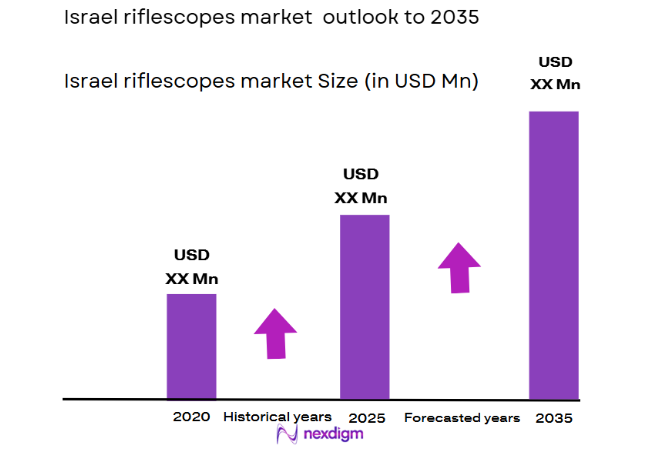
The Israel riflescopes market is projected to witness growth due to rising military demand, technological advancements, and expanding recreational use. Based on recent historical assessment, the market size for riflescopes is expected to reach USD ~ million. Demand is primarily driven by increasing investments in defense and hunting activities, coupled with a growing preference for high-tech, precision-enhancing optics. Furthermore, the transition to digital and smart riflescopes further accelerates market adoption across military and civilian sectors.
Dominant cities such as Tel Aviv and Haifa lead the Israeli riflescopes market due to their strong military infrastructure and advanced technological capabilities. The country’s robust defense spending and strategic initiatives by the Israeli Defense Forces have facilitated the development of high-performance riflescopes. Additionally, the recreational shooting culture in Israel, supported by outdoor enthusiasts, bolsters market growth, reinforcing Israel’s position as a key player in the global riflescopes industry.
Market Segmentation
By Product Type
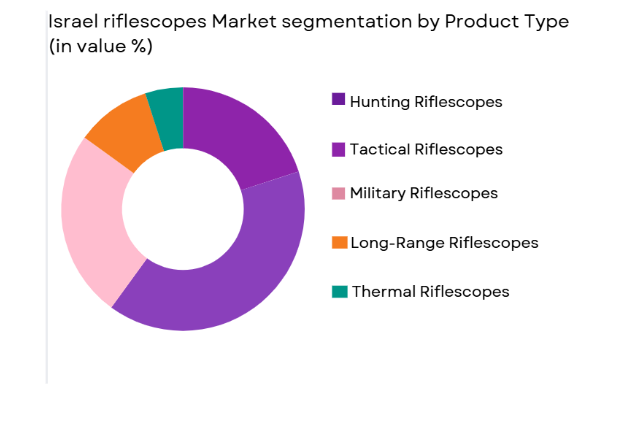
Israel riflescopes market is segmented by product type into hunting riflescopes, tactical riflescopes, military riflescopes, long-range riflescopes, and thermal riflescopes. Recently, tactical riflescopes have a dominant market share due to factors such as demand patterns, infrastructure availability, and consumer preference. Tactical riflescopes are widely used in military applications where high precision and durability are critical. These scopes offer enhanced targeting and optical features that support mission-critical operations. As the demand for tactical weapons in defense and law enforcement increases, this segment maintains its dominance in the market.
By Platform Type
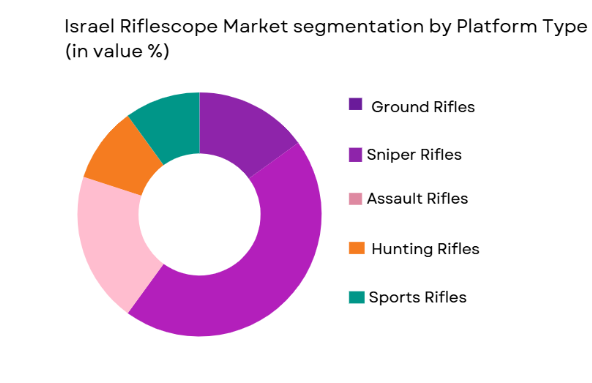
The market is segmented by platform type into ground rifles, sniper rifles, assault rifles, hunting rifles, and sports rifles. Recently, sniper rifles have dominated the market due to their high demand in military and law enforcement sectors. The rise in special operations, counter-terrorism initiatives, and long-range engagements has increased the need for high-performance sniper rifles. These rifles require specialized optics, thus driving the demand for riflescopes designed to meet the needs of precision shooting at long distances. This trend is expected to continue, strengthening the dominance of sniper rifles in the market.
Competitive Landscape
The competitive landscape of the Israel riflescopes market is marked by consolidation, where established players lead with innovative products. The influence of key players, who continuously upgrade technologies and expand their product portfolios, helps maintain a competitive edge. These companies invest heavily in research and development to improve optical precision, durability, and smart features. As a result, the market is poised for steady growth, driven by technological advancements and strategic partnerships.
| Company Name | Establishment Year | Headquarters | Technology Focus | Market Reach | Key Products | Revenue | Additional Parameter |
| Trijicon | 1981 | USA | ~ | ~ | ~ | ~ | ~ |
| Leupold & Stevens | 1907 | USA | ~ | ~ | ~ | ~ | ~ |
| Vortex Optics | 2004 | USA | ~ | ~ | ~ | ~ | ~ |
| EOTech | 1995 | USA | ~ | ~ | ~ | ~ | ~ |
| Nightforce Optics | 1990 | USA | ~ | ~ | ~ | ~ | ~ |
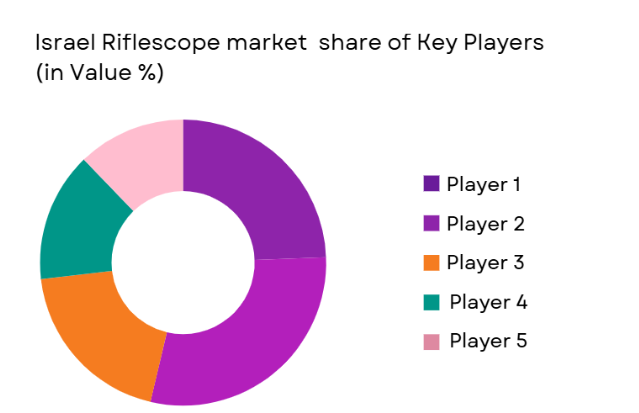
Israel Riflescopes Market Analysis
Growth Drivers
Increasing military investments
One of the key growth drivers for the Israel riflescopes market is the substantial military spending by the Israeli Defense Forces (IDF). The IDF’s focus on enhancing the effectiveness of their weaponry, including precision riflescopes, has propelled the growth of this market segment. With advanced riflescopes being integral to modern warfare, Israel’s strategic position in the Middle East leads to a continuous demand for high-precision optical systems. Furthermore, the integration of cutting-edge technologies such as range-finding, night vision, and thermal imaging into riflescopes boosts their appeal in military and defense operations, driving demand. This trend is supported by Israel’s ongoing efforts to improve its national security infrastructure, creating an environment conducive to high demand for riflescopes. Additionally, geopolitical tensions in the region and increased military engagements necessitate enhanced weapons systems with advanced optics, further driving the riflescopes market.
Expansion of recreational shooting
Another growth driver for the Israel riflescopes market is the expansion of recreational shooting activities, particularly hunting and sports shooting. As the interest in outdoor sports rises, the demand for precision riflescopes is also increasing. Israeli hunters and sports shooters are becoming more inclined to invest in high-quality, advanced riflescopes that offer superior accuracy and performance. The increasing popularity of shooting sports in Israel is supported by both private and governmental initiatives that promote the growth of outdoor activities. Furthermore, technological advancements in optics, such as smart riflescopes with integrated ballistic calculators and GPS, are increasing consumer interest in the market. The rising disposable income of affluent shooters is also contributing to the growth of the market, with consumers seeking more high-end, specialized optics for their rifles.
Market Challenges
High cost of precision riflescopes
One of the significant challenges faced by the Israel riflescopes market is the high cost of high-performance riflescopes. Premium riflescopes, which offer advanced features such as long-range precision, digital integration, and rugged designs, are often priced at a premium. This high cost can deter potential buyers, particularly in the civilian market, where price sensitivity is more pronounced. The cost of high-end riflescopes may also be a limiting factor for small to medium-sized defense contractors or local law enforcement agencies, who may not have the budget to invest in such expensive systems. Additionally, despite the growing interest in recreational shooting, the high price of specialized riflescopes can be a barrier for enthusiasts who are just starting out in the sport. While military and law enforcement budgets may absorb the costs, civilian consumers face financial limitations, hindering the broader adoption of advanced riflescope technology.
Availability of counterfeit products
The market for riflescopes in Israel, as well as globally, is increasingly being affected by the availability of counterfeit or low-quality products. These products often mimic the features of high-end brands but lack the quality, durability, and performance that consumers expect from reputable manufacturers. The proliferation of counterfeit products poses a significant challenge, as consumers may be unknowingly purchasing inferior optics that fail to meet the demands of professional shooters or military personnel. Moreover, counterfeit riflescopes may lead to performance failures or even safety risks, undermining the credibility of the entire market. While regulatory authorities are working to combat counterfeit goods, the presence of these products continues to disrupt the market, leading to brand dilution and a loss of consumer trust in certain sectors of the market.
Opportunities
Development of smart riflescopes
A key opportunity in the Israel riflescopes market lies in the development of smart riflescopes, which integrate advanced technologies such as GPS, rangefinders, ballistic calculators, and even real-time data analytics. The incorporation of digital technologies into riflescopes is transforming the market, providing shooters with more accurate targeting capabilities. This development presents a unique opportunity for manufacturers to tap into a rapidly growing segment of tech-savvy consumers who seek enhanced performance and versatility. Furthermore, the use of smart riflescopes in military operations is becoming increasingly common, as these systems provide soldiers with real-time data that can improve mission success rates. The continued advancement of smart technology in riflescopes will be a significant driver of innovation and market growth in the coming years.
Emerging markets and military modernization programs
Another promising opportunity for the Israel riflescopes market is the growing demand in emerging markets, particularly in regions experiencing military modernization programs. Countries in the Middle East and North Africa (MENA), as well as parts of Asia and Eastern Europe, are investing heavily in upgrading their military equipment, including firearms and optics. Israel’s established expertise in defense technology and optics positions it as a key supplier for these regions. As these countries modernize their military forces, the demand for high-performance riflescopes is expected to rise. Additionally, the growing interest in recreational shooting in these emerging markets provides an added growth avenue for the civilian segment of the market. By expanding their reach into these new markets, Israeli manufacturers can tap into a vast pool of potential customers, both in the defense sector and the civilian market.
Future Outlook
The future outlook of the Israel riflescopes market appears promising, driven by technological advancements, expanding military budgets, and growing demand for smart optics. Over the next five years, the market is expected to see significant growth, fueled by innovations such as digital riflescopes, advanced image stabilization, and integrated sensors. Additionally, increased defense spending and modernization programs in various countries present strong growth opportunities for Israeli manufacturers. As geopolitical tensions remain high, Israel’s robust defense sector will continue to drive demand for precision firearms and optics. Meanwhile, the growing interest in outdoor activities and shooting sports will provide further momentum to the civilian market, ensuring a well-balanced growth trajectory for both military and recreational segments.
Major Players
- Trijicon
- Leupold & Stevens
- Vortex Optics
- EOTech
- Nightforce Optics
- Burris Optics
- Meopta
- Zeiss
- Swarovski Optik
- Aimpoint
- Bushnell
- Sightmark
- Pulsar
- Steiner Optics
- ATN Corporation
Key Target Audience
- Investments and venture capitalist firms
- Government and regulatory bodies
- Defense contractors
- Military equipment manufacturers
- Law enforcement agencies
- Firearm and optics retailers
- Hunting and shooting sports organizations
- Private security firms
Research Methodology
Step 1: Identification of Key Variables
The research begins by identifying the key variables affecting the market, such as market size, product type trends, technological developments, and regional dynamics.
Step 2: Market Analysis and Construction
Data is gathered from primary and secondary sources to build a comprehensive view of market trends, segmentation, and competitive dynamics.
Step 3: Hypothesis Validation and Expert Consultation
Expert consultations and feedback are used to validate the initial hypotheses and refine the research approach.
Step 4: Research Synthesis and Final Output
The research is synthesized to produce a final market report, highlighting key insights, growth drivers, challenges, and opportunities in the market.

- Executive Summary
- Research Methodology (Definitions, Scope, Industry Assumptions, Market Sizing Approach, Primary & Secondary Research Framework, Data Collection & Verification Protocol, Analytic Models & Forecast Methodology, Limitations & Research Validity Checks)

- Market Definition and Scope
- Value Chain & Stakeholder Ecosystem
- Regulatory / Certification Landscape
- Sector Dynamics Affecting Demand
- Strategic Initiatives & Infrastructure Growth

- Growth Drivers
Increased Military and Defense Budgets
Growing Popularity of Hunting and Sports Shooting
Advancements in Optical and Thermal Imaging Technology
Improved Accuracy and Range of Riflescopes
Rising Security Concerns and Need for Surveillance Equipment - Market Challenges
High Production and Maintenance Costs
Stringent Regulatory Requirements
Competition from Low-Cost Alternatives
Technological Complexity and Training Requirements
Supply Chain Disruptions - Market Opportunities
Growing Demand for Thermal and Night Vision Riflescopes
Increasing Adoption of Smart Riflescopes
Expansion of Online Retail Channels - Trends
Integration of Riflescopes with Firearms Technology
Rise in Customizable and Modular Riflescopes
Shift Towards Compact and Lightweight Designs
Integration of Artificial Intelligence for Targeting Systems
Increasing Use of Riflescopes in Non-Military Applications - Government Regulations & Defense Policy
Export Regulations on Riflescope Technology
Regulations on Military and Defense Applications
Government Investments in Research and Development - SWOT Analysis
- Stakeholder and Ecosystem Analysis
- Porter’s Five Forces Analysis
- Competition Intensity and Ecosystem Mapping

- By Market Value, 2020-2025
- By Installed Units, 2020-2025
- By Average System Price, 2020-2025
- By System Complexity Tier, 2020-2025

- By System Type (In Value%)
Hunting Riflescopes
Tactical Riflescopes
Military Riflescopes
Target Riflescopes
Surveillance Riflescopes - By Platform Type (In Value%)
Land-Based Riflescopes
Mounted Riflescopes
Standalone Riflescopes
Integrated Systems Riflescopes
Multi-Platform Riflescopes - By Fitment Type (In Value%)
Fixed Magnification Riflescopes
Variable Magnification Riflescopes
Night Vision Riflescopes
Thermal Riflescopes
Red Dot Sight Riflescopes - By EndUser Segment (In Value%)
Military and Defense
Law Enforcement Agencies
Sporting and Hunting
Security and Surveillance
Commercial and Industrial - By Procurement Channel (In Value%)
Direct Procurement
Retail
Online Stores
Government Bidding
Wholesale Distribution - By Material / Technology (In Value%)
Optical Glass Technology
Lightweight Metal Alloys
Polymer Technology
Thermal Imaging Technology
Digital and Electronic Systems

- Market structure and competitive positioning
Market share snapshot of major players - Cross Comparison Parameters (Price, Product Features, Innovation, Market Reach, Technological Integration, Customer Support, Distribution Channels, Brand Reputation, Product Customization, Performance)
- SWOT Analysis of Key Players
- Pricing & Procurement Analysis
- Key Players
Trijicon
Leupold & Stevens
Vortex Optics
Bushnell
Eotech
Nightforce Optics
Swarovski Optik
Zeiss
Aimpoint
Steiner Optics
ATN Corporation
Sig Sauer
Holosun Technologies
Burris Optics
Pulsar

- Military Forces’ Adoption of Advanced Optics
- Law Enforcement Use of Riflescopes in Tactical Operations
- Rise of Amateur and Professional Hunters Investing in High-End Riflescopes
- Security and Surveillance Industries Integrating Riflescopes into Monitoring Systems

- Forecast Market Value, 2026-2035
- Forecast Installed Units, 2026-2035
- Price Forecast by System Tier, 2026-2035
- Future Demand by Platform, 2026-2035


 Request a Sample
 Ask for Customization
 Get a Quote
 Enquire Now