

 Download PDF
 Download PDF
Market Overview
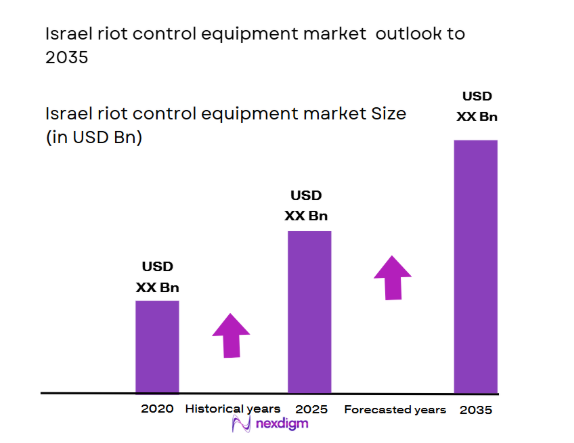
The Israel Riot Control Equipment market is valued at USD ~billion, driven by increasing governmental investments in non-lethal crowd control solutions, driven by the need to manage civil unrest and protests. The demand is being further fueled by technological advancements in riot control systems such as water cannons, sound cannons, and rubber bullet systems. The trend towards modernization of security forces, especially in urban centers, is expanding the market size, as these regions are experiencing heightened public demonstrations and security challenges.
Tel Aviv, Jerusalem, and Haifa dominate the Israeli market for riot control equipment, driven by their strategic significance as political and economic centers. These cities are home to critical government infrastructure and have a high concentration of security forces that require advanced riot control systems. Furthermore, these cities often experience public protests and demonstrations, driving demand for riot control equipment. The growing need for modernized security infrastructure in urban environments contributes significantly to the market’s strength in these locations.
Market Segmentation
By Product Type
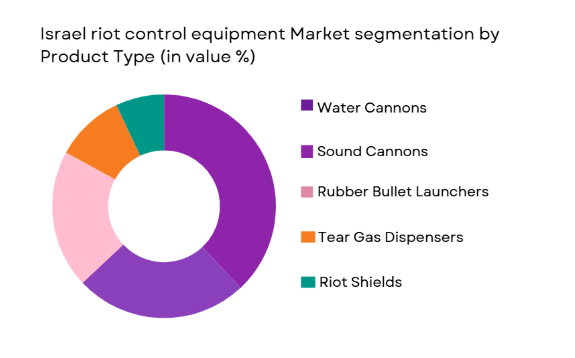
Israel’s riot control equipment market is segmented by product type into water cannons, sound cannons, rubber bullet launchers, tear gas dispensers, and riot shields. Among these, water cannons have a dominant market share due to their effectiveness in dispersing large crowds without causing fatalities. The high efficiency and relatively low cost compared to other equipment, such as sound cannons or rubber bullet systems, are significant drivers. Water cannons offer a safer alternative for law enforcement in handling civil unrest and have become standard equipment for riot control in Israel.
By Platform Type
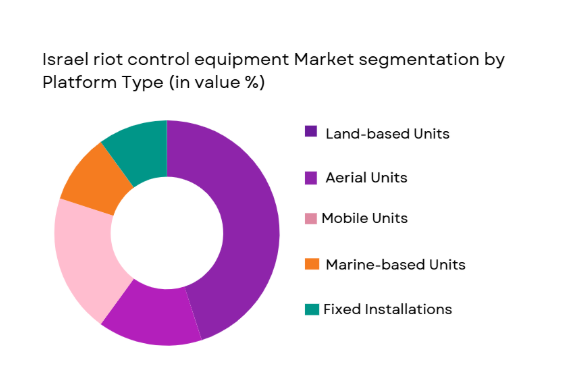
The market is also segmented by platform type, which includes land-based units, aerial units, mobile units, marine-based units, and fixed installations. Land-based units dominate the market due to their high versatility and ability to be deployed quickly in urban areas, where most unrest occurs. They are favored for their cost-effectiveness and ease of transportation. Mobile units are also gaining traction, as they can be deployed rapidly across various locations, making them an increasingly preferred solution for riot control in large-scale protests.
Competitive Landscape
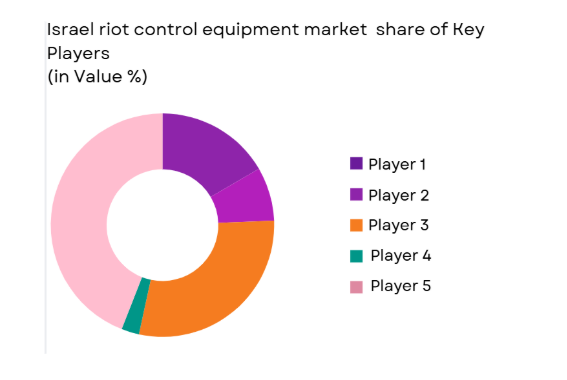
The Israeli riot control equipment market is moderately consolidated, with several key players driving innovation and product development. Major players in the market hold significant technological expertise and are responsible for introducing advanced equipment like non-lethal projectiles and autonomous riot control systems. These players influence market dynamics through their strong brand presence and substantial defense and security contracts with government agencies. Additionally, foreign firms are also entering the market, although local players dominate due to government regulations favoring domestic products for security needs.
| Company Name | Establishment Year | Headquarters | Technology Focus | Market Reach | Key Products | Revenue (USD) | Market-Specific Parameter |
| Israel Military Industries | 1933 | Ramat Gan | ~ | ~ | ~ | ~ | ~ |
| Rafael Advanced Defense Systems | 2000 | Haifa | ~ | ~ | ~ | ~ | ~ |
| Elbit Systems | 1966 | Haifa | ~ | ~ | ~ | ~ | ~ |
| Fox Group Security | 1988 | Tel Aviv | ~ | ~ | ~ | ~ | ~ |
| Oshkosh Corporation | 1917 | Wisconsin, USA | ~ | ~ | ~ | ~ | ~ |
Israel Riot Control Equipment Market Analysis
Growth Drivers
Increasing Government Investment in Non-lethal Weapons
Non-lethal weapon systems such as water cannons, tear gas dispensers, and rubber bullet launchers are rapidly becoming critical tools for maintaining order during civil unrest. With ongoing political instability and the rise in protests across the globe, governments are allocating more resources to develop and procure riot control equipment. These investments aim to reduce fatalities during crowd control operations while maintaining the security of urban areas. Israel, with its frequent protests and public unrest, is a key market where such non-lethal solutions are highly valued. As governments continue to prioritize the protection of civilians while enforcing public order, the demand for riot control systems is expected to increase.
Technological Advancements in Riot Control Solutions
One of the key factors driving the growth of Israel’s riot control equipment market is the continuous innovation in technology. The demand for more advanced, precise, and effective crowd control solutions is pushing manufacturers to develop smarter, safer technologies such as sound cannons and automated riot control vehicles. These technological improvements aim to reduce the impact of riot control measures on the general population while increasing their efficiency in crowd dispersion. Additionally, the integration of AI and IoT into these systems allows for better predictive analysis and real-time decision-making, ensuring greater control and more effective operations in volatile environments. As technology continues to evolve, these solutions are becoming more accessible and cost-effective, further boosting the market’s growth.
Market Challenges
Regulatory Restrictions on the Use of Riot Control Equipment
While riot control equipment is critical for maintaining public order, its use is subject to strict regulatory frameworks. In many regions, including Israel, there are stringent rules governing the deployment of non-lethal force. Governments and international bodies regularly review and enforce guidelines that restrict how riot control systems can be used to ensure human rights and ethical practices. These regulations often limit the scope and extent of equipment deployment, making it challenging for manufacturers to push the market forward. Moreover, public backlash and legal challenges regarding the use of force during protests can lead to the delay or rejection of new technologies, limiting market growth.
High Cost of Advanced Riot Control Systems
Advanced riot control equipment, such as sound cannons, autonomous vehicles, and high-tech non-lethal weapons, can be prohibitively expensive for many law enforcement agencies, particularly those in smaller municipalities or regions with limited budgets. The high upfront costs associated with purchasing and maintaining these systems create a barrier to widespread adoption. Additionally, while these systems offer improved safety and effectiveness, their high cost often leads to extended procurement processes and budget allocation delays. This can prevent smaller entities from acquiring modern equipment, restricting the overall growth potential of the market in certain regions.
Opportunities
Demand for Autonomous Riot Control Systems
With increasing public protests, governments are seeking advanced, cost-effective ways to manage large crowds without escalating violence. Autonomous riot control systems, such as unmanned ground vehicles (UGVs) and drones, present a unique opportunity for growth in Israel’s riot control equipment market. These systems offer enhanced efficiency and can be deployed with minimal risk to personnel. As technological capabilities improve, the demand for autonomous systems is expected to rise, driven by their ability to perform crowd control with precision and minimal human intervention. These systems are also seen as more humane alternatives, reducing the risk of injury or fatalities during public disturbances.
Expansion of International Defense Contracts
Israel’s defense sector is renowned for its technological prowess, and as global security concerns rise, the market for advanced riot control systems is expanding. The growing number of international defense contracts provides a significant opportunity for Israeli manufacturers to expand their market reach. Countries facing internal unrest or those seeking to modernize their military and law enforcement agencies will increasingly look to Israel for cutting-edge riot control solutions. By leveraging its established reputation in the defense industry, Israel’s riot control equipment manufacturers are well-positioned to capture a larger share of the global market, particularly in emerging regions experiencing heightened social unrest.
Future Outlook
The future outlook for Israel’s riot control equipment market is promising, with expectations of steady growth driven by increasing demand for non-lethal control solutions, particularly in urban areas prone to public disturbances. Over the next five years, advancements in autonomous technologies and AI-driven solutions will redefine crowd management strategies, making riot control more effective and less risky for civilians and law enforcement. Additionally, favorable government regulations, particularly those focusing on human rights and safety standards, will continue to promote the adoption of these systems across various sectors, ensuring sustained market growth.
Major Players
- Israel Military Industries
- Rafael Advanced Defense Systems
- Elbit Systems
- Fox Group Security
- Oshkosh Corporation
- Smith & Wesson Brands, Inc.
- General Dynamics
- Hanwa Co.
- Taavura Holdings
- Merhav Group
- Israel Aerospace Industries
- Arad Group
- Lockheed Martin
- Boeing
- BAE Systems
Key Target Audience
- Investments and venture capitalist firms
- Government and regulatory bodies
- Law enforcement agencies
- Military and defense organizations
- Emergency response units
- Security contractors
- Non-governmental organizations (NGOs)
- Infrastructure development firms
Research Methodology
Step 1: Identification of Key Variables
The initial step involves defining the key variables affecting the market, including product types, geographical regions, and end users. This process is crucial for understanding the scope of the market and its driving forces.
Step 2: Market Analysis and Construction
Detailed market analysis is conducted by gathering data from both primary and secondary sources. This includes assessing market trends, competitor activities, and regional growth potential to build a comprehensive model of market dynamics.
Step 3: Hypothesis Validation and Expert Consultation
To ensure the accuracy of the findings, expert consultations are carried out to validate the hypotheses and insights. This step helps refine market assumptions based on real-world data and expert opinions.
Step 4: Research Synthesis and Final Output
The final stage involves synthesizing all gathered information into a cohesive market report. The data is analyzed, and conclusions are drawn to provide actionable insights and future forecasts.

- Executive Summary
- Research Methodology (Definitions, Scope, Industry Assumptions, Market Sizing Approach, Primary & Secondary Research Framework, Data Collection & Verification Protocol, Analytic Models & Forecast Methodology, Limitations & Research Validity Checks)

- Market Definition and Scope
- Value Chain & Stakeholder Ecosystem
- Regulatory / Certification Landscape
- Sector Dynamics Affecting Demand
- Strategic Initiatives & Infrastructure Growth

- Growth Drivers
Increasing civil unrest
Rising government investments in public safety
Technological advancements in non-lethal weapons
Growing demand for border control technologies
Rising global military expenditure - Market Challenges
High cost of advanced equipment
Regulatory restrictions on certain technologies
Lack of international standardization
Geopolitical tensions affecting defense exports
Complex integration with existing defense systems - Market Opportunities
Development of eco-friendly non-lethal weapons
Expansion in emerging markets
Integration with smart city infrastructure - Trends
Rising adoption of AI in riot control
Increasing use of unmanned systems
Focus on crowd management technology
Growth in multi-agency collaboration
Advancements in body armor technology - Government Regulations & Defense Policy
Strict regulations on the use of chemical agents
Government funding programs for riot control technologies
International arms control agreements - SWOT Analysis
- Stakeholder and Ecosystem Analysis
- Porter’s Five Forces Analysis
- Competition Intensity and Ecosystem Mapping

- By Market Value, 2020-2025
- By Installed Units, 2020-2025
- By Average System Price, 2020-2025
- By System Complexity Tier, 2020-2025

- By System Type (In Value%)
Non-lethal weapons
Ballistic shields
Tear gas systems
Water cannon systems
Robotic systems - By Platform Type (In Value%)
Vehicle-mounted systems
Portable systems
Integrated systems
Fixed-point systems
Drone systems - By Fitment Type (In Value%)
Vehicle-mounted
Personal use
Stationary installations
Modular systems
Portable devices - By EndUser Segment (In Value%)
Law enforcement agencies
Military forces
Private security firms
Public safety organizations
Border control agencies - By Procurement Channel (In Value%)
Direct government procurement
Private sector procurement
Public-private partnerships
International defense contracts
Online platforms - By Material / Technology (in Value%)
Composite materials
Ballistic-resistant fabrics
Advanced optics
Non-lethal chemicals
Robotics and automation

- Market structure and competitive positioning
Market share snapshot of major players - Cross Comparison Parameters (Price, Quality, Reliability, Innovation, Customer Support, Geographic Reach, Brand Reputation, Market Share, Technological Leadership, Sustainability)
- SWOT Analysis of Key Players
- Pricing & Procurement Analysis
- Key Players
Rafael Advanced Defense Systems
Israel Military Industries
Elbit Systems
Magal Security Systems
IWI (Israel Weapon Industries)
Aeronautics Ltd
Meprolight
Taurus Systems
Avon Protection
SABRA Defence Systems
Zagro
Plasan
IMI Systems
Tactical Safety Solutions
Alfaisal Engineering

- Government agencies’ increasing reliance on high-tech solutions
- Private sector’s focus on security systems
- International collaboration in border control
- Need for adaptable and mobile systems

- Forecast Market Value, 2026-2035
- Forecast Installed Units, 2026-2035
- Price Forecast by System Tier, 2026-2035
- Future Demand by Platform, 2026-2035


 Request a Sample
 Ask for Customization
 Get a Quote
 Enquire Now