
 Download PDF
 Download PDF
Market Overview
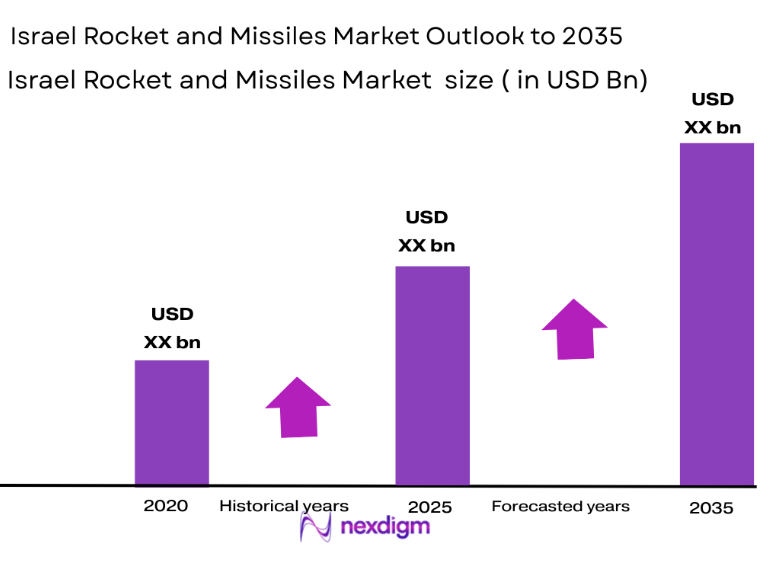
The Israel rockets and missiles market is valued in billions ~ USD, driven by significant advancements in missile defense systems and rocket propulsion technologies. The market is primarily influenced by government investments, defense contracts, and Israel’s prominent position in global defense technology. The demand for advanced propulsion systems, coupled with increasing geopolitical tensions, strengthens the market’s growth. Based on recent historical assessments, Israel’s defense market continues to thrive due to technological leadership and strategic defense priorities.
Israel’s dominance in the rocket and missile market is largely attributed to its technological innovations and strong international defense relationships. Key factors include the nation’s ability to rapidly develop and deploy advanced systems, bolstered by strong ties with the US and European allies. Israel’s defense sector is driven by a strategic focus on missile defense systems, particularly for anti-ballistic and hypersonic missiles. The country’s competitive edge is rooted in its ability to integrate cutting-edge technologies, ensuring a high level of effectiveness and global demand.
Market Segmentation
By Product Type
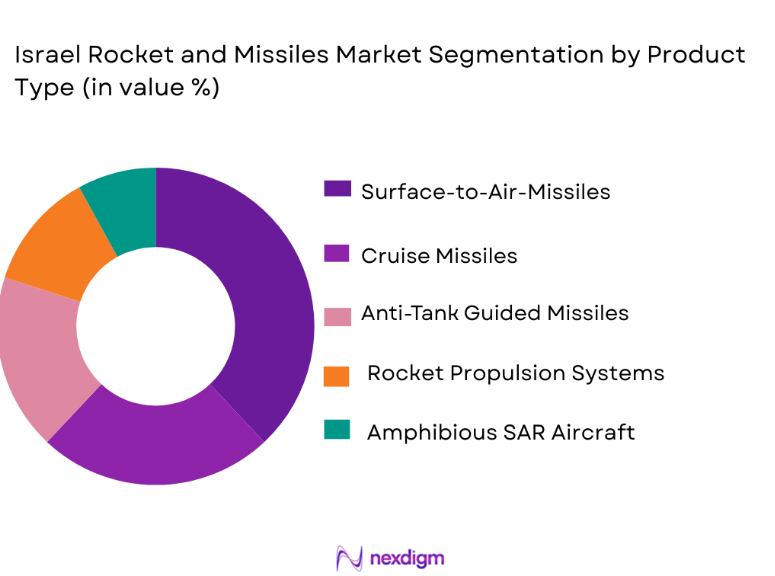
The Israel rockets and missiles market is segmented by product type into various categories such as surface-to-air missiles, cruise missiles, anti-tank guided missiles, ballistic missiles, and rocket propulsion systems. The dominant sub-segment in the market is the surface-to-air missile system, largely due to the consistent demand for air defense systems to protect against aerial threats. Israel’s advanced defense systems, such as the Iron Dome, have become crucial in global defense strategies, securing this segment’s leading market position.
By Platform Type
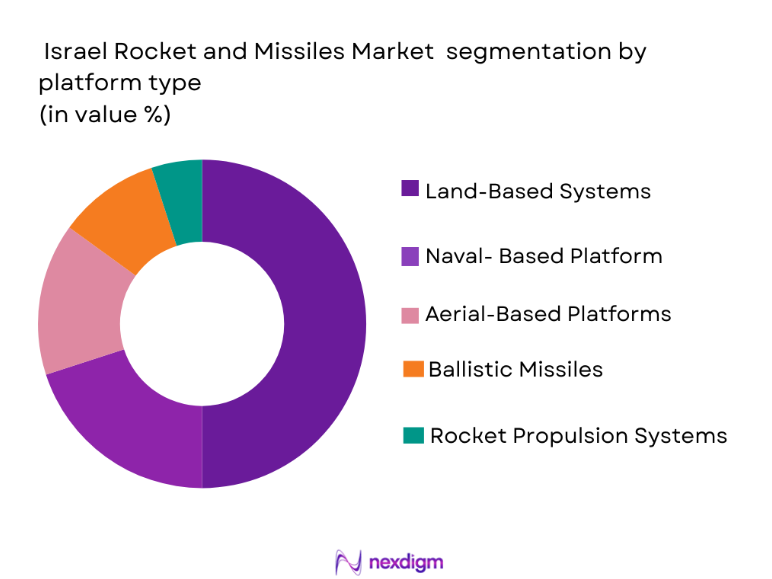
The Israel rockets and missiles market is segmented by platform type into land-based platforms, naval-based platforms, aerial-based platforms, space-based platforms, and mobile platforms. Recently, land-based platforms have dominated the market share due to Israel’s strong reliance on ground defense systems for territorial security. The strategic geographical location of Israel has led to an emphasis on ground-based missile defense systems, which play a pivotal role in national defense strategies.
Competitive Landscape
The Israel rockets and missiles market is highly competitive, with several major players consolidating their position through strategic defense contracts, partnerships, and technological advancements. The market is characterized by the dominance of Israeli defense contractors and international players, each striving to innovate and meet the growing global demand for advanced missile defense systems. Israel’s defense giants continue to lead the way in missile technology and defense solutions, driving global growth.
| Company Name | Establishment Year | Headquarters | Technology Focus | Market Reach | Key Products | Revenue (USD) | Technology Development Speed |
| Israel Aerospace Industries | 1953 | Israel | ~ | ~ | ~ | ~ | ~ |
| Rafael Advanced Defense Systems | 1980 | Israel | ~ | ~ | ~ | ~ | ~ |
| Elbit Systems | 1966 | Israel | ~ | ~ | ~ | ~ | ~ |
| IAI MBT | 1996 | Israel | ~ | ~ | ~ | ~ | ~ |
| Lockheed Martin | 1912 | USA | ~ | ~ | ~ | ~ | ~ |
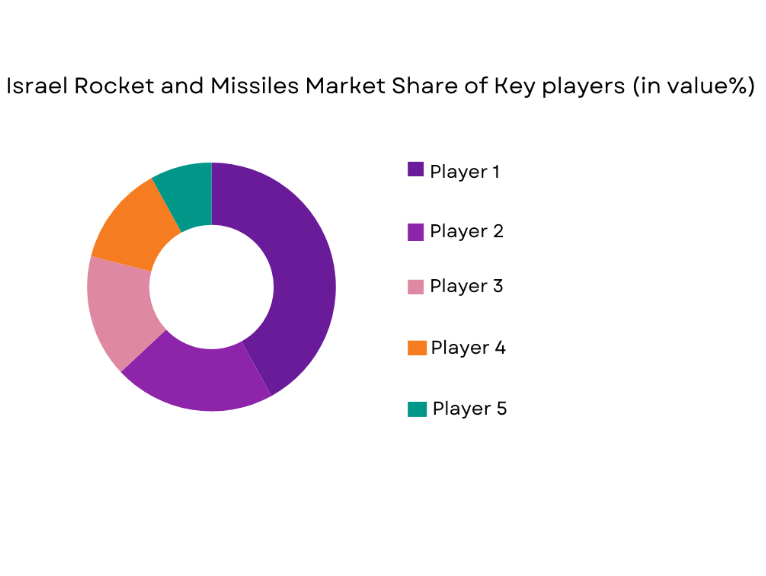
Israel Rocket and Missiles Market Analysis
Growth Drivers
Technological Advancements in Missile Defense
Technological advancements in missile defense have been a significant growth driver for the Israel rocket and missiles market. Israel has long been a leader in missile defense systems, particularly in the development of interceptors such as the Iron Dome, David’s Sling, and Arrow systems. These technological innovations have made Israel’s defense capabilities some of the most sophisticated and effective worldwide. As threats from various nations increase, particularly with the rise of hypersonic missile technology, the demand for advanced defense solutions continues to soar. Additionally, Israel’s continued investment in developing new technologies ensures that it remains at the forefront of missile defense. The advancements in guidance systems, propulsion technologies, and multi-layered defense strategies provide Israel with a competitive edge, driving the market growth. The global demand for advanced missile defense solutions, particularly from defense contractors and international buyers, further strengthens the market’s trajectory. Israel’s technological advancements in defense ensure that its systems remain highly sought after by military and governmental entities around the world.
Geopolitical Instability and Regional Tensions
Geopolitical instability and regional tensions in the Middle East have significantly contributed to the growth of the Israel rocket and missiles market. Israel, located in a geopolitically volatile region, faces continuous security threats from neighboring countries, particularly in the form of missile attacks. To protect its territory, Israel has invested heavily in missile defense systems, which has resulted in the development of some of the most effective and advanced missile defense technologies globally. The Israeli government’s increased military budget, coupled with rising defense budgets in the Middle East, has fueled the demand for missile defense systems. The increasing threat of missile proliferation from hostile states has led to a heightened focus on both offensive and defensive missile technologies, reinforcing Israel’s defense sector growth. Israel’s military innovations are often seen as a benchmark for other countries in the region, leading to regional reliance on Israeli missile systems. The need for robust and reliable defense systems in the Middle East ensures Israel’s continued dominance in the global defense market.
Market Challenges
High R&D and Manufacturing Costs
A major challenge for the Israel rockets and missiles market is the high research and development (R&D) and manufacturing costs associated with advanced missile systems. The process of developing cutting-edge technologies such as hypersonic missiles and advanced interceptors requires significant financial investment in both R&D and testing phases. This is particularly challenging given the stringent regulatory frameworks and the demand for high levels of precision and reliability in missile systems. The substantial costs involved in ensuring these technologies meet both national defense and international export standards create a significant barrier to market expansion. Furthermore, high production costs drive up the final price of these systems, making them less accessible to countries with limited defense budgets. Despite Israel’s dominance in missile defense technology, these cost-related barriers hinder the global spread of their missile systems, limiting their reach in emerging markets. Moreover, the competitive pressures from other global defense players, such as the United States and Russia, increase the market challenges for Israel’s defense manufacturers, who must continue to innovate while managing high operational costs.
Regulatory and Export Control Restrictions
Another significant challenge faced by the Israel rocket and missiles market is regulatory and export control restrictions. Israel’s defense industry is subject to stringent export controls imposed by both national and international bodies, limiting the potential for expanding its missile systems in certain markets. The Israeli government must comply with various international arms control agreements, which restrict the sale and export of advanced military technologies to certain regions. The U.S. government’s International Traffic in Arms Regulations (ITAR) and other international agreements impose limitations on the sale of sensitive defense technologies, which can affect Israel’s market reach and revenue potential. Additionally, political considerations play a role in the approval of arms sales, as some nations may face diplomatic challenges when importing advanced missile systems from Israel. The global security landscape, with its varying regulations across different countries, poses a challenge for Israel in managing international demand for its defense products while navigating these regulatory hurdles. This challenge forces Israeli defense firms to be highly selective in their export strategies, focusing on countries with strategic alliances or defense partnerships with Israel.
Opportunities
Defense Modernization in Emerging Economies
Defense modernization in emerging economies represents a key opportunity for the Israel rocket and missiles market. Countries in Asia, Africa, and Latin America are increasingly focused on strengthening their defense capabilities due to rising security threats, including terrorism, regional conflicts, and cyber warfare. These nations are seeking advanced missile defense systems and precision-guided munitions to enhance their military readiness. Israel’s reputation for high-quality and cost-effective defense systems, such as the Iron Dome and advanced rocket propulsion systems, positions the country as a key supplier of missile technologies. As these countries modernize their defense forces, they look to Israel for proven technologies that can address both conventional and asymmetric threats. Israel’s ability to provide customized solutions that meet specific regional needs, while offering high reliability and affordability, makes it an attractive partner for emerging economies. The demand for advanced missile defense technologies in these regions continues to grow as security challenges evolve, ensuring that Israel remains a significant player in the global defense market. Moreover, Israel’s robust relationships with the U.S. and other NATO countries allow it to expand its reach into these markets, leveraging international partnerships to penetrate new defense markets globally.
Increase in Hypersonic Missile Development
The increase in hypersonic missile development is another significant opportunity for the Israel rocket and missiles market. Hypersonic missiles, which travel at speeds greater than Mach 5, present a new frontier in missile defense systems, with their ability to evade traditional defense mechanisms. Israel’s expertise in missile defense technologies positions it well to capitalize on this growing market. With global powers like the U.S., Russia, and China making significant investments in hypersonic missile capabilities, Israel has an opportunity to develop and export defense systems capable of countering these advanced threats. By leveraging its experience in rapid technological development and innovation, Israel is poised to lead the development of interceptors capable of defeating hypersonic missiles. Additionally, as the threat of hypersonic weapons grows, there will be an increasing demand for defense systems that can provide a layered defense against such high-speed threats. Israel’s advanced research and development capabilities, combined with its strong ties to global defense contractors and military agencies, position it as a key player in the hypersonic defense market, with the potential for significant growth in the coming years.
Future Outlook
The future outlook of the Israel rockets and missiles market over the next five years shows promising growth, driven by continued advancements in missile defense technology, increasing global security threats, and strong government investment. Israel’s missile defense systems are expected to become more sophisticated, incorporating artificial intelligence and advanced sensors for enhanced accuracy and response times. Regulatory support and the growing importance of defense collaborations will further fuel the market’s expansion. The increasing demand for defense modernization in emerging economies, coupled with the rise in hypersonic threats, will create a favorable environment for Israel’s defense sector. Technological breakthroughs, such as the development of advanced interceptors for hypersonic missiles, will be key to Israel’s continued dominance in the global missile defense market.
Major Players
- Israel Aerospace Industries
- Rafael Advanced Defense Systems
- Elbit Systems
- IAI MBT
- Lockheed Martin
- Boeing
- Northrop Grumman
- Raytheon Technologies
- BAE Systems
- Thales Group
- General Dynamics
- L3 Technologies
- Leonardo S.p.A.
- MBDA
- Saab Group
Key Target Audience
- Investments and venture capitalist firms
- Government and regulatory bodies
- Military contractors
- Aerospace and defense manufacturers
- National defense ministries
- Military research and development agencies
- Space agencies
- Defense technology suppliers
Research Methodology
Step 1: Identification of Key Variables
The identification of key market drivers, challenges, and opportunities is performed using primary and secondary data sources.
Step 2: Market Analysis and Construction
This phase involves building a comprehensive market model based on collected data, focusing on current and future market trends.
Step 3: Hypothesis Validation and Expert Consultation
Interviews and consultations with industry experts validate the market hypothesis and refine the market projections.
Step 4: Research Synthesis and Final Output
Final output includes a synthesized market report with actionable insights, predictions, and analysis.

- Executive Summary
- Research Methodology (Definitions, Scope, Industry Assumptions, Market Sizing Approach, Primary & Secondary Research Framework, Data Collection & Verification Protocol, Analytic Models & Forecast Methodology, Limitations & Research Validity Checks)

- Market Definition and Scope
- Value Chain & Stakeholder Ecosystem
- Regulatory / Certification Landscape
- Sector Dynamics Affecting Demand
- Strategic Initiatives & Infrastructure Growth

- Growth Drivers
Technological Advancements in Missile Defense
Geopolitical Tensions and Regional Instability
Increasing Military Budgets in Middle Eastern Countries
Advancements in Hypersonic and Anti-Missile Technologies
International Demand for Advanced Propulsion Systems - Market Challenges
High R&D Costs and Technological Complexity
Regulatory and Export Control Restrictions
Dependence on Government Contracts
Vulnerabilities to Cybersecurity Threats
Competitive Pressure from Global Defense Contractors - Market Opportunities
Expansion of Military Alliances and Partnerships
Growth in Commercial Satellite Propulsion
Emerging Market Demand for Advanced Missile Defense Systems - Trends
Increase in Autonomous and AI-Driven Missiles
Expansion of Hypersonic Weapons Development
Integration of Space and Missile Defense Systems
Automation and Robotics in Missile Manufacturing
Shift Toward Green and Sustainable Propulsion Technologies - Government Regulations & Defense Policy
Compliance with International Arms Control Agreements
Support for Indigenous Defense Technologies
National Security and Export Control Policies - SWOT Analysis
- Stakeholder and Ecosystem Analysis
- Porter’s Five Forces Analysis
- Competition Intensity and Ecosystem Mapping

- By Market Value, 2020-2025
- By Installed Units, 2020-2025
- By Average System Price, 2020-2025
- By System Complexity Tier, 2020-2025

- By System Type (In Value%)
Rocket Propulsion Systems
Surface-to-Air Missile Systems
Ballistic Missile Systems
Cruise Missile Systems
Anti-Tank Guided Missiles - By Platform Type (In Value%)
Land-Based Platforms
Naval-Based Platforms
Aerial-Based Platforms
Space-Based Platforms
Mobile Platforms - By Fitment Type (In Value%)
Defense Fitments
Commercial Fitments
Dual-use Fitments
Upgrade & Retrofit Fitments
Custom Fitments - By EndUser Segment (In Value%)
Government & Defense Contractors
Aerospace and Aviation Companies
Private Security Firms
International Defense Organizations - By Procurement Channel (In Value%)
Direct Government Procurement
Third-Party Procurement
Defense Contractors
Bidding & Tenders
International Contracts - By Material / Technology (in Value%)
Solid Rocket Propellant
Liquid Rocket Propellant
Hybrid Rocket Propellant
Guidance & Control Systems
Propulsion Technologies

- Market structure and competitive positioning
- Market share snapshot of major players
- Cross Comparison Parameters (Product Range, Technological Innovation, Cost Efficiency, Geographic Reach, Strategic Partnerships)
- SWOT Analysis of Key Competitors
- Pricing & Procurement Analysis
- Key Players
Israel Aerospace Industries
Rafael Advanced Defense Systems
Elbit Systems
IAI MBT
Kassberg Military Systems
Tamir Systems
Israel Military Industries
ULA Systems
General Electric Defense
Lockheed Martin
Boeing
Northrop Grumman
Raytheon Technologies
BAE Systems
Thales Group

- Expansion of Military Budgets in the Middle East
- Rising Global Demand for Missile Defense Solutions
- Emerging Threats Driving Demand for Advanced Propulsion
- Collaboration Between Israel and Global Defense Agencies

- Forecast Market Value, 2026-2035
- Forecast Installed Units, 2026-2035
- Price Forecast by System Tier, 2026-2035
- Future Demand by Platform, 2026-2035


 Request a Sample
 Ask for Customization
 Get a Quote
 Enquire Now