
 Download PDF
Market Overview
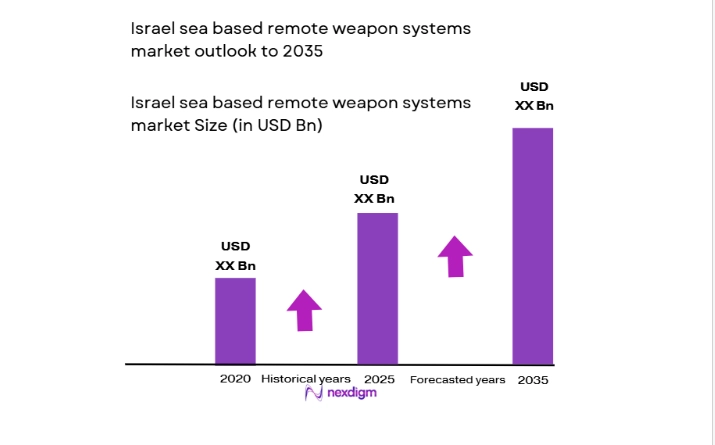
Based on a recent historical assessment, the Israel sea based remote weapon systems market was valued at USD ~ billion, supported by sustained naval modernization spending, indigenous defense production programs, and continuous upgrades of surface combatants and patrol vessels. Demand is driven by the requirement to enhance maritime force protection, improve precision engagement against asymmetric threats, and reduce crew exposure during combat operations. Integration of stabilized weapon stations with electro-optical sensors and naval combat management systems has further reinforced procurement across missile boats, corvettes, and offshore patrol platforms.
Based on a recent historical assessment, Haifa and Ashdod emerged as dominant operational and industrial hubs within the Israel sea based remote weapon systems market due to the presence of major naval bases, shipyards, and defense manufacturing facilities. These cities host core activities related to system integration, testing, and fleet deployment. Strong collaboration between the Israeli Navy, domestic defense companies, and technology developers accelerates adoption. Coastal operational requirements and proximity to strategic maritime zones further reinforce national dominance in sea based remote weapon system deployment.
Market Segmentation
By Product Type
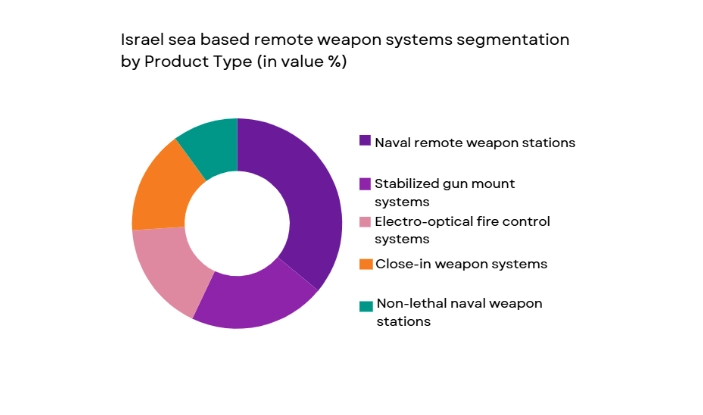
Israel sea based remote weapon systems market is segmented by product type into naval remote weapon stations, stabilized gun mount systems, electro-optical fire control systems, close-in weapon systems, and non-lethal maritime weapon stations. Recently, naval remote weapon stations have a dominant market share due to their adaptability across diverse vessel classes and compatibility with multiple weapon calibers. These systems support high-precision targeting while enabling remote operation from protected ship interiors, significantly improving crew safety. Their modular architecture allows easy retrofit on legacy platforms, extending vessel service life. Continuous upgrades in stabilization accuracy, sensor fusion, and automated tracking further strengthen operational value. Strong domestic manufacturing capability and proven operational performance reinforce widespread adoption across Israeli naval fleets.
By Platform Type
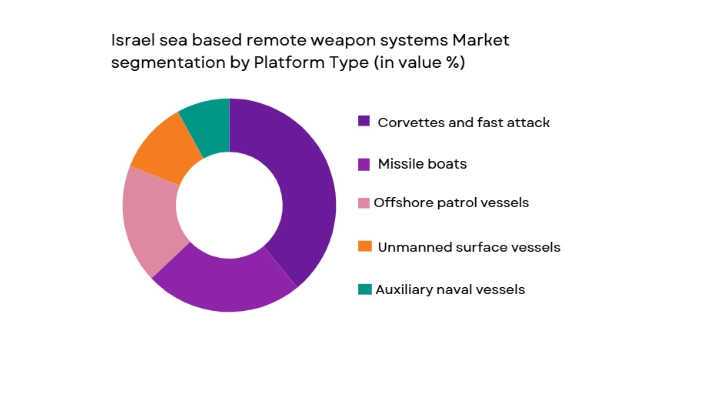
Israel sea based remote weapon systems market is segmented by platform type into corvettes and fast attack craft, missile boats, offshore patrol vessels, unmanned surface vessels, and auxiliary naval vessels. Recently, corvettes and fast attack craft have a dominant market share due to their frontline role in coastal defense, patrol missions, and rapid response operations. These platforms require highly reliable, stabilized weapon systems capable of engaging fast-moving asymmetric threats in congested maritime environments. Integration with advanced sensors and command systems is essential for mission success. High operational tempo and continuous fleet upgrades further justify investment. Indigenous naval design programs reinforce sustained deployment of remote weapon systems on these platforms.
Competitive Landscape
The Israel sea based remote weapon systems market is moderately consolidated, dominated by established domestic defense manufacturers with strong naval integration capabilities. These players benefit from long-term defense contracts, close coordination with the Israeli Navy, and vertically integrated technology portfolios, creating high entry barriers and reinforcing market concentration.
| Company Name | Establishment Year | Headquarters | Technology Focus | Market Reach | Key Products | Revenue | Naval Integration Strength |
| Elbit Systems | 1966 | Haifa, Israel | ~ | ~ | ~ | ~ | ~ |
| Rafael Advanced Defense Systems | 1948 | Haifa, Israel | ~ | ~ | ~ | ~ | ~ |
| Israel Aerospace Industries | 1953 | Lod, Israel | ~ | ~ | ~ | ~ | ~ |
| Elta Systems | 1967 | Ashdod, Israel | ~ | ~ | ~ | ~ | ~ |
| Controp Precision Technologies | 1972 | Hod Hasharon, Israel | ~ | ~ | ~ | ~ | ~ |
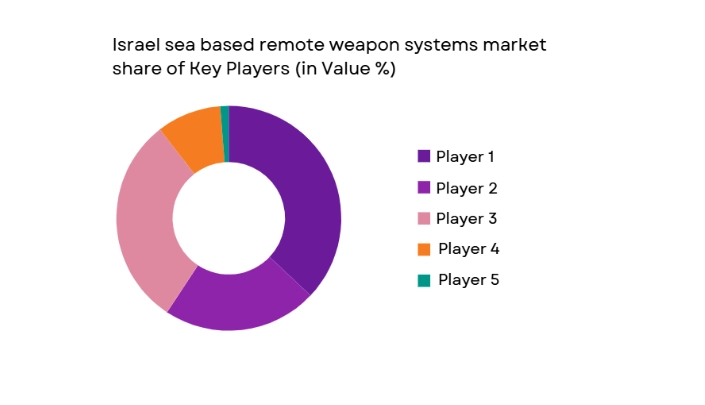
Israel Sea Based Remote Weapon Systems Market Analysis
Growth Drivers
Naval Modernization and Coastal Security Priorities:
Naval modernization and coastal security priorities are a primary growth driver for the Israel sea based remote weapon systems market as maritime threats continue to evolve. The Israeli Navy places strong emphasis on protecting offshore assets, ports, and economic zones. Remote weapon systems enhance precision engagement while minimizing crew exposure during hostile encounters. Integration with advanced sensors improves situational awareness in congested coastal environments. Continuous upgrades of missile boats and corvettes sustain procurement momentum. Indigenous development ensures rapid customization to operational needs. Budget allocation toward survivability and force protection remains consistent. These combined factors support long-term market expansion.
Operational Shift Toward Automation and Crew Safety:
Operational shift toward automation and crew safety significantly drives the Israel sea based remote weapon systems market by redefining naval combat doctrines. Reduced topside manning lowers risk during engagements. Automated tracking and stabilization improve accuracy in high-sea states. Commanders benefit from centralized control within protected combat information centers. Training efficiency improves through standardized digital interfaces. Integration with combat management systems enhances response speed. Technological maturity supports reliability under sustained operations. These operational advantages encourage continuous adoption across fleet assets.
Market Challenges
High Integration Complexity with Naval Combat Systems:
High integration complexity with naval combat systems poses a major challenge for the Israel sea based remote weapon systems market due to diverse legacy architectures. Custom engineering is required for each vessel class. Integration testing extends deployment timelines. Compatibility with sensors and command systems increases cost. Skilled workforce availability affects schedules. Certification requirements add further complexity. Delays impact fleet readiness. These factors constrain rapid system scaling.
Stringent Export Controls and Regulatory Compliance:
Stringent export controls and regulatory compliance challenge market growth by limiting international sales potential. Naval weapon systems are subject to strict licensing regimes. Compliance increases administrative burden. Approval timelines can delay contracts. Geopolitical sensitivities affect deal execution. Domestic priorities may override export opportunities. Documentation requirements are extensive. These constraints restrict market flexibility.
Opportunities
Integration of Remote Weapon Systems on Unmanned Vessels:
Integration of remote weapon systems on unmanned vessels presents a significant opportunity for the Israel sea based remote weapon systems market as naval autonomy initiatives expand. Armed unmanned platforms enhance surveillance and deterrence. Remote operation aligns with unmanned concepts. Modular systems enable rapid integration. Risk to personnel is minimized. R&D investment accelerates innovation. Export interest is growing. This opportunity supports future demand.
Advancement of AI-Enabled Fire Control Technologies:
Advancement of AI-enabled fire control technologies offers strong opportunity by improving targeting accuracy and decision speed. AI supports automated threat classification. Operator workload is reduced. Engagement precision improves. Integration with existing systems is feasible. Continuous learning enhances performance. Domestic expertise accelerates deployment. These benefits encourage upgrades.
Future Outlook
The Israel sea based remote weapon systems market is expected to maintain steady growth over the next five years, supported by sustained naval modernization and coastal security priorities. Technological advances in automation, sensor fusion, and AI-enabled fire control will enhance system effectiveness. Regulatory support for domestic defense production and exports will strengthen industry resilience. Growing adoption of unmanned maritime platforms will further expand demand for advanced remote weapon systems.
Major Players
- Elbit Systems
- Rafael Advanced Defense Systems
- Israel Aerospace Industries
- Elta Systems
- Controp Precision Technologies
- Aeronautics Group
- Camero-Tech
- Orbit Communication Systems
- RT LTA Systems
- NextVision Stabilized Systems
- SightX
- Septier Communication
- Magal Security Systems
- TeraView Israel
- UVision Air
Key Target Audience
- Naval procurement agencies
- Defense ministries
- Maritime security forces
- Naval shipyards
- Defense system integrators
- Coastal security authorities
- Investments and venture capitalist firms
- Government and regulatory bodies
Research Methodology
Step 1: Identification of Key Variables
Key demand drivers, technology parameters, procurement policies, and operational requirements were identified through structured secondary research and defense documentation review.
Step 2: Market Analysis and Construction
Collected data were analyzed to construct market size, segmentation, and competitive structure using validated analytical frameworks.
Step 3: Hypothesis Validation and Expert Consultation
Findings were validated through consultations with naval officers, defense engineers, and industry specialists to ensure accuracy.
Step 4: Research Synthesis and Final Output
Validated insights were synthesized into a comprehensive report with cross-verification for reliability and consistency.

- Executive Summary
- Research Methodology (Definitions, Scope, Industry Assumptions, Market Sizing Approach, Primary & Secondary Research Framework, Data Collection & Verification Protocol, Analytic Models & Forecast Methodology, Limitations & Research Validity Checks)

- Market Definition and Scope
- Value Chain & Stakeholder Ecosystem
- Regulatory / Certification Landscape
- Sector Dynamics Affecting Demand
- Strategic Initiatives & Infrastructure Growth

- Growth Drivers
Naval fleet modernization and combat readiness enhancement
Rising maritime threat environment and coastal security needs
Integration of autonomous and unmanned naval platforms - Market Challenges
High system integration and lifecycle sustainment costs
Complex naval certification and safety compliance requirements
Interoperability challenges with legacy combat systems - Market Opportunities
Expansion of remote weapon systems on unmanned vessels
Adoption of AI-driven targeting and engagement solutions
Growth in export-oriented naval defense programs - Trends
Shift toward modular and scalable naval weapon systems
Increasing deployment of AI-assisted fire control - Government Regulations & Defense Policy
- SWOT Analysis
- Porter’s Five Forces Analysis

- By Market Value, 2020-2025
- By Installed Units, 2020-2025
- By Average System Price, 2020-2025
- By System Complexity Tier, 2020-2025

- By System Type (In Value%)
Naval remote weapon stations
Stabilized naval gun mount systems
Electro-optical fire control systems - By Platform Type (In Value%)
Corvettes and fast attack craft
Offshore patrol vessels
Missile boats - By Fitment Type (In Value%)
New naval vessel integration
Mid-life upgrade retrofits
Modular mission-specific fitments - By End User Segment (In Value%)
Israeli Navy
Maritime border security forces
Special naval operations units - By Procurement Channel (In Value%)
Direct government defense procurement
Domestic defense OEM contracts
System integrator led acquisitions

- Market share of major players
- Cross Comparison Parameters (Weapon Caliber Compatibility, Stabilization Precision, Sensor Integration Capability, Automation Level, System Weight, Corrosion Resistance, Interoperability Standards, Lifecycle Support, Export Readiness)
- SWOT Analysis of Key Players
- Pricing & Procurement Analysis
- Key Players
Elbit Systems
Rafael Advanced Defense Systems
Israel Aerospace Industries
Elta Systems
Controp Precision Technologies
Aeronautics Group
Camero-Tech
Orbit Communication Systems
RT LTA Systems
NextVision Stabilized Systems
SightX
Septier Communication
Magal Security Systems
TeraView Israel
UVision Air

- Operational focus on coastal and offshore threat mitigation
- Preference for highly stabilized and automated weapon systems
- Demand for interoperability with naval combat management systems
- Increasing reliance on remote systems for asymmetric warfare

- Forecast Market Value, 2026-2035
- Forecast Installed Units, 2026-2035
- Price Forecast by System Tier, 2026-2035
- Future Demand by Platform, 2026-2035


 Request a Sample
 Ask for Customization
 Get a Quote
 Enquire Now