

 Download PDF
 Download PDF
Market Overview
The Israel Space Situational Awareness Systems market current size stands at around USD ~ million, reflecting strong institutional investments during recent defense modernization cycles. Deployment levels expanded across military and civil agencies, supported by increased satellite launches and orbital monitoring needs. Demand intensified as space congestion risks grew, encouraging broader adoption of surveillance technologies. Technological upgrades in radar, optical, and data fusion systems supported operational efficiency. Program funding remained stable through 2024 and 2025, reflecting long-term strategic commitment. Integration with national security infrastructure continued expanding across defense and intelligence operations. Local manufacturing participation increased through government-backed innovation initiatives. System upgrades focused on resilience, accuracy, and response time improvements.
Israel’s market concentration is strongest around Tel Aviv, Haifa, and Be’er Sheva due to defense infrastructure density. These regions host major aerospace facilities, command centers, and satellite control operations. Government-backed research clusters support system development and testing activities. High-security installations drive sustained demand for advanced monitoring solutions. Collaboration between military, civil agencies, and private developers strengthens ecosystem maturity. Regulatory oversight and national security policies further centralize adoption within established defense corridors.
Market Segmentation
By Technology Architecture
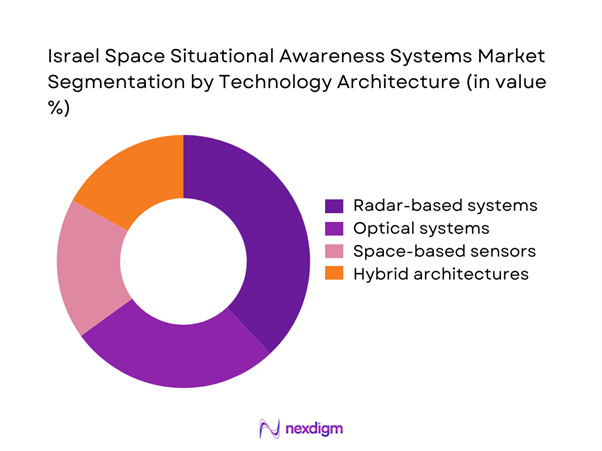
Radar-based and electro-optical architectures dominate Israel’s space situational awareness deployments due to operational reliability. Radar systems remain preferred for all-weather detection and long-range surveillance across orbital regimes. Optical and electro-optical platforms are increasingly adopted for high-resolution tracking and object characterization. Hybrid architectures integrating sensors with AI analytics enhance detection accuracy and response speed. Space-based sensors complement ground systems by expanding coverage and reducing latency. Continuous investment in fusion platforms improves situational awareness across defense and civil applications.
By End-Use Industry
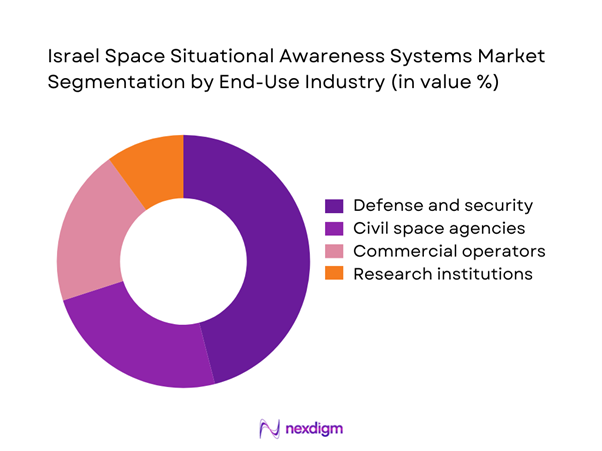
Defense and national security organizations represent the dominant end-user segment due to strategic surveillance requirements. Civil space agencies follow, driven by satellite traffic management and collision avoidance responsibilities. Commercial satellite operators increasingly adopt SSA systems to protect high-value orbital assets. Research institutions contribute through technology testing and data analysis initiatives. Demand concentration reflects mission-critical reliance on uninterrupted space operations. Government funding ensures sustained adoption across defense and civil sectors.
Competitive Landscape
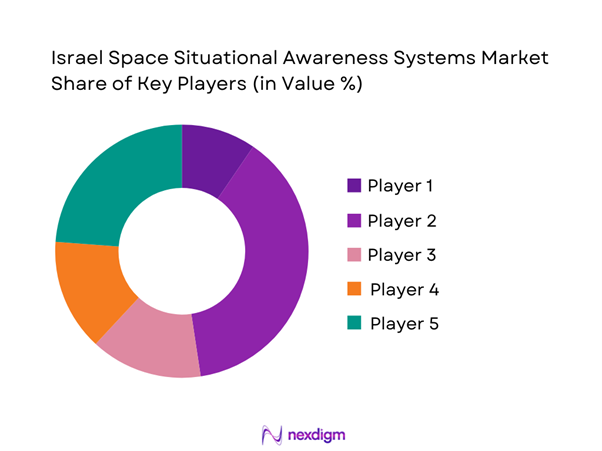
The competitive landscape is characterized by strong domestic defense manufacturers supported by government-backed innovation programs. Companies focus on advanced sensing technologies, system integration, and secure data processing capabilities. Competitive differentiation depends on technological depth, deployment reliability, and compliance with national security standards.
| Company Name | Establishment Year | Headquarters | Formulation Depth | Distribution Reach | Regulatory Readiness | Service Capability | Channel Strength | Pricing Flexibility |
| Israel Aerospace Industries | 1953 | Israel | ~ | ~ | ~ | ~ | ~ | ~ |
| Rafael Advanced Defense Systems | 1948 | Israel | ~ | ~ | ~ | ~ | ~ | ~ |
| Elbit Systems | 1966 | Israel | ~ | ~ | ~ | ~ | ~ | ~ |
| Orbit Communication Systems | 1950 | Israel | ~ | ~ | ~ | ~ | ~ | ~ |
| Gilat Satellite Networks | 1987 | Israel | ~ | ~ | ~ | ~ | ~ | ~ |
Israel Space Situational Awareness Systems Market Analysis
Growth Drivers
Rising national security focus on space domain awareness
Rising national security priorities have increased governmental focus on space domain awareness capabilities across defense planning frameworks and strategic coordination. Defense agencies expanded orbital monitoring programs to protect satellite infrastructure from emerging geopolitical and technological threats. Increased satellite dependency has amplified risks related to congestion, interference, and hostile activities in space. Authorities enhanced investments in real-time tracking systems to ensure continuous operational visibility. Collaboration between military branches strengthened intelligence-sharing mechanisms supporting situational awareness objectives. Policy emphasis encouraged integration of SSA capabilities within broader national defense strategies. Technology modernization initiatives improved detection accuracy and response speed across operational environments. Heightened geopolitical uncertainty reinforced prioritization of space domain monitoring systems. Cross-agency coordination improved data exchange between surveillance and command units. These combined factors sustained consistent demand growth across national security-driven deployments.
Expansion of Israeli satellite constellations
Expansion of Israeli satellite constellations increased operational complexity requiring enhanced space situational awareness capabilities. Growth in communication and observation satellites intensified monitoring and collision avoidance requirements. Orbital congestion necessitated precise tracking for asset protection and mission continuity. Satellite fleet diversification demanded scalable and interoperable SSA platforms. Increased launch activity elevated the importance of preemptive risk assessment systems. Operators required continuous updates on orbital positioning and potential conjunction events. Advanced analytics supported efficient management of expanding satellite networks. Integration of SSA systems improved mission planning and satellite lifecycle management. Government-backed programs supported constellation expansion initiatives. These developments reinforced sustained demand for advanced situational awareness infrastructure.
Challenges
High development and deployment costs
High development and deployment costs create barriers for rapid expansion of space situational awareness infrastructure. Advanced sensor systems require significant capital investment and long development cycles. Specialized components increase manufacturing complexity and operational expenses. Budget constraints limit adoption among smaller operators and research institutions. System maintenance and upgrades further elevate lifecycle costs. Integration with existing defense networks demands additional technical resources. Long procurement timelines delay system deployment and modernization. Cost pressures restrict experimentation with emerging technologies. Financial limitations impact scalability across multiple orbital regimes. These factors collectively challenge widespread SSA system implementation.
Limited orbital slots and spectrum constraints
Limited orbital slots and spectrum availability complicate effective space situational awareness planning and operations. Increasing satellite density intensifies competition for available orbital pathways. Spectrum congestion affects communication reliability and tracking accuracy. Regulatory coordination becomes more complex with growing international participation. Operators face restrictions on maneuverability due to limited orbital options. Spectrum allocation processes slow system deployment timelines. Cross-border coordination challenges hinder seamless information exchange. Regulatory compliance increases operational overhead for SSA providers. These constraints limit flexibility in managing expanding satellite fleets. Addressing congestion requires advanced coordination mechanisms and policy alignment.
Opportunities
Integration of AI and machine learning
Integration of AI and machine learning presents significant opportunities for enhancing space situational awareness capabilities. Automated data processing improves detection speed and anomaly identification accuracy. Machine learning algorithms enable predictive analysis for collision avoidance scenarios. AI-driven platforms reduce human intervention in routine monitoring tasks. Enhanced analytics support real-time decision-making across defense operations. Adaptive systems improve performance through continuous learning from orbital data. AI integration supports scalable management of increasing satellite volumes. Automation reduces operational workload and response times. Advanced modeling enhances threat assessment accuracy. These developments position AI as a critical enabler of next-generation SSA systems.
Growth of commercial satellite operations
Growth of commercial satellite operations creates expanding demand for reliable space situational awareness solutions. Private operators require accurate tracking to protect revenue-generating assets. Increasing satellite launches elevate collision and interference risks. Commercial missions demand cost-effective monitoring and data-sharing capabilities. SSA services support insurance, compliance, and mission optimization needs. Growing constellations amplify the importance of coordinated space traffic management. Private sector participation drives innovation in monitoring technologies. Partnerships between commercial and defense entities enhance data coverage. Market expansion encourages development of modular SSA platforms. These trends create long-term growth opportunities across the commercial space sector.
Future Outlook
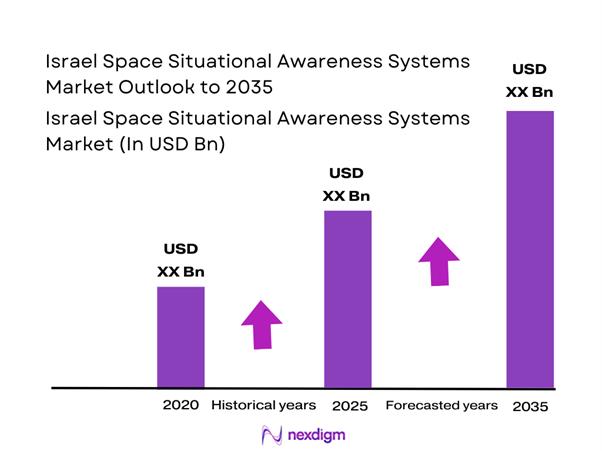
The Israel Space Situational Awareness Systems market is expected to advance steadily through 2035, driven by sustained defense investments and expanding satellite activity. Continued modernization of surveillance infrastructure will support operational resilience. Integration of AI and data analytics will redefine system capabilities. Collaboration between government and private stakeholders will further strengthen market development.
Major Players
- Israel Aerospace Industries
- Rafael Advanced Defense Systems
- Elbit Systems
- Orbit Communication Systems
- Gilat Satellite Networks
- Elta Systems
- ImageSat International
- SpacePharma
- UVision Air
- BlueBird Aero Systems
- Tadiran Telecommunications
- Aeronautics Group
- NSO Group Technologies
- Stellar Space Industries
- Israel Space Agency
Key Target Audience
- Ministry of Defense of Israel
- Israel Space Agency
- Defense procurement authorities
- Satellite operators and service providers
- Aerospace and defense manufacturers
- Space technology integrators
- Investments and venture capital firms
- Government regulatory and licensing bodies
Research Methodology
Step 1: Identification of Key Variables
Key market variables were identified through analysis of defense programs, satellite deployments, and SSA technology adoption trends. Focus was placed on operational scope, system types, and end-user applications.
Step 2: Market Analysis and Construction
Market structure was developed using segmentation by application, technology, and end use. Data consistency was ensured through cross-verification of operational deployments and program activity.
Step 3: Hypothesis Validation and Expert Consultation
Assumptions were validated through expert interactions across defense, aerospace, and satellite operations. Feedback refined market direction and technology adoption assessment.
Step 4: Research Synthesis and Final Output
Insights were consolidated into a structured framework ensuring alignment with industry realities, regulatory conditions, and technological evolution patterns.

- Executive Summary
- Research Methodology (Market Definitions and Israel SSA operational scope mapping, Platform and sensor-based segmentation framework, Bottom-up market sizing using program budgets and contract values, Revenue attribution by system type and deployment model, Primary validation through defense agencies and space operators interviews, Triangulation using satellite launch data and defense procurement disclosures)

- Definition and Scope
- Market evolution
- Usage and mission-critical applications
- Ecosystem structure
- Supply chain and system integration framework
- Regulatory and national security environment

- Growth Drivers
Rising national security focus on space domain awareness
Expansion of Israeli satellite constellations
Increasing space debris and collision risks
Growing reliance on space-based ISR capabilities
Government investments in space defense infrastructure
Advancements in radar and optical sensing technologies - Challenges
High development and deployment costs
Limited orbital slots and spectrum constraints
Data security and cyber vulnerability risks
Complex integration with legacy defense systems
Export restrictions and regulatory barriers
Limited skilled workforce in SSA analytics - Opportunities
Integration of AI and machine learning in SSA analytics
Growth of commercial satellite operations
International space situational data-sharing partnerships
Development of space traffic management systems
Expansion of dual-use SSA technologies
Emergence of space-based SSA platforms - Trends
Shift toward autonomous SSA systems
Increased use of AI-driven predictive analytics
Growing adoption of multi-sensor fusion platforms
Integration with missile defense and ISR systems
Rising public-private collaboration in space monitoring
Emphasis on real-time space domain awareness - Government Regulations
- SWOT Analysis
- Stakeholder and Ecosystem Analysis
- Porter’s Five Forces Analysis
- Competition Intensity and Ecosystem Mapping

- By Value, 2020–2025
- By Volume, 2020–2025
- By Active Systems, 2020–2025
- By Average Selling Price, 2020–2025

- By Fleet Type (in Value %)
Military satellites
Civil and commercial satellites
Dual-use space assets
Ground-based tracking assets - By Application (in Value %)
Space object tracking and cataloging
Collision avoidance and conjunction assessment
Space debris monitoring
Threat detection and space defense
Mission planning and orbit determination - By Technology Architecture (in Value %)
Radar-based SSA systems
Optical and electro-optical systems
Space-based SSA sensors
AI-enabled data fusion platforms
Hybrid SSA architectures - By End-Use Industry (in Value %)
Defense and national security
Civil space agencies
Commercial satellite operators
Research and academic institutions - By Connectivity Type (in Value %)
Ground-to-space communication systems
Inter-satellite data links
Secure military communication networks
Cloud-enabled SSA platforms - By Region (in Value %)
Northern Israel
Central Israel
Southern Israel

- Market structure and competitive positioning
Market share snapshot of major players - Cross Comparison Parameters (Technology maturity, System accuracy, Integration capability, Data processing capacity, Defense certification level, Pricing model, Local manufacturing presence, After-sales support)
- SWOT Analysis of Key Players
- Pricing and Commercial Model Benchmarking
- Detailed Profiles of Major Companies
Israel Aerospace Industries (IAI)
Rafael Advanced Defense Systems
Elbit Systems
Israel Space Agency
Tadiran Telecommunications
Aeronautics Group
UVision Air
NSO Group Technologies
Orbit Communication Systems
Gilat Satellite Networks
Elta Systems
ImageSat International
SpacePharma
Stellar Space Industries
BlueBird Aero Systems

- Demand and utilization drivers
- Procurement and tender dynamics
- Buying criteria and vendor selection
- Budget allocation and financing preferences
- Implementation barriers and risk factors
- Post-purchase service expectations

- By Value, 2026–2035
- By Volume, 2026–2035
- By Active Systems, 2026–2035
- By Average Selling Price, 2026–2035


 Request a Sample
 Ask for Customization
 Get a Quote
 Enquire Now