

 Download PDF
 Download PDF
Market Overview
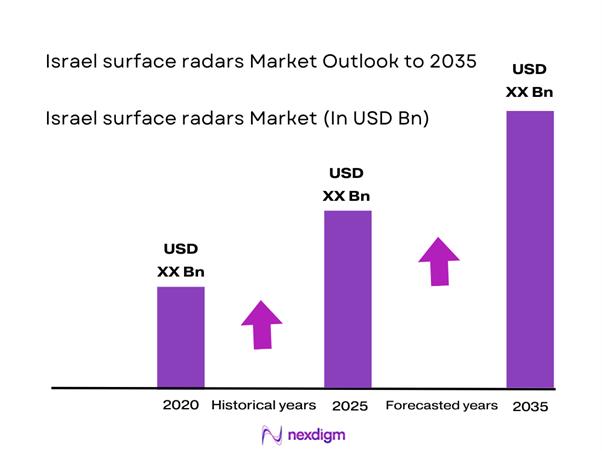
The Israel surface radars market current size stands at around USD ~ million, supported by sustained defense modernization and border surveillance investments. Deployment volumes increased steadily across 2024 and 2025, driven by air defense integration and ground surveillance requirements. The market reflects strong domestic manufacturing participation and consistent procurement cycles. Technology upgrades focus on multi-mission radar, electronic countermeasure resistance, and improved detection accuracy. Adoption remains concentrated within defense and homeland security frameworks. Demand momentum continues due to evolving threat environments and regional security priorities.
Market activity is concentrated around defense hubs and coastal surveillance zones where infrastructure density and operational readiness remain highest. Southern and northern operational belts drive continuous radar deployment due to border monitoring needs. Urban defense networks and strategic installations create sustained demand for advanced surface radar coverage. Strong government backing and integrated defense planning shape procurement consistency. Local manufacturing ecosystems enhance system integration and lifecycle management. Regulatory alignment supports long-term deployment stability across critical zones.
Market Segmentation
By Technology Architecture
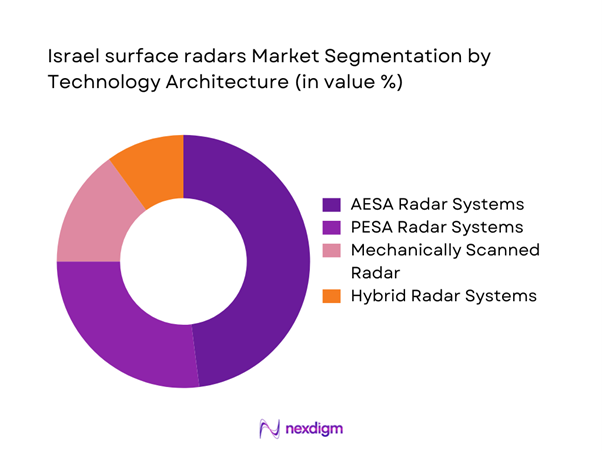
The technology architecture segment is dominated by active electronically scanned array systems due to superior detection accuracy, electronic counter-countermeasure capability, and rapid beam steering performance. AESA platforms are increasingly preferred for border surveillance and missile detection applications. Passive and mechanically scanned systems continue serving legacy installations and lower-cost deployments. Integration of digital signal processing enhances multi-target tracking efficiency. Technological upgrades are largely driven by interoperability requirements with national air defense systems. This segment remains innovation-driven with strong emphasis on resilience and adaptability.
By Application
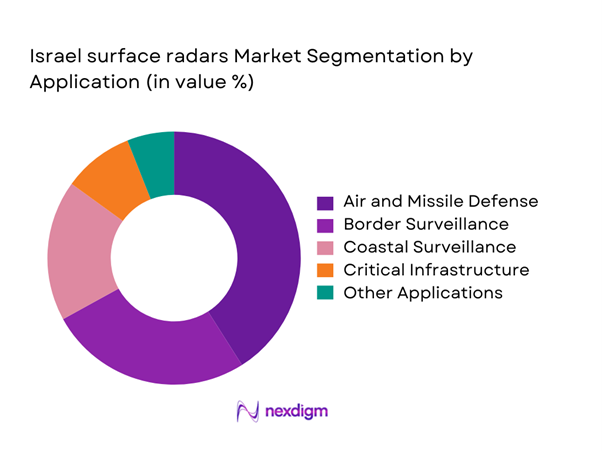
The application landscape is primarily led by air and missile defense usage, reflecting Israel’s strategic defense posture. Border surveillance represents a significant share due to continuous monitoring requirements and terrain complexity. Coastal and maritime surveillance maintains steady adoption to secure economic zones. Critical infrastructure protection contributes moderate demand through fixed installations. Emerging applications include counter-UAS and battlefield situational awareness systems. Application growth aligns closely with national security modernization programs and layered defense doctrines.
Competitive Landscape
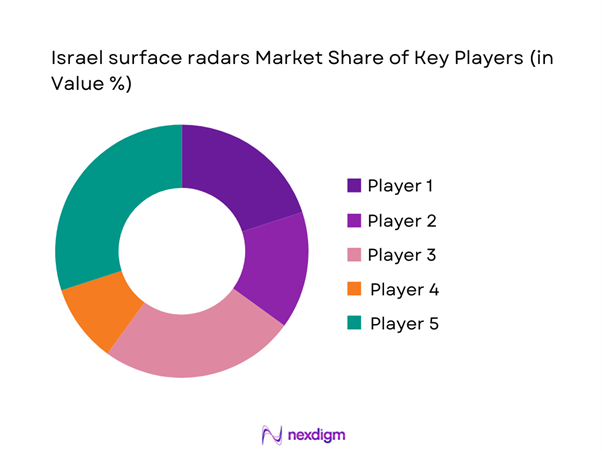
The competitive landscape is characterized by strong domestic manufacturing capabilities supported by advanced research ecosystems. Companies compete on radar performance, system integration depth, and long-term maintenance capabilities. Partnerships with defense agencies play a critical role in product deployment. Export-oriented product design also influences competitive positioning. Continuous innovation and system reliability remain key differentiators.
| Company Name | Establishment Year | Headquarters | Formulation Depth | Distribution Reach | Regulatory Readiness | Service Capability | Channel Strength | Pricing Flexibility |
| Israel Aerospace Industries | 1953 | Israel | ~ | ~ | ~ | ~ | ~ | ~ |
| Rafael Advanced Defense Systems | 1948 | Israel | ~ | ~ | ~ | ~ | ~ | ~ |
| Elbit Systems | 1966 | Israel | ~ | ~ | ~ | ~ | ~ | ~ |
| HENSOLDT | 2017 | Germany | ~ | ~ | ~ | ~ | ~ | ~ |
| Thales Group | 1893 | France | ~ | ~ | ~ | ~ | ~ | ~ |
Israel surface radars Market Analysis
Growth Drivers
Rising border security and threat detection requirements
Growing regional instability increases reliance on advanced radar surveillance systems across borders and sensitive zones. Defense agencies expanded radar deployments during 2024 to strengthen detection reliability. Advanced sensors improve real-time threat assessment accuracy significantly. Surveillance coverage expansion supports early warning and rapid response mechanisms. Radar upgrades enhance detection of low-altitude and slow-moving threats. Continuous monitoring strengthens national security resilience across critical regions. Investments prioritize multi-layer detection capabilities across operational theaters. Integrated radar systems support coordinated defense strategies effectively. Surveillance intensity continues increasing due to evolving threat complexity. This driver remains central to sustained procurement momentum.
Increased defense spending and radar modernization programs
Defense modernization programs accelerated radar upgrades during 2024 and 2025. Budget allocations prioritized sensor modernization over legacy system maintenance. Modern radar platforms enable improved tracking and data fusion capabilities. Multi-mission systems replaced older single-purpose radars. Defense modernization aligns with long-term national security strategies. Procurement cycles emphasize lifecycle performance and system reliability. Integration with air defense networks drives sustained demand. Technology refresh cycles shorten due to evolving electronic warfare threats. Government initiatives promote domestic system development. Modernization remains a long-term structural driver.
Challenges
High development and integration costs
Advanced radar systems require complex engineering and extensive testing processes. Development costs remain elevated due to sophisticated hardware requirements. Integration with command networks adds further cost complexity. Customization needs increase deployment expenses significantly. Budget limitations restrict procurement volume despite strategic importance. High system complexity raises maintenance expenditures. Lifecycle support requires skilled technical resources. Cost pressures affect procurement timelines and system scaling. Financial planning becomes critical for long-term deployment. Cost management remains a persistent operational challenge.
Long procurement and approval cycles
Procurement cycles involve extensive testing and regulatory approvals. Multi-stage evaluation delays system deployment timelines. Budgetary approvals extend acquisition durations significantly. Inter-agency coordination adds procedural complexity. Custom specifications lengthen tender processes. Technology validation requirements increase approval timelines. Contract negotiations involve multiple compliance checks. Deployment delays impact operational readiness planning. Long cycles reduce flexibility in technology adoption. Procurement inefficiencies remain a structural challenge.
Opportunities
Upgrades of legacy radar systems
Legacy radar installations require modernization to meet current threat profiles. Upgrade programs focus on digital processing and sensor fusion. Retrofitting offers cost-effective performance improvements. Modernization extends operational life of existing infrastructure. Integration with new command systems enhances effectiveness. Upgrade demand remains consistent across defense sectors. Technology refresh programs support continuous revenue streams. System interoperability upgrades improve multi-domain coordination. Incremental modernization reduces replacement costs. Upgrade initiatives represent strong near-term opportunities.
Integration with AI and advanced analytics
Artificial intelligence enhances target detection and classification accuracy. AI integration improves predictive threat assessment capabilities. Automated data processing reduces operator workload significantly. Advanced analytics enable faster decision-making cycles. AI-enabled radars improve situational awareness efficiency. Integration supports real-time threat prioritization. Software-driven upgrades extend system relevance. AI adoption improves operational responsiveness. Analytics improve mission planning accuracy. This opportunity drives next-generation radar development.
Future Outlook
The Israel surface radars market is expected to maintain steady expansion through 2035 driven by modernization initiatives and evolving defense needs. Increased adoption of intelligent radar systems will enhance surveillance efficiency. Integration with digital defense ecosystems will continue strengthening system capabilities. Demand will remain stable across defense and homeland security applications. Long-term investments will focus on advanced detection technologies.
Major Players
- Israel Aerospace Industries
- Rafael Advanced Defense Systems
- Elbit Systems
- HENSOLDT
- Thales Group
- Lockheed Martin
- Raytheon Technologies
- Leonardo
- Saab AB
- Northrop Grumman
- BAE Systems
- ASELSAN
- L3Harris Technologies
- Terma Group
- Indra Sistemas
Key Target Audience
- Defense ministries and armed forces
- Homeland security agencies
- Border security authorities
- Naval and coastal surveillance agencies
- Air defense command units
- Infrastructure protection agencies
- Investments and venture capital firms
- Government and regulatory bodies including Ministry of Defense
Research Methodology
Step 1: Identification of Key Variables
Market scope, radar classifications, operational applications, and deployment environments were defined. Technology segmentation and end-use mapping were established. Data parameters were standardized to ensure consistency.
Step 2: Market Analysis and Construction
Demand indicators, deployment trends, and technology adoption patterns were analyzed. Market structure was constructed using operational deployment data and defense procurement cycles.
Step 3: Hypothesis Validation and Expert Consultation
Industry specialists, defense analysts, and system integrators validated assumptions. Feedback was incorporated to refine market behavior and trend interpretation.
Step 4: Research Synthesis and Final Output
All findings were consolidated, cross-verified, and structured into analytical insights. Outputs were aligned with industry dynamics and strategic outlook considerations.

- Executive Summary
- Research Methodology (Market Definitions and operational radar scope mapping, platform and mission-based segmentation logic for surface radar systems, bottom-up market sizing using delivery and deployment data, revenue attribution by system type and contract value, primary interviews with Israeli defense OEMs and procurement officials, triangulation using defense budgets and radar installation databases, assumptions based on threat perception and modernization cycles)

- Definition and scope
- Market evolution and modernization timeline
- Operational usage across defense and civil domains
- Ecosystem structure and OEM–integrator relationships
- Supply chain and localization dynamics
- Regulatory and defense procurement framework

- Growth Drivers
Rising border security and threat detection requirements
Increased defense spending and radar modernization programs
Growing demand for integrated air and missile defense systems
Technological advancements in AESA and digital beamforming
Expansion of coastal and maritime surveillance infrastructure
Export-oriented development of radar technologies - Challenges
High development and integration costs
Long procurement and approval cycles
Dependence on government defense budgets
Export control and regulatory constraints
System interoperability challenges
Rapid technology obsolescence - Opportunities
Upgrades of legacy radar systems
Integration with AI and advanced analytics
Growth in counter-UAS and low-altitude detection systems
Export opportunities to allied nations
Multi-domain radar deployment programs
Dual-use radar applications - Trends
Shift toward software-defined radar architectures
Increased adoption of multi-mission radar platforms
Miniaturization and mobility enhancements
Integration with missile defense ecosystems
Focus on electronic warfare resilience
Rising use of predictive maintenance analytics - Government Regulations
- SWOT Analysis
- Stakeholder and Ecosystem Analysis
- Porter’s Five Forces Analysis
- Competition Intensity and Ecosystem Mapping

- By Value, 2020–2025
- By Volume, 2020–2025
- By Installed Base, 2020–2025
- By Average Selling Price, 2020–2025

- By Fleet Type (in Value %)
Ground-based fixed radar systems
Mobile and transportable radar systems
Naval surface surveillance radars
Coastal and border surveillance radars - By Application (in Value %)
Air and missile defense
Border and perimeter surveillance
Coastal and maritime monitoring
Ground movement detection
Critical infrastructure protection - By Technology Architecture (in Value %)
Active electronically scanned array (AESA)
Passive electronically scanned array (PESA)
Conventional mechanically scanned radar
Multi-function radar systems - By End-Use Industry (in Value %)
Defense and armed forces
Homeland security and border control
Aviation and air traffic management
Maritime authorities
Critical infrastructure operators - By Connectivity Type (in Value %)
Standalone radar systems
Networked and integrated C4ISR systems
AI-enabled sensor fusion platforms - By Region (in Value %)
Northern Israel
Central Israel
Southern Israel
Coastal regions

- Market structure and competitive positioning
Market share snapshot of major players - Cross Comparison Parameters (technology maturity, system range capability, integration flexibility, pricing strategy, after-sales support, domestic manufacturing share, export presence, R&D intensity)
- SWOT Analysis of Key Players
- Pricing and Commercial Model Benchmarking
- Detailed Profiles of Major Companies
Israel Aerospace Industries (ELTA Systems)
Rafael Advanced Defense Systems
Elbit Systems
HENSOLDT
Thales Group
Lockheed Martin
Raytheon Technologies
Leonardo
Saab AB
Northrop Grumman
BAE Systems
ASELSAN
L3Harris Technologies
Terma Group
Indra Sistemas

- Demand and utilization drivers
- Procurement and tender dynamics
- Buying criteria and vendor selection
- Budget allocation and financing preferences
- Implementation barriers and risk factors
- Post-purchase service expectations

- By Value, 2026–2035
- By Volume, 2026–2035
- By Installed Base, 2026–2035
- By Average Selling Price, 2026–2035


 Request a Sample
 Ask for Customization
 Get a Quote
 Enquire Now