

 Download PDF
 Download PDF
Market Overview
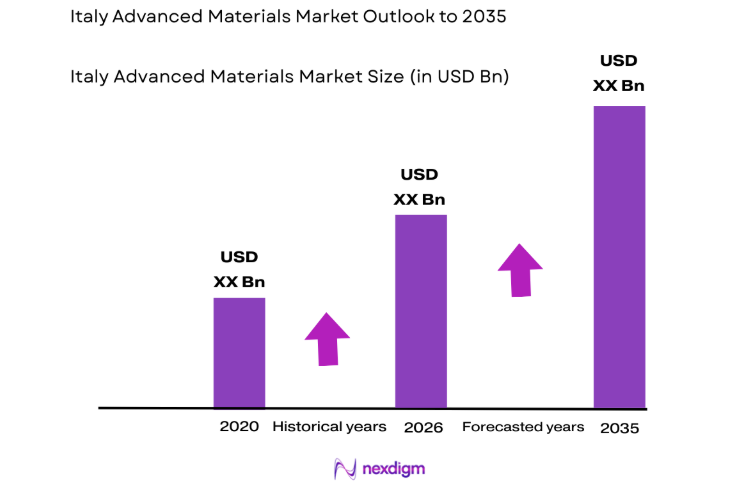
The Italy Advanced Materials market is projected to reach USD ~ billion in 2024, driven by the growing demand for high-performance materials across various industries such as automotive, aerospace, construction, and electronics. Factors such as increased manufacturing automation, the push for sustainability, and innovations in material science are contributing to this market growth. Moreover, advancements in composites, nanomaterials, and lightweight alloys are expanding their application across industries, further propelling market development.
The dominant cities driving the growth of the Italy Advanced Materials market include Milan, Turin, and Bologna. Milan, as the economic and industrial hub, has a high concentration of manufacturers adopting advanced materials for innovation and sustainability. Turin, known for its automotive sector, is integrating advanced materials into production to reduce vehicle weight and enhance performance. Bologna, with its focus on machinery and technology, is also investing heavily in advanced materials for better manufacturing processes, positioning itself as a major player in the market.
Market Segmentation
By Product Type
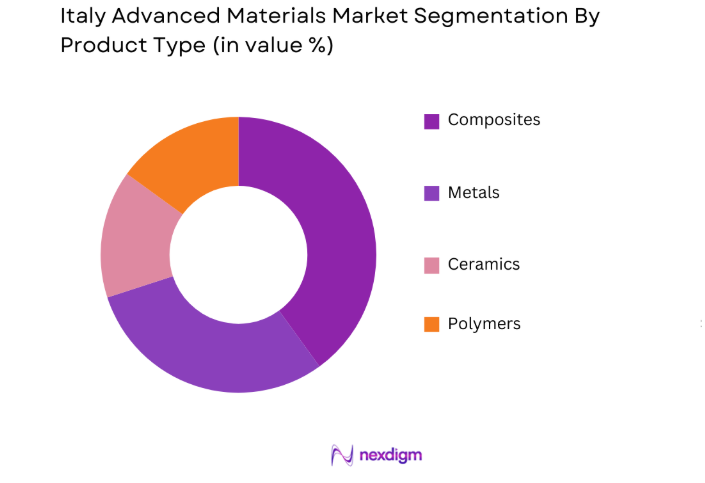
The Italy Advanced Materials market is segmented by product type into composites, metals, ceramics, and polymers. Recently, composites have dominated the market share due to their lightweight properties, high strength, and versatility in multiple industries, especially in aerospace and automotive. The increasing demand for fuel-efficient vehicles and the rise of electric vehicle production are driving the need for lightweight, durable materials such as carbon fiber and fiber-reinforced plastics. The aerospace sector is also a major adopter of advanced composites for manufacturing aircraft parts that require both strength and reduced weight. As these materials continue to evolve, the composites segment is expected to retain its dominance in the market.
By End-User Industry
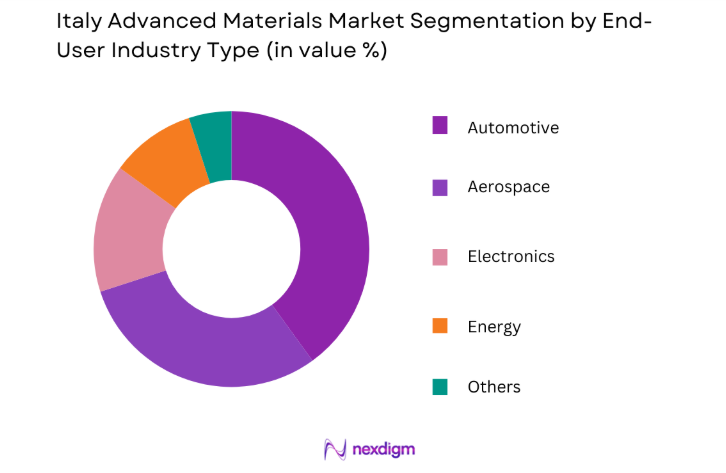
The Italy Advanced Materials market is segmented by end-user industry into automotive, aerospace, electronics, energy, and others. The automotive industry holds a dominant market share due to the rising use of advanced materials in vehicle manufacturing. The adoption of lightweight materials such as composites and alloys is helping automotive manufacturers reduce vehicle weight, enhance fuel efficiency, and meet environmental standards. Furthermore, the automotive industry’s shift toward electric vehicles, which require specialized advanced materials for batteries, powertrains, and body structures, is further driving the demand for advanced materials. The increasing emphasis on vehicle performance and sustainability continues to solidify the automotive sector’s leadership in the market.
Competitive Landscape
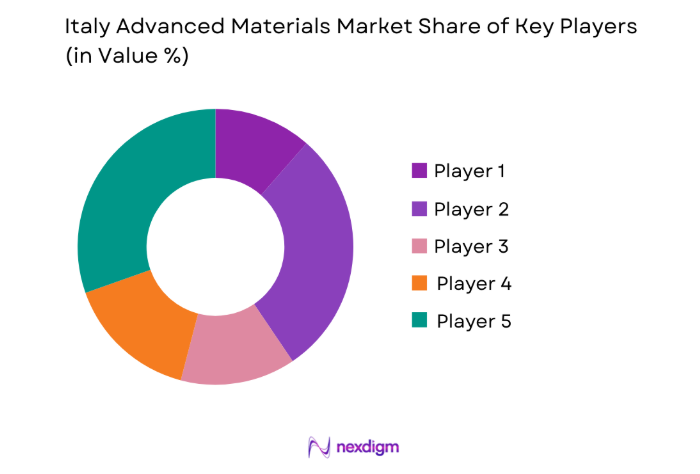
The Italy Advanced Materials market is competitive, with several global and regional players contributing to the market’s growth. Companies are focusing on innovation, especially in materials that offer sustainability, high performance, and advanced manufacturing techniques. Many of these companies are working closely with research institutions to develop new materials for automotive, aerospace, and energy applications. The growing focus on eco-friendly materials, coupled with increased investments in R&D, is driving innovation in the sector. Additionally, strategic partnerships and mergers and acquisitions are common as companies look to expand their capabilities and enter new markets. The presence of both established multinational corporations and local innovators is creating a dynamic competitive landscape in the market.
| Company Name | Establishment Year | Headquarters | Technology Focus | Market Reach | Key Products | Revenue | Additional Parameter |
| 3M | 1902 | St. Paul, USA | ~ | ~ | ~ | ~ | ~ |
| Dow Inc. | 1897 | Midland, USA | ~ | ~ | ~ | ~ | ~ |
| Hexcel | 1948 | Stamford, USA | ~ | ~ | ~ | ~ | ~ |
| Covestro | 2015 | Leverkusen, Germany | ~ | ~ | ~ | ~ | ~ |
| Carpenter Technology | 1889 | Wyomissing, USA | ~ | ~ | ~ | ~ | ~ |
Italy Advanced Materials Market Analysis
Growth Drivers
Technological Advancements in Material Science
Technological advancements in material science are a significant growth driver for the Italy Advanced Materials market. Over the past decade, innovations in composites, nanomaterials, and advanced polymers have enabled industries such as automotive, aerospace, and construction to achieve higher performance standards and reduce weight. The use of carbon fiber composites, for example, has revolutionized the aerospace and automotive industries by providing a lightweight alternative to traditional metals while maintaining strength and durability. The emergence of nanotechnology in materials science is further pushing the boundaries of material properties, such as enhanced electrical conductivity, corrosion resistance, and heat resistance. These advances are not only improving product performance but also enabling manufacturers to meet strict environmental regulations regarding energy efficiency and emissions. As research continues to uncover new materials with unique properties, the demand for advanced materials will continue to grow, driving further innovation in the market.
Demand for Sustainable and Lightweight Materials
The growing focus on sustainability and energy efficiency is another key driver for the Italy Advanced Materials market. Industries such as automotive and construction are increasingly looking for materials that reduce carbon footprints while offering improved performance. Lightweight materials, such as carbon fiber composites and advanced polymers, are critical in reducing energy consumption, especially in the automotive sector, where reducing vehicle weight improves fuel efficiency and lowers emissions. In the construction industry, sustainable materials like eco-friendly composites and recycled materials are gaining popularity due to their environmental benefits. Additionally, the adoption of renewable energy technologies, such as wind turbines and solar panels, is driving the demand for advanced materials with properties that enhance energy generation and storage. As Italy continues to prioritize sustainability and adhere to global climate targets, the demand for advanced materials that promote energy efficiency and sustainability will continue to rise, fueling market growth.
Market Challenges
High Production Costs and Limited Availability
One of the major challenges facing the Italy Advanced Materials market is the high production costs associated with manufacturing advanced materials. Advanced materials, such as carbon fiber composites, high-strength alloys, and nanomaterials, often require complex and expensive production processes. The high costs of raw materials, labor, and equipment needed to produce these materials limit their affordability, particularly for smaller manufacturers. This is a barrier for widespread adoption in cost-sensitive industries such as construction and consumer goods. The limited availability of these materials also restricts their use in large-scale applications, as suppliers struggle to meet the growing demand. Overcoming these challenges will require innovations in manufacturing processes, economies of scale, and new technologies that can reduce production costs and improve the availability of advanced materials, particularly for industries that rely on high-performance materials but have constrained budgets.
Integration with Existing Infrastructure
Another significant challenge in the Italy Advanced Materials market is the difficulty of integrating advanced materials into existing industrial infrastructure. Many industries, particularly in traditional sectors such as construction and manufacturing, still rely on legacy materials that were not designed for integration with advanced alternatives. Upgrading these systems to incorporate advanced materials such as composites or smart materials can be complex and expensive, particularly in industries where infrastructure is deeply rooted. In addition, the lack of standardization across advanced materials and manufacturing processes makes integration difficult, especially for small and medium-sized enterprises (SMEs) that lack the resources to adopt these new materials. To overcome this challenge, the development of standardized materials and manufacturing techniques, as well as targeted government support for infrastructure upgrades, will be crucial for enabling industries to adopt advanced materials on a broader scale.
Opportunities
Growth in the Automotive Industry and Electric Vehicles
The growth in the automotive industry, particularly with the shift toward electric vehicles (EVs), presents a significant opportunity for the Italy Advanced Materials market. The increasing demand for EVs and the push for more fuel-efficient vehicles is driving the adoption of advanced materials that offer lightweight and high-strength properties. Carbon fiber composites, advanced polymers, and lightweight alloys are increasingly being used in the production of EVs to reduce weight and improve battery efficiency, which directly impacts vehicle range. Additionally, the shift toward electric mobility in Italy, supported by government incentives and environmental regulations, presents opportunities for advanced material manufacturers to supply the automotive industry with materials that meet both performance and sustainability standards. As the automotive industry continues to prioritize eco-friendly solutions, the demand for advanced materials in vehicle production will continue to grow, providing a key growth opportunity for the market.
Expansion in Aerospace and Renewable Energy Sectors
The expansion of the aerospace and renewable energy sectors presents another significant opportunity for the Italy Advanced Materials market. In aerospace, the demand for lightweight, high-strength materials is increasing as manufacturers strive to build more fuel-efficient aircraft. Composites, such as carbon fiber and fiber-reinforced plastics, are critical to achieving these performance goals. Additionally, Italy’s aerospace industry is investing in advanced materials to improve aircraft performance, reduce emissions, and enhance passenger safety. In the renewable energy sector, advanced materials are essential for improving the efficiency and durability of wind turbines, solar panels, and energy storage systems. The push for cleaner energy and Italy’s commitment to sustainable development are driving demand for advanced materials that enhance energy production and storage. As both the aerospace and renewable energy sectors continue to expand, the demand for advanced materials in these industries will create significant growth opportunities for the market.
Future Outlook
The future outlook for the Italy Advanced Materials market is positive, with continued growth expected due to technological advancements, increased demand for sustainable and high-performance materials, and a focus on digital transformation in manufacturing. Industries such as automotive, aerospace, and energy will remain key drivers of market expansion, with the adoption of advanced materials playing a crucial role in enhancing product performance and reducing environmental impact. Additionally, Italy’s ongoing investment in research and development, along with supportive government policies, will foster innovation in the advanced materials sector, ensuring sustained market growth over the coming years.
Major Players
- 3M
- Dow Inc.
- Hexcel
- Covestro
- Carpenter Technology
- BASF
- Huntsman Corporation
- DuPont
- Arkema
- Mitsubishi Chemical
- Toray Industries
- Solvay
- Owens Corning
- PPG Industries
- SGL Carbon
Key Target Audience
- Investments and venture capitalist firms
- Government and regulatory bodies
- Aerospace manufacturers
- Automotive manufacturers
- Energy and utility companies
- Construction industry leaders
- Industrial design and development companies
Research Methodology
Step 1: Identification of Key Variables
Identification of key market drivers, challenges, and technological trends affecting the Italy Advanced Materials market, including government policies, healthcare needs, and digital healthcare advancements.
Step 2: Market Analysis and Construction
In-depth analysis of market trends, segmentation, and competition to create an accurate representation of the market dynamics.
Step 3: Hypothesis Validation and Expert Consultation
Consultations with industry experts, key stakeholders, and academic professionals to validate assumptions and refine the market analysis.
Step 4: Research Synthesis and Final Output
The final findings are synthesized into a report that provides actionable insights, strategic recommendations, and forecasts for stakeholders in the Italy Advanced Materials market.

- Executive Summary
- Research Methodology (Definitions, Scope, Industry Assumptions, Market Sizing Approach, Primary & Secondary Research Framework, Data Collection & Verification Protocol, Analytic Models & Forecast Methodology, Limitations & Research Validity Checks)

- Market Definition and Scope
- Value Chain & Stakeholder Ecosystem
- Regulatory / Certification Landscape
- Sector Dynamics Affecting Demand

- Growth Drivers
Increasing Demand for Lightweight Materials in Aerospace
Technological Advancements in Material Science
Growing Focus on Sustainable Construction - Market Challenges
High Costs of Advanced Materials
Regulatory Barriers and Compliance Issues
Integration Challenges with Traditional Materials - Market Opportunities
Rising Investment in Green Technologies
Adoption of Advanced Materials in Electric Vehicles
Growing Demand for Smart and Functional Materials - Trends
Sustainability in Material Production
Advances in Nanotechnology for Materials - Government Regulations
Environmental Regulations on Material Production
Safety Standards for Aerospace and Automotive Materials
Government Funding for Research in Advanced Materials - SWOT Analysis
- Porter’s Five Forces

- By Market Value, 2020-2025
- By Installed Units, 2020-2025
- By Average System Price, 2020-2025
- By System Complexity Tier, 2020-2025

- By System Type (In Value%)
Composites
Metals and Alloys
Polymers
Ceramics
Nanomaterials - By Platform Type (In Value%)
Natural Materials
Synthetic Materials
Recycled Materials
Bio-based Materials - By Fitment Type (In Value%)
On-Premise Solutions
Cloud Solutions
Hybrid Solutions
Integrated Solutions - By End User Segment (In Value%)
Aerospace
Automotive
Construction
Electronics

- Market Share Analysis
- Cross Comparison Parameters (System Type, Platform Type, End User Segment, Fitment Type, Price Sensitivity, Material Durability, Sustainability Trends)
- SWOT Analysis of Key Competitors
- Pricing & Procurement Analysis
- Key Players
BASF
DuPont
3M
Evonik Industries
ArcelorMittal
Saint-Gobain
Huntsman Corporation
SABIC
Solvay
ExxonMobil
Dow Chemical
Alcoa
Hexcel Corporation
Parker Hannifin
LG Chem

- Demand for Advanced Materials in Aerospace
- Increased Adoption in Automotive Manufacturing
- Growth of Green Building Materials
- Technological Advancements in Electronics

- Forecast Market Value, 2026-2035
- Forecast Installed Units, 2026-2035
- Price Forecast by System Tier, 2026-2035
- Future Demand by Platform, 2026-2035


 Request a Sample
 Ask for Customization
 Get a Quote
 Enquire Now