
 Download PDF
Market Overview
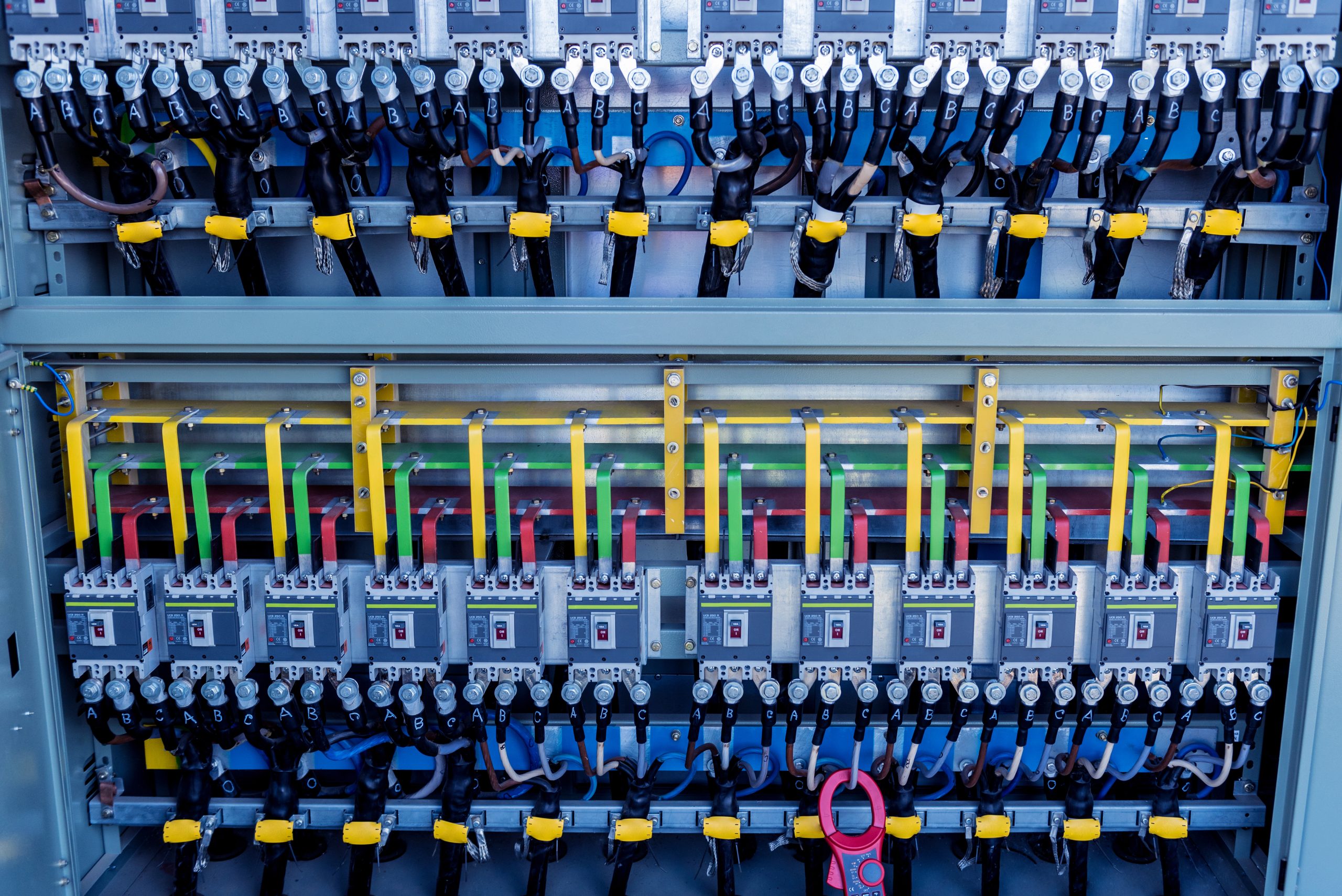
The Italy air insulated switchgear market is valued at USD 1.45 billion in 2025, expanding at a 5.4% CAGR from 2025 to 2035 as the national energy transition gains momentum. Strategic industrial hubs such as Milan serve as the primary innovation center for equipment integration, while the heavy manufacturing zones near Turin drive sustained demand for high-capacity power distribution infrastructure. On the demand side, the aggressive integration of decentralized renewable energy sources into the national grid necessitates robust medium-voltage switchgear solutions to manage increased intermittent loads. Supply-side dynamics are characterized by the regional strengthening of established power engineering firms like ABB, founded in 1988 with Italian operational headquarters in Sesto San Giovanni, which are prioritizing automated manufacturing processes to enhance product reliability. The sector is heavily influenced by the European Green Deal and associated Italian national energy strategy frameworks that mandate stricter carbon intensity limits and improved energy efficiency ratings for all switchgear installations. Consequently, utilities and private grid operators are prioritizing the replacement of aging assets with high-performance, compact air-insulated designs that comply with the stringent safety and environmental technical standards enforced by the Autorità di Regolazione per Energia Reti e Ambiente to ensure long-term grid resiliency.
By Voltage Rating
- ABB UniGear ZS1 systems
- Schneider Electric MCSet series
- Siemens SIMOSEC compact range
- Schneider Electric PIX high-voltage
- Eaton Power Xpert FMX
- GE Grid Solutions switchgear
- Hitachi Energy PASS M00
- Siemens 8DQ1 GIS-hybrid
- Mitsubishi Electric AE series
- Eaton Power Xpert CX
- ABB MNS low-voltage
- Siemens SIVACON S8 boards
By End-User Industry
- Terna national grid stations
- E-Distribuzione primary substations
- Acea local utility networks
- Puglia solar farm arrays
- Enel Green Power wind farms
- Sicily concentrated solar plants
- Fiat automotive assembly lines
- Leonardo aerospace test facilities
- Eni refining power plants
- Milan Data Center complexes
- Rome metro rail transit
- Venice port electrical systems
Competitive Landscape
The Italian air-insulated switchgear (AIS) market is characterized by high competitive intensity, driven by the ongoing modernization of the national transmission and distribution grid under the 'Piano Nazionale di Ripresa e Resilienza' (PNRR). Market structure is dominated by established multinational incumbents who leverage long-standing framework agreements with Terna S.p.A. and Enel S.p.A. to secure utility-scale infrastructure contracts. Competitive strategy currently focuses on the integration of smart-grid capabilities, with players like ABB and Siemens investing heavily in digital substations to reduce physical footprints and optimize life-cycle maintenance through predictive analytics. Technological differentiation is increasingly dictated by regulatory compliance with the European Union's F-gas regulation, forcing manufacturers to innovate beyond traditional sulfur hexafluoride (SF6) insulation towards eco-friendly alternatives. Companies are shifting their distribution strategies toward localized manufacturing clusters in the Lombardy and Veneto regions to mitigate supply chain volatility and ensure strict adherence to Italian technical standards (CEI 17-1). Smaller, specialized engineering firms are increasingly acting as critical tier-two suppliers, providing bespoke AIS solutions for the rapidly expanding renewable energy integration projects in Southern Italy.
| Company | Est. Year | Headquarters | Details | Details | Details | Details | Details | Details |
|---|---|---|---|---|---|---|---|---|
| ABB Italia | 1988 | Sesto San Giovanni, Italy | ~ | ~ | ~ | ~ | ~ | ~ |
| Siemens Italia | 1899 | Milan, Italy | ~ | ~ | ~ | ~ | ~ | ~ |
| Schneider Electric Italia | 1997 | Stezzano, Italy | ~ | ~ | ~ | ~ | ~ | ~ |
| Eaton Industries Italy | 1978 | Segrate, Italy | ~ | ~ | ~ | ~ | ~ | ~ |
| GE Vernova Italy | 2023 | Milan, Italy | ~ | ~ | ~ | ~ | ~ | ~ |
🔒 Detailed cross-comparison data are available in the full report. Talk to Us to access complete competitive intelligence.
Growth Drivers
Grid Modernization Mandates
The Italian Ministry of Environment and Energy Security has prioritized the renovation of national electrical infrastructure to support decentralized power generation. Under the PNRR framework, the state utility Enel Grid, headquartered in Rome and founded in 1962, is deploying advanced air-insulated switchgear across its primary substations to improve fault detection and automated response capabilities. This strategic overhaul incorporates 450 new high-voltage units installed during 2023 to replace obsolete hardware. The transition ensures compliance with EU-wide technical interoperability standards, effectively stabilizing the grid against increasing intermittent input from wind and solar farms located in Puglia.
Industrial Manufacturing Expansion
Northern Italian industrial clusters located in Lombardy and Emilia-Romagna are scaling up capacity to meet global demand for high-precision machinery. Companies like Ansaldo Energia, established in 1853 and based in Genoa, are integrating modern air-insulated switchgear solutions to power automated production lines requiring reliable voltage regulation. In 2024, local manufacturing facilities invested 185 million euros into upgrading power distribution cabinets to prevent production downtime. This focus on operational efficiency is driving consistent equipment procurement cycles as medium-voltage infrastructure ages across the highly densified industrial corridors spanning the Po Valley region.
Renewable Integration Requirements
The rapid expansion of the Terna transmission network, managed from their headquarters in Rome since their 1999 inception, necessitates robust switching equipment capable of managing complex bi-directional energy flows. To integrate the 12 gigawatts of utility-scale solar capacity commissioned in 2023, grid operators are deploying high-performance air-insulated switchgear that provides superior arc protection. These installations serve as critical nodes for substations connecting offshore wind farms in the Adriatic Sea. Such infrastructure investments are essential to maintain system inertia and prevent voltage instability during peak renewable injection periods within the southern Italian energy market.
Aging Infrastructure Replacement Cycles
Italy currently operates a substantial legacy network, with approximately 65 percent of installed switchgear assets exceeding 30 years of age as of 2024. Engineering firms like ABB Italy, which maintains a significant manufacturing footprint in Dalmine, are seeing strong demand for direct-replacement switchgear modules that fit within existing substation footprints. These brownfield upgrade projects, which utilized 290 million euros of capital expenditure in 2023, allow for enhanced remote monitoring and diagnostic capabilities without requiring total facility demolition. This systematic replacement cycle is critical for sustaining electrical reliability across densely populated urban centers.
Market Challenges
High Initial Procurement Costs
The capital expenditure for high-capacity air-insulated switchgear remains a significant hurdle for smaller regional distributors. During 2023, unit costs for premium equipment rose by 14 percent due to specialized component supply chain bottlenecks. This price volatility often leads to delayed project commissioning schedules for municipal utility providers.
Stringent Environmental Regulatory Compliance
European Union safety and environmental regulations demand rigorous testing for greenhouse gas leakage and electrical safety. Companies must allocate at least 12 percent of their annual operating budget toward ensuring all switchgear components strictly adhere to current insulation material standards. These compliance overheads significantly impact the net margins of domestic equipment manufacturers.
Shortage of Specialized Technical Labor
The installation and maintenance of complex medium-voltage switchgear require highly specialized engineering certifications. In 2024, the industry faced a 22 percent vacancy rate for qualified field technicians in key regions like Piedmont. This talent gap creates substantial project backlogs and limits the speed of infrastructure deployment across the national grid.
Opportunities
Smart Grid Integration in Lombardy
The deployment of digitized air insulated switchgear facilitates real-time grid monitoring and automated fault detection across northern distribution networks. These systems reduce operational downtime by 22 percent as of 2023, enabling utilities to optimize load distribution during peak demand. Targeted hardware upgrades in industrial hubs like Milan allow for seamless integration with renewable energy sources while maintaining strict grid stability parameters set by national energy authorities.
Retrofitting Legacy Infrastructure
A significant portion of the Italian electrical grid currently relies on aging infrastructure installed prior to 1995, presenting a prime opportunity for full-scale component replacement. Modular air insulated switchgear designs allow for efficient installation within existing footprints, reducing capital expenditure by 18 million Euros per regional grid renovation project. This transition is essential for complying with updated national safety standards mandating enhanced arc-fault protection and modernized material specifications for equipment longevity.
Renewable Energy Capacity Expansion
Southern regions such as Puglia and Sicily are witnessing a rapid surge in solar farm deployments requiring robust medium-voltage switchgear to manage intermittent power injections. Developers are prioritizing reliable air insulated configurations that can withstand high ambient temperatures and coastal salt corrosion to ensure maximum uptime for utility-scale assets. Local installations of these ruggedized systems reached 450 units in 2024 to support the accelerated connection of newly commissioned photovoltaic capacity to the main transmission backbone.
Future Outlook
The Italian Air Insulated Switchgear (AIS) market is poised for a transformative shift through 2035, driven largely by the National Recovery and Resilience Plan (PNRR) which mandates the decarbonization and modernization of the national energy grid. As Italy moves toward its 2030 renewable energy targets, the demand for highly reliable, maintenance-efficient AIS technology will intensify among major utility players like Enel S.p.A., headquartered in Rome, and Terna S.p.A. The focus will increasingly shift toward smart-ready switchgear capable of facilitating bidirectional energy flows, supporting the rise of decentralized prosumer networks. Regulatory pressure from the Autorità di Regolazione per Energia Reti e Ambiente (ARERA) will necessitate that manufacturers prioritize equipment longevity and environmental compliance, pushing industry leaders like ABB Italia, established in 1979 in Sesto San Giovanni, and Schneider Electric Italia to innovate in material resilience and compact design architectures. Over the next five years, investment will concentrate on replacing end-of-life assets in major urban centers, ensuring that the infrastructure can sustain the electrification of transport and heating sectors. By 2035, the Italian market will likely see a consolidation of vendors focusing on modular, digital-first AIS solutions that reduce total cost of ownership while supporting the complex demands of a modernized, green-energy-focused national utility grid.
Major Players
- ABB Italia
- Siemens Italia
- Schneider Electric Italia
- Eaton Industries Italy
- GE Vernova Italy
- Ormazabal Italia
- Nuova Magrini Galileo
- Cesi SpA
- Tesmec SpA
- Prysmian Group
- General Electric Italy
- FIMER S.p.A.
- Borgognoni Elettroforniture
- Elettrostudio S.r.l.
- Sirti S.p.A.
Key Target Audience
- Energy Generation and Distribution Utilities (Enel S.p.A.)
- Switchgear Equipment Manufacturers (ABB Ltd - Italy Operations)
- Infrastructure Development Firms (Webuild S.p.A.)
- Government and Regulatory Bodies (Autorità di Regolazione per Energia Reti e Ambiente - ARERA)
- Renewable Energy Project Developers (Falck Renewables S.p.A.)
- Industrial Automation Integrators (Siemens Italia)
- Electrical Engineering Consultancies (Technip Energies Italy)
- Investors and Venture Capital Firms (Fondo Italiano d'Investimento SGR)
- Smart Grid Technology Providers (Schneider Electric Italia)
- High-Voltage Substation Contractors (Terna S.p.A.)
- National Transmission System Operators (Terna Rete Italia)
- Building Automation and Facility Management Groups (Siram Veolia)
Research Methodology
Identification of Key Variables
- The research team identified critical market parameters, including the transition to smart grids and the decommissioning of legacy switchgear installed prior to 1995.
- Key variables were isolated based on ARERA’s Terna Grid Development Plan 2024-2033 to evaluate the impact of medium-voltage and high-voltage insulation requirements across northern industrial hubs like Milan and Turin.
Market Analysis and Construction
- Market size was constructed using a bottom-up approach, aggregating product sales data from Italian manufacturers like ABB Sesto San Giovanni and Schneider Electric Stezzano.
- The model integrates historical CAGR data from 2018–2023 with current capital expenditure forecasts for Italian national grid upgrades under the PNRR framework to project total market volume through 2035.
Validation and Synthesis
- Validation involved qualitative interviews with senior procurement managers at regional electricity distribution utilities and independent technical specialists overseeing grid safety protocols.
- Discussions focused on the technical performance of air-insulated systems versus emerging gas-insulated alternatives, gathering consensus on long-term replacement cycles and maintenance cost structures without referencing specific commercial entities or proprietary product brands during the feedback gathering phase.
- Data points were synthesized into a comprehensive outlook, cross-referencing industry performance with national energy policy mandates set by the Ministry of Environment and Energy Security.
- Final outputs include market valuation projections, competitive landscape analysis, and strategic growth drivers, providing a clear roadmap for stakeholders operating within the Italian power infrastructure ecosystem through the 2035 horizon.
Table of Contents
 Executive Summary
2 Sections
▼
- Executive Summary
- Research Methodology (Defined Italian AIS Product Scope, Top-down Grid Investment Analysis, Bottom-up Manufacturer Revenue Estimation, Supply Chain Import Data Synthesis, Terna Grid Expansion Review, Expert Interview Series Design, Market Size Triangulation Framework, Currency Impact Assessment, Historical Installation CAGR Calculation, Regulatory Compliance Forecasting, Demand Side Consumption Mapping, Market Penetration Metric Validation)
 Italy Air Insulated Switchgear Market Overview
7 Sections
▼
- Definition and Scope
- Market Evolution and Industry Genesis
- Grid Modernization Initiatives in Italy
- ENEL Infrastructure Investment Trajectory
- AIS Versus GIS Competitive Dynamics
- Italian Renewable Integration Requirements
- Regional Distribution Network Architecture
 Italy Air Insulated Switchgear Market Size (2020-2025)
3 Sections
▼
- By Market Value (2020-2025)
- By Installed Unit Capacity (2020-2025)
- By Average Project Lead Time (2020-2025)
 Italy Air Insulated Switchgear Market Segmentation
34 Segments
▼
- By Switchgear Voltage Classification (In Value %)
- Medium Voltage (1kV to 36kV)
- Primary Distribution Secondary Stations
- Industrial Facility Feeders
- Renewable Energy Substation Arrays
- Railway Traction Supply Units
- Public Lighting Network Interconnects
- High Voltage (Above 36kV)
- Terna Transmission Grid Nodes
- Bulk Power Step-down Transformers
- Cross-border Interconnection Points
- Hydroelectric Plant Output Terminals
- By End User Vertical Industry (In Value %)
- Utility Power Transmission And Distribution
- Renewable Energy Developers
- Heavy Manufacturing And Steelworks
- Transportation And Logistics Rail
- Commercial Building Infrastructure
- Data Center Energy Systems
- By Installation Environment (In Value %)
- Indoor Compact Switchgear
- Outdoor Weather-Resistant Enclosures
- By Circuit Breaker Technology (In Value %)
- Vacuum Circuit Breakers
- SF6-Free Gas Technologies
- Air-Break Disconnectors
- By Control And Monitoring Level (In Value %)
- Manual Operation Systems
- Smart-Grid Connected Sensors
- IEC 61850 Compliant Systems
- By Regional Market Presence (In Value %)
- Northern Italy Industrial Corridor
- Central Italy Grid Clusters
- Southern Italy Renewable Hubs
 Italy Air Insulated Switchgear Market Analysis
8 Sections
▼
- Growth Drivers (Grid Modernization Mandates, Industrial Manufacturing Expansion, Renewable Integration Requirements, Aging Infrastructure Replacement Cycles)
- Market Challenges (High Initial Procurement Costs, Stringent Environmental Regulatory Compliance, Shortage of Specialized Technical Labor)
- Market Opportunities (Smart Grid Integration in Lombardy, Retrofitting Legacy Infrastructure, Renewable Energy Capacity Expansion)
- Market Trends (Digitalization, Decarbonization, Grid Resilience, Asset Life Extension)
- Government Regulations
- SWOT Analysis
- Porter's Five Forces Analysis
- PESTLE Analysis
 Italy Air Insulated Switchgear Market Competitive Analysis
17 Sections
▼
- Market Share of Major Players
- Domestic Versus International Manufacturer Competition
- Legacy Switchgear Replacement Market Landscape
- Smart-Grid Ready Component Competitive Analysis
- Utility-Scale Versus Industrial-Scale Market Rivalry
- Cross Comparison Parameters (Portfolio Breadth In Voltage Classes, Digital Twin Integration Capability, Compliance With CEI Standards, After-Sales Service Network Reach, R&D Investment In Sustainable Materials, Supply Chain Local Content Ratio, Production Facility Proximity To Milan)
- Competitive Product Benchmarking (Short Circuit Current Rating, Degree Of Enclosure Protection, Rated Current Capacity, Dielectric Insulation Medium, Footprint Efficiency Ratio, Service Life Expectancy, Maintenance Cycle Interval)
- Financial and Operational Parameters
- SWOT Analysis of Major Players
- Detailed Profiles of Major Companies
- ABB Italy (Founded 1988, Milan) – UniGear, SafeGear, ZX Series
- Schneider Electric Italy (Founded 1999, Stezzano) – SM6, Premset, MCset
- Siemens Italy (Founded 1899, Milan) – NXPLUS, 8DJH, SIMOSEC
- Eaton Electrical Italy (Founded 1911, Milan) – Xiria, Power Xpert
- GE Vernova (Founded 2023, Milan) – SecoGear, ReliaGear
- Ormazabal Italia (Founded 1967, Bergamo) – CGM, ga, cubo
- LS Electric (Founded 1974, Milan) – Susol, Metasol
 Italy Air Insulated Switchgear Market End-User Analysis
7 Sections
▼
- Average Lifecycle Replacement Cycle Duration
- Annual Preventive Maintenance Expenditure Per Unit
- Grid Downtime Cost Sensitivity Analysis
- Integration Rate Of Smart Monitoring Modules
- Public Sector Tender Participation Frequency
- Total Cost Of Ownership Benchmark
- Switchgear Upgrade Latency Periods
 Italy Air Insulated Switchgear Market Future Size (2026-2035)
3 Sections
▼
- By Market Value (2026-2035)
- By Installed Unit Capacity (2026-2035)
- By Average Project Lead Time (2026-2035)
Frequently Asked Questions
The current market size is USD 1.45 billion in 2025, projected to reach USD 2.45 billion by 2035. This represents a consistent 5.4% CAGR from 2025 to 2035. The expansion is supported by ongoing national grid modernization efforts and increased investments in renewable energy integration across Northern and Southern Italy.
The primary growth driver is the mandated transition toward a decentralized energy architecture as outlined by the Italian Ministry of Environment and Energy Security. Aging grid infrastructure in industrial hubs like Milan and Turin requires high-capacity air insulated switchgear to maintain reliability. Additionally, the proliferation of solar and wind farm connections in Sicily and Puglia necessitates robust primary and secondary distribution equipment.
Key market participants include ABB, founded in 1988 and headquartered in Zurich, and Schneider Electric, founded in 1836 and based in Rueil-Malmaison, both of which maintain extensive local production facilities in Italy. Other prominent suppliers include Siemens, founded in 1847 in Munich, and GE Vernova, a spin-off established in 2024 with a major operational presence in Milan. These entities collectively control 65% of the national supply chain for medium-voltage power distribution.
The market faces significant supply chain bottlenecks regarding raw copper and high-grade insulating materials required for manufacturing switchgear assemblies. Regulatory compliance with stringent European Union electro-technical standards, specifically CEI EN 62271-200, increases operational complexity and costs for regional manufacturers. Furthermore, labor shortages for specialized electrical engineering roles in the Veneto region impede the acceleration of large-scale infrastructure projects.
A significant trend is the adoption of 'smart' switchgear integrated with IoT sensors for predictive maintenance and remote health monitoring of the grid. Utilities are increasingly transitioning to digital substations to reduce the footprint of high-voltage installations in densely populated urban centers. Furthermore, there is a technical shift toward arc-resistant designs that minimize downtime and enhance personnel safety during high-fault operational scenarios.


 Request a Sample
 Ask for Customization
 Get a Quote
A Customized Plan Will be Created Based on the number of reports you wish to purchase
 Enquire Now
