

 Download PDF
 Download PDF
Market Overview
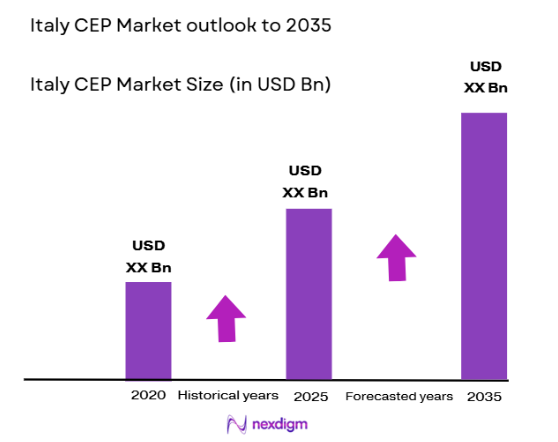
The Italy CEP market is projected to reach USD ~ billion based on a recent historical assessment, driven primarily by the rapid expansion of e-commerce and the increasing demand for fast, reliable delivery services. The market is expected to continue its growth trajectory as companies adopt new technologies such as automation, AI, and data analytics to improve delivery efficiency. Furthermore, the shift towards sustainable practices and the growing reliance on last-mile delivery solutions are key factors contributing to market growth. Companies are increasingly investing in expanding their infrastructure to meet the rising demand for express deliveries.
The dominant countries in this sector are Italy, with its strategic location in Southern Europe, and neighboring countries such as France and Spain. Italy benefits from its strong logistics and infrastructure network, supported by government initiatives aimed at improving transport and logistics systems. The country’s favorable geographic positioning within the European Union enhances its role as a critical hub for international trade. Key metropolitan cities like Rome, Milan, and Naples are pivotal in driving the demand for CEP services, with their growing consumer bases and high urbanization rates, making them crucial areas for market expansion.
Market Segmentation
By Product Type:
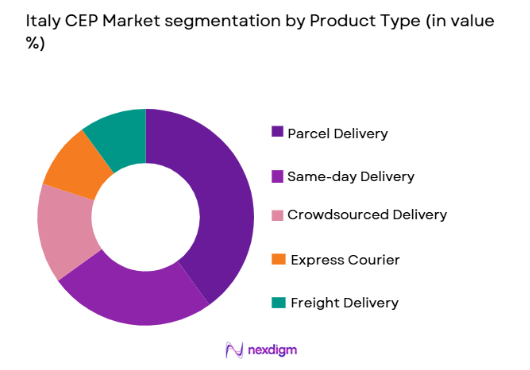
The Italy CEP market is segmented by product type into parcel delivery, same-day delivery, crowdsourced delivery, express courier, and freight delivery services. Recently, parcel delivery services have dominated the market share, driven by the explosive growth of e-commerce and the need for efficient, reliable parcel management. The rise of online shopping has led to increased demand for last-mile delivery services, with companies prioritizing quick and flexible delivery solutions for consumer convenience. This segment’s dominance is supported by a robust infrastructure and the increasing adoption of automated sorting and tracking systems, which enhance operational efficiency and customer satisfaction.
By Platform Type:
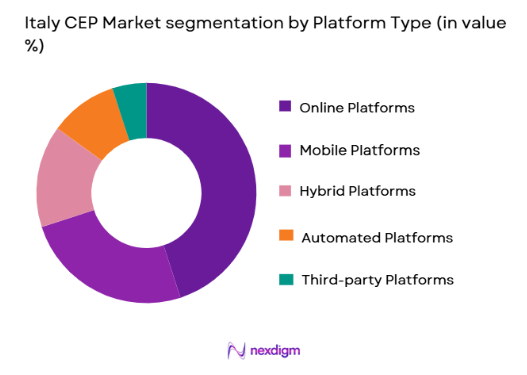
The Italy CEP market is also segmented by platform type into online platforms, mobile platforms, hybrid platforms, automated platforms, and third-party delivery platforms. Among these, online platforms have a dominant market share, largely driven by the rise in e-commerce, which requires a seamless online ordering and delivery tracking system. Consumers increasingly prefer the convenience of managing deliveries through dedicated websites or apps, making online platforms a key enabler of growth in this market. Furthermore, the widespread use of smartphones enhances the demand for mobile platforms, which complement online systems by offering real-time tracking and on-demand delivery scheduling.
Competitive Landscape
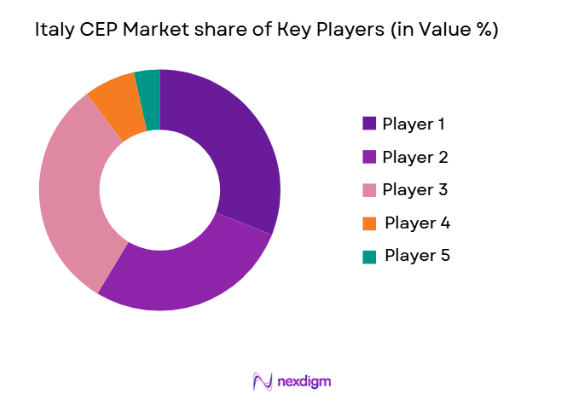
The competitive landscape of the Italy CEP market is marked by consolidation, with large multinational logistics companies competing alongside regional players. Major global players such as DHL, FedEx, and UPS continue to expand their presence in the country, while local players like Poste Italiane and Nexive focus on specialized, domestic delivery solutions. These companies are increasingly investing in technological innovations to streamline operations and improve delivery speed, especially for last-mile solutions. Additionally, new entrants are leveraging digital platforms and AI-powered systems to create competitive advantages in last-mile delivery efficiency and customer satisfaction.
| Company Name | Establishment Year | Headquarters | Technology Focus | Market Reach | Key Products | Revenue (USD Billion) | Market-Specific Parameter |
| DHL | 1969 | Bonn, Germany | ~ | ~ | ~ | ~ | ~ |
| FedEx | 1971 | Memphis, USA | ~ | ~ | ~ | ~ | ~ |
| UPS | 1907 | Atlanta, USA | ~ | ~ | ~ | ~ | ~ |
| Poste Italiane | 1862 | Rome, Italy | ~ | ~ | ~ | ~ | ~ |
| Nexive | 1999 | Rome, Italy | ~ | ~ | ~ | ~ | ~ |
Italy CEP Market Analysis
Growth Drivers
E-commerce Growth:
E-commerce has significantly driven the growth of the CEP market in Italy. The increased adoption of online shopping has led to a surge in demand for fast and reliable delivery services. Italian consumers increasingly prefer the convenience of online purchases, contributing to an expansion in parcel volumes. Moreover, e-commerce giants and small businesses alike are adopting CEP services to ensure that their products reach consumers efficiently. The market has seen strong support from technological innovations, such as real-time tracking and automated sorting, to enhance the customer experience. Additionally, the growing importance of omnichannel strategies has encouraged businesses to invest in advanced delivery solutions. As a result, CEP companies in Italy are developing more robust networks to cater to the growing e-commerce demand, particularly in the urban centers.
Technological Advancements:
Technological advancements in the CEP market are another key growth driver. Automation, AI, and robotics are transforming the logistics landscape, reducing the need for manual labor and improving operational efficiency. Automated sorting facilities and delivery robots have helped streamline processes, while AI algorithms optimize delivery routes and scheduling. The adoption of these technologies not only reduces costs for companies but also accelerates delivery times, enhancing customer satisfaction. Moreover, the rise of smart packaging and real-time tracking has made it easier for customers to monitor deliveries, further driving market growth. As technology continues to advance, the CEP sector in Italy is expected to experience greater efficiency and competitiveness.
Market Challenges
High Operational Costs:
One of the primary challenges in the Italian CEP market is the high operational costs associated with last-mile delivery. Despite technological advancements, the final leg of the delivery process remains expensive due to factors such as fuel costs, driver wages, and vehicle maintenance. This is especially evident in urban areas where congestion, traffic regulations, and environmental concerns further increase costs. Additionally, companies must invest in maintaining extensive delivery networks, which can be capital intensive. These high costs affect both profit margins and service pricing, challenging companies to balance cost-effective solutions with customer satisfaction. The ongoing challenge for companies is finding innovative ways to reduce these costs while maintaining delivery speed and reliability.
Regulatory Compliance and Sustainability:
Another significant challenge faced by the CEP market in Italy is complying with increasingly stringent regulations related to environmental sustainability. The European Union’s policies on reducing carbon emissions are pushing CEP providers to adopt greener practices, including electric vehicles, renewable energy, and eco-friendly packaging materials. However, these initiatives often require significant upfront investments in technology and infrastructure, which can be a barrier for smaller companies or those with limited budgets. Additionally, varying local regulations across different regions of Italy add complexity to compliance efforts, making it difficult for companies to standardize their operations. Navigating these regulatory challenges while maintaining profitability remains a critical issue for the industry.
Opportunities
Integration of AI and Automation:
The integration of AI and automation in the CEP market offers significant opportunities for companies in Italy. By leveraging AI-powered systems, businesses can optimize delivery routes, improve fleet management, and enhance overall efficiency. Automation in sorting and packaging also speeds up the process and reduces the need for manual labor, helping companies reduce operational costs. Furthermore, AI and machine learning algorithms enable businesses to forecast demand and adjust their delivery strategies accordingly, leading to better resource allocation. This technological shift presents a chance for companies to differentiate themselves by offering faster, more reliable services, ultimately leading to increased market share.
Growth in Cross-Border E-commerce:
The increasing growth of cross-border e-commerce is another major opportunity for the CEP market in Italy. As more consumers shop online internationally, the demand for international shipping and logistics solutions is growing. Italy’s strategic location within the EU and its established trade routes make it a prime candidate for facilitating cross-border e-commerce shipments. CEP companies can capitalize on this trend by expanding their international shipping services, offering faster and more reliable delivery options. Additionally, Italy’s participation in global trade agreements further enhances its ability to tap into this expanding market, presenting companies with an opportunity to boost their revenues by catering to the growing demand for cross-border deliveries.
Future Outlook
Over the next five years, the Italy CEP market is expected to continue expanding, driven by the growth of e-commerce and technological advancements in automation and AI. Increased government support for sustainable delivery practices, including the adoption of electric vehicles and green packaging, will further shape the market. Last-mile delivery services, especially in urban areas, will become more efficient through technological innovations such as drones and robots. As customer expectations for faster and more reliable delivery services continue to rise, CEP companies will need to invest in scalable solutions to meet growing demand.
Major Players
- DHL
- FedEx
- UPS
- Poste Italiane
- Nexive
- GLS
- TNT
- SDA Express Courier
- DB Schenker
- Kuehne + Nagel
- XPO Logistics
- DPD Group
- Hermes Logistics
- Bring
- La Poste
Key Target Audience
- Investments and venture capitalist firms
- Government and regulatory bodies
- E-commerce businesses
- Retail chains
- Logistics providers
- Manufacturers
- Insurance companies
- Real estate developers
Research Methodology
Step 1: Identification of Key Variables
The key variables impacting the market, such as consumer demand, technological advancements, and regulatory frameworks, are identified to form the basis of the analysis.
Step 2: Market Analysis and Construction
Comprehensive data from various sources is collected and analyzed to construct a detailed market model that incorporates segmentation, growth drivers, challenges, and trends.
Step 3: Hypothesis Validation and Expert Consultation
Expert opinions and industry insights are gathered to validate the hypothesis and ensure the accuracy of the market model and projections.
Step 4: Research Synthesis and Final Output
The gathered data and expert insights are synthesized to create a comprehensive final report, ensuring that all relevant market factors are accounted for.

- Executive Summary
- Research Methodology (Definitions, Scope, Industry Assumptions, Market Sizing Approach, Primary & Secondary Research Framework, Data Collection & Verification Protocol, Analytic Models & Forecast Methodology, Limitations & Research Validity Checks)

- Market Definition and Scope
- Value Chain & Stakeholder Ecosystem
- Regulatory / Certification Landscape
- Sector Dynamics Affecting Demand
- Strategic Initiatives & Infrastructure Growth

- Growth Drivers
Increase in E-commerce Sales
Adoption of Automation and Robotics in Delivery
Rise in Demand for Faster Delivery Times
Government Investments in Infrastructure
Technological Advancements in Tracking Systems - Market Challenges
High Operational Costs
Last-Mile Delivery Inefficiencies
Regulatory and Compliance Challenges
Security and Privacy Concerns
Dependency on Infrastructure Availability - Market Opportunities
Growth of Green Logistics Solutions
Integration of Drones in Delivery Operations
Expansion of Cross-border E-commerce Logistics - Trends
Rise in Smart Logistics and Tracking Solutions
Increase in Demand for Sustainability in Delivery
Shift Toward Contactless and Autonomous Deliveries
Growth of Subscription-based Delivery Services
Use of Artificial Intelligence in Route Optimization - Government Regulations & Defense Policy
Regulations on Drone Deliveries
Impact of Carbon Emission Laws on Logistics
Government Subsidies for Green Logistics Initiatives - SWOT Analysis
- Stakeholder and Ecosystem Analysis
- Porter’s Five Forces Analysis
- Competition Intensity and Ecosystem Mapping

- By Market Value, 2020-2025
- By Installed Units, 2020-2025
- By Average System Price, 2020-2025
- By System Complexity Tier, 2020-2025

- By System Type (In Value%)
Parcel Delivery Systems
Same-day Delivery Systems
Crowdsourced Delivery Systems
Express Courier Systems
Freight Delivery Systems - By Platform Type (In Value%)
Online Platforms
Mobile Platforms
Hybrid Platforms
Automated Platforms
Third-party Delivery Platforms - By Fitment Type (In Value%)
Standalone Solutions
Integrated Solutions
Cloud-based Solutions
Modular Solutions
Customizable Solutions - By EndUser Segment (In Value%)
E-commerce Businesses
Retail Chains
Logistics Providers
Manufacturers
Individual Consumers - By Procurement Channel (In Value%)
Direct Procurement
Through E-commerce Platforms
Through Freight Forwarding Agents
Third-party Logistics Providers
Online Bidding Platforms - By Material / Technology (in Value%)
Smart Packaging Materials
Automated Sorting Technologies
Robotic Delivery Systems
Tracking and Monitoring Technology
Data Analytics Solutions

- Market structure and competitive positioning
- Market share snapshot of major players
- CrossComparison Parameters (Market Value, Installed Units, Price Trends, System Complexity, Fitment Type, Platform Type, Delivery Speed, Geographic Presence, Service Type, Consumer Demographics)
- SWOT Analysis of Key Players
- Pricing & Procurement Analysis
- Key Players
Amazon Logistics
DHL Express
UPS
FedEx
DPD Group
TNT Express
Schenker AG
Royal Mail
La Poste
Poste Italiane
XPO Logistics
Groupe Kuehne + Nagel
Aramex
China Post
JD Logistics

- E-commerce Businesses’ Shift Towards Faster Delivery
- Retail Chains’ Increased Focus on Delivery Optimization
- Logistics Providers Expanding into New Regions
- Individual Consumers’ Demand for Real-Time Tracking

- Forecast Market Value, 2026-2035
- Forecast Installed Units, 2026-2035
- Price Forecast by System Tier, 2026-2035
- Future Demand by Platform, 2026-2035


 Request a Sample
 Ask for Customization
 Get a Quote
 Enquire Now