
 Download PDF
 Download PDF
Market Overview
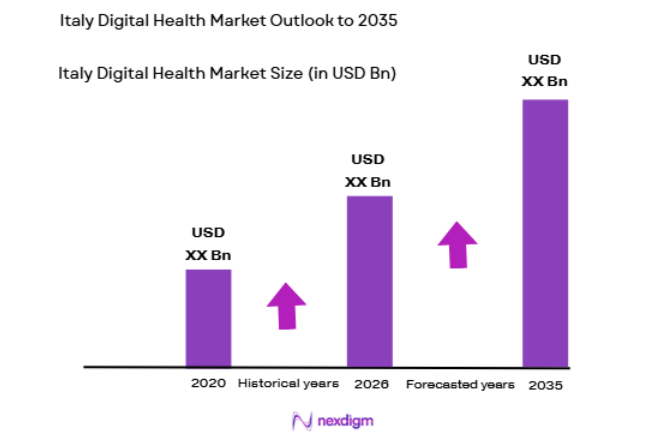
The Italy digital health market is valued at USD ~ billion based on a recent historical assessment, driven by increasing adoption of telemedicine, remote monitoring devices, and digital healthcare solutions. Advancements in AI, machine learning, and telecommunication technologies are further driving market growth. The government is investing in expanding digital health infrastructure to improve healthcare delivery, reduce costs, and enhance patient access to healthcare services. These factors combined have propelled the market’s growth, making it a rapidly expanding sector within the healthcare industry.
Italy’s healthcare system, particularly in major cities like Milan, Rome, and Turin, is embracing digital solutions to meet the growing demand for healthcare services. These cities are at the forefront due to their well-developed healthcare infrastructure, access to cutting-edge technology, and investments in telemedicine and digital health solutions. The increasing adoption of digital health platforms by hospitals, clinics, and patients in these regions has positioned Italy as a leader in digital health innovation in Europe.
Market Segmentation
By Product Type
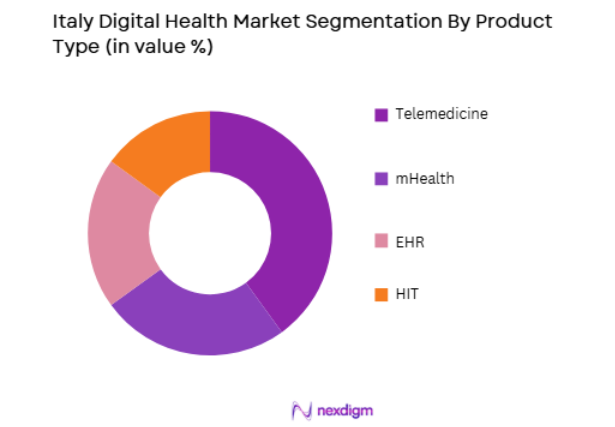
The Italy digital health market is segmented by product type into telemedicine, mHealth, electronic health records (EHR), and health information technology (HIT). Telemedicine has recently dominated the market due to its ability to provide remote consultations and healthcare services, especially during the COVID-19 pandemic. The increased demand for convenient, cost-effective healthcare solutions, coupled with improvements in internet connectivity and mobile applications, has made telemedicine a widely adopted solution in Italy. The ease of access to healthcare through digital platforms is leading to higher adoption rates among patients and healthcare providers alike, making it a dominant sub-segment.
By End-User Segment
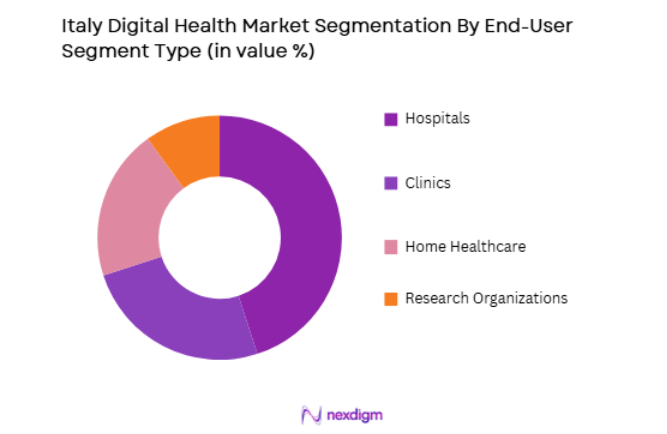
The Italy digital health market is segmented by end-user segment into hospitals, clinics, home healthcare, and research organizations. Recently, hospitals have dominated the market due to the significant investments in digital health technologies to streamline operations, improve patient care, and ensure better management of patient records. Hospitals are adopting digital health solutions such as EHR, telemedicine platforms, and patient monitoring systems to enhance clinical outcomes and optimize resource management. With increasing healthcare demands and pressure to improve efficiency, hospitals in Italy are prioritizing digital health adoption.
Competitive Landscape
The competitive landscape of the Italy digital health market is characterized by both established global players and local companies focusing on innovations to meet the unique needs of the Italian healthcare system. The market is experiencing consolidation, with larger players acquiring smaller tech firms to expand their service offerings. Leading companies are innovating in areas like telemedicine platforms, mobile health applications, and AI-based healthcare solutions. The government’s support for digital health adoption, coupled with private sector investments, is intensifying competition among key players. The market is expected to witness more partnerships and collaborations to enhance the scope and reach of digital health solutions across Italy.
| Company Name | Establishment Year | Headquarters | Technology Focus | Market Reach | Key Products | Revenue | Additional Market-Specific Parameter |
| Philips Healthcare | 1891 | Amsterdam, NL | ~ | ~ | ~ | ~ | ~ |
| Siemens Healthineers | 1847 | Erlangen, DE | ~ | ~ | ~ | ~ | ~ |
| Cerner Corporation | 1979 | North Kansas City, USA | ~ | ~ | ~ | ~ | ~ |
| Teladoc Health | 2002 | Purchase, USA | ~ | ~ | ~ | ~ | ~ |
| Allscripts Healthcare Solutions | 1986 | Chicago, USA | ~ | ~ | ~ | ~ | ~ |
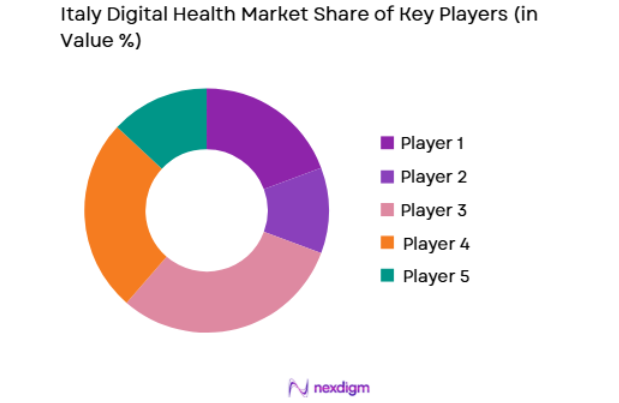
Italy Digital Health Market Analysis
Growth Drivers
Technological Advancements
Technological advancements in digital health solutions, including AI, telemedicine platforms, and wearable health devices, are key drivers for the growth of the Italy digital health market. The integration of AI in diagnostics and treatment planning has improved the accuracy and efficiency of healthcare services. Telemedicine platforms, which allow patients to consult with healthcare professionals remotely, have been crucial in expanding access to healthcare, especially in remote areas. With Italy’s aging population and rising healthcare demands, digital health technologies offer a practical and scalable solution to meet the needs of the healthcare system. Furthermore, advancements in mobile health (mHealth) apps have empowered patients to monitor their health conditions at home, reducing the burden on healthcare facilities.
Government Support and Healthcare Reforms
The Italian government has been a strong supporter of digital health solutions, facilitating their adoption through various initiatives and reforms. Government-funded programs aimed at digitizing healthcare services have spurred investment in digital health technologies across hospitals, clinics, and home healthcare settings. The introduction of policies that promote the use of electronic health records (EHR) and telemedicine has enabled healthcare providers to enhance care quality while reducing costs. These reforms align with Italy’s commitment to improving the overall healthcare system and ensure the widespread adoption of digital health solutions.
Market Challenges
Regulatory and Data Privacy Concerns
One of the major challenges facing the Italy digital health market is the complex regulatory environment and the concern over data privacy. The European Union’s General Data Protection Regulation (GDPR) has set strict rules regarding the collection, storage, and sharing of patient data, which presents hurdles for digital health companies. Compliance with these regulations requires significant investment in secure data management systems, which can slow down product development and increase costs. Additionally, the lack of standardized regulations across Europe may hinder the smooth implementation of digital health solutions, creating uncertainty for healthcare providers and technology developers.
Integration with Existing Healthcare Systems
Another challenge is the integration of digital health solutions with existing healthcare infrastructure. Many healthcare providers in Italy still rely on traditional paper-based systems, making it difficult to transition to digital platforms without significant investments in technology and training. The integration of digital health tools with legacy systems is often complex and requires significant customization. Moreover, healthcare workers may face resistance to adopting new technologies, especially in rural areas where digital literacy may be lower. These barriers hinder the full potential of digital health solutions and slow down their adoption in some areas.
Opportunities
Expansion of Telemedicine Services
The rapid growth of telemedicine services presents a significant opportunity for the Italy digital health market. With the increasing adoption of digital tools for remote consultations, telemedicine has become an integral part of Italy’s healthcare system, particularly in the wake of the COVID-19 pandemic. As patients demand more convenient and cost-effective healthcare options, telemedicine platforms offer a practical solution for consultations, follow-up visits, and monitoring of chronic conditions. The Italian government’s push to promote telehealth services further strengthens the opportunity for market expansion in this segment, as more healthcare providers adopt telemedicine solutions to meet patient needs.
Home Healthcare Technologies
The rising demand for home healthcare services, particularly due to Italy’s aging population, presents another opportunity for the digital health market. Home healthcare technologies, including wearable devices, remote monitoring systems, and health apps, are gaining traction as patients increasingly prefer receiving care at home. These technologies enable patients to manage chronic diseases, monitor vital signs, and communicate with healthcare providers from the comfort of their homes, reducing hospital admissions and healthcare costs. With an increasing focus on patient-centric care, the home healthcare segment is expected to witness significant growth in Italy, creating opportunities for companies providing innovative digital health solutions.
Future Outlook
The future outlook for the Italy digital health market is promising, with continued growth driven by technological advancements and government support for digital healthcare solutions. The adoption of telemedicine, mobile health applications, and AI-powered healthcare tools will continue to expand as Italy seeks to address its aging population and rising healthcare demands. With regulatory frameworks evolving to support digital health innovations and increased investments in healthcare infrastructure, the market is expected to experience steady growth. Additionally, the increasing shift towards patient-centric care and home healthcare presents new opportunities for digital health companies to deliver solutions that improve healthcare access, quality, and efficiency.
Major Players
- Philips Healthcare
- Siemens Healthineers
- Medtronic
- Abbott Laboratories
- GE Healthcare
- Teladoc Health
- Allscripts Healthcare Solutions
- Cerner Corporation
- IBM Watson Health
- Honeywell Healthcare
- Bosch Healthcare Solutions
- BioMérieux
- GE Healthcare
- Inovalon
- Biotronik
Key Target Audience
- Investments and venture capitalist firms
- Government and regulatory bodies
- Healthcare providers
- Telemedicine companies
- Insurance companies
- Healthcare technology developers
- Medical device manufacturers
Research Methodology
Step 1: Identification of Key Variables
The research identifies key growth drivers, challenges, and technological trends affecting the digital health market in Italy, derived from secondary research sources and expert consultations.
Step 2: Market Analysis and Construction
Market analysis is performed using data from reports, healthcare industry publications, and policy documents to construct an accurate market model that includes current and future trends.
Step 3: Hypothesis Validation and Expert Consultation
The research findings are validated by engaging with healthcare professionals, digital health technology experts, and regulatory bodies to ensure the reliability and accuracy of the conclusions.
Step 4: Research Synthesis and Final Output
The collected data and expert insights are synthesized into a comprehensive market report, covering market trends, challenges, and opportunities for stakeholders in the Italy digital health market.

- Executive Summary
- Research Methodology (Definitions, Scope, Industry Assumptions, Market Sizing Approach, Primary & Secondary Research Framework, Data Collection & Verification Protocol, Analytic Models & Forecast Methodology, Limitations & Research Validity Checks)

- Market Definition and Scope
- Value Chain & Stakeholder Ecosystem
- Regulatory / Certification Landscape
- Sector Dynamics Affecting Demand

- Growth Drivers
Government Investments in Digital Health
Technological Advancements in Mobile Health
Increasing Healthcare Access in Rural Areas - Market Challenges
Data Security and Privacy Issues
Regulatory Compliance Barriers
Limited Adoption of Digital Health Solutions in Certain Regions - Market Opportunities
Expansion of Telemedicine Solutions
Integration of AI in Healthcare Management
Growing Demand for Remote Patient Monitoring - Trends
Increased Adoption of Telehealth Services
Integration of Wearables in Telemedicine - Government Regulations
- SWOT Analysis
- Porter’s Five Forces

- By Market Value, 2020-2025
- By Installed Units, 2020-2025
- By Average System Price, 2020-2025
- By System Complexity Tier, 2020-2025

- By System Type (In Value%)
Telemedicine Platforms
Electronic Health Records (EHR)
Healthcare Analytics
Wearable Health Devices
Mobile Health Apps - By Platform Type (In Value%)
Cloud-Based Platforms
On-Premise Solutions
Mobile Platforms
Web-Based Platforms - By Fitment Type (In Value%)
Integrated Solutions
Cloud Solutions
Modular Solutions
Standalone Solutions - By End User Segment (In Value%)
Hospitals
Clinics
Government Healthcare Providers

- Market Share Analysis
- Cross Comparison Parameters (System Type, Platform Type, Procurement Channel, End User Segment, Fitment Type, Technological Integration, Market Penetration, Service Availability, Regulatory Compliance, Data Security, Patient Satisfaction)
- SWOT Analysis of Key Competitors
- Pricing & Procurement Analysis
- Key Players
Teladoc Health
Amwell
Cerner Corporation
Philips Healthcare
Medtronic
GE Healthcare
IBM Watson Health
Allscripts
Accenture
HealthTap
Doctor On Demand
Siemens Healthineers
Doctor Anywhere
Maple
Lifecare

- Hospitals Expanding Digital Health Adoption
- Clinics Integrating Telehealth Solutions
- Government Entities Promoting Digital Health
- Increasing Patient Adoption of Health Apps

- Forecast Market Value, 2026-2035
- Forecast Installed Units, 2026-2035
- Price Forecast by System Tier, 2026-2035
- Future Demand by Platform, 2026-2035


 Request a Sample
 Ask for Customization
 Get a Quote
 Enquire Now