
 Download PDF
 Download PDF
Market Overview
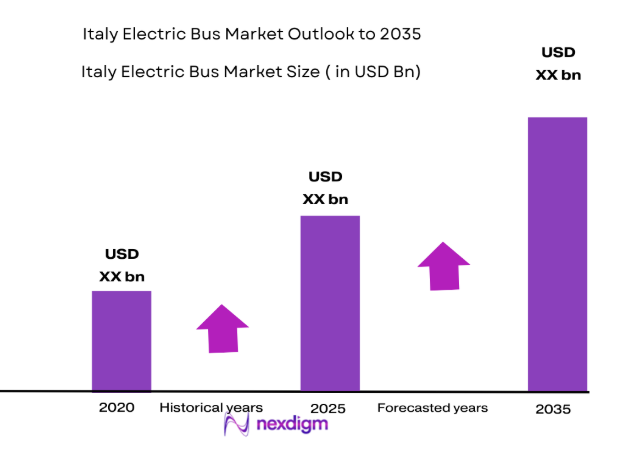
Italy Electric Bus market demonstrates significant expansion as national and municipal transport authorities accelerate the transition toward zero emission public mobility systems. Based on a recent historical assessment, the market value reached approximately USD ~ billion according to transport electrification datasets from the International Energy Agency and the European Alternative Fuels Observatory. Growth is supported by large scale electrification programs in public transit fleets, funding under European sustainable mobility frameworks, and investments in battery technology and charging infrastructure. Rising environmental regulation and decarbonization targets further stimulate procurement of electric buses across urban transport networks.
Major Italian metropolitan regions dominate electric bus adoption due to strong public transport infrastructure and municipal sustainability commitments. Cities such as Milan, Rome, Turin, Bologna, and Florence deploy large electric bus fleets to reduce urban air pollution and meet national climate objectives. Milan’s municipal transport operator continues expanding zero emission fleets supported by regional mobility funding and depot electrification investments. Rome and Turin strengthen electric bus deployment through smart mobility initiatives and public transport modernization strategies. These cities benefit from extensive charging infrastructure, higher passenger volumes, and strong administrative support for sustainable transport systems.
Market Segmentation
By Product Type
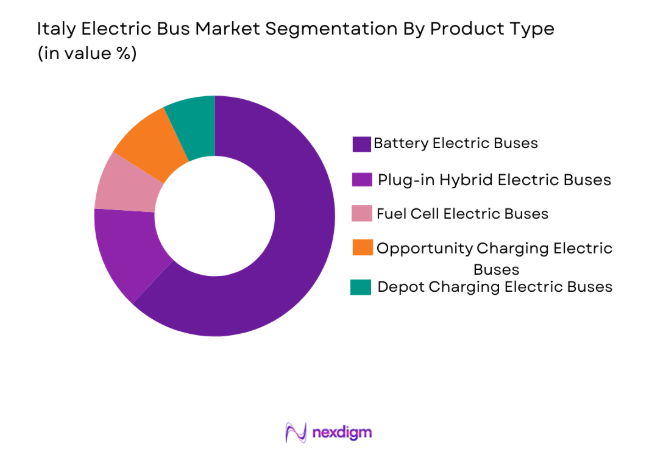
Italy Electric Bus market is segmented by product type into Battery Electric Buses, Plug-in Hybrid Electric Buses, Fuel Cell Electric Buses, Opportunity Charging Electric Buses, and Depot Charging Electric Buses. Recently, Battery Electric Buses have a dominant market share due to factors such as strong policy incentives, widespread charging infrastructure deployment, and large-scale procurement by municipal transit agencies. Battery electric platforms offer lower operational emissions, reduced maintenance requirements, and compatibility with depot charging systems already implemented across Italian urban transit networks. Public transport operators increasingly prioritize battery electric buses because they support long-term decarbonization goals and integrate efficiently with renewable energy based power supply systems.
By Platform Type
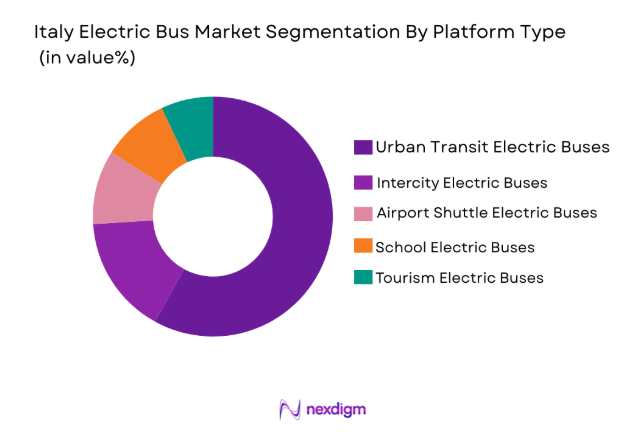
Italy Electric Bus market is segmented by platform type into Urban Transit Electric Buses, Intercity Electric Buses, Airport Shuttle Electric Buses, School Electric Buses, and Tourism Electric Buses. Recently, Urban Transit Electric Buses have a dominant market share due to strong electrification initiatives within municipal public transport systems. Major cities deploy electric buses primarily on urban routes to reduce emissions, noise pollution, and fuel dependency. High passenger volumes, fixed route operations, and established depot charging infrastructure make urban transit fleets the most suitable application for electric buses. Municipal transport agencies prioritize electrification of city bus fleets to meet environmental regulations and sustainable mobility objectives while improving urban air quality and operational efficiency.
Competitive Landscape
Italy Electric Bus market demonstrates moderate consolidation with a mix of established European bus manufacturers and emerging electric mobility specialists competing for municipal procurement contracts. Large multinational vehicle manufacturers dominate large public tenders due to strong engineering capabilities, extensive after-sales support networks, and advanced battery technology integration. Regional manufacturers and specialized electric mobility firms also compete by offering modular electric platforms, customized fleet solutions, and energy efficient bus architectures tailored for urban transit operations.
| Company Name | Establishment Year | Headquarters | Technology Focus | Market Reach | Key Products | Revenue | Battery Platform Type |
| Iveco Bus | 1975 | Italy | ~ | ~ | ~ | ~ | ~ |
| Solaris Bus & Coach | 1996 | Poland | ~ | ~ | ~ | ~ | ~ |
| BYD Europe | 1995 | Netherlands | ~ | ~ | ~ | ~ | ~ |
| Mercedes-Benz Bus | 1895 | Germany | ~ | ~ | ~ | ~ | ~ |
| MAN Truck & Bus | 1758 | Germany | ~ | ~ | ~ | ~ | ~ |
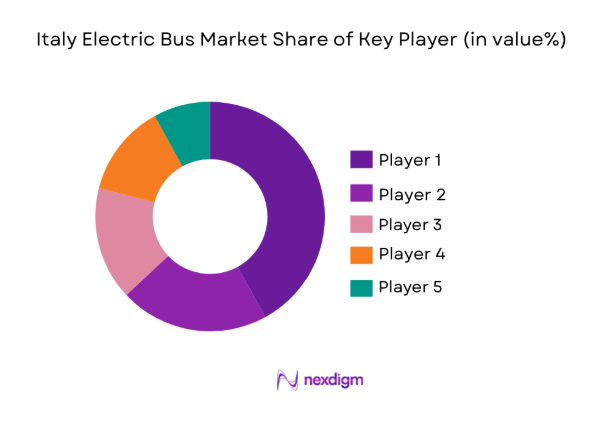
Italy Electric Bus Market Analysis
Growth Drivers
Urban Public Transport Electrification Programs
Italian metropolitan regions increasingly prioritize electrification of municipal bus fleets as part of broader sustainable mobility strategies aimed at reducing greenhouse gas emissions and improving urban air quality. National decarbonization frameworks and European Union climate targets encourage cities to transition away from diesel powered public transport vehicles toward zero emission alternatives such as battery electric buses and hydrogen fuel cell buses. Large urban transport operators across Milan, Rome, Turin, and Bologna are implementing multi-year fleet modernization programs that involve replacing aging diesel buses with electric alternatives equipped with advanced battery systems and digital fleet management platforms. Government subsidies and infrastructure development funds reduce the financial burden associated with electric bus procurement and charging infrastructure installation. These incentives enable municipal authorities to deploy electric buses at a larger scale than previously possible. Electric buses also provide lower operational costs over their lifetime due to reduced fuel consumption and simplified maintenance requirements compared with conventional internal combustion engine vehicles. Advances in lithium-ion battery technology improve vehicle range and reliability, making electric buses more suitable for daily urban transit operations. Public demand for cleaner transportation and stricter environmental regulations further reinforce the transition toward electric mobility solutions across Italy’s public transport sector.
Government Funding and Sustainable Mobility Incentives
Strong financial support from national and European institutions significantly accelerates electric bus adoption across Italy’s public transportation networks. Sustainable mobility investment programs allocate large public funds toward the modernization of urban transport fleets and the deployment of zero emission vehicles in metropolitan regions. Public funding mechanisms support procurement of electric buses, development of charging infrastructure, and integration of smart energy management systems for transit operators. Municipal governments receive financial assistance through European environmental initiatives focused on reducing carbon emissions from urban transportation systems. These funding frameworks lower the capital investment barrier associated with electric bus acquisition, enabling public transit agencies to adopt advanced electric vehicle technologies at a faster pace. In addition to procurement subsidies, national programs support research and development activities focused on improving battery efficiency, charging speed, and vehicle reliability. Electric bus manufacturers benefit from collaborative projects with energy companies and technology providers to develop integrated charging ecosystems that support large fleet operations. Infrastructure expansion such as depot charging stations and fast charging hubs further strengthens operational feasibility for electric buses. As financial incentives continue supporting clean mobility initiatives, electric buses increasingly become the preferred option for replacing conventional diesel public transport fleets.
Market Challenges
High Capital Investment for Electric Bus Procurement
One of the most significant barriers affecting electric bus deployment across Italy is the substantial upfront investment required for vehicle procurement and supporting charging infrastructure development. Electric buses involve higher acquisition costs compared with conventional diesel or compressed natural gas buses due to expensive battery systems, advanced electric drivetrains, and specialized electronic components. Transit authorities often face budget limitations when planning large scale fleet electrification programs, particularly in smaller municipalities with constrained financial resources. Infrastructure requirements such as charging stations, grid upgrades, and energy management systems further increase the initial investment required for transitioning to electric mobility. Public transport operators must also invest in specialized maintenance facilities and workforce training programs to manage electric vehicle technologies effectively. Battery replacement costs during the operational lifecycle add additional financial considerations for transit agencies evaluating long term economic feasibility. While operational savings from reduced fuel consumption and maintenance costs can offset some expenses, the initial capital expenditure remains a significant hurdle. Procurement processes involving public tenders and regulatory compliance also extend project timelines, delaying large scale electric bus deployment initiatives across certain regions of the country.
Charging Infrastructure and Grid Capacity Limitations
Deployment of electric buses requires extensive charging infrastructure and reliable electrical grid capacity capable of supporting large scale fleet operations. Many transit depots and public transport facilities across Italy require electrical upgrades to accommodate high capacity charging systems necessary for electric bus fleets. Installation of depot chargers, fast charging stations, and associated grid connections involves complex planning processes and collaboration with local electricity providers. In densely populated urban areas, limited space availability and regulatory permitting requirements can slow infrastructure development. Charging infrastructure must also be carefully designed to match operational schedules of public transport fleets, ensuring buses can recharge efficiently without disrupting service availability. Grid capacity constraints represent another important challenge because large electric bus depots demand significant electricity supply during peak charging periods. Electricity distribution networks may require reinforcement or expansion to accommodate the increased load created by electric bus charging operations. Energy management strategies including smart charging systems and off-peak charging schedules help mitigate some infrastructure limitations. However, uneven infrastructure development across different cities continues creating operational barriers that slow widespread electric bus adoption in certain parts of Italy.
Opportunities
Integration of Smart Charging and Energy Management Systems
Rapid development of intelligent charging infrastructure presents significant opportunities for improving operational efficiency of electric bus fleets across Italy’s urban transport networks. Smart charging systems allow transit operators to optimize electricity consumption by scheduling vehicle charging during periods of lower energy demand and reduced electricity prices. Advanced energy management platforms integrate electric buses with renewable power sources such as solar and wind energy, supporting environmentally sustainable transportation operations. Intelligent charging technologies also enable real time monitoring of battery performance, energy consumption patterns, and fleet operational efficiency. Public transport operators can leverage predictive analytics tools to schedule charging cycles and prevent energy supply bottlenecks within large electric bus depots. Integration of vehicle-to-grid technology further enhances system efficiency by allowing electric buses to return stored energy to the grid during peak demand periods. Energy companies and charging infrastructure providers increasingly collaborate with bus manufacturers and municipal transport agencies to develop integrated charging ecosystems. These solutions improve reliability and reduce long term energy costs associated with electric bus fleet operations. As digital energy management technologies advance, electric bus systems become more economically viable for large scale public transport applications.
Expansion of Electric Bus Deployment in Regional Cities and Tourism Transport
Electric bus adoption currently concentrates primarily in major metropolitan regions, creating significant growth opportunities in smaller cities and tourism-focused transport networks across Italy. Many regional municipalities aim to modernize public transport fleets while reducing environmental impacts associated with conventional diesel buses operating in historic city centers and tourism corridors. Electric buses offer quiet operation and zero tailpipe emissions, making them particularly suitable for environmentally sensitive urban zones and cultural heritage areas. Tourism oriented transport services including airport shuttles, sightseeing routes, and hotel transfer networks increasingly consider electric buses as part of sustainable mobility initiatives. Regional governments and tourism authorities encourage the adoption of electric transport systems to strengthen environmental sustainability and enhance visitor experience in historic destinations. Expansion of charging infrastructure in secondary cities further supports deployment of electric bus fleets outside major metropolitan areas. Local public transport agencies can benefit from national sustainability funding programs that encourage electric mobility adoption across regional transport networks. As tourism and regional urban mobility sectors prioritize environmental responsibility, electric buses represent a viable solution for expanding clean transportation infrastructure throughout Italy.
Future Outlook
Italy Electric Bus market is expected to experience sustained expansion as urban mobility systems increasingly transition toward zero emission public transportation solutions. Continued investment in charging infrastructure, battery technology improvements, and supportive government policies will accelerate electric bus deployment across metropolitan and regional transport networks. Integration of smart charging systems and digital fleet management platforms will improve operational efficiency for transit agencies. Environmental regulations and sustainability targets are expected to remain major demand drivers over the coming years.
Major Players
- Solaris Bus & Coach
- BYD Europe
- Mercedes-Benz Bus
- MAN Truck & Bus
- Volvo Buses
- Scania Group
- Irizar e-mobility
- VDL Bus & Coach
- Yutong Bus
- Ebusco
- Rampini Carlo
- CaetanoBus
- Anadolu Isuzu
- Alstom Transport
Key Target Audience
- Public transport authorities
- Electric bus manufacturers
- Automotive component suppliers
- Electric vehicle charging infrastructure providers
- Investments and venture capitalist firms
- Government and regulatory bodies
- Urban mobility infrastructure developers
Research Methodology
Step 1: Identification of Key Variables
The research process begins by identifying critical market variables including electric bus deployment volumes, government funding programs, charging infrastructure development, battery technology trends, and public transport electrification policies influencing demand within Italy’s electric bus ecosystem.
Step 2: Market Analysis and Construction
Primary and secondary research methods are used to construct the market model, combining industry databases, government transport datasets, manufacturer disclosures, and regulatory documentation to evaluate market size, infrastructure deployment, and technology adoption patterns.
Step 3: Hypothesis Validation and Expert Consultation
Industry experts including transport planners, electric bus manufacturers, fleet operators, and energy infrastructure specialists provide validation of market assumptions, ensuring accuracy regarding technology trends, procurement strategies, and infrastructure development.
Step 4: Research Synthesis and Final Output
Collected data is synthesized into structured market insights through statistical modeling, competitive benchmarking, and sector analysis to produce a comprehensive research report covering market dynamics, segmentation, competitive landscape, and strategic outlook.

- Executive Summary
- Research Methodology (Definitions, Scope, Industry Assumptions, Market Sizing Approach, Primary & Secondary Research Framework, Data Collection & Verification Protocol, Analytic Models & Forecast Methodology, Limitations & Research Validity Checks)

- Market Definition and Scope
- Value Chain & Stakeholder Ecosystem
- Regulatory / Certification Landscape
- Sector Dynamics Affecting Demand
- Strategic Initiatives & Infrastructure Growth

- Growth Drivers
Expansion of Urban Zero Emission Public Transport Programs
Government Subsidies and Green Mobility Incentives
Growing Investments in Electric Charging Infrastructure - Market Challenges
High Initial Procurement Cost of Electric Buses
Limited Charging Infrastructure in Smaller Cities
Battery Replacement and Lifecycle Management Costs - Market Opportunities
Expansion of Smart Public Transport Systems in Major Cities
Deployment of Electric Buses in Tourism and Airport Transport
Partnerships Between Bus Manufacturers and Energy Providers - Trends
Integration of Fast Charging and Opportunity Charging Systems
Adoption of Telematics and Smart Fleet Management Platforms - Government Regulations
- SWOT Analysis
- Porter’s Five Forces

- By Market Value, 2020-2025
- By Installed Units, 2020-2025
- By Average System Price, 2020-2025
- By System Complexity Tier, 2020-2025

- By System Type (In Value%)
Battery Electric Buses
Plug-in Hybrid Electric Buses
Fuel Cell Electric Buses
Opportunity Charging Electric Buses
Depot Charging Electric Buses - By Platform Type (In Value%)
Urban Transit Electric Buses
Intercity Electric Buses
Airport Shuttle Electric Buses
School Electric Buses
Tourism Electric Buses - By Fitment Type (In Value%)
OEM Factory Built Electric Buses
Retrofitted Diesel to Electric Buses
Modular Electric Bus Platforms
Integrated Smart Fleet Systems - By End User Segment (In Value%)
Municipal Public Transport Authorities
Private Bus Fleet Operators
Airport and Institutional Transport Providers

- Market Share Analysis
- Cross Comparison Parameters (Vehicle Range, Battery Capacity, Charging Technology, Passenger Capacity, Manufacturing Localization, Fleet Integration Capability, Total Cost of Ownership)
- SWOT Analysis of Key Competitors
- Pricing & Procurement Analysis
- Key Players
Iveco Bus
Solaris Bus & Coach
BYD Europe
Mercedes-Benz Bus
MAN Truck & Bus
VDL Bus & Coach
Yutong Bus
Irizar e-mobility
Volvo Buses
Scania Group
Ebusco
CaetanoBus
Rampini Carlo
Anadolu Isuzu
Alstom Transport

- Public transit agencies accelerating zero emission fleet transition
- Private operators adopting electric buses for operational cost reduction
- Airports deploying electric shuttle fleets to reduce emissions
- Institutional campuses integrating electric mobility solutions

- Forecast Market Value, 2026-2035
- Forecast Installed Units, 2026-2035
- Price Forecast by System Tier, 2026-2035
- Future Demand by Platform, 2026-2035


 Request a Sample
 Ask for Customization
 Get a Quote
 Enquire Now