
 Download PDF
 Download PDF
Market Overview
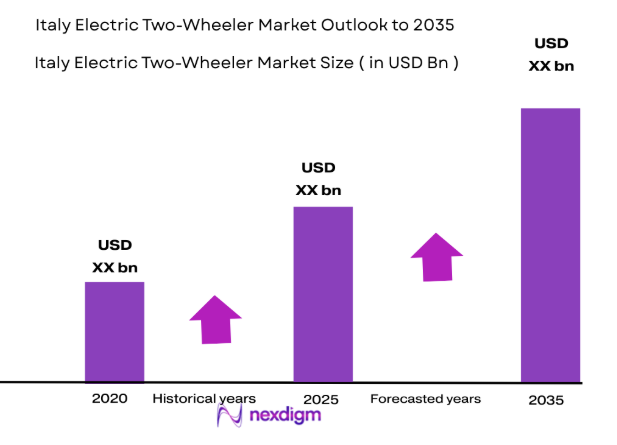
Italy Electric Two-Wheeler Market demonstrates steady expansion supported by urban mobility transformation and environmental policy frameworks encouraging low-emission transportation. Based on a recent historical assessment, the market generated approximately USD ~ billion in revenue according to data published by the European Cyclists’ Federation and national transport statistics agencies. Rising fuel costs, supportive purchase incentives, and expansion of urban charging and parking infrastructure continue to accelerate demand for electric scooters, mopeds, and lightweight electric motorcycles across metropolitan transport systems.
Major urban centers including Milan, Rome, Turin, Florence, and Bologna lead adoption due to dense population, congestion management policies, and strong micro-mobility ecosystems. These cities promote electric mobility through low-emission zones, incentives for electric vehicle ownership, and infrastructure development that supports charging access and parking privileges. Tourism-driven mobility demand and widespread shared mobility services further strengthen adoption of electric scooters and mopeds, positioning northern and central Italian urban corridors as important operational hubs for electric two-wheeler deployment and fleet expansion.
Market Segmentation
By Product Type
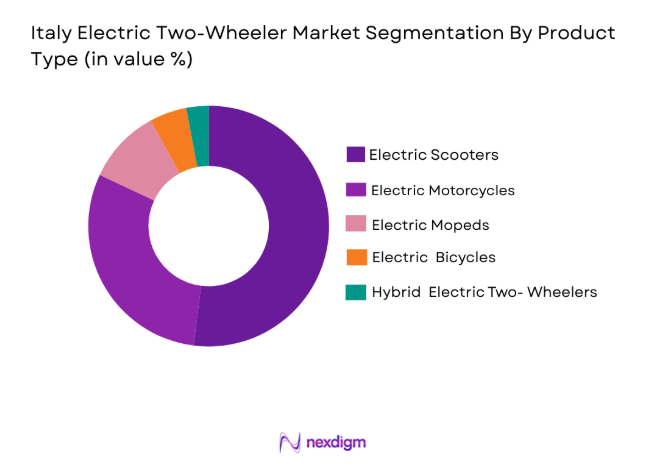
The Italy Electric Two-Wheeler market is segmented by product type into electric scooters, electric motorcycles, electric mopeds, electric bicycles, and hybrid electric two-wheelers. Recently, electric scooters have dominated the market share due to their convenience, affordability, and suitability for urban commuting. The increasing preference for compact, lightweight vehicles that are easy to navigate in congested urban environments has made electric scooters the product of choice for many consumers. Additionally, government incentives and the growing trend towards micro-mobility have further bolstered their popularity among city dwellers.
By Platform Type
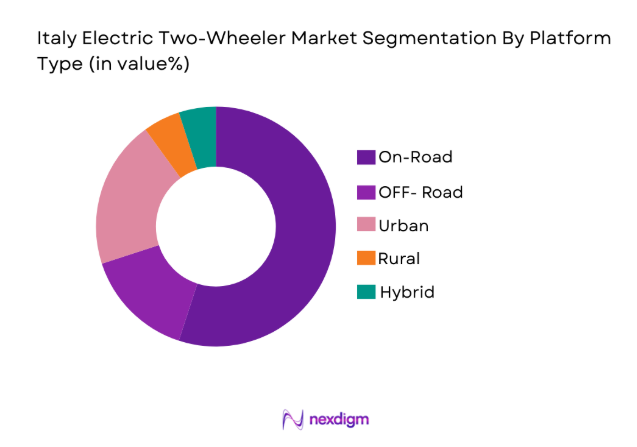
The Italy Electric Two-Wheeler market is segmented by platform type into on-road, off-road, urban, rural, and hybrid platforms. Recently, on-road platforms have dominated the market share, driven by the rising demand for electric two-wheelers in urban areas. On-road vehicles, designed for everyday city commutes, align with the increasing focus on reducing traffic congestion and promoting sustainable urban transportation. Off-road platforms, while smaller in share, cater to outdoor enthusiasts and rural users. Hybrid platforms combine elements of both urban and off-road use, offering versatile solutions for various consumer needs.
Competitive Landscape
The Italy Electric Two-Wheeler market features a moderately consolidated competitive structure supported by both domestic manufacturers and global electric mobility companies. Established scooter brands leverage strong dealer networks and manufacturing expertise while emerging electric mobility startups focus on innovation and smart connectivity features. Partnerships between battery technology providers, vehicle manufacturers, and mobility service operators play a critical role in expanding electric two-wheeler deployment. International brands increasingly enter the Italian market through distribution agreements and localized production strategies.
| Company Name | Establishment Year | Headquarters | Technology Focus | Market Reach | Key Products | Revenue | Battery Technology |
| Piaggio Group | 1884 | Italy | ~ | ~ | ~ | ~ | |
| NIU Technologies | 2014 | China | ~ | ~ | ~ | ~ | ~ |
| Vmoto Soco | 1999 | Australia | ~ | ~ | ~ | ~ | ~ |
| Askoll EVA | 2014 | Italy | ~ | ~ | ~ | ~ | ~ |
| Silence Urban Mobility | 2011 | Spain | ~ | ~ | ~ | ~ | ~ |
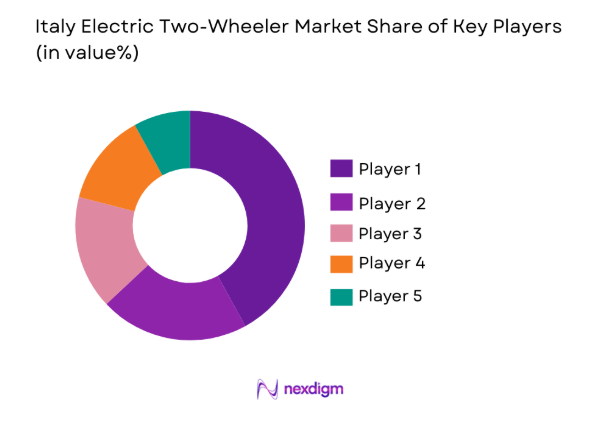
Italy Electric Two-Wheeler Market Analysis
Growth Drivers
Urban Congestion Reduction Policies and Low-Emission Mobility Programs
Urban Congestion Reduction Policies and Low-Emission Mobility Programs: Italian metropolitan areas increasingly implement environmental mobility regulations designed to reduce traffic congestion and urban pollution, and these initiatives significantly accelerate the adoption of electric two-wheelers as practical transportation alternatives within dense city environments. Municipal governments introduce low-emission zones that restrict access for internal combustion vehicles, encouraging commuters to transition toward electric scooters and mopeds capable of entering regulated areas without penalties. Transportation authorities also develop incentive programs that subsidize the purchase of electric two-wheelers, making these vehicles financially attractive for urban residents seeking cost-efficient mobility options. Electric scooters require minimal parking space and provide rapid mobility through narrow streets typical of historic Italian city centers, increasing their practicality compared with automobiles. Urban planners simultaneously promote micro-mobility strategies designed to integrate electric two-wheelers into broader public transport networks, allowing commuters to connect seamlessly between buses, metro systems, and personal electric mobility devices. Local administrations invest in parking infrastructure, charging facilities, and mobility lanes dedicated to small electric vehicles to further support safe and efficient use of these vehicles. These policies also support climate objectives by reducing carbon emissions from transportation activities, which remain one of the largest contributors to urban pollution across Italy. As urban population density continues increasing and environmental policies become stricter, electric two-wheelers increasingly represent an effective solution for both personal and commercial mobility within metropolitan regions.
Expansion of Shared Micro-Mobility Platforms Across Major Italian Cities
Expansion of Shared Micro-Mobility Platforms Across Major Italian Cities: The rapid growth of shared micro-mobility services significantly contributes to the adoption and visibility of electric two-wheelers throughout Italian cities by providing accessible and flexible transportation solutions for residents and visitors. Mobility operators deploy large fleets of electric scooters across metropolitan areas including Milan, Rome, and Turin to support short-distance travel and last-mile connectivity. Consumers increasingly rely on app-based mobility platforms that allow quick vehicle access without ownership responsibilities, which encourages frequent use of electric scooters for commuting, tourism, and leisure activities. These services introduce thousands of users to electric mobility technology, indirectly stimulating demand for personal ownership of similar vehicles. Fleet operators invest heavily in durable battery systems, fleet management software, and charging infrastructure that maintain efficient vehicle availability across urban environments. Partnerships between mobility service providers and municipal governments help regulate fleet distribution and ensure safe integration of electric scooters into urban traffic systems. Tourism sectors also benefit because shared electric scooters provide convenient mobility options for visitors exploring historic districts and urban attractions. As shared mobility ecosystems continue expanding and digital platforms improve fleet efficiency and user accessibility, electric two-wheelers gain stronger market penetration across Italian urban transportation networks.
Market Challenges
Limited Charging Infrastructure for Urban Electric Two-Wheelers
Limited Charging Infrastructure for Urban Electric Two-Wheelers: Despite the growing popularity of electric two-wheelers, limited charging infrastructure remains a significant challenge that affects the pace of adoption across certain regions of Italy. Many residential buildings in historic urban districts lack dedicated parking spaces or charging facilities, making it difficult for consumers to recharge electric scooters conveniently. Unlike automobiles, electric scooters are often parked on streets or communal parking areas where charging points are not readily available. Consumers living in apartment complexes without private garages must rely on removable batteries or public charging stations, which may not always be accessible or convenient. Infrastructure development often prioritizes electric cars rather than smaller electric vehicles, creating an imbalance in charging availability across transportation categories. Municipal authorities face logistical constraints when installing charging stations within historic city centers where architectural preservation rules limit infrastructure modifications. Battery swapping networks and removable battery solutions attempt to address this issue but require large operational investments from mobility companies. Without widespread charging access across residential areas, many potential buyers hesitate to adopt electric scooters despite favorable policies and incentives. Expanding micro-charging infrastructure therefore remains a necessary step to support broader electric two-wheeler adoption within Italian urban mobility systems.
High Upfront Cost of Electric Two-Wheelers Compared with Conventional Models
High Upfront Cost of Electric Two-Wheelers Compared with Conventional Models: Electric two-wheelers often carry higher upfront purchase costs compared with gasoline scooters and motorcycles, creating an economic barrier for certain consumer segments considering electric mobility options. Battery systems and electric drivetrain components contribute significantly to manufacturing costs, which directly influences vehicle pricing in the retail market. Although operating costs for electric scooters remain lower due to reduced fuel consumption and maintenance requirements, many buyers prioritize initial purchase affordability when selecting transportation vehicles. Traditional gasoline scooters continue to dominate lower-cost segments because their manufacturing processes and supply chains are already well established. Government incentive programs attempt to reduce price barriers through subsidies and tax benefits, yet these incentives do not always fully offset the price difference between electric and conventional models. Smaller manufacturers entering the electric mobility sector also face high research and development expenses that translate into higher vehicle prices for consumers. Limited economies of scale within the electric two-wheeler manufacturing sector further increase production costs. As a result, the higher upfront investment required for electric two-wheelers remains a challenge that manufacturers and policymakers must address to accelerate market penetration.
Opportunities
Integration of Swappable Battery Technology for Urban Electric Mobility
Integration of Swappable Battery Technology for Urban Electric Mobility: Swappable battery technology presents a significant opportunity for the Italy Electric Two-Wheeler market because it directly addresses charging limitations and improves operational convenience for both consumers and commercial fleet operators. Battery swapping allows riders to replace depleted batteries with fully charged units at designated stations, eliminating the need for lengthy charging times. Mobility service providers and logistics operators benefit particularly from this technology because vehicles can remain operational throughout the day without downtime for charging. Manufacturers increasingly collaborate with battery technology companies to develop standardized battery formats that enable compatibility across multiple vehicle models. Urban mobility companies are also investing in battery swapping networks to support fleet operations in densely populated cities where charging infrastructure remains limited. The technology reduces infrastructure pressure because swapping stations require less electrical capacity compared with large charging stations. Consumers also gain flexibility because removable batteries can be charged at home or exchanged quickly at service stations. As standardization improves and infrastructure expands, swappable battery technology could significantly enhance convenience and accelerate electric two-wheelers adoption across Italian cities.
Growth of Electric Two-Wheelers in Last-Mile Delivery and Urban Logistics
Growth of Electric Two-Wheelers in Last-Mile Delivery and Urban Logistics: Rapid expansion of e-commerce and urban delivery services creates strong opportunities for electric two-wheelers in last-mile logistics operations across Italy. Delivery companies increasingly seek cost-efficient and environmentally sustainable transportation solutions capable of navigating congested city streets efficiently. Electric scooters and cargo bikes provide ideal platforms for small parcel deliveries, food delivery services, and courier operations within urban environments. Their compact design allows riders to bypass traffic congestion and access narrow streets that are difficult for larger delivery vehicles to navigate. Logistics companies also benefit from reduced fuel expenses and lower maintenance costs associated with electric drivetrains. Municipal governments encourage this transition by implementing emission restrictions on conventional delivery vehicles within city centers. Several logistics firms already operate pilot programs using electric cargo scooters for urban deliveries, demonstrating strong operational efficiency and reduced environmental impact. As online retail activity continues expanding and cities prioritize low-emission logistics solutions, electric two-wheelers are positioned to become an essential component of sustainable urban delivery networks.
Future Outlook
The Italy Electric Two-Wheeler market is expected to experience sustained expansion over the coming years as urban mobility priorities increasingly shift toward sustainable and compact transportation solutions. Government incentive programs and environmental regulations supporting zero-emission mobility will continue to encourage adoption among consumers and commercial fleet operators. Advancements in battery efficiency, lightweight vehicle design, and digital connectivity technologies are expected to enhance vehicle performance and usability. Expansion of charging networks and battery swapping infrastructure will further improve convenience for electric two-wheeler users. Increasing integration of electric mobility within urban transport ecosystems will reinforce long-term market growth.
Major Players
- Piaggio Group
- NIU Technologies
- Vmoto Soco
- Askoll EVA
- Silence Urban Mobility
- Yamaha Motor Company
- Honda Motor Company
- Gogoro
- BMW Motorrad
- Kymco
- Hero Electric
- Ather Energy
- Energica Motor Company
- Zero Motorcycles
- Segway-Ninebot
Key Target Audience
- Electric vehicle manufacturers
- Urban mobility service providers
- Battery technology companies
- Automotive component suppliers
- Electric vehicle charging infrastructure providers
- Logistics and delivery companies
- Investments and venture capitalist firms
- Government and regulatory bodies
Research Methodology
Step 1: Identification of Key Variables
The research process begins with identifying key market variables including vehicle adoption patterns, urban mobility policies, infrastructure expansion, and manufacturer activity across the electric two-wheeler ecosystem. Primary mobility indicators and policy developments influencing electric vehicle demand are evaluated.
Step 2: Market Analysis and Construction
Market structure is developed through analysis of transportation statistics, electric vehicle registrations, and production data collected from national transport authorities and industry organizations. Supply chain analysis and manufacturer strategies are evaluated to construct a comprehensive market framework.
Step 3: Hypothesis Validation and Expert Consultation
Industry assumptions are validated through consultation with mobility experts, vehicle manufacturers, and transportation analysts. Insights from regulatory agencies and electric mobility infrastructure providers are incorporated to ensure accurate interpretation of market dynamics.
Step 4: Research Synthesis and Final Output
All collected insights are synthesized into a structured market model combining quantitative data analysis with qualitative industry assessment. Findings are compiled into the final market report, ensuring comprehensive coverage of growth drivers, challenges, competitive landscape, and future outlook.

- Executive Summary
- Research Methodology
(Definitions, Scope, Industry Assumptions, Market Sizing Approach, Primary & Secondary Research Framework, Data Collection & Verification Protocol, Analytic Models & Forecast Methodology, Limitations & Research Validity Checks)

- Market Definition and Scope
- Value Chain & Stakeholder Ecosystem
- Regulatory / Certification Landscape
- Sector Dynamics Affecting Demand
- Strategic Initiatives & Infrastructure Growth

- By Market Value, 2020-2025
- By Installed Units, 2020-2025
- By Average System Price, 2020-2025
- By System Complexity Tier, 2020-2025

- By System Type (In Value%)
Scooters
Motorcycles
Mopeds
E-bikes
Cargo Electric Two-Wheelers - By Platform Type (In Value%)
Urban Mobility Platforms
Commuter Platforms
Delivery Platforms
Tourism / Leisure Platforms
Specialized Utility Platforms - By Fitment Type (In Value%)
Battery Integrated Systems
Removable Battery Systems
Hybrid Electric Two-Wheelers
Conversion Kits
Fleet-Optimized Systems - By EndUser Segment (In Value%)
Individual Consumers
Delivery & Logistics Companies
Government / Municipalities
Tourism & Rental Operators
Corporate Fleets - By Procurement Channel (In Value%)
Direct Sales
Dealership Networks
Online Retail Platforms
Fleet Procurement Contracts
Third-party Distributors - By Material / Technology (in Value%)
Lithium-ion Battery Systems
Lead-acid Battery Systems
Brushless DC Motors
Regenerative Braking Technology
Lightweight Composite Frames

- Growth Drivers
Government Subsidies and Incentives for EV Adoption
Rising Fuel Costs and Urban Pollution Concerns
Expansion of Charging Infrastructure Across Major Cities
Increased Environmental Awareness Among Consumers
Integration of Smart and Connected Vehicle Technologies
- Market Challenges
Limited Battery Life and Range Anxiety
High Initial Purchase Costs
Fragmented Regulatory Framework Across Regions
Insufficient After-Sales and Service Network
Technological Standardization Across Manufacturers
- Market Opportunities
Expansion of Last-Mile Delivery Electric Fleets
Development of Battery Swapping Solutions
Integration of AI for Fleet Management and Performance Optimization
- Trends
Rising Adoption of Lightweight and Energy-Efficient Materials
Increased Focus on Smart Mobility Apps and Platforms
Collaboration Between OEMs and Tech Startups
Emergence of Electric Cargo Two-Wheelers for Urban Logistics
Rising Public-Private Partnerships for Sustainable Transport
- Government Regulations & Defense Policy
National EV Incentive Programs and Tax Rebates
Emission Reduction Targets and Low-Emission Zones
Standards for Battery Recycling and Disposal - SWOT Analysis
Stakeholder and Ecosystem Analysis
Porter’s Five Forces Analysis
Competition Intensity and Ecosystem Mapping

- Market structure and competitive positioning
Market share snapshot of major players
CrossComparison Parameters (System Type, Platform Type, EndUser Segment, Fitment Type, Material / Technology, Procurement Channel, Average System Price, Installed Units)
SWOT Analysis of Key Competitors
Pricing & Procurement Analysis - Key Players
Piaggio
Energica Motor Company
Askoll
Silence Scooters
Super Soco
Gogoro
NIU Technologies
Zero Motorcycles
BMW Motorrad
Yadea Group
Torrot
NIUTech Italia
Alta Motors
Vmoto Soco
Hero Electric

- Individual Buyers’ Growing Preference for Eco-Friendly Transport
- Logistics Companies’ Demand for Efficient Last-Mile Delivery Vehicles
- Municipalities’ Initiatives for Urban Mobility Electrification
- Tourism Operators’ Adoption of Sustainable Transport Options

- Forecast Market Value, 2026-2035
- Forecast Installed Units, 2026-2035
- Price Forecast by System Tier, 2026-2035
- Future Demand by Platform, 2026-2035


 Request a Sample
 Ask for Customization
 Get a Quote
 Enquire Now