
 Download PDF
 Download PDF
Market Overview
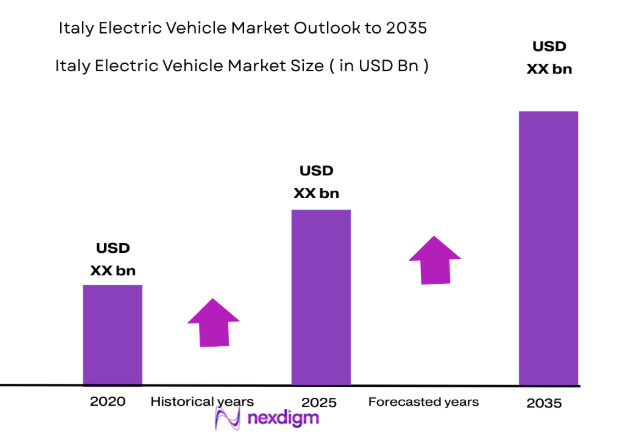
Italy Electric Vehicle market demonstrates strong expansion driven by accelerating electrification across the automotive sector and increasing adoption of zero-emission vehicles across passenger and commercial mobility segments. According to data from the International Energy Agency and European Automobile Manufacturers Association, electric vehicle sales revenue generated in Italy reached approximately USD ~ billion based on a recent historical assessment. Growth is supported by government incentives for low-emission vehicles, expanding public charging infrastructure, and automotive manufacturers introducing a broader portfolio of battery electric vehicles and plug-in hybrid models across multiple vehicle segments.
Within Italy, metropolitan economic centers such as Milan, Rome, Turin, and Bologna dominate electric vehicle adoption due to stronger charging infrastructure networks, higher consumer purchasing power, and progressive environmental policies restricting combustion engine vehicles in urban zones. Northern industrial regions also host a strong automotive manufacturing ecosystem including design, engineering, and supply chain companies that support electric mobility innovation. Additionally, the country benefits from broader European Union clean transportation regulations and cross-border EV infrastructure expansion that strengthens demand for electric vehicles across urban and intercity mobility corridors.
Market Segmentation
By Product Type
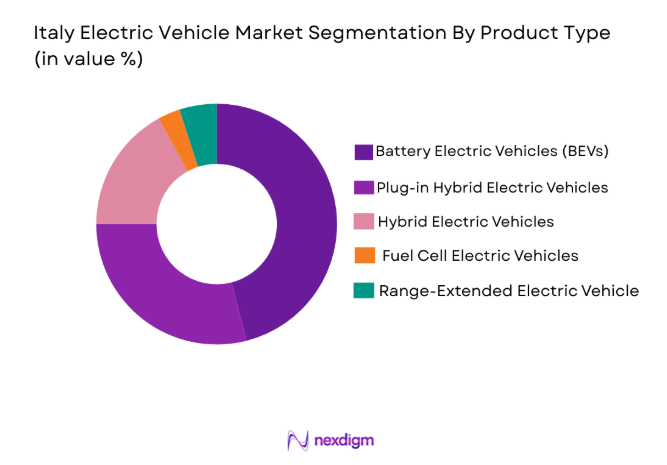
Italy Electric Vehicle market is segmented by product type into Battery Electric Vehicles, Plug-in Hybrid Electric Vehicles, Hybrid Electric Vehicles, Fuel Cell Electric Vehicles, and Range Extended Electric Vehicles. Recently, Battery Electric Vehicles have a dominant market share due to factors such as expanding charging infrastructure across urban centers, strong policy incentives supporting zero emission vehicles, and increasing availability of affordable compact electric models designed for European urban mobility patterns and daily commuting requirements.
By Platform Type
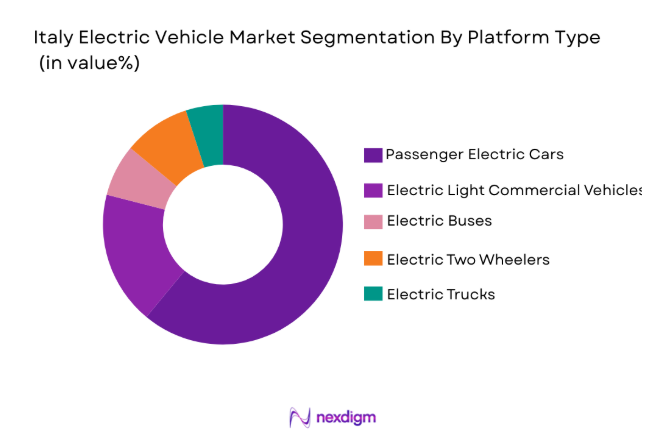
Italy Electric Vehicle market is segmented by platform type into Passenger Electric Cars, Electric Light Commercial Vehicles, Electric Buses, Electric Two Wheelers, and Electric Trucks. Recently, Passenger Electric Cars have a dominant market share due to factors such as strong consumer demand for urban mobility solutions, extensive dealership networks promoting electric passenger vehicles, and supportive government incentives encouraging private consumers to shift from internal combustion engine vehicles to electric alternatives.
Competitive Landscape
The Italy Electric Vehicle market exhibits moderate consolidation where global automotive manufacturers compete alongside regional European automakers expanding their electric mobility portfolios. Major companies maintain strong competitive positions through advanced battery technology investments, large manufacturing capacities, and strong dealership networks across Europe. Strategic collaborations with charging infrastructure providers, battery suppliers, and technology firms continue to reshape competition as companies attempt to strengthen electric mobility capabilities and accelerate vehicle electrification across passenger and commercial transportation segments.
| Company Name | Establishment Year | Headquarters | Technology Focus | Market Reach | Key Products | Revenue | Battery Strategy |
| Stellantis | 2021 | Netherlands | ~ | ~ | ~ | ~ | ~ |
| Tesla | 2003 | United States | ~ | ~ | ~ | ~ | ~ |
| Volkswagen Group | 1937 | Germany | ~ | ~ | ~ | ~ | ~ |
| Renault Group | 1899 | France | ~ | ~ | ~ | ~ | ~ |
| BMW Group | 1916 | Germany | ~ | ~ | ~ | ~ | ~ |
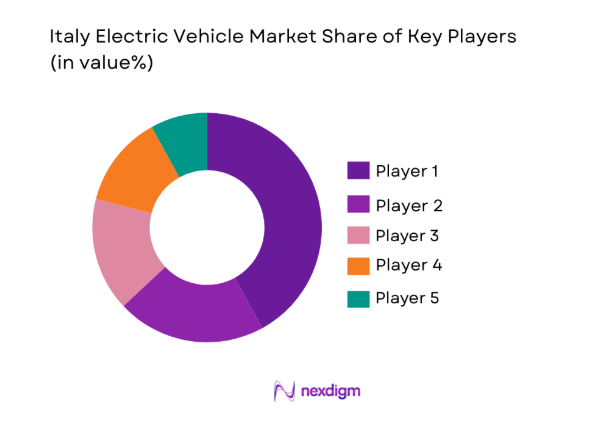
Italy Electric Vehicle Market Analysis
Growth Drivers
Expansion of Government Incentives and Environmental Regulations Encouraging Electric Mobility Adoption:
Italy’s transition toward electric mobility is strongly supported by government incentives, environmental regulations, and European Union climate targets that collectively promote the adoption of zero emission vehicles across the transportation sector. National policy programs offer purchase subsidies, tax exemptions, and registration benefits for battery electric vehicles and plug in hybrid vehicles, which significantly reduce the effective purchase cost for consumers and businesses transitioning to electric mobility solutions. Urban environmental policies in major metropolitan regions increasingly restrict high emission vehicles through low emission zones and congestion charges, encouraging drivers to adopt electric vehicles capable of accessing city centers without regulatory penalties. Municipal governments in cities such as Milan and Rome have introduced mobility policies that prioritize sustainable transportation and encourage electric vehicle ownership through preferential parking, charging infrastructure deployment, and integration with smart city initiatives. These regulatory frameworks are reinforced by European Union climate legislation targeting significant reductions in greenhouse gas emissions from the transportation sector, which requires member states to accelerate electrification of vehicle fleets and reduce reliance on fossil fuel powered vehicles. Automotive manufacturers are responding to these policy incentives by expanding the availability of electric vehicle models across multiple vehicle segments including compact city cars, luxury vehicles, and commercial delivery vans designed specifically for urban logistics operations. Public investment in charging infrastructure has also expanded rapidly through national and regional energy transition programs that support the installation of fast charging stations along highways and urban transportation corridors. This infrastructure expansion improves consumer confidence in electric vehicle usability and reduces concerns related to driving range limitations and charging accessibility across intercity mobility networks. In addition, financial institutions and automotive finance subsidiaries are introducing leasing and financing programs tailored specifically for electric vehicles, enabling consumers to adopt electric mobility with manageable monthly payment structures. As environmental regulations become stricter and consumers increasingly prioritize sustainability in mobility decisions, government incentive frameworks and emission regulations will continue to serve as a major growth catalyst for electric vehicle adoption across Italy.
Rapid Expansion of Electric Vehicle Charging Infrastructure Across Urban and Highway Networks:
The rapid expansion of electric vehicle charging infrastructure throughout Italy is playing a central role in accelerating electric vehicle adoption by addressing one of the most significant barriers to widespread EV deployment, which is the accessibility and convenience of charging networks. Energy utilities, infrastructure developers, and automotive companies are investing heavily in the deployment of fast charging and ultra fast charging stations across major transportation corridors, urban centers, and commercial districts to support increasing numbers of electric vehicles on the road. Charging networks operated by companies such as Enel X, Ionity, and other infrastructure providers are expanding along highways connecting major cities, enabling long distance travel for electric vehicle users without significant charging delays. Urban charging infrastructure is also growing rapidly as municipalities collaborate with private energy companies to install charging points in residential neighborhoods, public parking areas, shopping centers, and office complexes where electric vehicle owners can conveniently recharge their vehicles. These infrastructure investments are supported by European Union funding programs and national energy transition initiatives that prioritize the development of sustainable mobility systems across member states. The integration of smart charging technology further enhances the efficiency of electric vehicle charging networks by allowing vehicles to charge during off peak electricity demand periods and enabling communication between vehicles and electricity grids to optimize energy distribution. Automotive manufacturers are increasingly integrating advanced navigation systems within electric vehicles that guide drivers to available charging stations and provide real time charging availability information, significantly improving the overall user experience for EV owners. Fleet operators in logistics, ride sharing, and commercial transportation sectors are also adopting electric vehicles more rapidly as charging infrastructure becomes more reliable and accessible across industrial zones and urban delivery routes. Private businesses including shopping malls, hotels, and corporate campuses are installing charging stations to attract environmentally conscious customers and employees who rely on electric vehicles for daily mobility. As the density and reliability of charging infrastructure continue to improve across Italy’s transportation network, consumer confidence in electric vehicle practicality strengthens, accelerating market expansion and reinforcing long term electrification trends across the national automotive ecosystem.
Market Challenges
High Purchase Costs and Battery Manufacturing Expenses Limiting Mass Market EV Adoption:
Despite strong growth momentum in electric vehicle adoption across Italy, the high purchase cost of electric vehicles compared with conventional internal combustion engine vehicles continues to represent a major challenge that slows widespread market penetration among price sensitive consumer segments. Electric vehicles typically incorporate advanced lithium ion battery systems that remain one of the most expensive components of EV production, accounting for a substantial proportion of total vehicle manufacturing costs. Automotive manufacturers invest heavily in battery technology research, energy density improvements, and supply chain optimization to reduce production costs, yet battery packs still require significant capital investment due to complex manufacturing processes and reliance on raw materials such as lithium, nickel, and cobalt. These raw materials are sourced through global supply chains that often experience price volatility and geopolitical constraints, which directly influence battery manufacturing costs and overall electric vehicle pricing structures. Consumers evaluating electric vehicles frequently compare the upfront purchase cost of EVs with traditional vehicles powered by gasoline or diesel engines, and despite lower operating costs over time, the initial investment remains a key barrier to adoption for many households. Government incentives and purchase subsidies partially offset these price differences, yet incentive programs can fluctuate based on national budget priorities and regulatory adjustments, creating uncertainty among potential buyers considering electric vehicle purchases. In addition, the resale value of electric vehicles remains an evolving factor within automotive markets because battery degradation and technology improvements influence long term vehicle valuation in secondary markets. Financial institutions and automotive leasing companies are gradually introducing innovative financing solutions designed to reduce upfront purchase costs through leasing models and battery subscription services, but these solutions require strong consumer trust in emerging electric mobility technologies. The automotive industry continues to pursue economies of scale through large scale EV manufacturing facilities and global battery supply chain partnerships that aim to reduce vehicle production costs over time. However, until battery costs decline significantly and electric vehicle manufacturing becomes more cost competitive with traditional automotive production, high purchase prices will remain a structural challenge influencing consumer adoption rates across the Italian automotive market.
Uneven Charging Infrastructure Distribution Between Urban Centers and Rural Regions:
Although Italy has made significant progress in expanding electric vehicle charging infrastructure across major metropolitan areas and highway corridors, the uneven distribution of charging networks between urban and rural regions remains a major challenge that affects nationwide electric vehicle adoption. Urban areas such as Milan, Rome, Turin, and Florence benefit from relatively dense charging networks supported by municipal sustainability initiatives and private infrastructure investments that provide convenient charging access for electric vehicle users. In contrast, rural regions and smaller towns often have limited charging infrastructure availability, which creates range anxiety among potential electric vehicle buyers who rely on private vehicles for longer distance travel between cities and rural communities. This geographic imbalance in charging infrastructure coverage is partly influenced by the economics of infrastructure deployment because charging network operators prioritize high traffic urban locations where charging utilization rates are higher and infrastructure investments can generate stronger financial returns. Rural charging infrastructure development often requires public sector support and policy incentives to ensure that electric mobility remains accessible beyond major metropolitan regions. The lack of widespread charging coverage in rural areas also affects logistics operators, agricultural businesses, and regional transportation services that rely on dependable charging infrastructure for electric commercial vehicle fleets operating outside urban centers. Energy grid capacity in remote areas can also limit the deployment of high power charging stations, particularly ultra fast charging systems that require significant electrical infrastructure upgrades to support rapid charging capabilities. Governments and infrastructure developers are exploring solutions such as distributed charging networks, renewable energy powered charging stations, and integrated grid modernization programs to address these regional infrastructure disparities. However, the pace of charging infrastructure deployment across rural regions remains slower than urban expansion due to higher installation costs and lower immediate demand for charging services. Until charging infrastructure networks achieve more balanced geographic coverage across Italy’s transportation ecosystem, consumers living outside major cities may remain hesitant to adopt electric vehicles due to concerns regarding long distance mobility and reliable charging access.
Opportunities
Expansion of Electric Commercial Vehicle Fleets for Urban Logistics and Last Mile Delivery:
The rapid growth of e commerce and urban logistics operations across Italy presents a significant opportunity for electric vehicle adoption within commercial transportation fleets that operate in densely populated metropolitan regions. Logistics companies and parcel delivery operators increasingly rely on light commercial vehicles and delivery vans to support last mile delivery services connecting warehouses, distribution hubs, and urban customers across major cities. Electric commercial vehicles offer substantial advantages for logistics operators because they produce zero tailpipe emissions, operate with lower fuel costs compared with diesel powered vehicles, and align with sustainability commitments adopted by many multinational logistics companies. Municipal governments across Italy are also introducing urban mobility regulations that restrict high emission delivery vehicles within city centers, encouraging logistics companies to transition toward electric fleets capable of operating within low emission zones without regulatory penalties. Electric delivery vans and commercial vehicles are particularly suitable for urban logistics routes because these vehicles typically travel predictable daily distances that fall well within the driving range capabilities of modern electric powertrains. Automotive manufacturers have recognized this opportunity and are developing specialized electric commercial vehicle platforms designed to accommodate cargo capacity requirements while maintaining energy efficiency and operational reliability. Charging infrastructure deployment within logistics depots and distribution centers further strengthens the practicality of electric commercial fleets because vehicles can recharge overnight while not in active operation. Fleet electrification programs supported by government incentives and sustainability funding initiatives also provide financial support for companies investing in electric commercial vehicles as part of broader corporate decarbonization strategies. Major logistics providers are increasingly integrating electric delivery vehicles within their fleets to reduce operational emissions and meet environmental reporting requirements associated with global supply chain sustainability commitments. As urban delivery volumes continue to increase due to online retail growth and evolving consumer purchasing behavior, electric commercial vehicles will represent a major opportunity for expansion within the Italy electric vehicle market.
Development of Next Generation Battery Technologies Improving Vehicle Range and Cost Efficiency:
The development of next generation battery technologies represents a transformative opportunity for the electric vehicle industry in Italy because advancements in battery chemistry and energy storage design have the potential to significantly improve vehicle performance while reducing manufacturing costs. Current electric vehicles primarily rely on lithium ion battery systems that offer strong energy density and reliability, yet research and development efforts are rapidly progressing toward alternative battery chemistries including solid state batteries, advanced lithium iron phosphate systems, and high nickel cathode technologies that enhance vehicle range and charging efficiency. Automotive manufacturers and battery technology companies are investing heavily in research collaborations, pilot production facilities, and strategic partnerships designed to accelerate the commercialization of advanced battery technologies capable of delivering improved energy density and longer operational lifespans. These technological improvements directly influence consumer adoption rates because longer driving ranges reduce concerns related to charging frequency and vehicle usability across long distance travel routes. Faster charging capabilities supported by advanced battery architectures also reduce the time required for vehicle recharging, making electric vehicles more convenient for consumers accustomed to rapid refueling of traditional gasoline vehicles. Battery manufacturing innovation also focuses on improving recycling processes and material efficiency to reduce reliance on scarce raw materials such as cobalt while strengthening the sustainability of battery supply chains. European governments and industrial policy frameworks are supporting domestic battery manufacturing initiatives that aim to establish a competitive regional battery industry capable of supplying automotive manufacturers across the European electric vehicle ecosystem. As battery technology evolves and production scales increase through gigafactory developments across Europe, electric vehicle manufacturing costs are expected to decline while vehicle performance capabilities improve significantly. These technological advancements will expand the appeal of electric vehicles to broader consumer segments while strengthening the competitiveness of electric mobility solutions across passenger and commercial transportation markets in Italy.
Future Outlook
The Italy Electric Vehicle market is expected to continue expanding steadily over the coming years as electric mobility becomes a central component of the country’s transportation transition. Automotive manufacturers are investing heavily in next generation electric platforms while governments strengthen regulatory frameworks supporting zero emission mobility. Expansion of nationwide charging infrastructure and battery technology improvements will further enhance vehicle usability. Rising consumer awareness regarding environmental sustainability and the electrification of commercial fleets will continue driving long term demand across the automotive sector.
Major Players
- Tesla
- Volkswagen Group
- Renault Group
- BMW Group
- Mercedes Benz Group
- Hyundai Motor Company
- Kia Corporation
- Nissan Motor Company
- Toyota Motor Corporation
- Ford Motor Company
- BYD Auto
- Volvo Cars
- MG Motor
- Polestar
Key Target Audience
- Battery manufacturers
- Electric vehicle component suppliers
- Charging infrastructure developers
- Logistics and fleet operators
- Investments and venture capitalist firm
- Government and regulatory bodies
- Energy utilities and grid operators
Research Methodology
Step 1: Identification of Key Variables
The study identifies the major economic, technological, and regulatory variables influencing electric vehicle adoption across Italy. Data points include vehicle sales, charging infrastructure development, automotive investments, and consumer adoption patterns within the national mobility ecosystem. These variables establish the structural framework for the market analysis.
Step 2: Market Analysis and Construction
A comprehensive analysis of the electric vehicle industry structure is conducted using industry databases, automotive association reports, and governmental publications. Market models are constructed to evaluate value chains, technology adoption patterns, and competitive dynamics shaping electric mobility development across Italy.
Step 3: Hypothesis Validation and Expert Consultation
Industry experts including automotive engineers, infrastructure developers, and mobility analysts are consulted to validate market assumptions and confirm technological trends influencing electric vehicle adoption. This step ensures that research findings align with real world developments within the automotive and energy sectors.
Step 4: Research Synthesis and Final Output
Validated data is consolidated to construct the final research report. Market segmentation, competitive landscape evaluation, and future outlook analysis are integrated to present a comprehensive understanding of the Italy Electric Vehicle market and its evolving industry dynamics.

- Executive Summary
- Research Methodology
(Definitions, Scope, Industry Assumptions, Market Sizing Approach, Primary & Secondary Research Framework, Data Collection & Verification Protocol, Analytic Models & Forecast Methodology, Limitations & Research Validity Checks)

- Market Definition and Scope
- Value Chain & Stakeholder Ecosystem
- Regulatory / Certification Landscape
- Sector Dynamics Affecting Demand
- Strategic Initiatives & Infrastructure Growth

- Growth Drivers
Expansion of national incentives supporting low emission vehicle adoption
Rising fuel costs encouraging transition toward electric mobility solutions
Rapid expansion of public charging infrastructure across Italian cities
Increasing consumer awareness regarding environmental sustainability
Automotive manufacturers expanding EV product portfolios in European markets - Market Challenges
High upfront purchase costs compared with conventional vehicles
Limited charging infrastructure coverage in rural regions
Battery supply chain dependencies and raw material volatility
Consumer concerns regarding driving range and battery lifespan
Complex regulatory compliance and homologation procedures - Market Opportunities
Expansion of ultra fast charging networks across highways and urban centers
Growing corporate fleet electrification initiatives in logistics and delivery sectors
Integration of renewable energy with EV charging infrastructure - Trends
Growth of compact urban electric vehicles suited for Italian city mobility
Expansion of battery leasing and subscription ownership models
Automakers increasing investments in next generation battery technologies
Rising deployment of smart charging and vehicle to grid technologies
Expansion of electric commercial vehicles for last mile delivery services - Government Regulations & Defense Policy
European Union emission reduction targets influencing national vehicle policies
Government incentive programs supporting EV purchases and charging infrastructure
Regulations encouraging zero emission urban mobility zones in major cities - SWOT Analysis
Stakeholder and Ecosystem Analysis
Porter’s Five Forces Analysis
Competition Intensity and Ecosystem Mapping

- By Market Value, 2020-2025
- By Installed Units, 2020-2025
- By Average System Price, 2020-2025
- By System Complexity Tier, 2020-2025

- By System Type (In Value%)
Battery Electric Vehicles
Plug-in Hybrid Electric Vehicles
Hybrid Electric Vehicles
Fuel Cell Electric Vehicles
Range Extended Electric Vehicles - By Platform Type (In Value%)
Passenger Vehicles
Commercial Vehicles
Electric Two Wheelers
Electric Buses
Electric Light Commercial Vehicles - By Fitment Type (In Value%)
OEM Factory Installed Electric Systems
Retrofitted Electric Conversion Systems
Modular Battery Integration Platforms
Integrated Electric Powertrain Systems
Fleet Electrification Platforms - By EndUser Segment (In Value%)
Private Passenger Vehicle Owners
Corporate Fleet Operators
Public Transportation Authorities
Logistics and Delivery Companies
Government and Municipal Agencies - By Procurement Channel (In Value%)
Authorized Automotive Dealerships
Direct Manufacturer Sales Channels
Fleet Procurement Contracts
Government Procurement Programs
Online Automotive Sales Platforms - By Material / Technology (in Value %)
Lithium-ion Battery Technology
Nickel Manganese Cobalt Battery Systems
Lithium Iron Phosphate Battery Systems
Solid State Battery Technology
Advanced Battery Management Systems

- Market structure and competitive positioning
Market share snapshot of major players
CrossComparison Parameters (Vehicle Range, Charging Time, Battery Capacity, Vehicle Price Segment, Charging Network Compatibility)
SWOT Analysis of Key Competitors
Pricing & Procurement Analysis - Key Players
Stellantis
Tesla
Volkswagen Group
Renault Group
BMW Group
Mercedes Benz Group
Hyundai Motor Company
Kia Corporation
Nissan Motor Company
Toyota Motor Corporation
Ford Motor Company
BYD Auto
Volvo Cars
MG Motor
Polestar

- Private consumers increasingly adopting EVs due to urban mobility restrictions on combustion vehicles
- Corporate fleets transitioning toward electric vans and cars to meet sustainability targets
- Public transportation authorities investing in electric buses to reduce urban emissions
- Logistics companies adopting electric delivery vehicles for efficient last mile operations

- Forecast Market Value, 2026-2035
- Forecast Installed Units, 2026-2035
- Price Forecast by System Tier, 2026-2035
- Future Demand by Platform, 2026-2035


 Request a Sample
 Ask for Customization
 Get a Quote
 Enquire Now