
 Download PDF
Market Overview
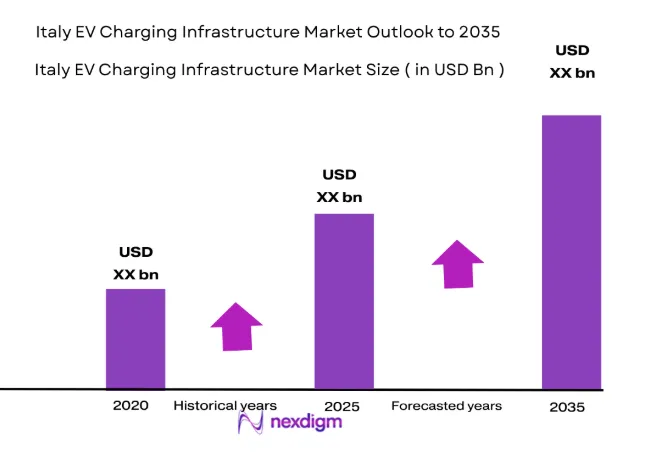
The Italy EV Charging Infrastructure Market recorded a market size of approximately USD ~ billion based on a recent historical assessment, supported by rapid expansion of electric mobility infrastructure and government backed decarbonization initiatives. The market is driven by rising electric vehicle registrations, nationwide deployment of public charging networks, and increasing investments by energy utilities and infrastructure operators. Major operators including Enel X Way and Ionity continue expanding fast charging corridors while European green mobility programs and national recovery funds support installation of high capacity charging stations across urban and highway networks.
Major metropolitan areas including Milan, Rome, Turin, and Bologna dominate the charging infrastructure ecosystem because of higher electric vehicle ownership, strong municipal sustainability programs, and better electricity grid readiness. Northern Italy remains particularly influential as industrial activity and purchasing power stimulate EV adoption. These regions also host major automotive clusters and innovation hubs, attracting investments from utilities and mobility technology providers. Proximity to major European transport corridors further accelerates deployment of highway fast charging stations connecting Italy with neighboring European markets.
Market Segmentation
By Product Type
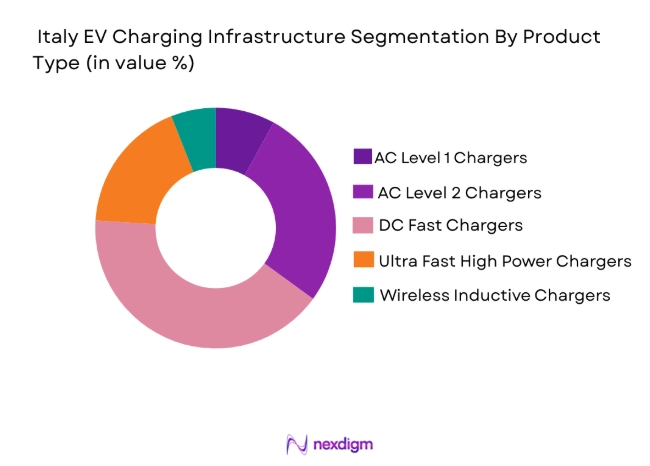
Italy EV Charging Infrastructure market is segmented by product type into AC Level 1 Chargers, AC Level 2 Chargers, DC Fast Chargers, Ultra Fast High Power Chargers, and Wireless Inductive Chargers. Recently, DC Fast Chargers has a dominant market share due to increasing demand for rapid charging, expansion of highway charging corridors, and strong presence of public charging network operators. Fast charging significantly reduces charging time and improves usability for long distance travel and commercial fleets. Energy utilities and infrastructure developers continue investing in high power charging stations to support the growing electric vehicle population across Italy.
By Platform Type
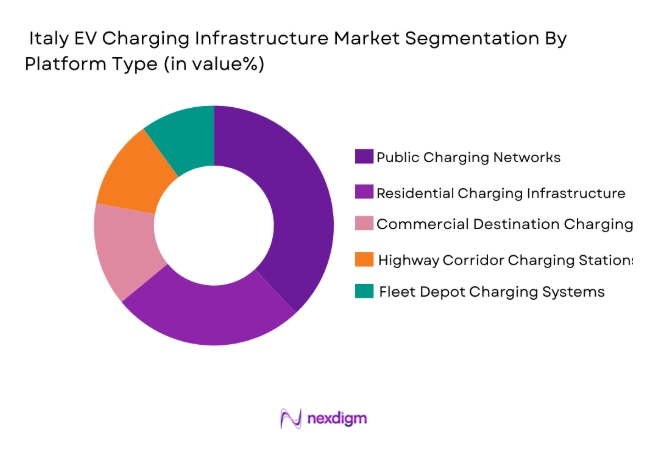
Italy EV Charging Infrastructure market is segmented by platform type into Public Charging Networks, Residential Charging Infrastructure, Commercial Destination Charging, Highway Corridor Charging Stations, and Fleet Depot Charging Systems. Recently, Public Charging Networks has a dominant market share due to rising urban EV adoption, expanding charging accessibility, and government incentives promoting public infrastructure deployment. Municipal authorities and utilities are prioritizing public charging stations in cities and transport hubs to ensure convenient access for EV users. Charging operators are also expanding digital platforms that help drivers locate and use charging services efficiently.
Competitive Landscape
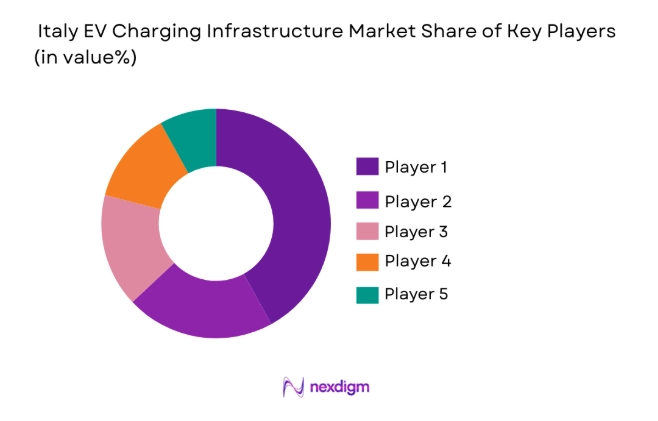
The Italy EV Charging Infrastructure market exhibits a moderately consolidated competitive structure where large energy utilities, global technology providers, and specialized charging network operators compete to expand national charging coverage. Market leadership is strongly influenced by grid integration capabilities, charging speed technology, and the ability to deploy extensive charging networks across cities and transport corridors. Major companies continue forming partnerships with automotive manufacturers and municipal authorities to accelerate infrastructure deployment.
| Company Name | Establishment Year | Headquarters | Technology Focus | Market Reach | Key Products | Revenue | Charging Network Scale |
| Enel X Way | 2017 | Rome, Italy | ~ | ~ | ~ | ~ | ~ |
| ABB | 1988 | Zurich, Switzerland | ~ | ~ | ~ | ~ | ~ |
| Siemens | 1847 | Munich, Germany | ~ | ~ | ~ | ~ | ~ |
| Ionity | 2017 | Munich, Germany | ~ | ~ | ~ | ~ | ~~ |
| Tesla | 2003 | Texas, USA | ~ | ~ | ~ | ~ | ~ |
Italy EV Charging Infrastructure Market Analysis
Growth Drivers
Rapid Expansion of Electric Vehicle Adoption Across Italy:
The accelerating adoption of electric vehicles across Italy is one of the most important factors driving the expansion of EV charging infrastructure. Rising environmental awareness and strict European Union climate policies are encouraging both consumers and governments to shift toward zero emission mobility solutions. As electric vehicle sales continue to grow, the need for reliable and accessible charging infrastructure increases across residential, commercial, and public environments. Automotive manufacturers are introducing a wider range of electric vehicles with longer driving ranges and improved battery performance which increases consumer confidence in electric mobility. Government incentives including vehicle purchase subsidies and infrastructure funding programs further stimulate adoption of EV technology. Large energy utilities and charging network operators are expanding infrastructure investments to accommodate the increasing number of electric vehicles on Italian roads. Cities are implementing sustainability strategies that prioritize electrified transport systems and urban charging accessibility. Corporate fleet operators are also electrifying delivery and service vehicles which increases demand for depot charging infrastructure. As the electric vehicle ecosystem expands across passenger cars, commercial vehicles, and public transport fleets, charging infrastructure deployment becomes essential to support reliable mobility services.
Government Incentives and National Electrification Policies Supporting Charging Infrastructure:
Government policies supporting electric mobility play a crucial role in accelerating investment in EV charging infrastructure throughout Italy. National electrification programs aligned with European climate commitments encourage development of widespread charging networks capable of supporting electric transportation. Public funding initiatives support installation of charging stations in urban centers, residential complexes, and intercity transport corridors. These initiatives are designed to eliminate range anxiety and provide convenient charging access for electric vehicle users. Government regulations also encourage collaboration between utilities, automotive manufacturers, and infrastructure developers to accelerate deployment of advanced charging systems. Financial incentives and infrastructure grants reduce the financial burden associated with large scale charging network investments. Local municipalities are implementing sustainable mobility strategies that prioritize electric vehicle charging accessibility within city planning frameworks. Transportation authorities are also expanding electric public transport fleets which require depot charging facilities and high capacity charging systems. These policy driven initiatives create a supportive regulatory environment that stimulates infrastructure investments and strengthens long term growth prospects for the EV charging infrastructure market.
Market Challenges
High Infrastructure Deployment Costs and Grid Integration Complexity:
One of the major challenges facing the Italy EV charging infrastructure market is the high cost associated with deploying advanced charging networks and integrating them with existing electricity grids. Installation of high power charging stations requires significant capital investment in power electronics, grid connections, and site development. Urban environments often require complex electrical upgrades to support the power demand of multiple fast charging stations. In older historic cities such as Rome and Florence, infrastructure deployment is further complicated by architectural preservation regulations that restrict construction modifications. Grid capacity limitations in densely populated urban districts can also delay installation of high capacity charging equipment. Utilities must invest in grid reinforcement and energy management systems to maintain electricity supply stability as charging demand increases. Infrastructure developers must therefore carefully plan charging network expansion to ensure compatibility with local energy distribution networks. These technical and financial barriers increase the complexity of charging infrastructure development and slow the pace of deployment in some regions.
Uneven Regional Distribution of Charging Infrastructure Across Italy:
Another critical challenge in the EV charging infrastructure market is the uneven distribution of charging stations between northern and southern regions of Italy. Northern Italy has experienced rapid infrastructure development due to stronger economic conditions, industrial clusters, and higher electric vehicle adoption rates. In contrast, southern regions face slower deployment because of limited investment capacity and lower EV adoption levels. This imbalance creates infrastructure accessibility challenges for EV drivers traveling across different regions of the country. Limited charging availability in rural and remote areas may discourage potential consumers from purchasing electric vehicles. Government programs aim to reduce this regional disparity by encouraging infrastructure investment across less developed regions. However, achieving balanced infrastructure distribution remains a complex process requiring coordination between national authorities, energy utilities, and local governments. Addressing this imbalance is essential to ensure nationwide accessibility of charging services and support broader adoption of electric mobility.
Opportunities
Development of Ultra Fast Charging Networks Along European Transport Corridors:
Expansion of ultra fast charging infrastructure along major European transport corridors presents a significant growth opportunity for the Italy EV charging infrastructure market. Italy serves as a strategic transit route connecting southern Europe with central and northern European markets. As electric vehicles increasingly support long distance travel, high power charging stations capable of delivering rapid energy replenishment become essential. Charging network operators are investing in ultra fast charging hubs along highways and major transportation routes to support intercity mobility. These charging hubs provide rapid charging services that significantly reduce travel interruptions for EV drivers. Integration with European cross border charging networks also enhances accessibility for international travelers and freight operators. Infrastructure investments in these strategic transport corridors strengthen Italy’s position within the broader European electric mobility ecosystem. As long distance EV travel becomes more common, ultra fast charging infrastructure will play a critical role in supporting reliable transportation networks across the continent.
Integration of Renewable Energy Sources With Charging Infrastructure:
Integration of renewable energy generation with EV charging networks offers another major opportunity for the Italian charging infrastructure market. Solar powered charging stations and energy storage systems can significantly reduce electricity costs while supporting national sustainability goals. Renewable energy integrated charging systems allow operators to generate clean electricity locally and supply it directly to electric vehicles. This approach improves the environmental benefits of electric mobility while also enhancing energy independence. Energy storage technologies can further stabilize electricity supply by storing renewable energy during peak generation periods and releasing it when charging demand increases. Utilities and charging network operators are increasingly exploring hybrid infrastructure models that combine renewable energy generation, battery storage, and EV charging services. Such integrated energy ecosystems align with Italy’s long term decarbonization strategy and strengthen the sustainability profile of electric transportation systems.
Future Outlook
The Italy EV Charging Infrastructure market is expected to experience strong expansion as electric vehicle adoption accelerates across passenger and commercial transport sectors. Government electrification policies and European climate initiatives will continue supporting infrastructure investments. Technological advancements in fast charging systems and smart energy management platforms will improve charging efficiency and reliability. Increasing collaboration between automotive manufacturers, utilities, and mobility companies will expand nationwide charging networks over the coming years.
Major Players
- ABB
- Siemens
- Alpitronic
- Tesla
- Schneider Electric
- EVBox
- Ionity
- Efacec
- Shell Recharge Solutions
- ChargePoint
- Legrand
- Engie
- Circontrol
- Delta Electronics
Key Target Audience
- Automotive component manufacturers
- Charging infrastructure developers
- Energy utilities and electricity providers
- Investments and venture capitalist firms
- Government and regulatory bodies
- Logistics and transportation companies
- Smart mobility technology providers
Research Methodology
Step 1: Identification of Key Variables
Key market variables such as electric vehicle adoption, charging infrastructure installations, and energy grid capacity are identified. These variables determine infrastructure demand patterns and investment flows across the electric mobility ecosystem.
Step 2: Market Analysis and Construction
Industry reports, government energy publications, and corporate disclosures are analyzed to construct the market framework. Data validation ensures consistency across charging network expansion statistics and infrastructure investment figures.
Step 3: Hypothesis Validation and Expert Consultation
Industry experts including charging infrastructure developers, automotive manufacturers, and energy sector analysts validate the research assumptions. Their insights help refine the analysis of market trends and infrastructure deployment strategies.
Step 4: Research Synthesis and Final Output
All validated data and expert insights are synthesized into a comprehensive market report. Analytical models are applied to generate strategic insights and evaluate market opportunities across the EV charging ecosystem.

- Executive Summary
- Research Methodology
(Definitions, Scope, Industry Assumptions, Market Sizing Approach, Primary & Secondary Research Framework, Data Collection & Verification Protocol, Analytic Models & Forecast Methodology, Limitations & Research Validity Checks)

- Market Definition and Scope
- Value Chain & Stakeholder Ecosystem
- Regulatory / Certification Landscape
- Sector Dynamics Affecting Demand
- Strategic Initiatives & Infrastructure Growth

- Growth Drivers
Expansion of electric vehicle adoption across passenger and commercial transport segments
Government incentives supporting national EV infrastructure expansion
Rapid development of highway fast charging corridors across Italy
Investments by utilities and energy companies in smart charging networks
Automotive manufacturers partnering with charging operators to support EV ecosystems - Market Challenges
High installation costs associated with high power charging infrastructure
Grid capacity limitations in historic urban centers
Complex municipal permitting procedures for charging station installation
Uneven infrastructure distribution between northern and southern Italy
Interoperability challenges across multiple charging networks - Market Opportunities
Expansion of ultra fast charging networks along European transport corridors
Integration of renewable energy sources into EV charging infrastructure
Development of large scale fleet charging systems for logistics and mobility services - Trends
Deployment of ultra fast DC charging hubs in metropolitan regions
Growth of subscription based EV charging services and digital platforms
Integration of solar powered charging stations
Adoption of vehicle to grid energy management technologies
Expansion of smart charging networks connected with energy utilities - Government Regulations & Defense Policy
National electric mobility strategy promoting EV infrastructure investments
European Union climate transition regulations encouraging charging network expansion
Public funding programs supporting EV charging deployment
SWOT Analysis
Stakeholder and Ecosystem Analysis
Porter’s Five Forces Analysis
Competition Intensity and Ecosystem Mapping

- By Market Value, 2020-2025
- By Installed Units, 2020-2025
- By Average System Price, 2020-2025
- By System Complexity Tier, 2020-2025

- By System Type (In Value%)
AC Level 1 Charging Systems
AC Level 2 Charging Systems
DC Fast Charging Systems
Ultra Fast High Power Charging Systems
Wireless Inductive Charging Systems - By Platform Type (In Value%)
Public Charging Networks
Residential Charging Infrastructure
Commercial Destination Charging
Highway Corridor Charging Stations
Fleet and Depot Charging Systems - By Fitment Type (In Value%)
Standalone Charging Stations
Parking Facility Integrated Chargers
On Street Municipal Charging Points
Highway Service Area Charging Hubs
Retail and Commercial Complex Chargers - By EndUser Segment (In Value%)
Private Electric Vehicle Owners
Corporate Fleet Operators
Public Transport Authorities
Logistics and Delivery Companies
Commercial Property Operators - By Procurement Channel (In Value%)
Government Infrastructure Tenders
Utility Company Infrastructure Projects
Private Charging Network Operators
Public Private Partnership Projects
Corporate Fleet Infrastructure Procurement - By Material / Technology (in Value %)
Smart Grid Connected Charging Systems
Internet of Things Enabled Chargers
Renewable Energy Integrated Chargers
Vehicle to Grid Enabled Charging Systems
Energy Storage Integrated Charging Systems

- Market structure and competitive positioning
Market share snapshot of major players
CrossComparison Parameters (Charging Power Capacity, Network Coverage, Charger Technology, Installation Capability, Grid Integration, Interoperability Standards, Digital Platform Capability, Pricing Model, Infrastructure Partnerships)
SWOT Analysis of Key Competitors
Pricing & Procurement Analysis - Key Players
Enel X Way
ABB
Siemens
Alpitronic
Tesla
Schneider Electric
EVBox
Ionity
Efacec
Shell Recharge Solutions
ChargePoint
Legrand
Engie
Circontrol
Delta Electronics

- Private vehicle owners increasingly require accessible urban charging infrastructure
- Corporate fleets expanding workplace charging networks to electrify vehicles
- Public transport authorities deploying depot based charging infrastructure for electric buses
- Logistics and delivery operators investing in fleet charging hubs

- Forecast Market Value, 2026-2035
- Forecast Installed Units, 2026-2035
- Price Forecast by System Tier, 2026-2035
- Future Demand by Platform, 2026-2035


 Request a Sample
 Ask for Customization
 Get a Quote
 Enquire Now