

 Download PDF
 Download PDF
Market Overview
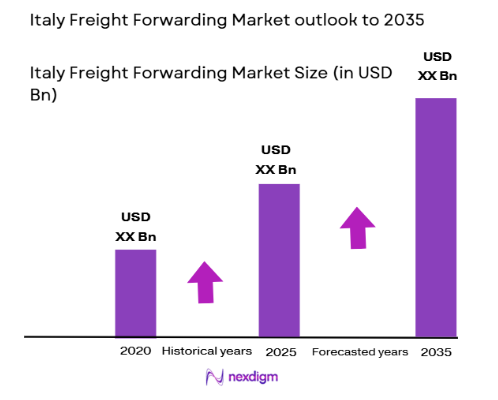
The Italy Freight Forwarding market is valued at approximately USD ~ billion, driven by factors such as the country’s strategic position in European logistics, robust transportation infrastructure, and its thriving manufacturing sector. The market is propelled by the growing demand for efficient supply chain management, cross-border trade, and the expansion of e-commerce. Italy’s advanced port infrastructure, particularly in cities like Genoa and Naples, plays a critical role in facilitating international freight operations, further driving the growth of the industry.
Italy continues to dominate the freight forwarding landscape due to its central location within Europe, its ports serving as vital transshipment hubs, and well-established trade agreements within the European Union. Key regions like Lombardy, Lazio, and Campania are significant contributors, as they house some of the busiest ports and most efficient transportation networks. The country’s manufacturing sector, which includes automotive, textiles, and food, generates substantial freight volumes, strengthening Italy’s position as a global logistics hub.
Market Segmentation
By Product Type:
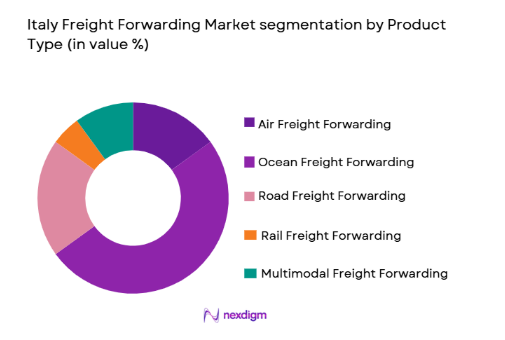
Italy Freight Forwarding market is segmented by product type into air freight forwarding, ocean freight forwarding, road freight forwarding, rail freight forwarding, and multimodal freight forwarding. Recently, ocean freight forwarding has a dominant market share due to factors such as cost-effectiveness for large volumes, strong global shipping routes, and the presence of major Italian ports. Ports such as Genoa and Livorno offer efficient shipping solutions, making ocean freight a preferred choice for international shipments, especially those involving bulk goods, vehicles, and heavy equipment. Additionally, Italy’s strategic location in the Mediterranean boosts the demand for ocean freight services.
By EndUser:
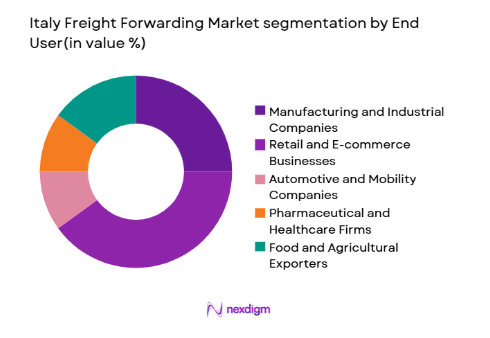
Italy Freight Forwarding market is segmented by end-user into manufacturing and industrial companies, retail and e-commerce businesses, automotive and mobility companies, pharmaceutical and healthcare firms, and food and agricultural exporters. Recently, retail and e-commerce businesses have a dominant market share due to the increasing demand for timely deliveries and last-mile solutions in Italy. With the rise of online shopping, e-commerce companies require fast and reliable freight forwarding services to handle cross-border shipments, often incorporating advanced tracking and warehouse management technologies to ensure smooth operations. The rise of consumer demand for faster deliveries and global product availability continues to drive e-commerce companies’ reliance on freight forwarding solutions.
Competitive Landscape
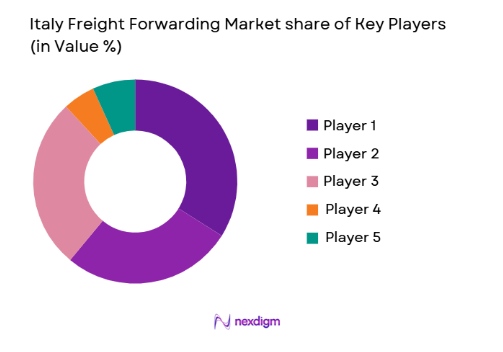
The Italy Freight Forwarding market is highly competitive, with several major players consolidating their positions by expanding their service offerings and improving technological integration. Major players often focus on enhancing their digital platforms for tracking, optimizing supply chain management, and providing end-to-end logistics solutions. Italy’s highly developed infrastructure and strategic location offer an advantage to both local and international logistics firms, contributing to intense competition. The market sees a mix of large global logistics companies and regional players, all vying for dominance.
| Company Name | Establishment Year | Headquarters | Technology Focus | Market Reach | Key Products | Revenue (in billion USD) | Additional Market-Specific Parameter |
| DHL Global Forwarding | 1969 | Bonn, Germany | ~ | ~ | ~ | ~ | ~ |
| Kuehne + Nagel International | 1890 | Schindellegi, Switzerland | ~ | ~ | ~ | ~ | ~ |
| DB Schenker Logistics | 1872 | Essen, Germany | ~ | ~ | ~ | ~ | ~ |
| CEVA Logistics | 2007 | Baar, Switzerland | ~ | ~ | ~ | ~ | ~ |
| Expeditors International | 1979 | Seattle, USA | ~ | ~ | ~ | ~ | ~ |
Italy Freight Forwarding Market Analysis
Growth Drivers
Digital Transformation in Freight Forwarding:
The rapid adoption of digital technologies is a significant growth driver for the Italy Freight Forwarding market. Digital solutions, such as freight tracking systems, automated documentation processing, and integrated supply chain platforms, have enhanced efficiency, reduced human error, and streamlined operations. Technologies such as blockchain are improving transparency in supply chains, allowing for real-time tracking and faster dispute resolution. With the growing demand for faster and more reliable deliveries, companies in Italy are increasingly relying on these digital solutions to improve service levels. Furthermore, the shift toward paperless operations has minimized delays caused by traditional manual processing. As e-commerce and international trade continue to grow, the need for efficient, technology-driven logistics solutions will remain a key factor driving the market forward. This trend is expected to contribute to higher adoption of innovative technologies in the freight forwarding sector in Italy, positioning the market for long-term growth.
Strong Italian Manufacturing Sector:
Italy’s established manufacturing sector is another key driver for the growth of the freight forwarding market. The country is a global leader in the automotive, textile, and machinery industries, all of which require consistent and efficient transportation of raw materials and finished goods. Freight forwarding services are essential for transporting these goods both domestically and internationally. The presence of manufacturing hubs in regions such as Lombardy, Emilia-Romagna, and Veneto ensures a steady flow of goods that require distribution through the country’s extensive logistics network. This consistent demand from the manufacturing sector will continue to drive the growth of Italy’s freight forwarding services. Additionally, Italy’s robust export market, particularly to neighboring European countries, makes the demand for international freight forwarding services even more significant. With the country’s manufacturing output showing signs of growth, the freight forwarding industry is poised to benefit from increased shipments.
Market Challenges
Regulatory and Compliance Barriers:
One of the significant challenges facing the Italy Freight Forwarding market is the complex regulatory and compliance environment. Freight forwarding companies must comply with a range of national and international regulations, including customs procedures, international trade laws, and environmental standards. The complexity of the EU’s trade agreements, coupled with varying regulations across countries, creates challenges for companies operating across borders. Additionally, the regulations related to data protection and digital services add another layer of complexity to freight operations, particularly for companies adopting new technologies such as blockchain and cloud computing. Adhering to these regulations can lead to increased operational costs, especially for smaller companies that lack the resources to manage compliance effectively. These barriers can also lead to delays and inefficiencies in the freight forwarding process, impacting overall market performance.
Rising Fuel Prices and Environmental Constraints:
The ongoing fluctuations in fuel prices present another challenge for the Italy Freight Forwarding market. The cost of fuel, which accounts for a significant portion of transportation expenses, directly affects the cost of freight services. In addition, environmental regulations, particularly those related to carbon emissions and fuel consumption, are becoming increasingly stringent in the EU. These regulations impose additional costs on freight companies, especially those operating in sectors such as road transport, where fuel consumption is a critical factor. Freight forwarders must invest in greener technologies and fleet upgrades to comply with these regulations, adding to the financial burden. Furthermore, rising fuel prices can lead to higher operational costs, which may be passed on to consumers, reducing demand for freight forwarding services and hindering market growth.
Opportunities
Sustainability Initiatives in Logistics:
As sustainability becomes a higher priority globally, there is a significant opportunity for the Italy Freight Forwarding market to focus on eco-friendly logistics solutions. The demand for greener transportation methods, such as electric trucks, biofuels, and carbon offset programs, is rising. This trend is particularly important in light of the European Union’s Green Deal, which aims to reduce emissions across sectors, including logistics. Freight forwarders who invest in sustainable technologies will be able to reduce their environmental impact and meet consumer demand for eco-friendly solutions. This presents a promising opportunity for companies to differentiate themselves by offering sustainable shipping alternatives, potentially capturing a new customer base that values environmental responsibility. As businesses across Italy face increasing pressure to comply with green regulations, freight forwarding companies will be in a prime position to provide low-carbon transport solutions.
Expansion of E-commerce and Last-Mile Logistics Solutions:
The continued growth of e-commerce presents a major opportunity for the Italy Freight Forwarding market, particularly in last-mile delivery solutions. As online shopping continues to surge, demand for efficient, fast, and reliable delivery options is increasing. Companies that provide specialized last-mile delivery services, such as parcel lockers, local distribution centers, and advanced route optimization, will benefit from this trend. Additionally, the integration of technology in the form of AI-powered logistics platforms and drone deliveries has the potential to revolutionize the last-mile segment. Freight forwarders who can adapt to these changes and offer innovative delivery solutions will see significant growth opportunities in Italy’s expanding e-commerce market. With Italian consumers increasingly expecting fast delivery times, freight forwarding companies that can offer agile, last-mile solutions will be well-positioned to meet this demand.
Future Outlook
Over the next five years, the Italy Freight Forwarding market is expected to witness steady growth, driven by the expansion of e-commerce, digital transformation in logistics, and advancements in transportation technology. Increased regulatory support from the European Union to modernize logistics networks will also play a significant role. Moreover, demand for sustainable logistics solutions is set to rise, alongside a continued focus on automation and AI integration to optimize supply chain operations. The growth of Italy’s manufacturing sector will remain a key factor, ensuring strong demand for freight forwarding services.
Major Players
- DHL Global Forwarding
- Kuehne + Nagel International
- DB Schenker Logistics
- CEVA Logistics
- Expeditors International
- DSV A/S
- Panalpina World Transport
- Geodis Logistics
- UPS Supply Chain Solutions
- Nippon Express Holdings
- Bolloré Logistics
- HAPAG-Lloyd AG
- XPO Logistics
- Hitachi Transport System
- Maersk Line
Key Target Audience
- Investments and venture capitalist firms
- Government and regulatory bodies
- Freight forwarding companies
- E-commerce platforms
- Manufacturing companies
- Logistics and supply chain management firms
- Retail businesses and wholesalers
- Port and terminal operators
Research Methodology
Step 1: Identification of Key Variables
We begin by identifying the key variables that influence the market, such as freight volume, transportation modes, and technological trends.
Step 2: Market Analysis and Construction
Next, we analyze data on market size, growth trends, and competitive dynamics to construct a comprehensive market model.
Step 3: Hypothesis Validation and Expert Consultation
Our analysis is validated through consultations with industry experts, stakeholders, and market leaders to ensure the accuracy of the data.
Step 4: Research Synthesis and Final Output
The final research report synthesizes all findings and presents actionable insights based on primary and secondary data sources.

- Executive Summary
- Research Methodology (Definitions, Scope, Industry Assumptions, Market Sizing Approach, Primary & Secondary Research Framework, Data Collection & Verification Protocol, Analytic Models & Forecast Methodology, Limitations & Research Validity Checks)

- Market Definition and Scope
- Value Chain & Stakeholder Ecosystem
- Regulatory / Certification Landscape
- Sector Dynamics Affecting Demand
- Strategic Initiatives & Infrastructure Growth

- Growth Drivers
Expansion of Cross Border Trade Across European Union Logistics Corridors
Growth of E-commerce Fulfillment and International Parcel Distribution
Increasing Port Throughput at Major Italian Maritime Hubs
Digitalization of Freight Documentation and Logistics Platforms
Rising Demand for Multimodal Transport Solutions in European Supply Chains - Market Challenges
Port Congestion and Infrastructure Capacity Limitations
Complex Customs and Trade Compliance Regulations
High Fuel Costs and Freight Transportation Expenses
Fragmented Logistics Service Provider Ecosystem
Cybersecurity Risks in Digital Freight Platforms - Market Opportunities
Expansion of Green Logistics and Sustainable Freight Transport Solutions
Development of Smart Ports and Automated Cargo Handling Systems
Growth of Integrated Pan European Multimodal Logistics Networks - Trends
Adoption of Digital Freight Platforms and Real Time Shipment Visibility
Expansion of Automated Warehousing Integrated with Freight Networks
Integration of Blockchain for Transparent Supply Chain Tracking
Increased Use of Data Analytics for Freight Demand Forecasting
Growing Investment in Cold Chain Logistics for Pharmaceutical Exports - Government Regulations & Defense Policy
European Union Customs and Trade Facilitation Regulations
National Logistics Infrastructure Development Programs
Environmental Regulations Promoting Low Emission Freight Transport - SWOT Analysis
- Stakeholder and Ecosystem Analysis
- Porter’s Five Forces Analysis
- Competition Intensity and Ecosystem Mapping

- By Market Value, 2020-2025
- By Installed Units, 2020-2025
- By Average System Price, 2020-2025
- By System Complexity Tier, 2020-2025

- By System Type (In Value%)
Air Freight Forwarding
Ocean Freight Forwarding
Road Freight Forwarding
Rail Freight Forwarding
Multimodal Freight Forwarding - By Platform Type (In Value%)
Domestic Logistics Platforms
International Trade Corridors
Intermodal Transport Platforms
Port Logistics Platforms
Airport Cargo Handling Platforms - By Fitment Type (In Value%)
In-house Freight Forwarding Operations
Third Party Logistics Integration
Digital Freight Forwarding Platforms
Hybrid Logistics Management Systems
Contract-based Freight Management - By EndUser Segment (In Value%)
Manufacturing and Industrial Companies
Retail and E-commerce Businesses
Automotive and Mobility Companies
Pharmaceutical and Healthcare Firms
Food and Agricultural Exporters - By Procurement Channel (In Value%)
Direct Freight Forwarding Contracts
Digital Freight Marketplace Platforms
Third Party Logistics Providers
International Trade Intermediaries
Government and Institutional Logistics Contracts - By Material / Technology (in Value %)
AI Enabled Logistics Optimization
Blockchain Based Shipment Tracking
IoT Enabled Cargo Monitoring
Cloud Based Freight Management Systems
Automated Customs Documentation Systems

- Market structure and competitive positioning
- Market share snapshot of major players
- CrossComparison Parameters (Service Portfolio Breadth, Global Network Coverage, Multimodal Capability, Digital Logistics Integration, Customs Brokerage Capability, Pricing Flexibility, Cold Chain Capability, Real Time Tracking Technology, Warehousing Integration, Sustainability Logistics Solutions)
- SWOT Analysis of Key Players
- Pricing & Procurement Analysis
- Key Players
DHL Global Forwarding
Kuehne + Nagel International
DB Schenker Logistics
DSV A/S
Expeditors International
CEVA Logistics
Bolloré Logistics
Geodis Logistics
UPS Supply Chain Solutions
Nippon Express Holdings
Panalpina World Transport
Savino Del Bene
Arcese Group
Fercam Logistics
Transmec Group

- Manufacturing exporters rely on freight forwarding networks for efficient cross border trade across European markets
- E-commerce companies require integrated freight forwarding services to manage international parcel and fulfillment logistics
- Automotive manufacturers depend on reliable freight forwarding for global supply chain component transportation
- Pharmaceutical exporters utilize specialized freight forwarding services for temperature controlled cargo shipments

- Forecast Market Value, 2026-2035
- Forecast Installed Units, 2026-2035
- Price Forecast by System Tier, 2026-2035
- Future Demand by Platform, 2026-2035


 Request a Sample
 Ask for Customization
 Get a Quote
 Enquire Now