
 Download PDF
Market Overview
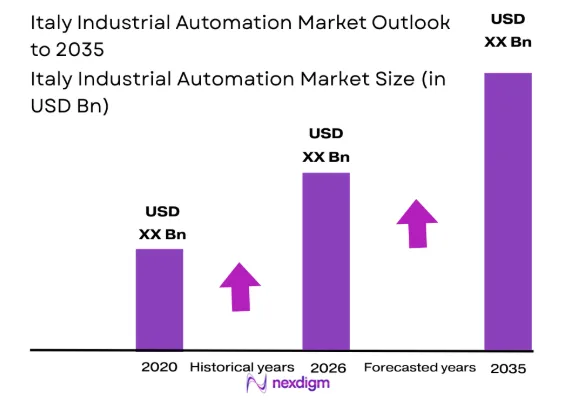
The Italy Industrial Automation market is valued at approximately USD ~ billion based on a recent historical assessment, driven by the increased adoption of automation technologies across key industries like automotive, pharmaceuticals, and manufacturing. Factors such as the government’s focus on Industry 4.0 initiatives, technological advancements in robotics and AI, and growing demand for efficiency and precision in industrial operations have significantly contributed to market expansion. Italy’s industrial sector is increasingly leveraging automation systems to enhance productivity, reduce operational costs, and ensure competitive advantage in the global market.
Dominant cities in Italy, such as Milan, Turin, and Bologna, have played key roles in driving the industrial automation market due to their strong manufacturing base and technological infrastructure. These cities host a significant number of automotive manufacturers, industrial machinery companies, and research institutions focused on automation. The government’s support through investment in smart factories and Industry 4.0 initiatives further reinforces the country’s position as a leader in the automation landscape. Regional collaborations and innovation clusters in these cities have enhanced Italy’s role in the European industrial automation ecosystem.
Market Segmentation
By Product Type
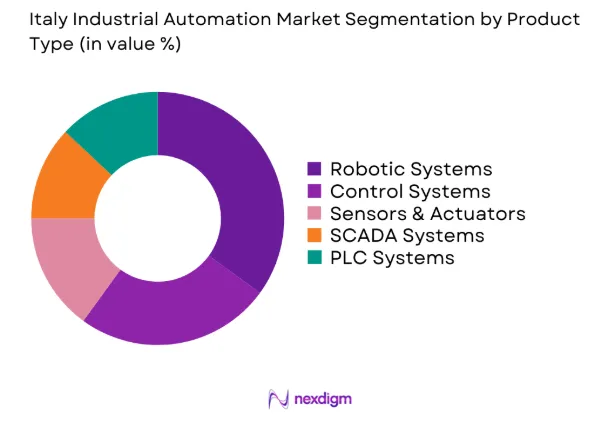
The Italy Industrial Automation market is segmented by product type into control systems, robotic systems, sensors & actuators, SCADA systems, and PLC systems. The dominant sub-segment in this market is robotic systems, which have garnered the largest share due to increased demand across automotive, electronics, and manufacturing industries for precision and efficiency. The growing need for automation in tasks such as assembly, welding, and packaging has fueled this demand, making robotic systems the most significant contributor to the market. Robotics offers scalability, improved production output, and lower labor costs, making it indispensable in modern industrial automation.
By End-User Industry
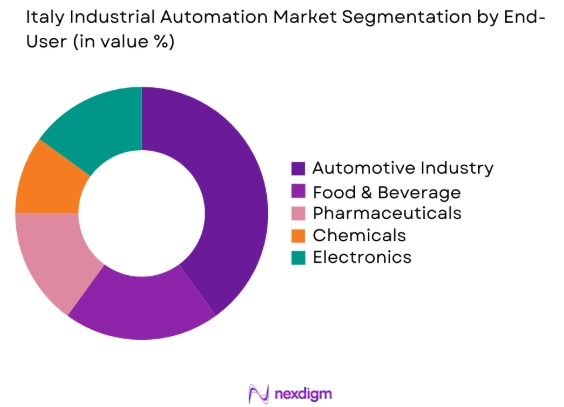
The Italy Industrial Automation market is segmented by end-user industry into automotive, food & beverage, pharmaceuticals, chemicals, and electronics manufacturing. The automotive industry holds the largest share of the market due to the extensive use of automated systems in production lines, particularly in the assembly of vehicles and components. Automation in the automotive industry allows for higher precision, faster production cycles, and lower manufacturing costs. The demand for robots and AI-powered solutions is expected to continue rising as manufacturers focus on increasing production capacity and maintaining quality control standards.
Competitive Landscape
The competitive landscape of the Italy Industrial Automation market is characterized by a few large multinational players alongside strong regional players specializing in niche technologies. Key players in the market are focusing on innovation, technological advancements, and expanding their market presence through strategic partnerships and acquisitions. Automation solutions offered by these players are essential in improving operational efficiency, reducing labor costs, and enhancing product quality in various industries. Industry consolidation is expected as larger players continue to acquire smaller firms with specialized technologies to strengthen their market offerings.
| Company Name | Establishment Year | Headquarters | Technology Focus | Market Reach | Key Products | Revenue (USD) | Additional Parameter |
| Siemens | 1847 | Munich, Germany | ~ | ~ | ~ | ~ | ~ |
| ABB | 1988 | Zurich, Switzerland | ~ | ~ | ~ | ~ | ~ |
| Rockwell Automation | 1903 | Milwaukee, USA | ~ | ~ | ~ | ~ | ~ |
| Schneider Electric | 1836 | Rueil-Malmaison, France | ~ | ~ | ~ | ~ | ~ |
| Fanuc | 1956 | Oshino, Japan | ~ | ~ | ~ | ~ | ~ |
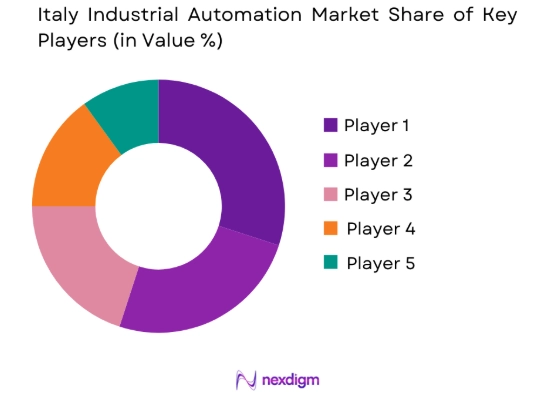
Italy Industrial Automation Market Analysis
Growth Drivers
Increased demand for operational efficiency in manufacturing
As industries like automotive, electronics, and pharmaceuticals aim to boost productivity, industrial automation has become essential to streamline operations. The demand is driven by the need to improve production efficiency, reduce human error, and cut operational costs. Automation technologies such as robotics, AI, and IoT are increasingly integrated into manufacturing processes to enhance output, ensure greater precision, and reduce downtime. Italy, a key manufacturing hub in Europe, is witnessing growing adoption of these technologies as companies seek smarter and more scalable solutions to stay competitive. With the push for greater efficiency and productivity, automation is expected to continue expanding across Italian industries to meet global market demands.
Technological advancements in AI and robotics
The ongoing evolution of AI and robotics technologies has become a key driver of growth in the industrial automation market. AI facilitates smarter decision-making, predictive maintenance, and real-time monitoring, significantly improving operational efficiency and performance. By integrating AI with robotics, manufacturers can achieve higher precision and speed in critical tasks like assembly, inspection, and packaging. The use of advanced sensors further enhances the capabilities of robotic systems, enabling them to perform complex tasks with greater accuracy. In Italy, the adoption of these technologies is rapidly accelerating as companies seek automation solutions to stay competitive in the global economy. With increased pressure to innovate, Italy’s industrial sector is embracing these advancements to optimize production processes and meet rising demand.
Market Challenges
High initial investment costs
A major challenge for businesses adopting industrial automation technologies is the high upfront investment needed for purchasing and installing advanced systems. Although the long-term benefits, such as increased productivity and reduced labor costs, are well-recognized, many small and medium-sized enterprises (SMEs) struggle to cover the substantial costs involved in technology deployment. This financial barrier is particularly impactful for industries with tight profit margins, such as food processing and textiles, where the cost of automation systems may outweigh immediate financial capabilities. As a result, many businesses delay or avoid integrating automation, hindering the overall pace of adoption and innovation within the sector.
Integration with legacy systems
A significant challenge for companies is integrating new automation technologies with legacy systems. Many Italian manufacturing industries still rely on outdated machinery and control systems, making it difficult and costly to incorporate modern automation solutions. Ensuring compatibility between new systems and older equipment is crucial for seamless operation and to fully leverage automation benefits. However, the complexity and high cost of such integration projects often deter businesses from adopting the latest technologies. This barrier is particularly challenging for smaller manufacturers, who may lack the resources to invest in extensive system upgrades or integration, slowing down the broader adoption of automation in the industry.
Opportunities
Expansion of smart factory initiatives
Italy is increasingly focusing on the development of smart factories as part of the Industry 4.0 movement, incorporating advanced automation technologies like IoT, AI, and robotics. These smart factories aim to optimize production, enhance efficiency, and enable real-time, data-driven decision-making. The Italian government’s support for digitalization and innovation in manufacturing presents a strong opportunity for automation providers to expand their market presence. By offering smart factory solutions that seamlessly integrate with existing operations, these providers can help businesses enhance productivity, streamline processes, and stay competitive in an evolving industrial landscape. This trend is driving significant growth in Italy’s industrial automation sector.
Rising demand for energy-efficient solutions
As industries in Italy strive to lower their carbon footprint and energy consumption, there is a rising demand for energy-efficient industrial automation solutions. Technologies like energy management systems and smart sensors play a critical role in monitoring and optimizing energy usage within manufacturing operations. With increasingly stringent environmental regulations and heightened awareness around sustainability, automation solutions that reduce energy consumption are gaining significant traction. Companies providing these energy-efficient solutions are positioned to capitalize on this growing trend, offering a competitive advantage in the market while contributing to more sustainable industrial practices. This shift is expected to drive further growth in the Italy Industrial Automation sector.
Future Outlook
The future of the Italy Industrial Automation market is promising, with continued growth expected over the next five years. Technological advancements, such as the integration of AI, robotics, and IoT into manufacturing processes, will drive innovation and productivity. Additionally, government support for Industry 4.0 initiatives and smart factory projects will further accelerate market growth. As Italian industries increasingly prioritize automation to stay competitive, demand for advanced automation solutions will continue to rise, creating opportunities for both established players and new entrants in the market.
Major Players
- Siemens
- ABB
- Rockwell Automation
- Schneider Electric
- Fanuc
- Mitsubishi Electric
- Omron
- Honeywell International
- Yaskawa Electric
- Bosch Rexroth
- KUKA AG
- Emerson Electric
- Panasonic
- Toshiba
- Festo
Key Target Audience
- Investments and venture capitalist firms
- Government and regulatory bodies
- Manufacturing companies seeking automation solutions
- Technology solution providers
- Industrial equipment distributors
- Automation solution integrators
- Research and development departments
- Large-scale industrial consumers
Research Methodology
Step 1: Identification of Key Variables
This step involves identifying the critical factors and trends that impact the industrial automation market, including technological advancements, market dynamics, and customer preferences.
Step 2: Market Analysis and Construction
Data is collected through primary and secondary research to understand the market size, segmentation, and growth trends, along with regional analysis and competitive dynamics.
Step 3: Hypothesis Validation and Expert Consultation
Experts from the automation industry are consulted to validate assumptions and refine market models based on their insights and experience.
Step 4: Research Synthesis and Final Output
The collected data and insights are synthesized into actionable market reports, focusing on growth trends, market challenges, and emerging opportunities for industry stakeholders.

- Executive Summary
- Research Methodology (Definitions, Scope, Industry Assumptions, Market Sizing Approach, Primary & Secondary Research Framework, Data Collection & Verification Protocol, Analytic Models & Forecast Methodology, Limitations & Research Validity Checks)

- Market Definition and Scope
- Value Chain & Stakeholder Ecosystem
- Regulatory / Certification Landscape
- Sector Dynamics Affecting Demand
- Strategic Initiatives & Infrastructure Growth

- Growth Drivers
Rising Demand for Efficiency in Manufacturing
Government Support for Smart Manufacturing
Technological Advancements in Automation - Market Challenges
High Initial Investment Costs
Integration with Legacy Systems
Cybersecurity Risks in Industrial Automation - Market Opportunities
Growth in Smart Factory Initiatives
Expansion of Industrial IoT Applications
Integration of AI and Machine Learning in Automation - Trends
Increase in Use of Collaborative Robots
Rise in Adoption of AI-powered Automation
Shift Toward Energy-efficient Industrial Systems - Government Regulations
- SWOT Analysis of Key Competitors
- Porter’s Five Forces

- By Market Value, 2020-2025
- By Installed Units, 2020-2025
- By Average System Price, 2020-2025
- By System Complexity Tier, 2020-2025

- By System Type (In Value%)
Robotic Systems
Control Systems
Sensors & Actuators
PLC Systems
SCADA Systems - By Platform Type (In Value%)
Fixed Platforms
Mobile Platforms
Cloud Platforms
Edge Platforms
Hybrid Platforms - By Fitment Type (In Value%)
On-premise Solutions
Cloud-based Solutions
Modular Solutions
Integrated Solutions
Remote Solutions - By End User Segment (In Value%)
Automotive Industry
Pharmaceutical Industry
Food & Beverage Industry
Electronics Manufacturing
Energy & Utilities - By Procurement Channel (In Value%)
Direct Procurement
Third-party Distributors
Online Procurement
Government Tenders
Private Sector Procurement

- Market Share Analysis
- Cross Comparison Parameters (System Type, Platform Type, Procurement Channel, End User Segment, Fitment Type, Technology Integration, Automation Level, Industry Adoption Rate, Geographic Region, Cost Structure)
- SWOT Analysis of Key Competitors
- Pricing & Procurement Analysis
- Key Players
Siemens
Rockwell Automation
Schneider Electric
ABB
Fanuc
Mitsubishi Electric
Omron
Honeywell International
Yaskawa Electric
Bosch Rexroth
KUKA AG
Emerson Electric
Panasonic
Toshiba
Festo

- Automotive Manufacturers’ Focus on Automation
- Pharmaceutical Industry’s Emphasis on Precision
- Growth in Food & Beverage Manufacturing Automation
- Electronics Industry’s Increasing Reliance on Robotics

- Forecast Market Value, 2026-2035
- Forecast Installed Units, 2026-2035
- Price Forecast by System Tier, 2026-2035
- Future Demand by Platform, 2026-2035


 Request a Sample
 Ask for Customization
 Get a Quote
 Enquire Now