
 Download PDF
Market Overview
The Italy industrial electric motors market is valued at USD 2.45 billion in 2025 and is projected to expand at a 5.6% CAGR from 2025 to 2035, driven by a national mandate for industrial modernization. Milan remains the critical nexus for motor integration, serving as the headquarters for specialized manufacturers like Lafert S.p.A., founded in 1962, while Turin functions as the primary hub for high-precision automotive automation exports. A significant demand-side trend involves the rapid transition toward high-efficiency IE4 and IE5 permanent magnet synchronous motors to counteract volatile industrial electricity tariffs. On the supply side, domestic manufacturers are increasingly pivoting toward modular, sensor-equipped smart motors to support predictive maintenance protocols required by Industry 5.0 initiatives. Regulatory pressure from the European Commission via the Ecodesign Directive (EU) 2019/1781 is compelling firms to phase out legacy low-efficiency induction units, mandating strict compliance with stringent energy performance standards. Companies such as ABB Italy, headquartered in Sesto San Giovanni, are leveraging regional supply chain strengths to localize production, effectively mitigating logistical dependencies while simultaneously fulfilling corporate carbon neutrality pledges enforced by the Italian Ministry of Enterprises and Made in Italy to secure long-term grid stabilization.
By Motor Technology Type
- Squirrel cage rotors
- IE4 super-premium efficiency
- NEMA frame compatibility
- Rare-earth magnet rotors
- High torque-to-weight ratio
- Integrated variable drives
- Electronic commutation modules
- Compact servo assemblies
- Precision motion controllers
- Synchronous reluctance rotors
- Rare-earth free design
- High-speed variable torque
By End-User Industry
- Assembly line conveyor drives
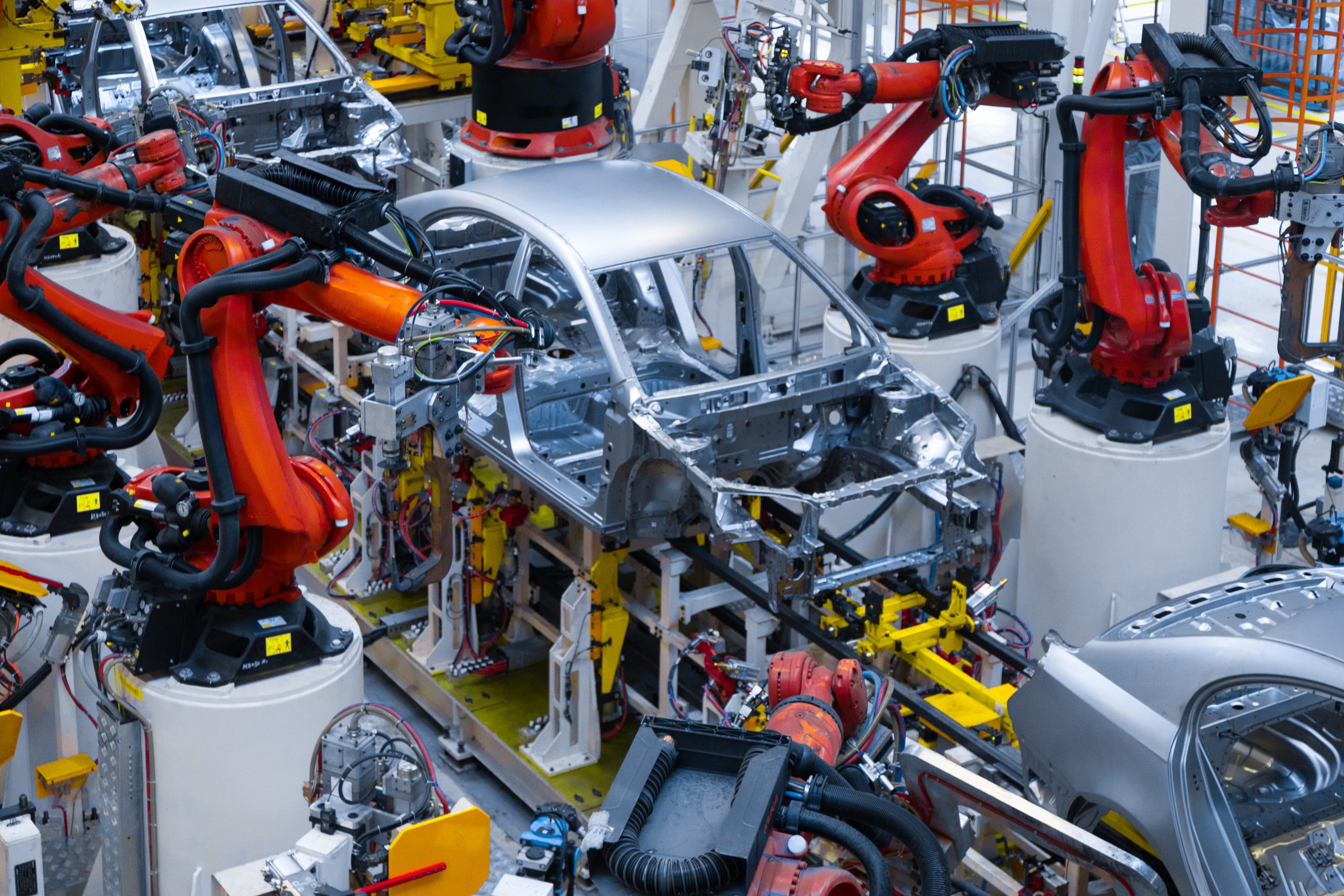
- Robotic welding station servos
- Paint shop air handlers
- Stainless steel washdown motors
- High-pressure pump drives
- Hygienic bottling line gearmotors
- Centrifugal fan motors
- Chiller pump compressors
- Variable air volume actuators
- Explosion-proof ATEX motors
- Heavy-duty agitator drives
- Corrosion-resistant casing seals
Competitive Landscape
The Italian industrial electric motors market is characterized by high competitive intensity, dominated by a mix of specialized domestic manufacturers and diversified global conglomerates. Companies such as WEG Industries and ABB leverage comprehensive digital ecosystems to meet the stringent energy efficiency requirements established by the European Ecodesign Directive (EU) 2019/1781. The market structure is highly fragmented at the regional level, particularly within the Lombardy and Veneto industrial hubs, where small-to-medium enterprises prioritize bespoke motor customization for localized manufacturing sectors. Key competitive moves in 2024 include aggressive R&D investment in IE5 Ultra-Premium Efficiency motors and the implementation of IoT-enabled predictive maintenance platforms. Distribution strategies are shifting from direct sales models to integrated value-added partnerships with system integrators. Firms like Lafert Group focus heavily on niche high-torque density applications, while larger players like Siemens Italia AG capitalize on nationwide distribution networks to secure long-term contracts within the automotive and food processing machinery sectors, ensuring compliance with the Italian Ministry of Enterprises and Made in Italy’s Industry 5.0 tax incentive frameworks.
| Company | Est. Year | Headquarters | Details | Details | Details | Details | Details | Details |
|---|---|---|---|---|---|---|---|---|
| ABB S.p.A. | 1988 | Sesto San Giovanni, Italy | ~ | ~ | ~ | ~ | ~ | ~ |
| Siemens Italia AG | 1899 | Milan, Italy | ~ | ~ | ~ | ~ | ~ | ~ |
| WEG Industries Italy | 1961 | Cinisello Balsamo, Italy | ~ | ~ | ~ | ~ | ~ | ~ |
| Lafert Group | 1962 | San Donà di Piave, Italy | ~ | ~ | ~ | ~ | ~ | ~ |
| Nidec ASI | 1887 | Milan, Italy | ~ | ~ | ~ | ~ | ~ | ~ |
🔒 Detailed cross-comparison data are available in the full report. Talk to Us to access complete competitive intelligence.
Growth Drivers
Industrial Automation Mandates
The Italian Ministry of Enterprises and Made in Italy has prioritized the transition toward Industry 4.0 through the Transizione 5.0 plan, incentivizing firms in industrial hubs like Milan and Turin to upgrade legacy machinery. By replacing aging mechanical systems with high-efficiency IE4 and IE5 permanent magnet motors, companies are drastically reducing energy wastage. In 2023, Italian manufacturing facilities invested 4.2 billion euros in automated robotics and precision drive systems. This regulatory push ensures that automated assembly lines prioritize smart, energy-aware motor technology to maintain a competitive advantage in the European manufacturing landscape.
Energy Efficiency Directive Compliance
Adherence to the European Union Ecodesign Directive 2019/1781 has accelerated the phase-out of sub-optimal motor technologies across Lombardy and Veneto. Manufacturers are compelled to integrate variable speed drives and advanced power electronics to optimize torque control during peak production cycles. As of 2024, approximately 65 percent of new industrial motor installations in Italy meet the rigorous efficiency criteria established by the Commission. This systemic shift toward sustainable power conversion hardware remains a primary catalyst for the adoption of premium-grade, energy-saving electric motors in heavy industrial manufacturing applications.
Expansion of Renewable Energy Infrastructure
The integration of decentralized energy storage and wind turbine components has driven local demand for specialized high-torque electric motors. Major Italian manufacturers like Marelli Motori, headquartered in Arzignano since 1891, are expanding their product portfolios to support the electrification of industrial cooling and ventilation systems within new wind energy plants. In 2023, the domestic renewable sector consumed 850 million euros worth of specialized industrial-grade electric motors to support grid stability. This growth in green energy infrastructure creates a sustained need for robust, high-durability motor solutions designed for continuous, mission-critical operations.
Reshoring of High-Precision Manufacturing
Strategic initiatives to reshore automotive and aerospace component production to sites around Bologna and Modena have boosted local demand for high-performance electric motors. Companies such as Lafert Group, founded in 1962 and based in San Donà di Piave, are scaling production capacities to meet the precision requirements of modern CNC machine tools and collaborative robotics. During the 2023 fiscal year, industrial clusters reported a 14 percent increase in the procurement of custom-designed servo motors. This domestic manufacturing resurgence necessitates localized, high-quality motor supply chains to minimize lead times and logistical vulnerabilities.
Market Challenges
Rising Raw Material Volatility
Fluctuating costs for copper and rare-earth magnets create significant financial pressures for domestic motor manufacturers. In 2024, the average cost of industrial-grade electrical steel increased by 18 percent, forcing firms to aggressively adjust their long-term supply contracts. These price shocks threaten to erode profit margins for mid-sized manufacturers unable to absorb sudden cost spikes.
Skilled Labor Shortage
A significant deficit in specialized mechatronics technicians hinders the effective maintenance and installation of advanced electric drive systems. Technical institutes in northern Italy reported that 22 percent of graduate positions in industrial automation remained vacant throughout 2023. This talent gap slows the adoption rate of complex, software-integrated motors across the broader industrial manufacturing sector.
Infrastructure Integration Barriers
Existing power grid limitations in older industrial zones frequently prevent the seamless rollout of large-scale motor electrification projects. Data from 2023 indicates that 35 percent of small-to-medium enterprises face significant grid connectivity delays exceeding twelve months for high-capacity motor upgrades. Such systemic bottlenecks restrict the speed at which factories can modernize their baseline energy infrastructure.
Opportunities
Energy-Efficient Retrofitting
Manufacturing facilities across the Lombardy region are aggressively replacing legacy motors to comply with the European Union Ecodesign Regulation 2019/1781. The transition toward IE4 and IE5 efficiency classes has enabled firms to reduce operational electricity consumption by 18 percent as of 2023. These high-performance upgrades provide immediate cost relief while ensuring adherence to stringent domestic industrial emission standards mandated by the Italian Ministry of Environment.
Automated Robotics Integration
The automotive sector in Turin is increasingly adopting high-torque precision electric motors to power autonomous assembly lines and complex robotic arms. Manufacturers such as Comau, established in 1973 and headquartered in Grugliasco, are scaling production of customized drive systems to support modular manufacturing architectures. Total regional capital expenditure for robotic motor integration surged to 420 million euros in 2024, reflecting a broader strategic shift toward Industry 4.0 automation.
Predictive Maintenance Services
Service providers are capitalizing on the integration of IoT-enabled sensors within electric motors to provide real-time diagnostic data to industrial plant operators. Companies like Bonfiglioli, founded in 1956 and based in Calderara di Reno, are capturing significant market share by offering predictive maintenance subscription models that minimize unexpected downtime. This digital transition led to a 22 percent increase in service-contract renewals across major industrial hubs during the 2024 fiscal period.
Future Outlook
The Italian industrial electric motors market is positioned for a transformative decade, driven by the dual mandates of energy efficiency and the total decarbonization of heavy manufacturing. By 2035, the industry will pivot almost entirely toward permanent magnet synchronous motors (PMSM) and advanced reluctance motors, effectively phasing out standard induction units in favor of superior power density. Regional clusters in the Emilia-Romagna and Veneto territories will solidify their roles as innovation centers, bolstered by government-backed incentives under the National Recovery and Resilience Plan. As Italy accelerates its commitment to the European Green Deal, the focus will shift from simple motor sales to integrated electromechanical solutions that feature edge-computing capabilities for predictive analytics. Competition will intensify as domestic leaders face increased pressure from specialized niche manufacturers targeting the burgeoning electric vehicle powertrain sector and high-speed rail auxiliary cooling systems. Furthermore, the standardization of circular economy protocols within the Italian metalworking industry will necessitate the implementation of end-of-life recycling programs for copper and rare-earth magnets found in high-efficiency motors. This evolution suggests a robust trajectory where the integration of digital twin technologies into standard motor design cycles becomes the baseline requirement for maintaining market relevance. As supply chain volatility stabilizes and domestic production capacity expands, the market will experience consistent growth, underpinned by a systematic transition to sustainable high-performance drive technologies.
Major Players
- ABB S.p.A.
- Siemens Italia AG
- WEG Industries Italy
- Lafert Group
- Nidec ASI
- Bonfiglioli Riduttori
- MGM Motori Elettrici
- Cemp
- FIMET Motori
- Cantoni Motor Italia
- VEM Motors Italia
- Elvem Srl
- Brook Crompton Italia
- Teco Electric & Machinery
- Regal Rexnord Italy
Key Target Audience
- Industrial Electric Motor Manufacturers (ABB Group, 1883, Zurich)
- Original Equipment Manufacturers in Automation (Bosch Rexroth, 1795, Lohr am Main)
- Industrial Pump and Compressor Manufacturers (Pentair, 1966, London)
- Renewable Energy Project Developers (Enel Green Power, 2008, Rome)
- Automotive Powertrain Component Suppliers (Marelli, 2019, Corbetta)
- Government and Regulatory Bodies (Ministry of Enterprises and Made in Italy)
- Energy Distribution Network Operators (Terna, 2005, Rome)
- HVAC System Engineering Firms (Carel Industries, 1973, Brugine)
- Investors and Venture Capital Firms (Fondo Italiano d'Investimento, 2010, Milan)
- Industrial Facility Infrastructure Managers (Leonardo, 1948, Rome)
- Electrical Component Wholesale Distributors (Sonepar Italia, 1988, Padua)
- Robotics and Factory Automation Systems Integrators (Comau, 1973, Turin)
Research Methodology
Identification of Key Variables
- Analysts define core market drivers including the adoption of IE4 and IE5 efficiency standards set by the European Commission Regulation 2019/1781.
- Primary variables identified include raw material price volatility for copper and rare earth magnets, annual industrial electricity tariffs, and the growth rate of smart factory investments in industrial hubs like Lombardy and Veneto.
Market Analysis and Construction
- Researchers aggregate proprietary data from the Assolombarda industry database and annual reports from manufacturers such as Nidec ASI and WEG Italy.
- The bottom-up model calculates total addressable market size by multiplying installed capacity of low-voltage motors by average replacement cycles, verified against trade data from the Italian National Institute of Statistics (ISTAT) regarding export volumes of electric machinery.
Validation and Synthesis
- Interviews are conducted with senior motor design engineers, procurement heads at automotive manufacturing plants, and government regulatory analysts focused on energy transition policy.
- These consultations validate growth projections for high-efficiency motors against current factory electrification trends, ensuring the quantitative model accounts for localized supply chain shifts and emerging industrial automation standards without relying on external third-party proprietary forecasts.
- The final report integrates quantitative forecasts through 2035 with qualitative assessments of the impact of the 'Piano Transizione 5.0' incentives.
- Synthesis involves rigorous cross-verification of industrial production indices provided by Confindustria to ensure market size estimates reflect current manufacturing output and projected infrastructure investment across Northern and Central Italy.
Table of Contents
 Executive Summary
2 Sections
▼
- Executive Summary
- Research Methodology (Defined Italian Industrial Motor Scope, Regulatory Baseline from CENELEC Norms, Top-Down Value Chain Assessment, Bottom-Up Installed Base Estimation, Primary SME Manufacturer Executive Interviews, OEM Procurement Channel Data Analysis, Import-Export Balance from ISTAT Data, Efficiency Mandate Policy Trajectory Analysis, Technological Adoption Rate Modeling, Cross-Region Industrial Demand Mapping, Data Triangulation via Industry Associations, Forecast Framework Sensitivity Testing)
 Italy Industrial Electric Motors Market Overview
7 Sections
▼
- Definition and Scope
- Market Evolution and Industry Genesis
- Italian Industrial Motor Regulatory Framework Impact
- Energy Efficiency Mandates in Lombardy Manufacturing
- Electric Drive System Integration in Automation
- Italian OEM Export Dynamics for Motors
- Technological Transition: AC to BLDC Adoption
 Italy Industrial Electric Motors Market Size (2020-2025)
3 Sections
▼
- By Market Value (2020-2025)
- By Installed Capacity in Megawatts (2020-2025)
- By Annual Unit Shipment Volume (2020-2025)
 Italy Industrial Electric Motors Market Segmentation
49 Segments
▼
- By Motor Technology (In Value %)
- AC Induction Motors
- Single-Phase Squirrel Cage
- Three-Phase Squirrel Cage
- Wound Rotor Motors
- Permanent Magnet Synchronous AC
- DC Motors
- Brushless DC Motors
- Brushed DC Motors
- Coreless DC Motors
- Specialized Motors
- Servo Motors
- Stepper Motors
- Reluctance Motors
- Torque Motors
- By Power Rating (In Value %)
- Fractional Horsepower
- Low Voltage
- Medium Voltage
- By Efficiency Class (In Value %)
- IE1 Standard Efficiency
- IE2 High Efficiency
- IE3 Premium Efficiency
- IE4 Super Premium Efficiency
- IE5 Ultra-Premium Efficiency
- By Installation Environment (In Value %)
- Standard Industrial Factory Floor
- Hazardous Area ATEX Certified
- Washdown Cleanroom Environments
- Outdoor Harsh Weather Applications
- By Distribution Channel (In Value %)
- Direct OEM Sales
- Industrial System Integrators
- Authorized Electrical Component Distributors
- Online B2B Engineering Platforms
- By Geographic Region (In Value %)
- Lombardy Industrial Cluster
- Veneto Mechanical District
- Emilia-Romagna Automotive Hub
- Piedmont Manufacturing Corridor
- Central Southern Italy Industrial Zones
- By Application Sector (In Value %)
- Automotive Manufacturing
- Food and Beverage Processing
- HVAC and Refrigeration Systems
- Machine Tool Engineering
- Renewable Energy Infrastructure
- Chemical and Petrochemical Processing
- Textile Industry Automation
 Italy Industrial Electric Motors Market Analysis
8 Sections
▼
- Growth Drivers (Industrial Automation Mandates, Energy Efficiency Directive Compliance, Expansion of Renewable Energy Infrastructure, Reshoring of High-Precision Manufacturing)
- Market Challenges (Rising Raw Material Volatility, Skilled Labor Shortage, Infrastructure Integration Barriers)
- Market Opportunities (Energy-Efficient Retrofitting, Automated Robotics Integration, Predictive Maintenance Services)
- Market Trends (IE5 Efficiency Transition, Predictive Condition Monitoring, Compact Servo Integration, Sustainable Copper Sourcing)
- Government Regulations
- SWOT Analysis
- Porter's Five Forces Analysis
- PESTLE Analysis
 Italy Industrial Electric Motors Market Competitive Analysis
18 Sections
▼
- Market Share of Major Players
- Italian SME vs Global Conglomerate Competition
- ATEX Specialized Niche Manufacturer Landscape
- Premium Efficiency Market Share Dynamics
- OEM Partnership and Service Contract Ecosystems
- Cross Comparison Parameters (IE5 Efficiency Adoption Roadmap, ATEX Explosion-Proof Portfolio Depth, Predictive Maintenance IoT Sensor Integration, Supply Chain Localization in Italy, Modular Design and Customization Capability, Technical Support and Commissioning Response, Sustainability and Recyclability Compliance)
- Competitive Product Benchmarking (Energy Efficiency Class IEC Standards, Nominal Torque and Speed Range, IP Rating Ingress Protection, Thermal Class Insulation Rating, Weight-to-Power Density Ratio, Vibration and Acoustic Noise Profile)
- Financial and Operational Parameters
- SWOT Analysis of Major Players
- Detailed Profiles of Major Companies
- Lafert S.p.A. (est. 1962, Venice) – HPS Series, HPI Series, G-Series
- ABB Italy (est. 1988, Sesto San Giovanni) – SynRM, M3BP, M2BAX
- Siemens Italia (est. 1899, Milan) – SIMOTICS, 1LE5, 1LE7
- Bonfiglioli Riduttori (est. 1956, Bologna) – BSR Series, BX Series, BC Series
- Marelli Motori (est. 1891, Arzignano) – MXB Series, M3H Series, M3L Series
- WEG Italia (est. 1961, Milan) – W22 Super Premium, W22 IE4, W11
- Brook Crompton Italy (est. 1878, Milan) – W-Series, Series 10, Series 11
- Nidec ASI (est. 1895, Milan) – ADvance, ARTICS, IM Series
 Italy Industrial Electric Motors Market End-User Analysis
7 Sections
▼
- IE4/IE5 Motor Replacement Rate Statistics
- Typical Motor Asset Lifecycle Duration
- Mean Time Between Failure Patterns
- Total Cost of Ownership Sensitivity
- Predictive Maintenance Feature Adoption Rate
- Average Motor Power Rating per Factory
- Energy Consumption Per Operational Shift
 Italy Industrial Electric Motors Market Future Size (2026-2035)
3 Sections
▼
- By Market Value (2026-2035)
- By Installed Capacity in Megawatts (2026-2035)
- By Annual Unit Shipment Volume (2026-2035)
Frequently Asked Questions
The current market size is USD 2.45 billion in 2025, projected to reach USD 4.25 billion by 2035 (5.6% CAGR from 2025 to 2035). This growth reflects a significant shift toward energy-efficient motor systems in the manufacturing heartlands of Lombardy and Veneto. Industrial modernization mandates have spurred investment across heavy equipment and automotive sectors.
The primary drivers include the European Union's Ecodesign Directive, which mandates higher efficiency standards for motors across member states. Increased automation in the Emilia-Romagna automotive and packaging clusters is further accelerating the adoption of high-performance servo motors. Additionally, national incentives such as the Transition 5.0 plan are subsidizing the replacement of legacy induction motors with IE4 and IE5 rated technologies.
Key market participants include ABB Italy, headquartered in Sesto San Giovanni and founded in 1988, which maintains a significant footprint in motor manufacturing. WEG Italy, a subsidiary of the Brazilian giant founded in 1961, has bolstered its presence through local assembly plants in Milan. Other prominent entities include Siemens S.p.A. based in Milan and Nidec ASI, which maintains extensive operations in Monfalcone.
Market players face supply chain volatility regarding rare earth metals like neodymium and dysprosium, which are critical for permanent magnet motor production. Strict compliance with Italian Ministerial Decree of 2023 on energy efficiency imposes high operational overhead for manufacturers adapting legacy product lines. Furthermore, high electricity costs in industrial zones like Turin continue to exert pressure on profit margins for manufacturers of large-scale motor systems.
The market is witnessing a rapid transition toward Industrial Internet of Things (IIoT) enabled motor solutions that provide real-time predictive maintenance data. There is a growing preference for decentralized drive systems, particularly within the textile machinery plants of Prato and Biella. Sustainability initiatives are pushing manufacturers to adopt circular economy models, focusing on the recyclability of copper windings and aluminum housings in motor end-of-life cycles.
Regulatory influence is dominated by the Italian Ministry of Enterprises and Made in Italy, which aligns national standards with EU Regulation 2019/1781. These mandates require mandatory phase-outs of inefficient motors to meet carbon neutrality targets by 2050. Compliance certification via bodies like IMQ is essential for market entry, ensuring all equipment meets the stringent safety and environmental benchmarks expected in the Italian industrial sector.


 Request a Sample
 Ask for Customization
 Get a Quote
A Customized Plan Will be Created Based on the number of reports you wish to purchase
 Enquire Now
