

 Download PDF
 Download PDF
Market Overview
The Italy Industrial IoT market is projected to reach USD ~ billion in 2024, driven by increasing automation across manufacturing industries and advancements in network infrastructure. The rise in the adoption of connected devices, sensors, and smart machinery in industrial operations is facilitating operational efficiency, predictive maintenance, and real-time data analytics. Italy’s commitment to Industry 4.0 technologies, alongside government incentives to enhance digitalization in industries, is further accelerating the market growth for Industrial IoT solutions.
Dominant cities like Milan, Turin, and Bologna play a pivotal role in Italy’s Industrial IoT market due to their advanced industrial ecosystems and technological infrastructure. Milan, as a financial and innovation hub, is at the forefront of smart factory integration and IoT-driven solutions. Turin, historically known for automotive manufacturing, is leveraging IoT to optimize production and improve manufacturing processes. Bologna, with its significant presence in machinery and electronics, is seeing increased IoT adoption in automation and logistics, further bolstering the market in these regions.
Market Segmentation
By Product Type
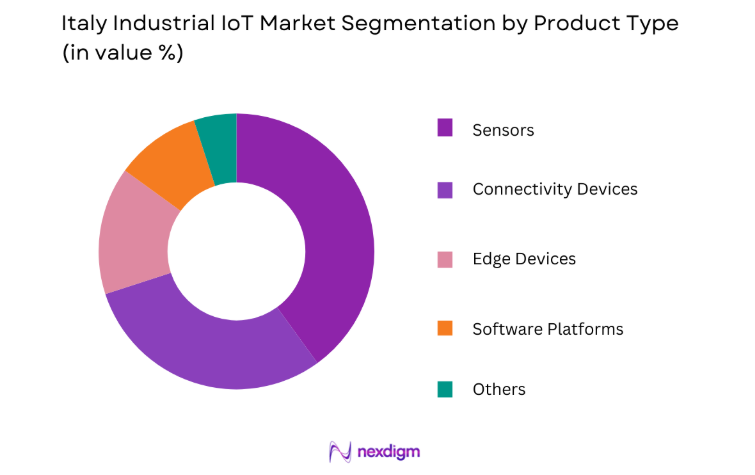
The Italy Industrial IoT market is segmented by product type into sensors, connectivity devices, edge devices, software platforms, and others. Recently, sensors have held a dominant market share due to their critical role in data collection and monitoring across various industrial applications. Sensors enable real-time tracking, predictive maintenance, and process optimization by providing continuous data on temperature, pressure, and other environmental factors. As industries focus on enhancing operational efficiency and minimizing downtime, the adoption of advanced sensor technologies continues to rise, positioning sensors as a key enabler in the Industrial IoT ecosystem.
By End-User Industry
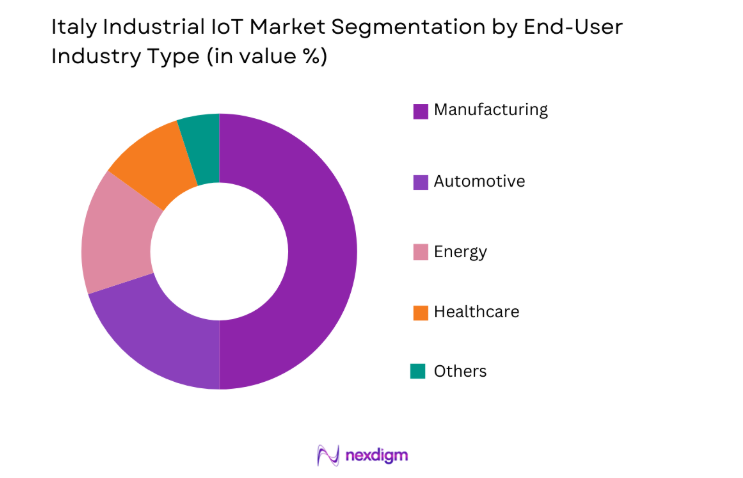
The Italy Industrial IoT market is segmented by end-user industry into manufacturing, automotive, energy, healthcare, and others. The manufacturing sector has dominated the market share due to the rapid adoption of automation and IoT-based solutions to enhance production lines. Italian manufacturers are increasingly leveraging IoT technologies for process optimization, real-time monitoring, predictive maintenance, and supply chain management. As manufacturing industries aim to increase operational efficiency and reduce costs, the demand for Industrial IoT solutions continues to grow, making manufacturing the dominant sector for Industrial IoT implementation in Italy.
Competitive Landscape
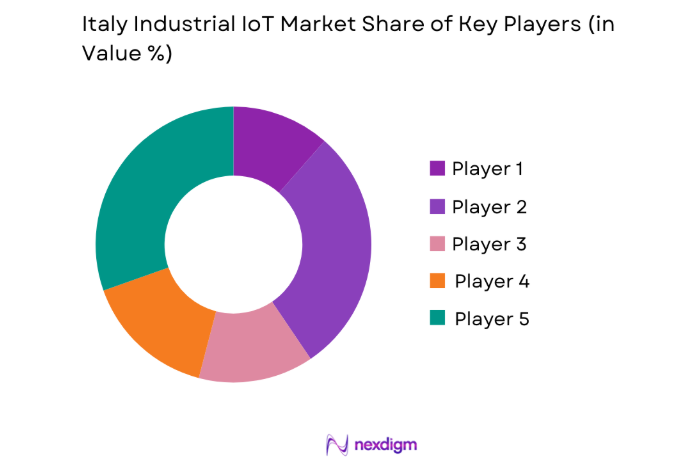
The Italy Industrial IoT market is competitive, with a mix of established global players and local innovators shaping the market dynamics. Companies are focusing on integrating advanced technologies such as AI, machine learning, and edge computing into IoT solutions to provide more intelligent and automated systems. There is also growing collaboration between local manufacturers and technology companies to tailor IoT solutions for specific industrial needs. As the demand for smarter, more connected factories increases, both multinational corporations and regional players are investing heavily in developing innovative solutions to address the evolving needs of the market.
| Company Name | Establishment Year | Headquarters | Technology Focus | Market Reach | Key Products | Revenue | Additional Parameter |
| Siemens | 1847 | Munich, Germany | ~ | ~ | ~ | ~ | ~ |
| Bosch | 1886 | Stuttgart, Germany | ~ | ~ | ~ | ~ | ~ |
| ABB | 1988 | Zurich, Switzerland | ~ | ~ | ~ | ~ | ~ |
| Schneider Electric | 1836 | Rueil-Malmaison, France | ~ | ~ | ~ | ~ | ~ |
| Rockwell Automation | 1903 | Milwaukee, USA | ~ | ~ | ~ | ~ | ~ |
Italy Industrial IoT Market Analysis
Growth Drivers
Adoption of Industry 4.0 Technologies
The adoption of Industry 4.0 technologies is a key growth driver for the Italy Industrial IoT market. Industry 4.0 encompasses the integration of IoT, robotics, AI, and big data analytics into manufacturing and industrial operations, making processes smarter and more efficient. Italy’s manufacturing sector is embracing these technologies to enhance automation, improve quality control, and reduce operational costs. With the increased need for real-time data analytics, predictive maintenance, and supply chain management, IoT solutions are becoming a crucial part of Industry 4.0 implementations. As Italy continues to invest in digital transformation, there is a growing demand for IoT systems that can integrate seamlessly with existing industrial infrastructure. The shift toward smarter, data-driven operations is enabling businesses to stay competitive globally while also meeting customer demands for more efficient, flexible production. The country’s focus on digitalization and automation in sectors such as automotive, textiles, and electronics will further drive the growth of Industrial IoT solutions, ensuring the continued expansion of the market.
Government Incentives for Digital Transformation
The Italian government’s initiatives and funding programs aimed at promoting digital transformation in industrial sectors are a significant growth driver for the Industrial IoT market. The government is actively supporting the adoption of advanced technologies through subsidies, tax incentives, and funding for digitalization projects in manufacturing and other industries. With programs like the National Industry 4.0 Plan, which incentivizes the adoption of automation, smart manufacturing technologies, and IoT solutions, Italian industries are encouraged to modernize their operations. These initiatives aim to increase productivity, improve industrial processes, and enhance competitiveness on a global scale. Additionally, Italy’s focus on improving its infrastructure to support IoT technologies, including the expansion of high-speed internet and the development of smart cities, is further bolstering market growth. As more companies take advantage of government support to implement IoT systems, the adoption of Industrial IoT solutions will continue to grow, contributing to the expansion of the market in Italy.
Market Challenges
Data Security and Privacy Concerns
One of the major challenges facing the Italy Industrial IoT market is the concern over data security and privacy. As IoT devices and sensors collect and transmit large amounts of data, the risk of cyberattacks and data breaches increases, particularly when dealing with sensitive industrial data. In sectors like manufacturing and automotive, where intellectual property and proprietary processes are involved, protecting this data is critical. The lack of standardized security protocols across IoT devices also makes it challenging to ensure consistent security measures. Companies need to invest in advanced cybersecurity solutions to safeguard their systems, which increases the overall cost of implementing IoT solutions. Moreover, the European Union’s strict data protection regulations, such as GDPR, require companies to meet stringent requirements for data handling and processing, adding complexity to IoT system deployment. Addressing these security concerns will be crucial for ensuring the widespread adoption of IoT technologies in industrial settings and maintaining market growth.
Integration of Legacy Systems with IoT Solutions
The integration of legacy systems with modern IoT solutions is another challenge for the Italy Industrial IoT market. Many companies in Italy still operate with traditional equipment and industrial processes that were not designed for IoT integration. Upgrading or replacing these systems to make them compatible with IoT technologies can be costly and time-consuming, particularly for small and medium-sized enterprises (SMEs). Additionally, the lack of standardization in IoT devices and communication protocols can create interoperability issues, further complicating the integration process. While the benefits of IoT adoption, such as improved operational efficiency and predictive maintenance, are clear, many companies face significant obstacles when it comes to integrating IoT systems with their existing infrastructure. Overcoming these challenges will require targeted efforts to develop cost-effective and interoperable solutions that can seamlessly integrate with legacy systems, allowing businesses to realize the full potential of IoT technologies.
Opportunities
Rise of Smart Manufacturing Solutions
The rise of smart manufacturing solutions presents a significant opportunity for the Italy Industrial IoT market. Smart manufacturing, powered by IoT technologies, allows manufacturers to optimize their production processes by enabling real-time monitoring, predictive maintenance, and process automation. The Italian manufacturing sector, which has traditionally been a leader in industries like automotive and machinery, is increasingly adopting IoT solutions to remain competitive in a rapidly evolving global market. The integration of IoT with advanced manufacturing technologies, such as robotics and AI, is helping businesses improve efficiency, reduce downtime, and enhance product quality. Additionally, as the demand for customized products grows, smart manufacturing solutions enable greater flexibility and faster production times, giving Italian manufacturers a competitive edge. As Italy continues to invest in digital transformation, the demand for smart manufacturing solutions will continue to grow, driving the expansion of the Industrial IoT market.
Medical IoT and Healthcare Solutions
The growing adoption of medical IoT devices and healthcare solutions presents a significant opportunity for the Italy Industrial IoT market. The healthcare sector is increasingly relying on IoT technologies for remote patient monitoring, telemedicine, and asset tracking. In Italy, the rising demand for personalized healthcare and the need for more efficient healthcare delivery are driving the growth of medical IoT solutions. Devices such as wearables, connected diagnostic tools, and smart hospital systems are transforming healthcare by providing real-time data to improve patient outcomes and reduce operational costs. Furthermore, the Italian government’s focus on digital health and telemedicine initiatives is accelerating the adoption of IoT solutions in the healthcare sector. The growing aging population and the increasing need for home healthcare services provide additional opportunities for the integration of IoT technologies in healthcare. As the healthcare sector continues to embrace IoT, the demand for medical IoT solutions will drive the growth of the Industrial IoT market in Italy.
Future Outlook
The future outlook for the Italy Industrial IoT market is promising, with continued growth expected over the next five years. The ongoing adoption of Industry 4.0 technologies, increased government support for digital transformation, and the rise of smart manufacturing will drive the demand for IoT solutions. Advancements in AI, edge computing, and 5G networks will further enhance the capabilities of IoT devices, enabling real-time data processing and decision-making. Additionally, sectors like healthcare and energy will see increased IoT adoption, presenting new opportunities for market expansion. As the market matures, there will be a greater focus on developing secure, scalable, and cost-effective IoT solutions, ensuring sustained growth in the Italian market.
Major Players
- Siemens
- ABB
- Bosch
- Rockwell Automation
- Schneider Electric
- Honeywell
- PTC
- GE Digital
- Cisco
- Mitsubishi Electric
- Huawei
- IBM
- Qualcomm
- Ericsson
- Intel
Key Target Audience
- Investments and venture capitalist firms
- Government and regulatory bodies
- Manufacturing companies
- Industrial IoT solution providers
- Healthcare organizations
- Energy providers
- Logistics companies
Research Methodology
Step 1: Identification of Key Variables
Identification of key drivers, challenges, and trends, including technological advancements, government policies, and sector-specific needs.
Step 2: Market Analysis and Construction
Market segmentation and competitive analysis to create an accurate model of the market.
Step 3: Hypothesis Validation and Expert Consultation
Consultations with industry experts and stakeholders to validate the findings and refine the analysis.
Step 4: Research Synthesis and Final Output
The synthesis of research findings into a comprehensive report providing actionable insights and forecasts.

- Executive Summary
- Research Methodology (Definitions, Scope, Industry Assumptions, Market Sizing Approach, Primary & Secondary Research Framework, Data Collection & Verification Protocol, Analytic Models & Forecast Methodology, Limitations & Research Validity Checks)

- Market Definition and Scope
- Value Chain & Stakeholder Ecosystem
- Regulatory / Certification Landscape
- Sector Dynamics Affecting Demand

- Growth Drivers
Technological Advancements in IoT Devices
Government Investments in Smart Infrastructure
Rising Demand for Automation in Industrial Sectors - Market Challenges
Data Security and Privacy Concerns
High Initial Costs of IoT Implementation
Complex Integration with Existing Systems - Market Opportunities
Increasing Adoption of AI and Machine Learning in Industrial IoT
Expanding Market for Predictive Maintenance Solutions
Growth in Smart Manufacturing Initiatives - Trends
Integration of 5G with Industrial IoT
Growth of Remote Monitoring and Control Solutions - Government Regulations
Data Protection and Privacy Regulations
Compliance with Industry-Specific Standards
Government Initiatives to Support Digital Transformation - SWOT Analysis
- Porter’s Five Forces

- By Market Value, 2020-2025
- By Installed Units, 2020-2025
- By Average System Price, 2020-2025
- By System Complexity Tier, 2020-2025

- By System Type (In Value%)
Edge Computing
Cloud-based IoT Solutions
Industrial Sensors
Data Analytics
Actuators - By Platform Type (In Value%)
Device Management Platforms
Data Management Platforms
Application Enablement Platforms
Connectivity Management Platforms - By Fitment Type (In Value%)
On-Premise Solutions
Cloud Solutions
Hybrid Solutions
Integrated Solutions - By End User Segment (In Value%)
Manufacturing
Energy & Utilities
Transportation & Logistics
Retail

- Market Share Analysis
- Cross Comparison Parameters (System Type, Platform Type, End User Segment, Fitment Type, IoT Security, Adoption of 5G, Implementation Costs)
- SWOT Analysis of Key Competitors
- Pricing & Procurement Analysis
- Key Players
Siemens
Bosch
Honeywell
GE Digital
Schneider Electric
Rockwell Automation
Cisco Systems
IBM
Microsoft
Intel
PTC
ABB
Emerson Electric
SAP
Oracle

- Demand for Automation in Manufacturing
- Increase in Smart Grid Deployments
- Growth of IoT Solutions in Retail and Transportation
- Adoption of Predictive Maintenance in Industrial Sectors

- Forecast Market Value, 2026-2035
- Forecast Installed Units, 2026-2035
- Price Forecast by System Tier, 2026-2035
- Future Demand by Platform, 2026-2035


 Request a Sample
 Ask for Customization
 Get a Quote
 Enquire Now