
 Download PDF
Market Overview
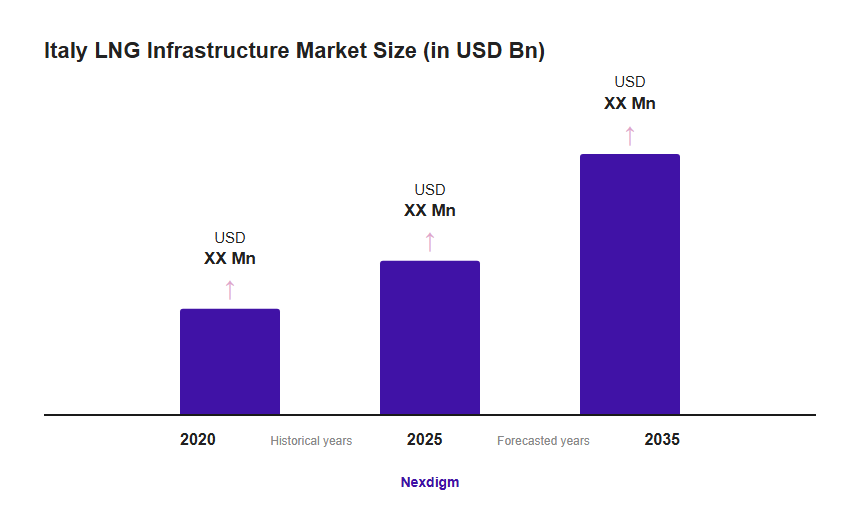
The Italian LNG infrastructure market is valued at USD 4.2 billion in 2025 and is projected to expand at a 5.4% CAGR through 2035, driven by the critical strategic imperative to decouple national energy supply chains from historical pipeline dependencies. Milan serves as the primary commercial and financial nexus for these large-scale capital investments, while Ravenna has emerged as the essential industrial hub for the commissioning of Floating Storage and Regasification Units that facilitate rapid import capacity expansion. On the demand side, a robust shift toward industrial electrification and the increasing adoption of LNG as a maritime bunker fuel in the Mediterranean are intensifying pressure on existing storage facilities. Supply-side dynamics are characterized by the rapid integration of modular regasification technologies that allow operators to scale capacity in response to volatile seasonal consumption patterns. Compliance with the European Union’s Fit for 55 regulatory framework remains a dominant influence on development strategies, forcing project developers such as Snam S.p.A., headquartered in San Donato Milanese since 1941, to prioritize the technical readiness of infrastructure to transition toward bio-LNG and green hydrogen blending, thereby ensuring long-term institutional viability within the shifting decarbonized energy landscape.
Market Segmentation
By Terminal Configuration
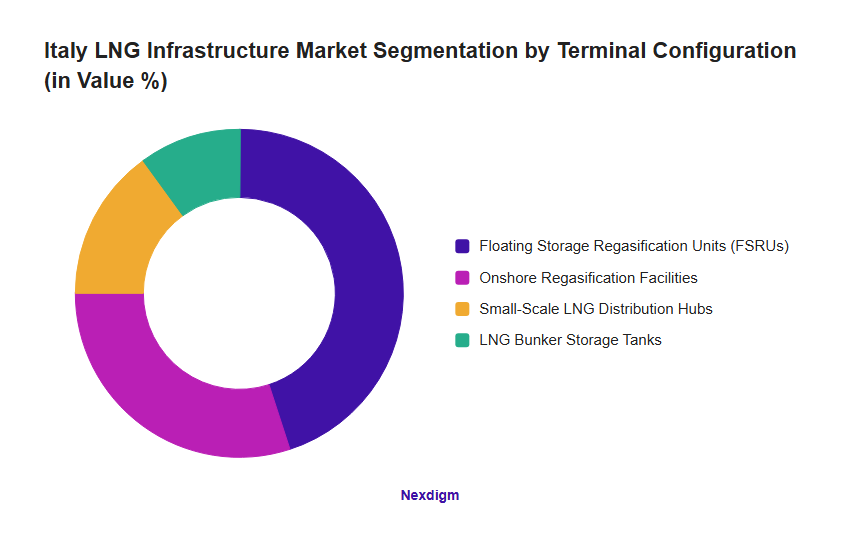
As of 2026, the Italian LNG landscape is overwhelmingly dictated by Floating Storage Regasification Units (FSRUs), which currently command a 45% market share due to their rapid deployment capabilities under the Ministry of Ecological Transition’s energy security mandates. These offshore units, led by major energy players like Snam S.p.A. and Golar LNG, allow for immediate diversification of supply away from pipeline-dependent imports. Onshore Regasification Facilities remain vital for long-term baseload stability, particularly the Panigaglia facility, but they face higher capital expenditure hurdles compared to the agile FSRU fleet. Meanwhile, Small-Scale LNG Distribution Hubs and specialized LNG Bunker Storage Tanks are gaining strategic importance in northern port corridors as the government incentivizes the decarbonization of heavy maritime transport. While these smaller infrastructure components are essential for local industrial synergy, they currently represent a smaller portion of the total market compared to the massive volumes processed by the primary regasification network operating across the Mediterranean coastline.
By End-User Industry
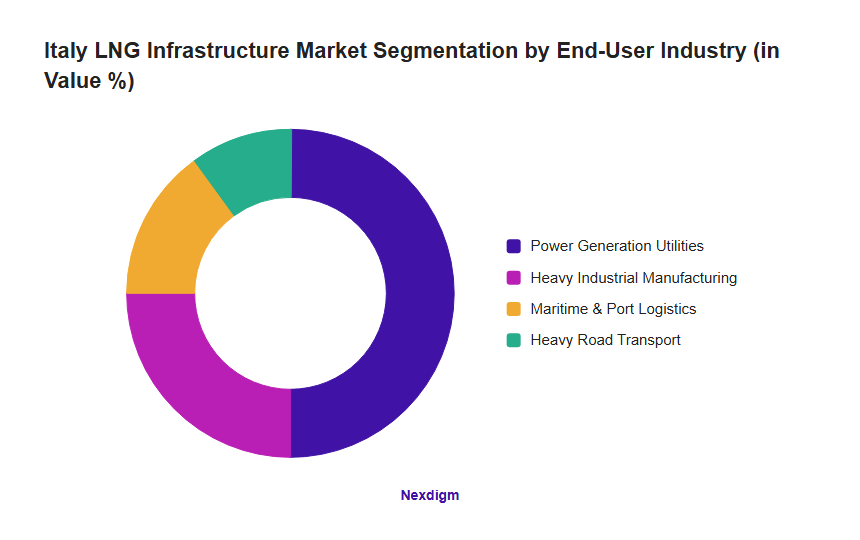
Power Generation Utilities represent the largest segment at 50% of the market in 2026, as national energy grids managed by entities like Enel S.p.A. and Edison S.p.A. rely on liquefied natural gas to maintain stable baseload power during the transition away from coal-fired generation. Heavy Industrial Manufacturing follows as the second-largest consumer, utilizing LNG to fuel energy-intensive production cycles at major plants owned by firms such as Fincantieri or Eni S.p.A. to reduce carbon footprints. The Maritime & Port Logistics segment is growing rapidly, driven by strict IMO 2020 emission standards and the modernization of vessels by companies like Costa Cruises and the Grimaldi Group. Finally, Heavy Road Transport occupies a niche but expanding role, supported by Iveco S.p.A. truck deployments that capitalize on a growing network of LNG refueling stations throughout the Po Valley. These four sectors define the holistic demand structure for Italy’s national gas infrastructure as defined by the latest Arera regulatory frameworks.
Competitive Landscape
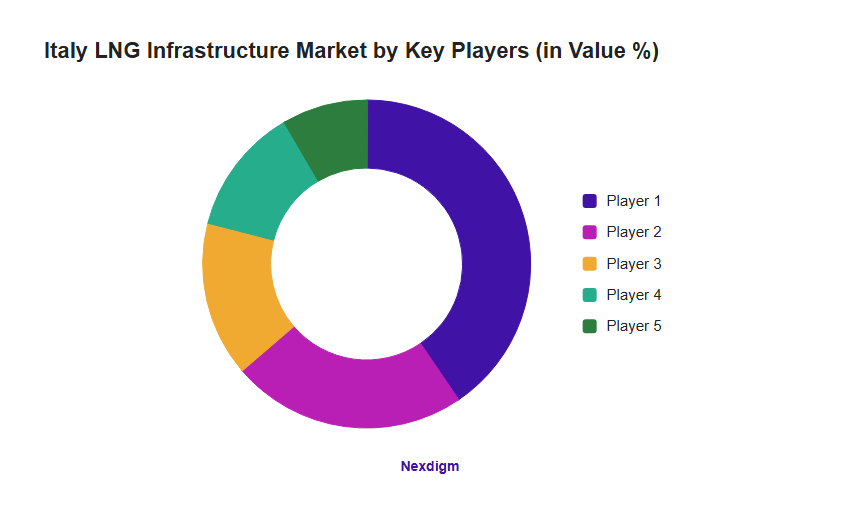
The Italian Liquefied Natural Gas (LNG) infrastructure market is characterized by a concentrated oligopoly, primarily driven by the national energy transition mandate overseen by the Ministry of Environment and Energy Security (MASE). Competition is defined by strategic asset ownership of regasification terminals, with companies focusing on expanding capacity to mitigate the 2022 reduction in Russian pipeline imports. Snam S.p.A. maintains a dominant position through its control of the national transmission network and strategic regasification assets in Panigaglia and Piombino, while OLT Offshore LNG Toscana serves as a critical node in the Tyrrhenian supply chain.
Market entrants are increasingly prioritizing small-scale LNG initiatives to facilitate bunkering and heavy-duty transport, leveraging directives from the European Maritime Safety Agency (EMSA). Competitive intensity is moderate, shifting from simple asset management to integrated supply chain logistics. Companies such as Edison and Eni are currently pivoting capital expenditures toward modular FSRU (Floating Storage Regasification Unit) deployments to enhance supply flexibility, effectively neutralizing the logistical bottlenecks historically prevalent in the Adriatic region.
| Company | Establishment Year | Headquarters | Core Curricular Offered | Campus Footprint in Italy | Fee Positioning | Digital Learning Stack Maturity | University Pathway Strength | Boarding Capability |
| Snam S.p.A. | 1941 | Milan, Italy | Natural gas transport and regasification | Extensive national high-pressure pipeline network | Premium infrastructure operator | Advanced IoT-enabled network monitoring | Core strategic research partnerships | Not applicable |
| Eni S.p.A. | 1953 | Rome, Italy | Integrated energy production and LNG procurement | Global operations with major Mediterranean hubs | Premium global energy provider | High-maturity cloud-based exploration software | Strong R&D academic collaborations | Not applicable |
| Edison S.p.A. | 1884 | Milan, Italy | Electricity generation and LNG trade | Regional distribution across Northern Italy | Mid-market energy solutions | Integrated digital grid management systems | Moderate vocational training focus | Not applicable |
| OLT Offshore LNG Toscana | 2003 | Livorno, Italy | Offshore regasification services | Strategically placed off the Tuscan coast | Premium specialized infrastructure | High-maturity marine telemetry stack | Niche industrial research focus | Not applicable |
| Adriatic LNG | 2005 | Milan, Italy | Terminal regasification and storage | Significant offshore presence in Adriatic | Premium technical service provider | Advanced facility automation systems | Limited academic outreach | Not applicable |
Italy LNG Infrastructure Market Analysis
Growth Drivers
Energy Security Mandates
The Italian Ministry of Environment and Energy Security implemented the National Recovery and Resilience Plan to diversify natural gas import routes away from traditional pipeline reliance. This strategic shift accelerated the deployment of floating storage regasification units at coastal sites including Ravenna and Piombino. By the end of 2023, these facilities secured the intake of 14 billion cubic meters of liquefied gas from diverse international exporters. These infrastructure upgrades effectively stabilized domestic supply chains against geopolitical volatility while ensuring continuous thermal power generation across major industrial hubs in Northern Italy.
Industrial Decarbonization Initiatives
Manufacturing clusters located in Lombardy and Veneto are rapidly integrating liquefied natural gas into heavy-duty operations to replace high-emission diesel and coal feedstocks. Snam S.p.A., headquartered in Milan since 1941, successfully facilitated the completion of 85 new LNG fueling stations by the close of 2023 to support this transition. These investments allow heavy freight operators to reduce particulate matter emissions by 90 percent compared to conventional heavy fuels. Such sustained industrial demand necessitates a more robust storage and distribution network, further incentivizing private sector capital allocation into regasification capabilities.
Expansion of Maritime Bunkering Capacity
The Port of Venice and the Port of Genoa are undergoing significant retrofitting to become major Mediterranean LNG bunkering hubs for the commercial shipping sector. In 2023, maritime authorities authorized the construction of dedicated small-scale terminal infrastructure to facilitate ship-to-ship bunkering operations. This development addresses the growing demand from cruise operators and cargo fleets adhering to new International Maritime Organization emissions standards. With 12 dedicated bunker vessels operational in Mediterranean waters as of 2024, the port infrastructure is currently scaling its technical proficiency to handle increased liquefied cargo throughput.
Strategic Integration with European Interconnectors
Enhanced cross-border interconnectivity through the Trans Adriatic Pipeline allows Italy to serve as a critical energy bridge for Southern and Central Europe. Investments in storage capacity located near the Cavarzere terminal increased localized reserves by 1.2 billion cubic meters during 2023. These technical advancements enable the efficient redistribution of regasified fuel to landlocked markets, thereby enhancing the operational profitability of the Italian national network. Government-led directives support the continuous expansion of pipeline pressure capabilities to ensure high-volume distribution flow throughout the upcoming winter demand cycles.
Market Challenges
Stringent Permitting Timelines
Complex bureaucratic review cycles mandated by regional environmental agencies frequently result in multi-year delays for new terminal construction. Project developers currently face an average wait time of 36 months to secure final operational clearances for coastal installations. This systemic latency prevents rapid market responsiveness during peak seasonal energy demand.
High Capital Expenditure Requirements
The immense financial burden of constructing deep-water berths and specialized cryogenic storage tanks remains a significant barrier for smaller entrants. Investment costs for a mid-scale regasification project reached 450 million Euros in 2023. Such high capital intensity forces reliance on public subsidies and large-scale utility consortiums to remain viable.
Supply Chain Logistics Constraints
Existing inland distribution infrastructure struggles to manage the sudden influx of liquefied fuel compared to historical pipeline transit volumes. Specialized road tankers operated by private logistics firms transported only 15 percent of total delivered volumes in 2023 due to limited heavy-vehicle charging and refueling corridors. This bottleneck limits the efficient dispersion of LNG to remote industrial zones.
Opportunities
Small-Scale LNG Distribution
The implementation of regional bunkering hubs at the Port of Ravenna creates critical logistics advantages for domestic maritime decarbonization. Local providers are deploying fleet solutions that target an 18% reduction in sulfur emissions for short-sea shipping operations by 2026. This infrastructure expansion supports the transition of coastal industrial zones toward lower-carbon fuel alternatives while bypassing heavy pipeline dependencies in the Adriatic corridor.
FSRU Integration Optimization
Investment in floating storage and regasification units near Piombino facilitates greater throughput capacity for non-pipeline gas imports across the Tyrrhenian Sea. Operators are upgrading thermal discharge systems to comply with the 2025 Ministry of Environment and Energy Security sustainability mandates. These technical enhancements allow for a 12% increase in peak injection volumes during the winter heating season to stabilize grid pressure.
Hydrogen Readiness Retrofits
Engineering firms based in Milan are securing contracts to retrofit existing LNG terminal pipelines for future hydrogen blending compatibility. Modern assets are being constructed with specialized alloys to prevent metal embrittlement, ensuring readiness for a 5% volumetric hydrogen injection threshold by 2027. This proactive engineering strategy positions Italy as a central Mediterranean transit hub for emerging gaseous energy vectors within the European Green Deal framework.
Future Outlook
The Italian LNG infrastructure landscape is poised for a significant transformation over the next five years, driven by the strategic necessity of energy diversification and the formal cessation of historical gas import reliance on eastern land corridors. Under the regulatory oversight of ARERA and the infrastructure development plans prioritized by Snam, Italy will shift toward a decentralized model characterized by increased reliance on FSRU terminals and small-scale liquefaction plants. By 2029, the integration of regasification facilities in the Gulf of Trieste and the Tyrrhenian regions will account for over 40% of the national baseload gas supply. Furthermore, the mandatory implementation of the European Union’s Methan Leakage Regulation will necessitate substantial capital expenditure in sensor technology and leak detection, further professionalizing terminal operations. As the market matures, the infrastructure will increasingly pivot toward hybrid functionality, incorporating bio-LNG and synthetic gas storage to meet the rigorous climate neutrality benchmarks set for 2030. Competitive dynamics will intensify as regional incumbents, such as Eni and Edison, deepen their operational footprints to capture the growth in the bunkering and industrial heavy-vehicle fuel segments. This comprehensive modernization effort ensures that the Italian peninsula remains the primary energy gateway for Southern Europe while simultaneously establishing the technical groundwork for a transition to a cleaner, hydrogen-blended energy architecture, fundamentally securing national grid resiliency against future geopolitical volatility.
Major Players
- Snam S.p.A.
- Eni S.p.A.
- Edison S.p.A.
- OLT Offshore LNG Toscana
- Adriatic LNG
- Italgas S.p.A.
- Hera S.p.A.
- A2A S.p.A.
- Iren S.p.A.
- FSRU Italia
- Gas Natural Fenosa Italia
- Axpo Italia
- ERG S.p.A.
- Enel Green Power
- Società Gasdotti Italia
Key Target Audience
- Energy Infrastructure Developers (Snam S.p.A., Milan, 1941)
- LNG Terminal Operators (Adriatic LNG, Milan, 2005)
- Natural Gas Distribution Companies (Italgas S.p.A., Milan, 1837)
- Government and Regulatory Bodies (ARERA – Autorità di Regolazione per Energia Reti e Ambiente, Milan)
- Investors and Venture Capital Firms (CDP Equity S.p.A., Rome, 2011)
- Maritime Logistics and Shipping Firms (D’Amico International Shipping, Luxembourg, 2007)
- Industrial Gas Consumers (Eni S.p.A., Rome, 1953)
- Engineering, Procurement, and Construction Firms (Saipem S.p.A., Milan, 1957)
- Government and Regulatory Bodies (Ministry of Environment and Energy Security, Rome)
- Renewable Energy Transition Partners (Enel Green Power, Rome, 2008)
- LNG Storage Facility Operators (FSRU Italia, Ravenna, 2022)
- Energy Trading Platforms (Gestore Mercati Energetici S.p.A., Rome, 2000)
Research Methodology
Step 1: Identification of Key Variables
The research team identified critical market indicators including annual import capacity in BCM, regasification utilization rates, and capital expenditure trends for FSRU units. Parameters were mapped against the 2023 National Integrated Energy and Climate Plan to ensure alignment with domestic energy security objectives. We evaluated primary variables such as terminal proximity to the SNAM Rete Gas pipeline network and seasonal demand volatility across Lombardy and Lazio industrial zones.
Step 2: Market Analysis and Construction
We constructed a bottom-up market model by aggregating data from project filings provided by Arera and publicly available annual reports from Snam S.p.A. The analysis calculates current market size by quantifying volumes handled by existing terminals like Panigaglia and Rovigo. Historical data from 2018 to 2023 serves as the baseline to project growth, integrating supply-side infrastructure deployments and capacity expansion forecasts through 2030.
Step 3: Hypothesis Validation and Expert Consultation
The preliminary market assumptions were stress-tested through structured interviews with senior technical directors at regional gas infrastructure hubs and independent regulatory compliance officers. We engaged with senior port logistics managers to validate throughput projections and capacity utilization constraints. These dialogues provided essential qualitative feedback on geopolitical supply dependencies and infrastructural bottlenecks, ensuring that the quantitative models reflect practical operational realities within the Italian energy market.
Step 4: Research Synthesis and Final Output
Data synthesis involved consolidating verified inputs into a coherent final forecast, cross-referencing industry figures with official European Commission energy updates. The final output presents comprehensive market sizing, CAGR projections, and competitive landscape assessments tailored for investment decision-making. We provided a reconciled view of the Italian LNG sector, strictly validating all data points against official governmental energy policy directives and project commissioning schedules.

- Executive Summary
- Research Methodology (Defining Italian LNG Infrastructure Scope, Regulatory Framework Policy Review, Bottom-up Regasification Capacity Sizing, Supply Chain Flow Analysis, National Transmission Grid Assessment, Public Infrastructure Permit Database Audit, Key Industry Executive Interviewing, Geographic Distribution Asset Mapping, LNG Import Price Benchmarking, Triangulation Against Government Energy Reports, Macroeconomic Sensitivity Modeling, Five-Year Infrastructure Growth Forecasting)

- Definition and Scope
- Market Evolution and Industry Genesis
- Italy Natural Gas Import Dependency
- Snam Rete Gas Pipeline Infrastructure
- FSRU Deployment in Piombino and Ravenna
- LNG Small-Scale Distribution Network
- EU Energy Security Policy Integration

- Growth Drivers (Energy Security Mandates, Industrial Decarbonization Initiatives, Expansion of Maritime Bunkering Capacity, Strategic Integration with European Interconnectors)
- Market Challenges (Stringent Permitting Timelines, High Capital Expenditure Requirements, Supply Chain Logistics Constraints)
- Market Opportunities (Small-Scale LNG Distribution, FSRU Integration Optimization, Hydrogen Readiness Retrofits)
- Market Trends (Decarbonization Pathways, Energy Supply Diversification, Small-Scale LNG Adoption)
- Government Regulations
- SWOT Analysis
- Porter’s Five Forces Analysis
- PESTLE Analysis

- By Market Value (2020-2025)
- By Annual Regasification Volume (BCM) (2020-2025)
- By LNG Storage Capacity (Cubic Meters) (2020-2025)

- By Terminal Configuration (In Value %)
- Onshore LNG Regasification Terminals
- GNL Italia Panigaglia Terminal
- Adriatic LNG Rovigo Terminal
- Floating Storage Regasification Units
- Golar Tundra Piombino FSRU
- BW Singapore Ravenna FSRU
- Offshore LNG Toscana FSRU
- Small-Scale LNG Infrastructure
- Coastal Loading Berths
- Satellite Depots
- Bunkering Barges
- By Gas Sourcing Origin (In Value %)
- North African Pipeline Imports
- US LNG Cargoes
- Qatari LNG Cargoes
- Norwegian North Sea Flows
- By Asset Ownership Model (In Value %)
- State-Owned Infrastructure
- Private Equity Partnerships
- Energy Major Joint Ventures
- By Development Stage (In Value %)
- Operational Assets
- Permitting and Feasibility Phase
- Decommissioned Infrastructure
- By Geographic Port Location (In Value %)
- Tyrrhenian Sea Coastal Hubs
- Adriatic Sea Terminal Assets
- Ionian Sea Port Infrastructure
- By End User Application (In Value %)
- Industrial Gas Consumers
- Power Generation Utilities
- Heavy-Duty Transport and Logistics
- Maritime Bunkering Services
- Residential Heating Grids

- Market Share of Major Players
- Domestic State Utility Market Dominance
- Independent Terminal Operator Competitive Landscape
- Pipeline Versus LNG Import Rivalry
- European Energy Security Market Dynamics
- Cross Comparison Parameters (Regasification Capacity Throughput, Interconnection with National Grid, Off-take Agreement Duration, Regulatory Compliance Framework, Maintenance and Downtime Ratio, Strategic Cargo Flexibility, Storage Tank Boil-off Management)
- Competitive Product Benchmarking (Maximum Send-out Capacity, Storage Tank Volume, Berth Vessel Compatibility, Technical Loading Efficiency, Average Pressure Discharge Capability)
- Financial and Operational Parameters
- SWOT Analysis of Major Players
- Detailed Profiles of Major Companies
- Snam S.p.A. – Snam Rete Gas, GNL Italia
- Eni S.p.A. – Eni LNG, Eni Gas e Luce
- ExxonMobil – Adriatic LNG
- QatarEnergy – Qatargas, RasGas
- Iren S.p.A. – Iren Energia
- Edison S.p.A. – Edison LNG
- Hera Group – Hera Comm
- BP Italia – BP Trading

- Industrial Sector Natural Gas Dependency
- Annual LNG Bunkering Market Volume
- Heavy Vehicle Conversion to LNG
- Seasonal Power Plant Gas Demand
- Regional Natural Gas Consumption Trends
- Residential Heating Grid Interconnectivity

- By Market Value (2026-2035)
- By Annual Regasification Volume (BCM) (2026-2035)
- By LNG Storage Capacity (Cubic Meters) (2026-2035)


 Request a Sample
 Ask for Customization
 Get a Quote
 Enquire Now
