
 Download PDF
 Download PDF
Market Overview
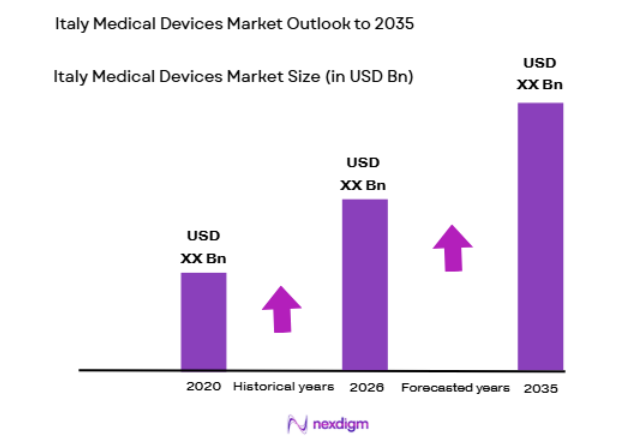
The Italy medical devices market is valued at USD ~ billion based on a recent historical assessment. The market is driven by advancements in technology, increasing demand for diagnostic equipment, and growing healthcare infrastructure investments. Additionally, the rising prevalence of chronic diseases, such as diabetes and cardiovascular conditions, has led to increased demand for medical devices that aid in diagnosis, treatment, and monitoring. The government’s commitment to improving healthcare systems and encouraging the adoption of innovative healthcare solutions is also fueling the market’s growth.
The dominant cities in Italy, such as Milan, Rome, and Florence, are leading the healthcare infrastructure development, including the integration of advanced medical technologies. Milan is known for its concentration of private healthcare providers, diagnostic centers, and research institutions, while Rome serves as a hub for both public and private healthcare services. These cities benefit from well-established medical infrastructures, robust healthcare policies, and access to skilled healthcare professionals, ensuring their dominance in the medical devices market.
Market Segmentation
By Product Type
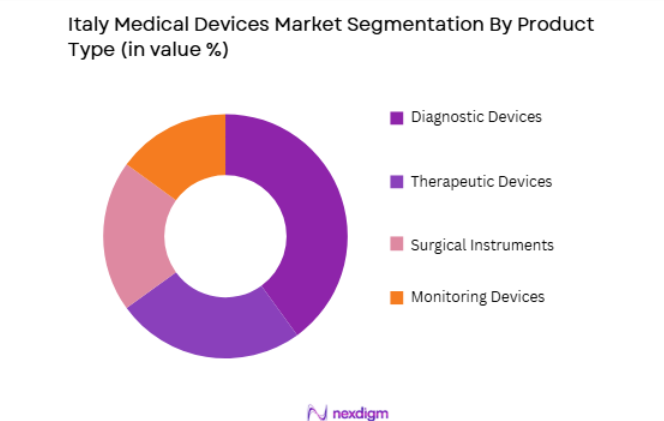
The Italy medical devices market is segmented by product type into diagnostic devices, therapeutic devices, surgical instruments, and monitoring devices. Recently, diagnostic devices have dominated the market share due to the growing need for early diagnosis and precision in healthcare. The increasing prevalence of diseases such as cancer, diabetes, and cardiovascular diseases has led to an increased demand for diagnostic equipment, including imaging devices, lab equipment, and diagnostic tools. The Italian healthcare system is also modernizing and investing in cutting-edge diagnostic technologies to improve patient outcomes and enhance the quality of care.
By Application
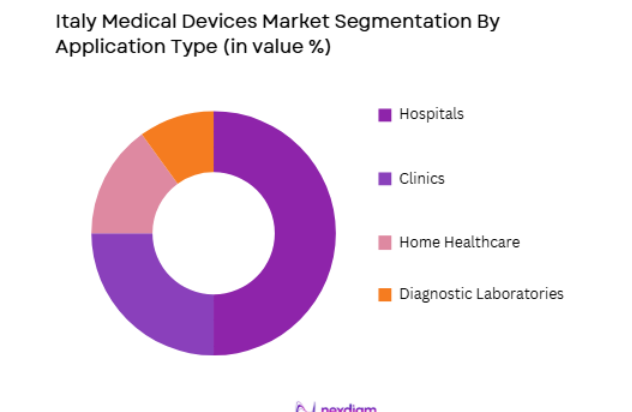
The Italy medical devices market is segmented by application into hospitals, clinics, home healthcare, and diagnostic laboratories. Recently, the hospital segment has dominated the market share due to its vast infrastructure and the constant demand for medical devices in patient care. Hospitals require a wide variety of devices, including diagnostic equipment, surgical tools, and therapeutic devices. The need for medical devices is further driven by the increasing number of surgeries, diagnostic tests, and critical care services in hospitals across Italy. Hospitals are investing heavily in advanced technologies to ensure better patient care and meet the rising demand for medical services.
 Competitive Landscape
The competitive landscape of the Italy medical devices market is shaped by both local and global players, with significant consolidation occurring among key industry players. Large companies are focusing on expanding their market presence by offering innovative products and technologies. They are also increasing investments in R&D to improve the effectiveness of medical devices. Local manufacturers, along with international brands, are gaining traction as Italy’s healthcare system modernizes and adapts to new medical technologies. The market is expected to remain competitive, with companies striving to meet the growing demand for advanced medical devices that cater to both hospitals and home healthcare settings.
| Company Name | Establishment Year | Headquarters | Technology Focus | Market Reach | Key Products | Revenue | Additional Market-Specific Parameter |
| Medtronic | 1949 | Dublin, Ireland | ~ | ~ | ~ | ~ | ~ |
| Abbott Laboratories | 1888 | Abbott Park, USA | ~ | ~ | ~ | ~ | ~ |
| Johnson & Johnson | 1886 | New Brunswick, USA | ~ | ~ | ~ | ~ | ~ |
| Stryker Corporation | 1941 | Kalamazoo, USA | ~ | ~ | ~ | ~ | ~ |
| Siemens Healthineers | 1847 | Erlangen, Germany | ~ | ~ | ~ | ~ | ~ |
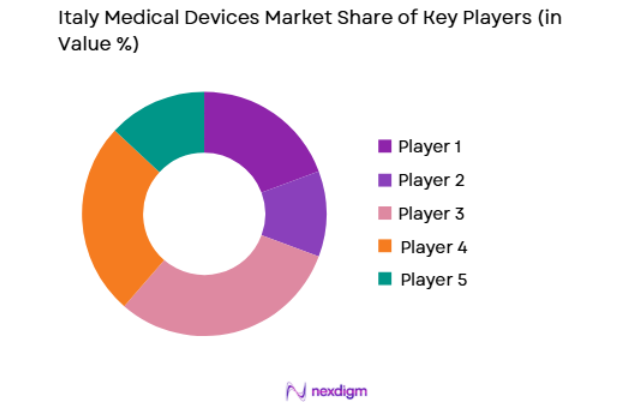
Italy Medical Devices Market Analysis
Growth Drivers
Technological Advancements
The growth of the Italy medical devices market is primarily driven by technological advancements in medical equipment. The increasing adoption of innovative technologies, such as artificial intelligence (AI), robotics, and advanced imaging systems, has revolutionized patient care, diagnostics, and treatment. For example, AI-powered diagnostic tools are enhancing the accuracy and speed of disease detection, while robotic-assisted surgeries are improving precision in operations. The integration of smart devices in healthcare facilities is contributing to the growth of the medical devices sector by improving clinical outcomes and increasing efficiency in healthcare delivery. These technological advancements are encouraging healthcare providers to invest in upgrading their medical equipment, further fueling market growth.
Rising Healthcare Expenditures
Another growth driver for the Italy medical devices market is the increasing healthcare expenditure, particularly in the public healthcare sector. The Italian government has made significant investments in healthcare infrastructure and modernization, creating substantial demand for advanced medical devices. Additionally, the aging population in Italy is leading to a higher prevalence of chronic diseases, which in turn is boosting the demand for medical devices, particularly diagnostic equipment and long-term care devices. With the government’s commitment to improving healthcare services and ensuring accessibility, the medical devices market is witnessing steady growth as healthcare facilities modernize their infrastructure to meet the evolving needs of patients.
Market Challenges
Regulatory Hurdles
One of the major challenges facing the Italy medical devices market is the regulatory environment. The European Union (EU) regulations on medical devices are stringent and evolving, and companies must comply with these regulations to gain market approval for their products. Manufacturers face significant challenges in navigating the complex approval process, including obtaining CE certifications, meeting quality standards, and adhering to post-market surveillance requirements. These regulatory hurdles can delay product launches and increase the cost of bringing new medical devices to market. Additionally, any changes to EU regulations can disrupt market dynamics and require companies to make costly adjustments to their products.
High Competition and Price Sensitivity
The Italy medical devices market is highly competitive, with numerous local and international companies vying for market share. This competitive environment has led to price sensitivity among healthcare providers, who are seeking cost-effective solutions without compromising on quality. As a result, companies are under pressure to offer affordable pricing models while maintaining product innovation. The high level of competition also makes it challenging for smaller players to gain a foothold in the market. To stay competitive, companies must differentiate themselves by offering superior quality, cutting-edge technology, and comprehensive customer support services.
Opportunities
Expansion of Home Healthcare
The growing demand for home healthcare services presents a significant opportunity for the Italy medical devices market. With the aging population and increasing prevalence of chronic diseases, more patients are seeking care at home rather than in hospitals. Medical devices that cater to home healthcare, such as remote monitoring devices, wearable health trackers, and telemedicine platforms, are gaining traction in the market. The Italian government is supporting the expansion of home healthcare services to reduce the burden on hospitals and provide patients with more personalized care options. As home healthcare becomes more widely accepted, there is significant potential for market growth in devices that enable remote patient monitoring and management.
Private Healthcare Growth
The growing private healthcare sector in Italy also presents an opportunity for medical device manufacturers. As the demand for private healthcare services increases, there is a rising need for advanced medical devices, particularly in diagnostics, surgery, and rehabilitation. Private clinics and healthcare facilities are increasingly investing in state-of-the-art equipment to attract patients seeking high-quality care. This trend is expected to continue as Italy’s private healthcare sector expands, creating opportunities for companies offering innovative medical devices that meet the specific needs of private healthcare providers. Additionally, patients are willing to pay a premium for faster access to specialized treatments, further boosting demand for medical devices in the private healthcare segment.
Future Outlook
The future outlook for the Italy medical devices market is positive, with continued growth expected across various segments, particularly in diagnostic equipment, surgical instruments, and home healthcare devices. The integration of digital health technologies, such as AI and telemedicine, will continue to drive innovation in medical devices. With increasing government support, advancements in healthcare infrastructure, and a growing focus on patient-centric care, the market is poised for sustained growth in the coming years. Additionally, the rising demand for specialized treatments and home healthcare solutions presents new opportunities for companies operating in the medical devices sector.
Major Players
- Medtronic
- Abbott Laboratories
- Johnson & Johnson
- Stryker Corporation
- Siemens Healthineers
- BioMérieux
- GE Healthcare
- Philips Healthcare
- Zimmer Biomet
- Boston Scientific
- Becton, Dickinson and Company
- Danaher Corporation
- Terumo Corporation
- Smith & Nephew
- Intuitive Surgical
Key Target Audience
- Investments and venture capitalist firm
- Government and regulatory bodies
- Healthcare providers
- Diagnostic technology companies
- Biotech companies
- Research laboratories
- Medical insurance companies
Research Methodology
Step 1: Identification of Key Variables
Identify key growth drivers, technological developments, and government policies through secondary research and expert consultation to shape market projections.
Step 2: Market Analysis and Construction
Analyze data from reputable sources, including market reports, healthcare publications, and governmental initiatives to construct a comprehensive market overview.
Step 3: Hypothesis Validation and Expert Consultation
Validate findings through consultations with industry experts and healthcare professionals to ensure the accuracy of market insights.
Step 4: Research Synthesis and Final Output
Synthesize research findings to produce a detailed market report that covers key drivers, challenges, opportunities, and the competitive landscape of the Italy medical devices market.

- Executive Summary
- Research Methodology (Definitions, Scope, Industry Assumptions, Market Sizing Approach, Primary & Secondary Research Framework, Data Collection & Verification Protocol, Analytic Models & Forecast Methodology, Limitations & Research Validity Checks)

- Market Definition and Scope
- Value Chain & Stakeholder Ecosystem
- Regulatory / Certification Landscape
- Sector Dynamics Affecting Demand

- Growth Drivers
Technological Advancements in Medical Devices
Aging Population Driving Healthcare Demand
Increased Adoption of Minimally Invasive Procedures - Market Challenges
Regulatory and Compliance Barriers
High Equipment Costs
Lack of Skilled Technicians in Remote Areas - Market Opportunities
Growing Demand for Home Healthcare Devices
Rising Popularity of Wearable Medical Devices
Advances in Diagnostic Technologies - Trends
Increased Focus on Personalized Medicine
Integration of AI in Medical Devices - Government Regulations
- SWOT Analysis
- Porter’s Five Forces

- By Market Value, 2020-2025
- By Installed Units, 2020-2025
- By Average System Price, 2020-2025
- By System Complexity Tier, 2020-2025

- By System Type (In Value%)
Diagnostic Devices
Therapeutic Devices
Surgical Instruments
Monitoring Devices
Imaging Equipment - By Platform Type (In Value%)
Hospital-Based Platforms
Point-of-Care Platforms
Mobile Platforms
Diagnostic Lab Platforms - By Fitment Type (In Value%)
Fixed Devices
Portable Devices
Wearable Devices
Disposable Devices - By End User Segment (In Value%)
Hospitals
Clinics
Research Institutes

- Market Share Analysis
- Cross Comparison Parameters (System Type, Platform Type, Procurement Channel, End User Segment, Fitment Type, Technological Integration, Service Availability, Market Reach, Regulatory Compliance, Patient Satisfaction, Cost Efficiency)
- SWOT Analysis of Key Competitors
- Pricing & Procurement Analysis
- Key Players
Siemens Healthineers
GE Healthcare
Medtronic
Philips Healthcare
Stryker Corporation
Johnson & Johnson
Abbott Laboratories
Becton Dickinson
Thermo Fisher Scientific
Zimmer Biomet
Roche Diagnostics
Boston Scientific
Smith & Nephew
Fujifilm Healthcare
Stryker Corporation

- Hospitals Expanding Medical Device Adoption
- Research Institutes Innovating with New Technologies
- Clinics Integrating Advanced Diagnostic Equipment
- Home Care Providers Using Remote Monitoring Devices

- Forecast Market Value, 2026-2035
- Forecast Installed Units, 2026-2035
- Price Forecast by System Tier, 2026-2035
- Future Demand by Platform, 2026-2035


 Request a Sample
 Ask for Customization
 Get a Quote
 Enquire Now