

 Download PDF
 Download PDF
Market Overview
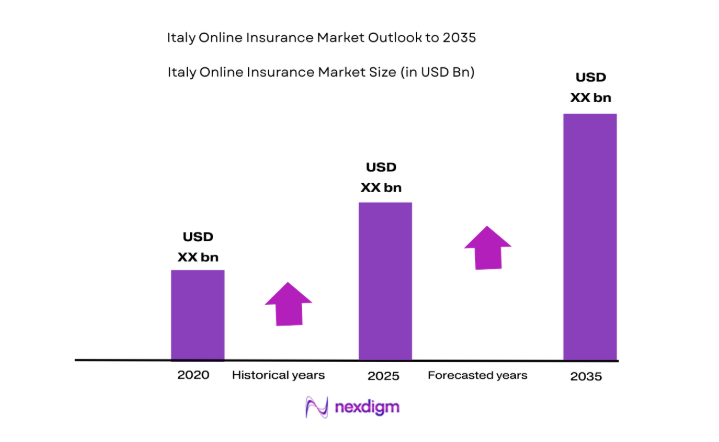
Italy’s online insurance market has witnessed a significant increase in demand, driven by consumer preference for convenience and accessibility. With the rise of digital platforms, more individuals are opting for online insurance policies due to their ease of comparison, cost-effectiveness, and quick access. In 2024, the market size is expected to reach USD ~ billion, reflecting the growing consumer adoption of digital insurance solutions. Increased mobile and internet penetration has further fueled this shift towards online channels.
The dominant regions driving Italy’s online insurance market include major urban centers such as Rome, Milan, and Florence, where access to high-speed internet and tech-savvy consumers is higher. These cities are home to a higher concentration of young professionals and tech enthusiasts who prefer digital platforms for their insurance needs. Additionally, the market benefits from a strong regulatory framework that supports online insurance policies, providing further impetus for growth in these urban hubs.
Market Segmentation
By Product Type
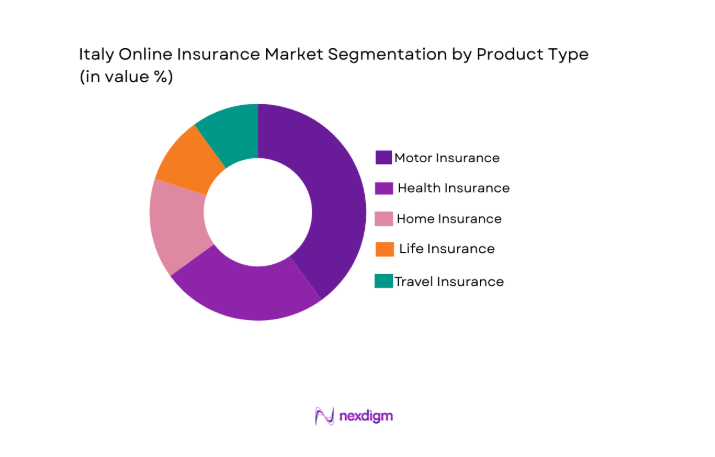
Italy’s online insurance market is segmented by product type into motor, health, home, life, and travel insurance. Among these, motor insurance has the largest market share due to the increasing adoption of online platforms for car insurance policy purchases. This dominance is attributed to the ease of comparing prices, customizable policies, and the convenience of renewing policies through digital platforms. The demand for motor insurance has surged as more drivers seek cost-effective and hassle-free insurance solutions. Additionally, the growth of digital transformation in the insurance sector has led to the development of online platforms offering tailored motor insurance plans, further boosting its market share.
By Platform Type
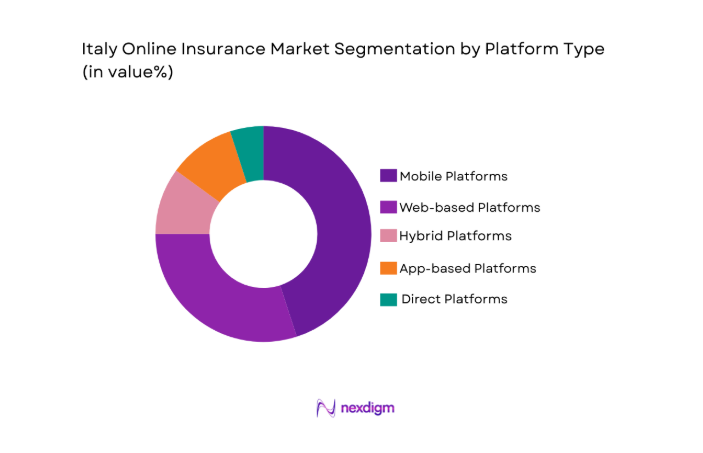
The market is also segmented by platform type, including web-based platforms, mobile platforms, hybrid platforms, app-based platforms, and direct platforms. Mobile platforms have emerged as the dominant segment, largely due to the increasing use of smartphones for insurance services. With more consumers preferring mobile-first experiences, insurance providers have optimized their apps to offer streamlined quote comparisons, policy purchases, and claims submissions. The mobility and convenience provided by mobile platforms have made them the preferred choice for users looking to access insurance services on the go. The rise of mobile-based insurance solutions has facilitated faster customer service, which in turn has accelerated the adoption of mobile platforms.
Competitive Landscape
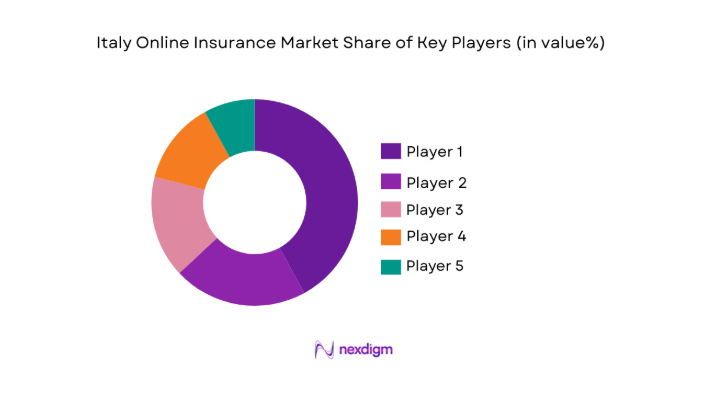
The competitive landscape in Italy’s online insurance market is characterized by a blend of established insurers and emerging digital-first companies. Major players dominate the landscape, offering comprehensive digital insurance solutions, while newer entrants focus on innovative InsurTech platforms that streamline the purchasing process. The market has seen significant consolidation, with large players acquiring smaller, agile startups to expand their digital capabilities and reach. These acquisitions have strengthened their position in the market, enabling them to offer diverse products and enhanced customer experiences.
| Company Name | Establishment
Year |
Headquarters | Technology Focus | Market Reach | Key Products | Revenue (USD) | Additional Parameter |
| Allianz Italia | 1890 | Milan | ~ | ~ | ~ | ~ | ~ |
| Generali Italia | 1831 | Trieste | ~ | ~ | ~ | ~ | ~ |
| UnipolSai Assicurazioni | 1960 | Bologna | ~ | ~ | ~ | ~ | ~ |
| AXA Assicurazioni | 1817 | Paris, France | ~ | ~ | ~ | ~ | ~ |
| Cattolica Assicurazioni | 1896 | Verona | ~ | ~ | ~ | ~ | ~ |
Italy Online Insurance Market Analysis
Growth Drivers
Increased Adoption of Digital Platforms
The increased adoption of digital platforms is a key growth driver in Italy’s online insurance market. As consumers become more familiar with digital tools, they are increasingly looking for ways to simplify the process of obtaining insurance. Mobile phones and web-based platforms allow users to compare, purchase, and manage insurance policies at their convenience. The convenience and accessibility provided by online platforms have encouraged more Italians to explore digital insurance options, particularly as the younger, more tech-savvy population enters the market. Additionally, the ability to receive instant quotes and quick policy comparisons has made it easier for consumers to make informed decisions. This transition to digital platforms has also been driven by improved internet penetration, with more rural areas gaining access to high-speed broadband, further broadening the customer base. The rapid shift from traditional in-person insurance purchases to digital alternatives has allowed insurance providers to tap into previously underserved populations, boosting overall market growth. Additionally, the ease of policy renewals and automatic claim processing via online platforms has driven further adoption among users seeking a hassle-free insurance experience.
Technological Advancements in InsurTech
Technological advancements in InsurTech have also played a significant role in driving growth in Italy’s online insurance market. The integration of artificial intelligence (AI), big data, and blockchain technology has enabled insurers to offer highly personalized products and services that cater to individual consumer needs. AI-driven chatbots and automated claim processing systems have reduced the time and effort involved in managing insurance policies. These innovations have made it easier for insurers to engage with customers in real time, providing them with relevant information and support throughout their journey. Furthermore, blockchain technology has enhanced the transparency and security of digital transactions, instilling greater confidence in customers opting for online insurance. InsurTech solutions also help insurance providers streamline their operations, reduce costs, and deliver faster services to policyholders. The advancements in InsurTech are expected to continue shaping the market, as more companies invest in emerging technologies to stay competitive. Additionally, with the increasing popularity of customized insurance products, technological advancements will be key in providing more tailored solutions that appeal to consumers’ diverse needs.
Market Challenges
Regulatory and Compliance Barriers
Regulatory and compliance barriers represent a significant challenge to Italy’s online insurance market. As digital insurance solutions become more widespread, regulators have had to adapt to ensure consumer protection, privacy, and fair competition. While the European Union has introduced several initiatives to standardize insurance regulations across member states, the complexity of complying with both EU and national regulations remains a significant hurdle. These regulations cover a wide range of areas, including data protection, consumer rights, and anti-money laundering (AML) measures. Insurance companies must ensure they comply with these regulations to avoid costly penalties and reputational damage. However, the ever-changing regulatory landscape poses difficulties for online insurers who need to adapt quickly to new laws, often requiring significant changes to their technology and operations. Additionally, small and medium-sized insurers may struggle to keep up with the compliance requirements, further limiting their ability to compete with larger, more established players. This challenge underscores the need for robust regulatory frameworks and proactive strategies to navigate the complex legal environment surrounding online insurance.
Cybersecurity and Data Privacy Concerns
Cybersecurity and data privacy concerns are critical challenges for Italy’s online insurance market. As more personal and financial information is shared online, the risk of cyberattacks has escalated, leaving both consumers and insurers vulnerable to breaches. Insurance companies must invest heavily in secure platforms and encryption technologies to protect sensitive data. A single data breach can result in significant financial losses and damage to customer trust, which can be difficult to rebuild. Moreover, the growing sophistication of cybercriminals has made it more difficult for insurers to safeguard their systems from attacks. Insurance customers are also becoming increasingly aware of the risks associated with sharing personal information online, leading to heightened concerns about data privacy. This skepticism can hinder the growth of online insurance adoption, particularly among older generations who may be less comfortable with digital platforms. Insurers are, therefore, under increasing pressure to implement robust cybersecurity measures and reassure customers that their data is safe. While advancements in security technologies have been made, continuous investment is needed to stay ahead of emerging threats.
Opportunities
Expansion of Digital-Only Insurance Products
One of the most significant opportunities for Italy’s online insurance market lies in the expansion of digital-only insurance products. Consumers are increasingly seeking personalized insurance options that can be fully managed online, and the demand for digital-first policies is on the rise. This opportunity has been fueled by the growing popularity of mobile devices and the increasing reliance on online services for everyday tasks. By focusing on digital-only products, insurance providers can offer customers a streamlined experience that is accessible at any time, from anywhere. The convenience and flexibility of digital policies, such as pay-per-use auto insurance or on-demand life coverage, have made them particularly attractive to the younger demographic. Furthermore, as mobile internet access improves across Italy, more consumers in remote areas are likely to turn to digital-only policies for their insurance needs. By capitalizing on this trend, insurers can differentiate themselves from competitors who still rely on traditional models, ultimately driving growth in the market. The rise of the gig economy and the increasing need for flexible insurance options provide additional opportunities for insurers to innovate and offer new, digital-first solutions that cater to emerging customer needs.
Growth of Microinsurance for Low-Income Populations
The growth of microinsurance presents a significant opportunity for Italy’s online insurance market, particularly in providing coverage for low-income populations. Microinsurance offers low-cost insurance policies with minimal coverage limits, making them accessible to individuals who may not be able to afford traditional insurance products. The digital nature of the market enables insurers to reach a larger base of potential customers, particularly those who may be excluded from conventional insurance due to cost or accessibility barriers. With the advent of mobile technology and online platforms, insurers can now offer microinsurance policies through mobile apps or websites, making it easier for consumers to purchase and manage their coverage. This presents a tremendous opportunity for insurers to tap into an underserved market segment while simultaneously helping to improve financial inclusion. Moreover, as more consumers become aware of the benefits of insurance, the demand for affordable, digital insurance options is expected to increase. By expanding their offerings to include microinsurance, insurers can build customer loyalty and strengthen their market position, especially in Italy’s diverse and evolving insurance landscape.
Future Outlook
The future of Italy’s online insurance market appears promising, with continued growth driven by technological innovations, regulatory support, and shifting consumer behavior. Over the next five years, advancements in AI, machine learning, and blockchain will significantly enhance the customer experience, enabling insurers to offer more personalized and efficient services. As mobile internet penetration increases, more Italians are likely to transition to online platforms for their insurance needs. Furthermore, government initiatives aimed at fostering digital transformation will create a favorable environment for market expansion. The growing popularity of digital-only insurance products, along with the rise of microinsurance, presents new opportunities for insurers to cater to diverse customer segments. The continued evolution of InsurTech will drive product innovation, while the regulatory landscape will evolve to support the growing demand for digital insurance solutions.
Major Players
- Allianz Italia
- Generali Italia
- UnipolSai Assicurazioni
- AXA Assicurazioni
- Cattolica Assicurazioni
- Reale Mutua
- Mapfre Asistencia Italia
- Fidelidade – Companhia de Seguros
- AmTrust Europe
- AIG Europe
- Direct Line Insurance
- Helvetia Assicurazioni
- Zurich Italia
- Tokio Marine Insurance
- Munich Re
Key Target Audience
- Investments and venture capitalist firms
- Government and regulatory bodies
- Insurance companies
- Insurance technology providers
- Insurance brokers and agencies
- Private equity firms
- Consumer protection agencies
- Mobile technology developers
Research Methodology
Step 1: Identification of Key Variables
Key variables such as market size, growth rate, and technological trends are identified to shape the research framework.
Step 2: Market Analysis and Construction
Data is collected from primary and secondary sources to construct a comprehensive market model for analysis.
Step 3: Hypothesis Validation and Expert Consultation
Expert consultations and stakeholder interviews are conducted to validate the market hypotheses and assumptions.
Step 4: Research Synthesis and Final Output
The data and insights gathered are synthesized into a final report, providing actionable market insights and trends.

- Executive Summary
- Research Methodology (Definitions, Scope, Industry Assumptions, Market Sizing Approach, Primary & Secondary Research Framework, Data Collection & Verification Protocol, Analytic Models & Forecast Methodology, Limitations & Research Validity Checks)

- Market Definition and Scope
- Value Chain & Stakeholder Ecosystem
- Regulatory / Certification Landscape
- Sector Dynamics Affecting Demand
- Strategic Initiatives & Infrastructure Growth

- Growth Drivers
Growth of mobile internet users in Italy
Rising demand for personalized insurance products
Increasing adoption of Insur Tech
Government initiatives for digital insurance
Cost-effectiveness of online insurance platforms - Market Challenges
Low trust in online insurance providers
Regulatory and compliance issues
Cybersecurity and data privacy concerns
Limited penetration in rural areas
Competition from traditional insurance companies - Market Opportunities
Increase in adoption of microinsurance
Expansion of digital-only insurance policies
Growth of insurance products tailored for gig economy workers - Trends
Rise in usage of AI and chatbots in customer service
Shift towards pay-per-use insurance models
Increasing popularity of health and life insurance products online - Government Regulations & Defense Policy
Data protection regulations
Digital insurance certification standards
Regulations surrounding digital distribution platforms - SWOT Analysis
- Stakeholder and Ecosystem Analysis
- Porter’s Five Forces Analysis
- Competition Intensity and Ecosystem Mapping

- By Market Value, 2020-2025
- By Installed Units, 2020-2025
- By Average System Price, 2020-2025
- By System Complexity Tier, 2020-2025

- By System Type (In Value%)
Motor Insurance
Health Insurance
Home Insurance
Life Insurance
Travel Insurance - By Platform Type (In Value%)
Web-based Platforms
Mobile Platforms
Hybrid Platforms
App-based Platforms
Direct Platforms - By Fitment Type (In Value%)
Digital-only Policies
Traditional Policies with Online Features
Comprehensive Digital Policies
Custom Digital Policies
Modular Policies - By End User Segment (In Value%)
Individuals
SMEs
Large Enterprises
Government Bodies
Insurance Brokers

- Market structure and competitive positioning
Market share snapshot of major players - Cross Comparison Parameters (System Type, Platform Type, Procurement Channel, End User Segment, Fitment Type)
- SWOT Analysis of Key Competitors
- Pricing & Procurement Analysis
- Key Players
Allianz Italia
UnipolSai Assicurazioni
Generali Italia
Intesa Sanpaolo Assicurazioni
Reale Mutua
Zurich Italia
Cattolica Assicurazioni
AXA Assicurazioni
Mapfre Asistencia Italia
Fidelidade – Companhia de Seguros
AmTrust Europe
AIG Europe
Direct Line Insurance
Helvetia Assicurazioni
Vita.it

- Increasing adoption by younger demographics
- Growing shift from traditional to online insurance purchasing
- Emerging demand for affordable insurance products
- Rise of mobile-first users in insurance purchasing

- Forecast Market Value, 2026-2035
- Forecast Installed Units, 2026-2035
- Price Forecast by System Tier, 2026-2035
- Future Demand by Platform, 2026-2035


 Request a Sample
 Ask for Customization
 Get a Quote
 Enquire Now