
 Download PDF
 Download PDF
Market Overview
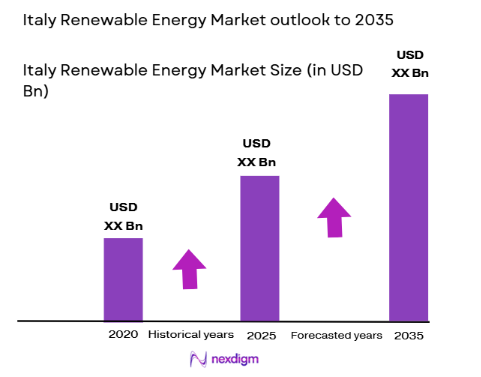
The Italy renewable energy market is expected to reach a substantial market size, driven by a combination of government policies promoting sustainable energy, technological advancements, and a growing demand for renewable solutions. With the Italian government’s continued investment in clean energy infrastructure and the push for greener energy sources, the market size is projected to grow significantly, reaching USD ~ billion by the year under assessment. The demand for solar, wind, and hydro power is increasing, further bolstered by consumer interest in reducing carbon footprints and energy costs.
The renewable energy market in Italy is dominated by regions with a high concentration of renewable energy generation, such as Southern Italy, which experiences strong solar energy potential, and coastal areas that support wind energy farms. These regions are favored due to their favorable climatic conditions for renewable energy generation. As Italy continues to transition toward a greener energy mix, these areas are expected to see continued investment, along with an increase in both public and private sector participation.
Market Segmentation
By System Type:
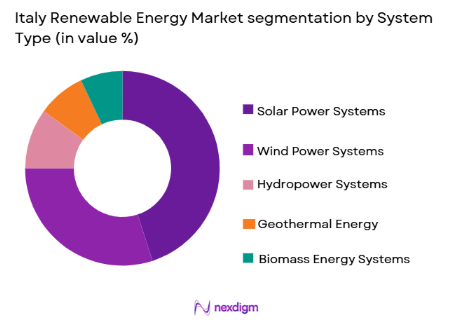
Italy Renewable Energy market is segmented by system type into solar power systems, wind power systems, hydropower systems, geothermal energy systems, and biomass energy systems. Recently, solar power systems have a dominant market share due to factors such as abundant sunlight, government incentives for solar energy adoption, and falling installation costs. The Italian government has been actively supporting solar energy projects through subsidies and favorable regulations, leading to a surge in solar installations, particularly in residential and commercial sectors. This, along with advancements in solar technology that improve efficiency and cost-effectiveness, continues to propel the growth of solar energy within the country.
By Platform Type:
Italy Renewable Energy market is segmented by platform type into land-based systems, offshore systems, floating solar platforms, hybrid platforms, and distributed generation systems. Recently, land-based systems have dominated the market share due to their widespread use, easy installation, and integration into existing infrastructure. The availability of large areas of land for wind and solar farms has made land-based systems a preferred choice. Moreover, significant investments have been made to develop these systems, making them more cost-efficient and reliable. 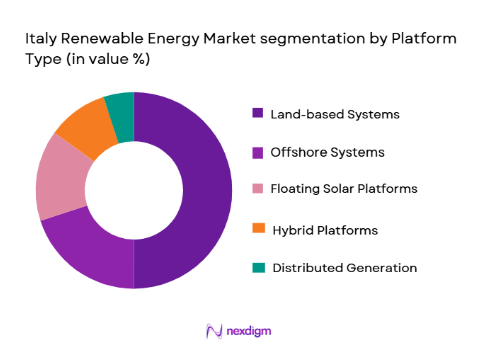
Competitive Landscape
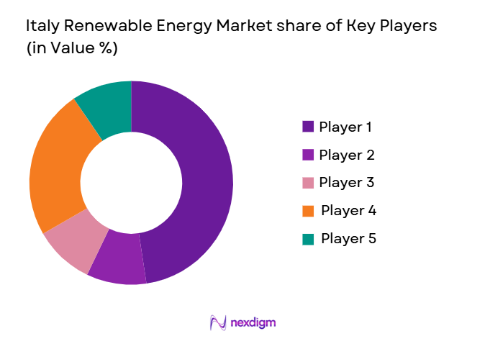
The competitive landscape in Italy’s renewable energy market is characterized by a mix of large international firms and local players who are capitalizing on the growing demand for sustainable energy. The market sees a high degree of consolidation, with the largest players dominating the landscape, often through strategic mergers, acquisitions, and partnerships. These companies benefit from established infrastructure, strong financial backing, and significant technological expertise, giving them an advantage in driving innovation and securing large-scale projects.
| Company Name | Establishment Year | Headquarters | Technology Focus | Market Reach | Key Products | Revenue (USD Billion) | Market-Specific Parameter |
| Enel Green Power | 2008 | Rome, Italy | ~ | ~ | ~ | ~ | ~ |
| ERG S.p.A | 1938 | Genoa, Italy | ~ | ~ | ~ | ~ | ~ |
| Falck Renewables | 2002 | Milan, Italy | ~ | ~ | ~ | ~ | ~ |
| Iren Group | 1907 | Reggio Emilia, Italy | ~ | ~ | ~ | ~ | ~ |
| Sorgenia S.p.A | 1999 | Milan, Italy | ~ | ~ | ~ | ~ | ~ |
Italy Renewable Energy Market Analysis
Growth Drivers
Government Investment in Clean Energy:
The Italian government’s commitment to achieving energy transition goals has significantly contributed to the growth of renewable energy. Incentives such as feed-in tariffs, tax credits, and subsidies for solar and wind energy installations have attracted both domestic and international investments. Moreover, Italy’s participation in the European Union’s renewable energy targets has spurred further growth in the sector, positioning Italy as one of the leading countries for green energy initiatives in Europe. These investments in clean energy infrastructure, coupled with favorable regulatory policies, continue to promote the widespread adoption of renewable energy systems in the residential, commercial, and industrial sectors.
Technological Advancements in Renewable Energy Systems:
Technological innovations in renewable energy systems have played a key role in driving market growth. Solar power systems, for instance, have become more efficient and affordable due to advances in photovoltaic panel technology, while wind turbine designs have improved to increase energy capture even in areas with lower wind speeds. Additionally, innovations in energy storage technologies, such as battery storage systems, allow renewable energy to be stored and used when needed, thus overcoming the intermittency issues typically associated with renewable sources. These advancements have significantly reduced the cost per kilowatt-hour of energy generated from renewable sources, making them more attractive to both businesses and consumers.
Market Challenges
High Initial Capital Investment:
One of the primary challenges facing the Italy renewable energy market is the high initial capital investment required for renewable energy infrastructure. Although the costs of solar and wind systems have declined, the upfront capital required for large-scale projects remains substantial. This can be a barrier for smaller companies or private consumers who wish to adopt renewable energy systems, particularly in regions where subsidies or government incentives are limited. Despite the long-term savings from reduced energy costs, the initial investment is a significant challenge for many potential adopters.
Grid Integration and Infrastructure Limitations:
Another challenge for the Italy renewable energy market is the integration of renewable energy sources into the existing power grid. Renewable energy sources, such as solar and wind, are intermittent, meaning they do not consistently produce energy at a predictable rate. This variability can create challenges for grid operators, who must ensure a stable supply of electricity. The infrastructure in Italy, though improving, still faces significant challenges when it comes to integrating a large volume of renewable energy sources into the grid. This requires significant investment in smart grid technologies and energy storage solutions to ensure a reliable energy supply.
Opportunities
Expansion of Energy Storage Systems:
The growing demand for renewable energy storage systems presents significant opportunities for market growth in Italy. Energy storage systems, particularly batteries, allow renewable energy to be stored and used when production is low, ensuring that energy supply remains constant. As the adoption of renewable energy increases, the need for energy storage systems will also rise, offering a substantial opportunity for companies operating in the energy storage space. This trend is supported by technological advancements in battery technology, which continue to reduce costs while improving storage capacity and efficiency.
Rising Corporate Adoption of Green Energy:
A significant opportunity in the Italy renewable energy market lies in the increasing adoption of green energy solutions by corporate entities. As global corporations and local businesses strive to meet sustainability goals and reduce their carbon footprints, there is growing interest in renewable energy solutions. Companies are investing in solar, wind, and other renewable energy sources as part of their commitment to corporate social responsibility and sustainability. With Italy’s abundant renewable energy resources and supportive policies, businesses are increasingly choosing to power their operations with clean energy, driving further growth in the market.
Future Outlook
The outlook for Italy’s renewable energy market remains highly positive over the next five years. Technological advancements are expected to continue to reduce costs and improve efficiency, while government regulations and policies will likely remain supportive of renewable energy adoption. As demand for clean energy solutions grows across both residential and commercial sectors, Italy’s renewable energy market is poised to experience robust growth. Additionally, the integration of energy storage technologies and the expansion of offshore wind energy will likely drive new investment opportunities, positioning Italy as a leader in the renewable energy transition within Europe.
Major Players
- Enel Green Power
- ERG S.p.A
- Falck Renewables
- Iren Group
- Sorgenia S.p.A
- A2A S.p.A
- Italgas
- Terna S.p.A
- Saipem S.p.A
- E.ON SE
- Vestas
- Siemens Gamesa
- Nordex
- First Solar
- SunPower
Key Target Audience
- Investments and venture capitalist firms
- Government and regulatory bodies
- Renewable energy developers
- Utility companies
- Environmental NGOs
- Energy consultants
- Financial institutions
- Construction and infrastructure firms
Research Methodology
Step 1: Identification of Key Variables
Identify and define the key market variables influencing the renewable energy sector, including technological advancements, regulatory trends, and market demand.
Step 2: Market Analysis and Construction
Analyze current market conditions, historical data, and trends to construct a detailed market model, segmenting the renewable energy market in Italy based on product types, platforms, and key end-users.
Step 3: Hypothesis Validation and Expert Consultation
Validate hypotheses and findings by consulting industry experts, government agencies, and market leaders to ensure accuracy and relevance in market dynamics.
Step 4: Research Synthesis and Final Output
Synthesize all gathered data, providing a final report that summarizes key insights, growth trends, and future opportunities in Italy’s renewable energy market.

- Executive Summary
- Research Methodology (Definitions, Scope, Industry Assumptions, Market Sizing Approach, Primary & Secondary Research Framework, Data Collection & Verification Protocol, Analytic Models & Forecast Methodology, Limitations & Research Validity Checks)

- Market Definition and Scope
- Value Chain & Stakeholder Ecosystem
- Regulatory / Certification Landscape
- Sector Dynamics Affecting Demand
- Strategic Initiatives & Infrastructure Growth

- Growth Drivers
Government Investment in Clean Energy
Advancements in Renewable Technologies
Increasing Public Demand for Sustainable Energy
Regulatory Support and Green Certifications
Growing Focus on Energy Independence - Market Challenges
High Initial Capital Investment
Grid Integration Challenges
Regulatory Hurdles and Policy Uncertainty
Environmental and Social Resistance to Large-Scale Projects
Technology and Equipment Sourcing Constraints - Market Opportunities
Integration of Energy Storage Systems
Development of Hybrid Renewable Energy Systems
Rising Demand for Offshore Wind Energy - Trends
Surge in Renewable Energy Policy Implementation
Shift Towards Decentralized Energy Systems
Increased Investment in Solar and Wind Technologies
Rising Corporate Adoption of Green Energy Solutions
Public-Private Partnerships in Renewable Energy Projects - Government Regulations & Defense Policy
Renewable Energy Mandates and Targets
Energy Efficiency and Sustainability Laws
Government Incentives and Subsidies for Clean Energy - SWOT Analysis
- Stakeholder and Ecosystem Analysis
- Porter’s Five Forces Analysis
- Competition Intensity and Ecosystem Mapping

- By Market Value, 2020-2025
- By Installed Units, 2020-2025
- By Average System Price, 2020-2025
- By System Complexity Tier, 2020-2025

- By System Type (In Value%)
Solar Power Systems
Wind Power Systems
Hydropower Systems
Geothermal Energy Systems
Biomass Energy Systems - By Platform Type (In Value%)
Land-based Systems
Offshore Systems
Floating Solar Platforms
Hybrid Platforms
Distributed Generation Systems - By Fitment Type (In Value%)
Onshore Installations
Offshore Installations
Hybrid Systems
Standalone Systems
Integrated Systems - By EndUser Segment (In Value%)
Residential
Commercial
Industrial
Government & Public Sector
Utility Providers - By Procurement Channel (In Value%)
Direct Procurement
Government Tenders
Private Sector Procurement
Online Bidding Platforms
Third-party Distributors - By Material / Technology (in Value%)
Solar PV Panels
Wind Turbines
Energy Storage Systems
Geothermal Technologies
Biomass Feedstocks

- Market structure and competitive positioning
- Market share snapshot of major players
- CrossComparison Parameters (Market Value, Market Share, Installed Units, System Complexity, Platform Type, End User Segment, Material/Technology, Pricing Strategy, Procurement Channel, Fitment Type)
- SWOT Analysis of Key Players
- Pricing & Procurement Analysis
- Key Players
Enel Green Power
Iren Group
ERG S.p.A
Falck Renewables
Sorgenia S.p.A
Edison S.p.A
A2A S.p.A
Italgas
Terna S.p.A
Saipem S.p.A
Tata Power
Lumen Technologies
Siemens Gamesa
Vestas
Nordex

- Government Policies Impacting the Residential Sector
- Private Sector Investment in Green Energy
- Industrial Demand for Renewable Energy Solutions
- Government and Utility Provider Collaborations

- Forecast Market Value, 2026-2035
- Forecast Installed Units, 2026-2035
- Price Forecast by System Tier, 2026-2035
- Future Demand by Platform, 2026-2035


 Request a Sample
 Ask for Customization
 Get a Quote
 Enquire Now