

 Download PDF
 Download PDF
Market Overview
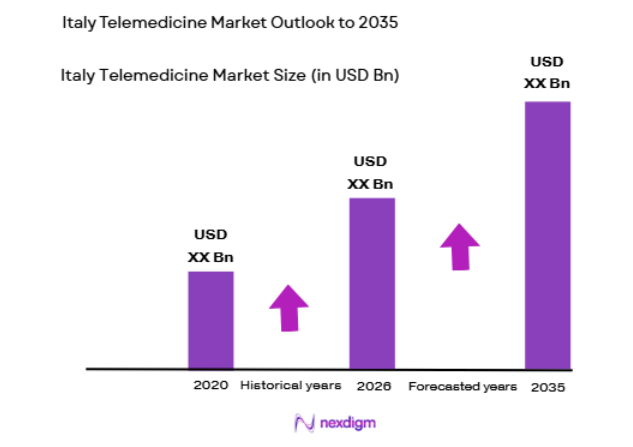
The Italy telemedicine market is valued at USD ~ billion, driven by advancements in remote patient monitoring, virtual consultations, and telehealth technologies. The increasing demand for more accessible, cost-effective healthcare solutions, especially in rural areas, has contributed to market growth. Government support for telemedicine adoption, along with investments in healthcare infrastructure and digital transformation, has accelerated the deployment of telehealth services across Italy, fostering a shift towards digital healthcare solutions.
Italy’s major cities such as Rome, Milan, and Turin are leading the adoption of telemedicine, fueled by their robust healthcare infrastructure and access to digital technologies. These cities serve as hubs for telehealth innovations due to the availability of high-speed internet, healthcare professionals, and telemedicine platforms. Furthermore, Italy’s growing healthcare needs, such as managing an aging population and reducing hospital congestion, have made telemedicine an essential solution for improving patient access and care efficiency.
Market Segmentation
By Product Type
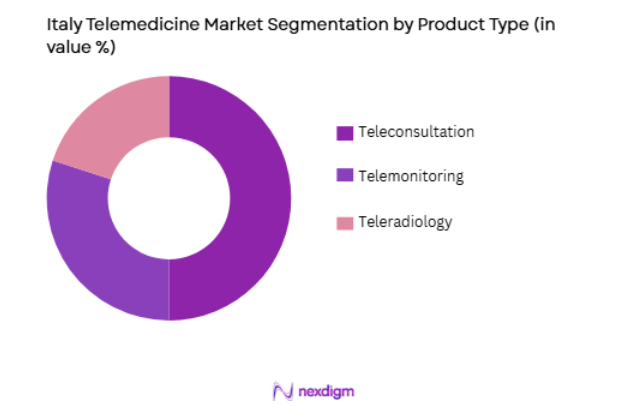
The Italy telemedicine market is segmented by product type into teleconsultation, telemonitoring, and teleradiology. Teleconsultation has recently dominated the market due to its ability to provide remote consultations with healthcare professionals, especially in underserved areas. With increased demand for virtual care services, teleconsultation platforms have gained widespread adoption among both patients and healthcare providers, offering flexibility, convenience, and cost-effectiveness. The growing popularity of telehealth, especially during the COVID-19 pandemic, has fueled the adoption of teleconsultation services, making it a dominant sub-segment.
By End-User Segment
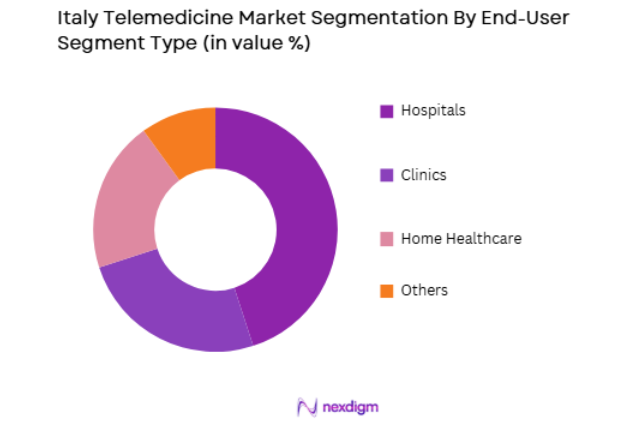
The Italy telemedicine market is segmented by end-user segment into hospitals, clinics, home healthcare, and others. Recently, hospitals have dominated the market due to the significant adoption of telemedicine platforms to enhance patient care, reduce healthcare costs, and improve access to specialists. Telemedicine services have allowed hospitals to offer remote consultations, patient monitoring, and follow-up care, thereby improving operational efficiency and patient satisfaction. The strong demand for telemedicine services in hospitals is driven by the need for efficient healthcare delivery, especially in the context of Italy’s healthcare system challenges.
Competitive Landscape
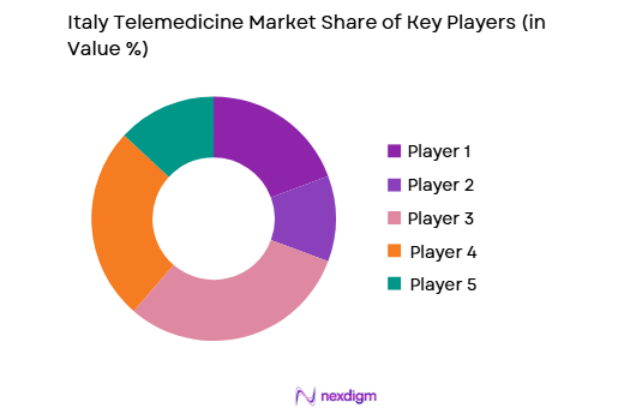
The competitive landscape of the Italy telemedicine market is influenced by both global players and local firms innovating to meet the country’s unique healthcare needs. Major players are focusing on expanding their telemedicine services, particularly in remote monitoring, virtual consultations, and digital health solutions. The market is becoming increasingly consolidated as companies form strategic partnerships and collaborate with healthcare providers, expanding their market presence and enhancing service offerings. The rise of new startups focused on telemedicine solutions and innovations is further intensifying competition. The market is expected to continue evolving with greater investments in telemedicine infrastructure and technologies.
| Company Name | Establishment Year | Headquarters | Technology Focus | Market Reach | Key Products | Revenue | Additional Market-Specific Parameter |
| Teladoc Health | 2002 | Purchase, USA | |||||
| Philips Healthcare | 1891 | Amsterdam, NL | |||||
| Cerner Corporation | 1979 | North Kansas City, USA | |||||
| Siemens Healthineers | 1847 | Erlangen, DE | |||||
| Medtronic | 1949 | Dublin, IE |
Italy Telemedicine Market Analysis
Growth Drivers
Government Support and Healthcare Policies
Government support for telemedicine is one of the primary drivers of growth in Italy’s telemedicine market. The Italian government has implemented various initiatives and policies to encourage the adoption of digital healthcare solutions, including telemedicine. Telemedicine is seen as a solution to improve access to healthcare in underserved regions, particularly for remote and elderly patients. The government’s efforts to digitize the healthcare system through the National Recovery and Resilience Plan (NRRP) have facilitated investments in telemedicine infrastructure and platforms. These measures have significantly contributed to the growth of telemedicine adoption among hospitals, clinics, and patients, addressing the need for efficient healthcare delivery and reducing the burden on the public healthcare system.
Increased Patient Demand for Remote Care
The demand for remote care has significantly increased in Italy, driven by the aging population and the growing preference for convenience and accessibility. With an aging population that requires ongoing medical care, telemedicine offers an effective means to manage chronic diseases, conduct consultations, and provide follow-up care without the need for patients to visit healthcare facilities. Additionally, the COVID-19 pandemic accelerated the adoption of telemedicine as patients and healthcare providers sought safer alternatives to in-person consultations. As patients continue to seek more flexible healthcare options, telemedicine will continue to play an essential role in delivering care efficiently and effectively, particularly in rural and remote areas.
Market Challenges
Regulatory and Compliance Barriers
One of the major challenges facing the Italy telemedicine market is the regulatory and compliance landscape, especially related to data privacy and security. The European Union’s General Data Protection Regulation (GDPR) imposes stringent data protection measures, requiring telemedicine providers to ensure the privacy and security of patient data. Compliance with these regulations can be costly and time-consuming for telemedicine companies, particularly for small to medium-sized firms. Additionally, the lack of standardized regulatory frameworks for telemedicine across Europe creates challenges for providers looking to expand their services across borders. Regulatory hurdles related to reimbursement for telemedicine services also impact market growth and limit the widespread adoption of telemedicine solutions.
Technological Barriers to Integration
Another challenge facing the Italy telemedicine market is the difficulty in integrating telemedicine platforms with existing healthcare infrastructure. Many healthcare providers in Italy still rely on traditional methods of care delivery, including paper-based records, and the transition to digital solutions requires substantial investments in technology, training, and system upgrades. Integration issues may also arise due to compatibility problems between existing Electronic Health Record (EHR) systems and telemedicine platforms. This lack of interoperability between different healthcare systems slows the adoption of telemedicine and limits its effectiveness in providing seamless, continuous care for patients.
Opportunities
Expansion of Telemedicine in Rural and Underserved Areas
The expansion of telemedicine services in rural and underserved areas presents a significant opportunity for the Italy telemedicine market. Italy’s rural regions often face challenges in accessing healthcare, especially for patients who require ongoing monitoring or specialist consultations. Telemedicine can bridge this gap by allowing patients to access care remotely, without having to travel long distances to visit healthcare providers. Additionally, the Italian government’s efforts to improve digital infrastructure in these regions have created an environment conducive to the expansion of telemedicine services. This presents a valuable opportunity for telemedicine providers to reach untapped markets and expand their services across the country.
Growth of Home Healthcare and Remote Monitoring
The growing demand for home healthcare services presents another opportunity for telemedicine providers in Italy. With the increasing prevalence of chronic diseases and an aging population, more patients are opting for home-based care, including remote monitoring and telehealth consultations. Telemedicine platforms that offer remote patient monitoring services, including wearable devices and health apps, are increasingly being adopted by healthcare providers to manage chronic conditions and monitor patient health in real-time. The growth of home healthcare solutions, supported by government policies and technological advancements, creates opportunities for telemedicine providers to develop innovative solutions tailored to the needs of patients in their homes.
Future Outlook
The future outlook for the Italy telemedicine market is positive, with continued growth driven by technological advancements, government support, and increasing patient demand for accessible healthcare. As digital health technologies continue to evolve, telemedicine services will become more sophisticated, integrating AI, wearable devices, and advanced telehealth platforms to offer better patient care. The Italian government’s ongoing support for digital healthcare initiatives, combined with the expansion of telemedicine infrastructure in rural and underserved areas, is expected to further drive market growth. In the coming years, Italy’s telemedicine market is poised for steady expansion, with new opportunities emerging in home healthcare and remote patient monitoring.
Major Players
- Teladoc Health
- Siemens Healthineers
- Philips Healthcare
- Medtronic
- Cerner Corporation
- Allscripts Healthcare Solutions
- GE Healthcare
- IBM Watson Health
- Honeywell Healthcare
- Bosch Healthcare Solutions
- BioMérieux
- GE Healthcare
- Inovalon
- Biotronik
- R-Health
Key Target Audience
- Investments and venture capitalist firms
- Government and regulatory bodies
- Healthcare providers
- Telemedicine companies
- Insurance companies
- Healthcare technology developers
- Medical device manufacturers
Research Methodology
Step 1: Identification of Key Variables
The research identifies key growth drivers, challenges, and technological trends affecting the telemedicine market in Italy, derived from secondary research sources and expert consultations.
Step 2: Market Analysis and Construction
Market analysis is performed using data from reports, healthcare industry publications, and policy documents to construct an accurate market model that includes current and future trends.
Step 3: Hypothesis Validation and Expert Consultation
The research findings are validated by engaging with healthcare professionals, telemedicine technology experts, and regulatory bodies to ensure the reliability and accuracy of the conclusions.
Step 4: Research Synthesis and Final Output
The collected data and expert insights are synthesized into a comprehensive market report, covering market trends, challenges, and opportunities for stakeholders in the Italy telemedicine market.

- Executive Summary
- Research Methodology (Definitions, Scope, Industry Assumptions, Market Sizing Approach, Primary & Secondary Research Framework, Data Collection & Verification Protocol, Analytic Models & Forecast Methodology, Limitations & Research Validity Checks)

- Market Definition and Scope
- Value Chain & Stakeholder Ecosystem
- Regulatory / Certification Landscape
- Sector Dynamics Affecting Demand

- Growth Drivers
Government Support for Telemedicine Initiatives
Rising Demand for Remote Healthcare Services
Technological Advancements in Telehealth - Market Challenges
High Initial Investment in Infrastructure
Data Security and Privacy Issues
Lack of Telemedicine Regulations - Market Opportunities
Expanding Telemedicine for Mental Health
Telemedicine Adoption in Rural Areas
Growing Use of AI and Machine Learning in Telehealth - Trends
Increase in Adoption of Virtual Healthcare Services
Integration of Wearables in Telemedicine - Government Regulations
- SWOT Analysis
- Porter’s Five Forces

- By Market Value, 2020-2025
- By Installed Units, 2020-2025
- By Average System Price, 2020-2025
- By System Complexity Tier, 2020-2025

- By System Type (In Value%)
Telemedicine Platforms
Remote Patient Monitoring Systems
Teleconsultation Services
Telehealth Devices
Healthcare Analytics Solutions - By Platform Type (In Value%)
Cloud-Based Platforms
On-Premise Solutions
Mobile Platforms
Web-Based Platforms - By Fitment Type (In Value%)
On-premise Solutions
Cloud-based Solutions
Hybrid Solutions
Integrated Solutions - By End User Segment (In Value%)
Hospitals
Clinics
Healthcare Providers
Patients

- Market Share Analysis
- Cross Comparison Parameters (System Type, Platform Type, Procurement Channel, End User Segment, Fitment Type, Service Availability, Technological Integration, Regulatory Compliance, Data Security, Cost Efficiency, Patient Engagement, Market Penetration)
- SWOT Analysis of Key Competitors
- Pricing & Procurement Analysis
- Key Players
Teladoc Health
Amwell
Doximity
Cerner Corporation
GE Healthcare
Philips Healthcare
Medtronic
HealthTap
Doctor On Demand
Lifecare
SnapMD
Vivify Health
Doctor Anywhere
Maple
Lifecare

- Hospitals Increasing Telemedicine Services
- Clinics Expanding Teleconsultation Offerings
- Healthcare Providers Adopting Virtual Health Models
- Patients Increasingly Seeking Remote Consultations

- Forecast Market Value, 2026-2035
- Forecast Installed Units, 2026-2035
- Price Forecast by System Tier, 2026-2035
- Future Demand by Platform, 2026-2035


 Request a Sample
 Ask for Customization
 Get a Quote
 Enquire Now