

 Download PDF
 Download PDF
Market Overview
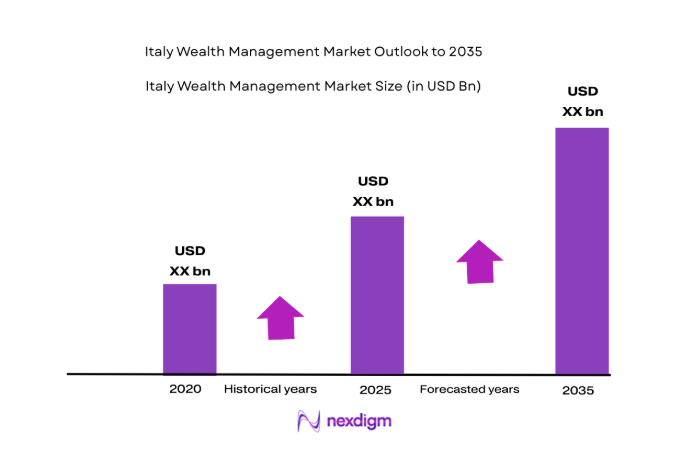
The Italy Wealth Management market is significantly driven by the increasing number of high-net-worth individuals (HNWIs) and ultra-high-net-worth individuals (UHNWIs) who seek personalized financial management services. As of recent evaluations, the market size has been valued in the billions ~ USD, supported by growing demand for investment advisory, asset management, and estate planning services. This expansion is propelled by the rise of affluent populations and increasing wealth accumulation across Italy, especially in economically thriving regions.
Italy’s wealth management industry is concentrated in cities such as Milan, Rome, and Turin, where a strong presence of financial institutions and private banks supports its dominance. These cities benefit from Italy’s established financial infrastructure, government policies that support financial services, and a long-standing tradition of wealth management. Milan, as the financial capital, is home to major banking institutions that cater to both domestic and international clients, fostering a competitive market environment for wealth management services.
Market Segmentation
By Product Type
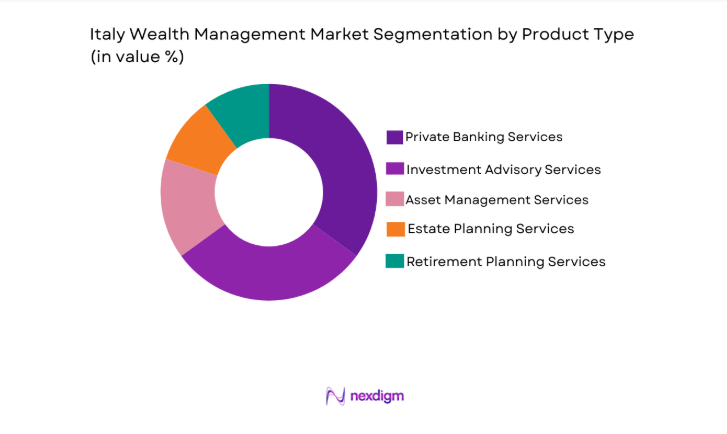
Italy Wealth Management market is segmented by product type into private banking services, investment advisory services, asset management services, estate planning services, and retirement planning services. Recently, private banking services have dominated the market share due to their personalized offerings, which cater specifically to high-net-worth and ultra-high-net-worth individuals. These services are driven by an increasing preference for tailored financial strategies, which can address complex financial needs such as tax planning, estate management, and bespoke investment solutions. This growing demand for private banking services is also fueled by Italy’s affluent demographic and the tendency of wealthy clients to seek professional financial advice for preserving and growing their wealth.
By Platform Type
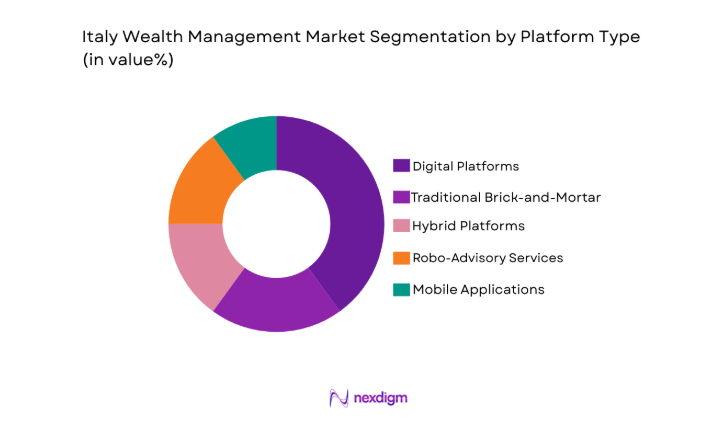
Italy Wealth Management market is segmented by platform type into digital platforms, traditional brick-and-mortar, hybrid platforms, robo-advisory services, and mobile applications. Digital platforms have gained a dominant market share as more investors opt for convenient, tech-driven solutions for wealth management. With growing digital literacy and the adoption of mobile banking, these platforms provide cost-effective services, including investment tracking and portfolio management, which appeal to younger, tech-savvy investors. The rapid advancements in artificial intelligence and machine learning also contribute to the increasing reliance on digital platforms, as they enable personalized financial planning and quicker decision-making.
Competitive Landscape
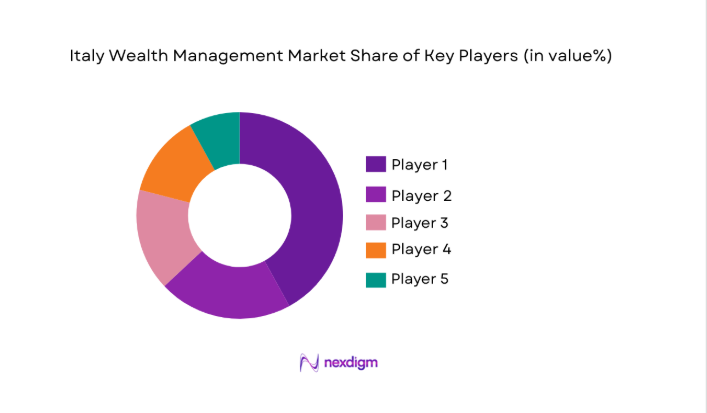
The competitive landscape of Italy’s wealth management market is marked by a mix of global financial institutions and well-established local private banks, leading to both consolidation and heightened competition. The market is driven by major players who invest in expanding digital platforms, offering integrated wealth management services, and developing innovative solutions like robo-advisory services. The dominance of these players has created a highly competitive environment, compelling firms to adopt technology-driven strategies and personalized offerings.
| Company Name | Establishment Year | Headquarters | Technology Focus | Market Reach | Key Products | Revenue (USD) | Digital Wealth Solutions |
| Intesa
Sanpaolo |
2007 | Milan | ~ | ~ | ~ | ~ | ~ |
| UniCredit | 1998 | Milan | ~ | ~ | ~ | ~ | ~ |
| Generali Wealth Management | 1831 | Trieste | ~ | ~ | ~ | ~ | ~ |
| Banca Mediolanum | 1990 | Milan | ~ | ~ | ~ | ~ | ~ |
| Credit Suisse | 1856 | Zurich | ~ | ~ | ~ | ~ | ~ |
Italy Wealth Management Market Analysis
Growth Drivers
Increased Affluence of Italian Households
The growing wealth in Italy, driven by a booming affluent population, has significantly contributed to the market’s expansion. The number of HNWIs and UHNWIs in Italy is increasing, reflecting the rising trend of wealth accumulation. In addition, Italian households are seeing higher disposable income, resulting in more individuals seeking personalized wealth management services. This demographic shift has directly spurred demand for both traditional and digital wealth management solutions. The increasing number of wealthy individuals, coupled with higher life expectancy, has fostered the need for comprehensive financial planning services. As the number of Italian millionaires continues to rise, financial institutions are focusing on delivering more tailored services, including estate planning, investment advice, and retirement planning to cater to this affluent clientele.
Technological Advancements in Wealth Management Platforms
As technology continues to evolve, wealth management platforms in Italy are increasingly incorporating advanced technologies such as artificial intelligence, machine learning, and blockchain to enhance their service offerings. These innovations have played a major role in transforming the wealth management landscape by providing more personalized services to clients. Technology-driven platforms allow for faster decision-making, improved risk management, and personalized investment recommendations. Robo-advisors are now being widely adopted due to their cost-efficiency, and they have been integrated with advanced AI for dynamic portfolio management. As the demand for digital wealth management platforms grows, firms are investing more in AI-driven tools to maintain a competitive edge in this rapidly evolving market.
Market Challenges
Regulatory Compliance and Taxation Complexities
The wealth management industry in Italy faces significant challenges regarding regulatory compliance and taxation policies. Italy has strict financial regulations that govern wealth management activities, including tax laws, which constantly evolve. These regulations require wealth management firms to adapt quickly, leading to high operational costs for maintaining compliance. Changes in inheritance laws, capital gains taxes, and the introduction of new fiscal policies impact the wealth management market and challenge firms in adapting their strategies. Moreover, global tax transparency initiatives and international regulations, such as the Common Reporting Standard (CRS), put additional pressure on wealth management institutions to ensure full compliance, further complicating operations. Firms must allocate substantial resources to meet these regulatory demands, affecting their ability to offer cost-effective services to their clients.
Security and Privacy Concerns
The growing reliance on digital platforms and mobile applications in Italy’s wealth management market introduces significant concerns regarding data security and privacy. As financial institutions collect sensitive personal and financial information, safeguarding this data against cyber threats has become increasingly challenging. A breach of client data could result in legal implications, loss of reputation, and financial penalties. Additionally, Italian wealth management firms must comply with strict privacy laws, including the European Union’s General Data Protection Regulation (GDPR). While firms invest in advanced cybersecurity measures, the risk of cyberattacks, data breaches, and identity theft remains a constant threat. This concern may lead to hesitancy among potential clients in adopting digital wealth management services, thus limiting the growth of the digital wealth management sector.
Opportunities
Growing Demand for Sustainable and Ethical Investment Options
A major opportunity within Italy’s wealth management market lies in the rising demand for sustainable and ethical investment options. As consumers become more socially conscious, there has been a noticeable shift toward investments that align with personal values, such as environmental sustainability, social responsibility, and corporate governance. The growing awareness of climate change and environmental issues has prompted investors to seek out firms that offer ethical investment portfolios. Wealth management firms can capitalize on this shift by expanding their offerings of Environmental, Social, and Governance (ESG)-focused investments. This trend provides opportunities for wealth managers to attract a new segment of clients, including younger investors who prioritize responsible investing.
Digital Transformation and Adoption of Robo-Advisors
With the rapid digital transformation in the financial sector, Italy’s wealth management market is poised for substantial growth in digital platforms. Robo-advisory services, powered by artificial intelligence, offer affordable, automated, and scalable wealth management solutions, catering to the growing mass affluent market. As millennials and Gen Z increasingly enter the wealth accumulation phase, their preference for cost-effective, accessible digital solutions will drive the demand for robo-advisory services. These platforms use algorithms to tailor investment strategies based on individual preferences, risk tolerance, and financial goals, making them an attractive alternative to traditional wealth management services. Wealth management firms that embrace this digital shift are expected to see significant growth as they tap into this new, tech-savvy customer base.
Future Outlook
The future of the Italy wealth management market looks promising, with an expected continuation of growth driven by both technological advancements and increasing demand from affluent clients. Wealth management firms will likely focus more on personalized digital platforms and sustainable investment offerings to meet client expectations. The regulatory environment will continue to evolve, but technological innovation and AI-driven platforms will provide greater flexibility to manage compliance efficiently. The growing influence of digital wealth solutions will be a key factor in shaping the market in the next five years, driving both consumer demand and institutional adoption.
Major Players
- Intesa Sanpaolo Private Banking
- UniCredit Private Banking
- Banca Mediolanum
- Generali Wealth Management
- Banca Nazionale del Lavoro
- Fideuram Private Banking
- Citi Private Bank
- JPMorgan Private Bank
- Goldman Sachs Private Wealth Management
- Berenberg Wealth Management
- Deutsche Bank Wealth Management
- Credit Suisse Private Banking
- Rothschild & Co Wealth Management
- Pictet Wealth Management
- Bank of America Merrill Lynch
Key Target Audience
- Investments and venture capitalist firms
- Government and regulatory bodies
- Family Offices
- Private Equity Firms
- Insurance Companies
- Hedge Funds
- High-net-worth Individuals (HNWIs)
- Financial Advisors
Research Methodology
Step 1: Identification of Key Variables
This step involves identifying the primary market drivers, challenges, and trends relevant to the wealth management industry in Italy.
Step 2: Market Analysis and Construction
In this step, we conduct detailed market analysis, considering both quantitative and qualitative data to construct accurate models for the wealth management sector.
Step 3: Hypothesis Validation and Expert Consultation
We validate initial findings through consultation with industry experts and executives to ensure that our research reflects current trends and insights in Italy’s wealth management sector.
Step 4: Research Synthesis and Final Output
In this phase, we synthesize all collected data, analyze results, and generate the final market report, which includes detailed market segmentation, dynamics, and outlook.

- Executive Summary
- Research Methodology (Definitions, Scope, Industry Assumptions, Market Sizing Approach, Primary & Secondary Research Framework, Data Collection & Verification Protocol, Analytic Models & Forecast Methodology, Limitations & Research Validity Checks)

- Market Definition and Scope
- Value Chain & Stakeholder Ecosystem
- Regulatory / Certification Landscape
- Sector Dynamics Affecting Demand
- Strategic Initiatives & Infrastructure Growth

- Growth Drivers
Increase in High-net-worth Individuals
Rising Demand for Investment Advisory Services
Technological Advancements in Wealth Management Solutions
Increasing Interest in Sustainable and Ethical Investments
Growth in Cross-border Wealth Management - Market Challenges
Regulatory Compliance and Taxation Issues
Security and Privacy Concerns in Wealth Management
Managing Client Expectations and Demands
Market Volatility and Economic Uncertainty
Lack of Technological Integration Across Platforms - Market Opportunities
Growing Market for Digital Wealth Management Solutions
Demand for Personalized Wealth Management Services
Expansion of ESG Investments in Wealth Management - Trends
Integration of Artificial Intelligence in Wealth Management
Rising Popularity of Robo-Advisors
Shift Toward Digital and Hybrid Wealth Management Platforms
Growth in Sustainable Investing
Increased Use of Blockchain for Transparency - Government Regulations & Defense Policy
Regulatory Changes Affecting Wealth Management
Data Privacy Regulations in Wealth Management
Taxation Policies for High-net-worth Individuals - SWOT Analysis
- Stakeholder and Ecosystem Analysis
- Porter’s Five Forces Analysis
- Competition Intensity and Ecosystem Mapping

- By Market Value, 2020-2025
- By Installed Units, 2020-2025
- By Average System Price, 2020-2025
- By System Complexity Tier, 2020-2025

- By System Type (In Value%)
Private Banking Services
Investment Advisory Services
Asset Management Services
Estate Planning Services
Retirement Planning Services - By Platform Type (In Value%)
Digital Platforms
Traditional Brick-and-Mortar
Hybrid Platforms
Robo-Advisory Services
Mobile Applications - By Fitment Type (In Value%)
On-Premise Solutions
Cloud-based Solutions
Hybrid Solutions
Modular Solutions
Integrated Solutions - By End User Segment (In Value%)
High-net-worth Individuals (HNWIs)
Ultra-high-net-worth Individuals (UHNWIs)
Family Offices
Institutions
Corporations

- Market structure and competitive positioning
Market share snapshot of major players - Cross Comparison Parameters (System Type, Platform Type, EndUser Segment, Procurement Channel, Material/Technology)
- SWOT Analysis of Key Competitors
- Pricing & Procurement Analysis
- Key Players
Intesa Sanpaolo Private Banking
UBI Banca Private Banking
Banca Mediolanum
Generali Wealth Management
Banca Nazionale del Lavoro
UniCredit Private Banking
Fideuram Private Banking
Citi Private Bank
JPMorgan Private Bank
Goldman Sachs Private Wealth Management
Berenberg Wealth Management
Deutsche Bank Wealth Management
Credit Suisse Private Banking
Rothschild & Co Wealth Management
Pictet Wealth Management

- High-net-worth Individuals’ Preference for Personalized Services
- Family Offices’ Focus on Succession Planning
- Institutions’ Rising Demand for Ethical Investments
- Corporations’ Interest in Retirement and Estate Planning Services

- Forecast Market Value, 2026-2035
- Forecast Installed Units, 2026-2035
- Price Forecast by System Tier, 2026-2035
- Future Demand by Platform, 2026-2035


 Request a Sample
 Ask for Customization
 Get a Quote
 Enquire Now