
 Download PDF
Market Overview
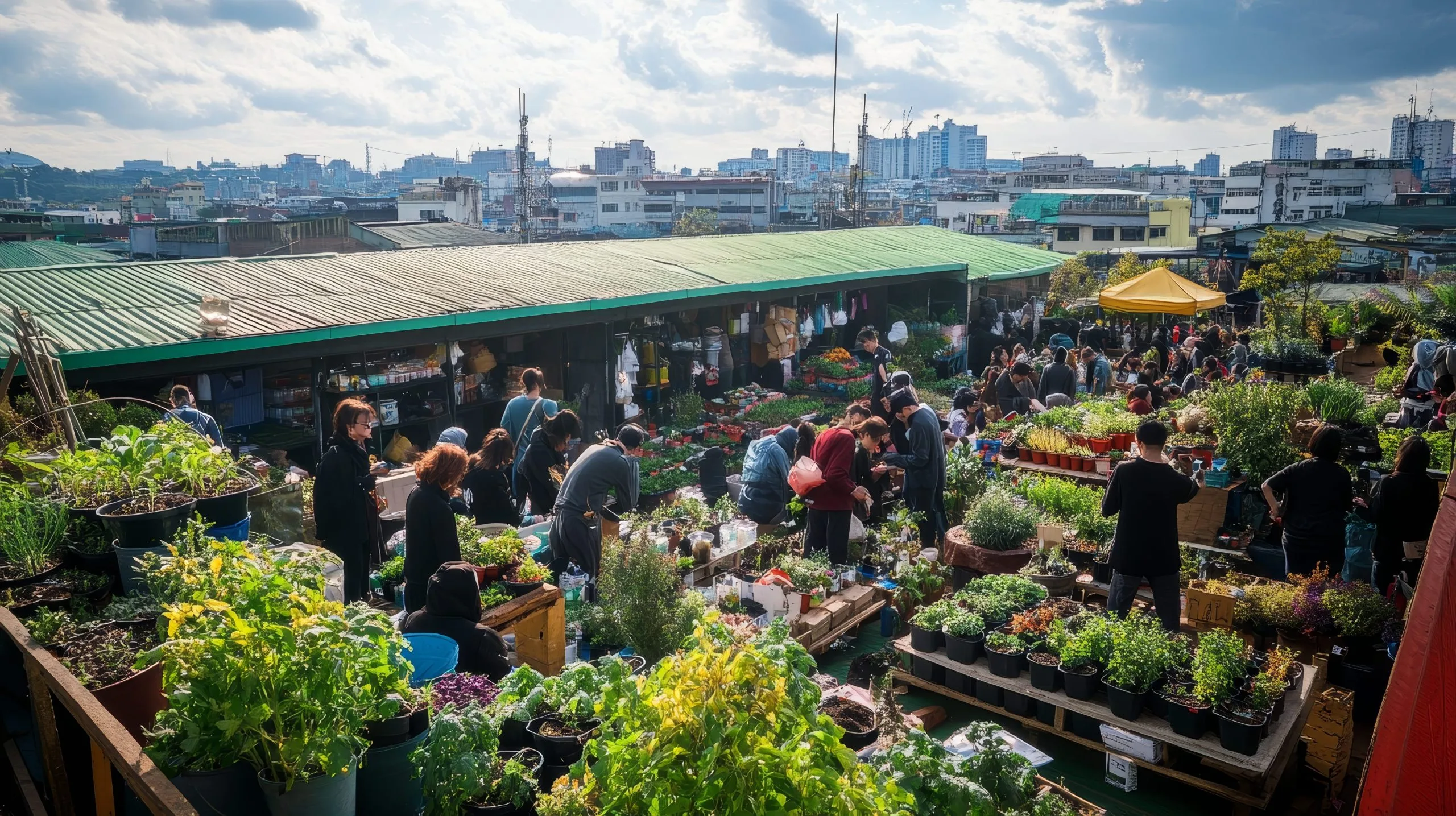
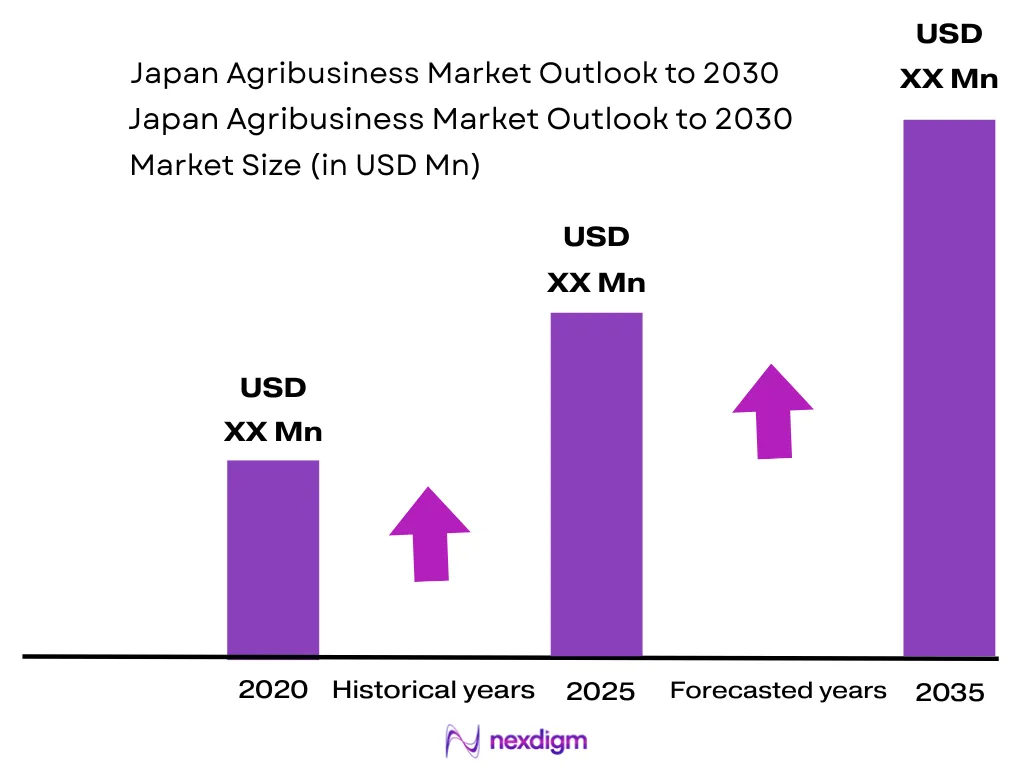
The Japan Agribusiness Market is valued at USD ~ million, based on a five-year historical analysis derived from the latest published market base of USD ~ million and the reported forward growth path. The market is driven by food security policy, farm mechanization, smart agriculture, export-oriented food production and premium agricultural products. Japan’s agricultural output reached JPY 9.5 trillion, while agricultural, forestry, fishery and food exports reached JPY 1.507 trillion, supported by rice, vegetables, beef, green tea and processed foods. Hokkaido, Tohoku, Kanto, Chubu and Kyushu dominate Japan Agribusiness Market because they combine crop scale, food processing, logistics access and regional specialization. Hokkaido leads large-scale dairy, wheat, potato and sugar beet agribusiness, while Tohoku and Niigata remain rice-focused. Kanto dominates food processing and retail-linked procurement around Tokyo. Kyushu supports vegetables, tea, livestock and sweet potato value chains. Japan’s exports reached JPY 1.454 trillion before rising to JPY 1.507 trillion, reinforcing regional export-oriented production.
Market Segmentation
By Value Chain Stage
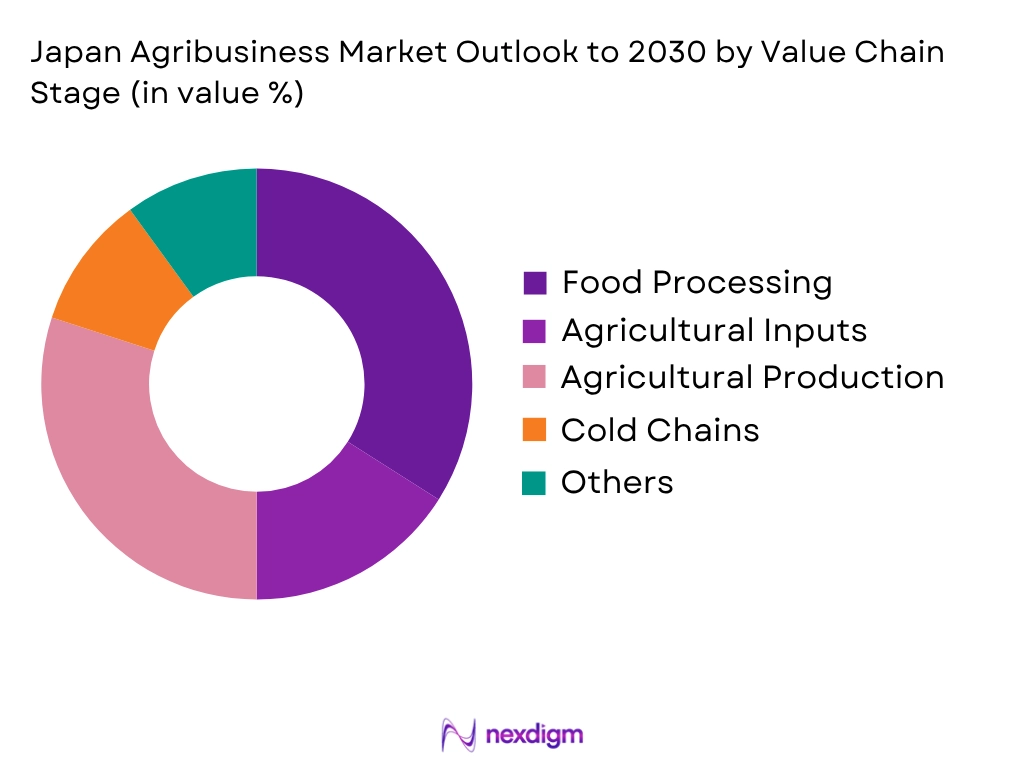
Japan Agribusiness Market is segmented by value chain stage into food processing and value-added products, primary agricultural production, agricultural inputs, aggregation and wholesale, cold chain logistics, agri-tech services and export distribution. Food processing and value-added products hold the dominant market share because Japan has a mature packaged food, dairy, meat, rice milling, frozen food, seasoning, bakery and ready-meal ecosystem tied to domestic consumption and export branding. Japan’s agribusiness is not only farm production; it is strongly integrated with food processors, retail chains, convenience stores, trading houses and cold-chain distribution. Rising export value also strengthens value-added processing, as green tea, beef, rice, yellowtail and processed food products require grading, packaging, traceability and certification. Primary production remains critical, but its aging workforce and limited farmland make downstream processing and branded food systems more commercially scalable.
By Product Category
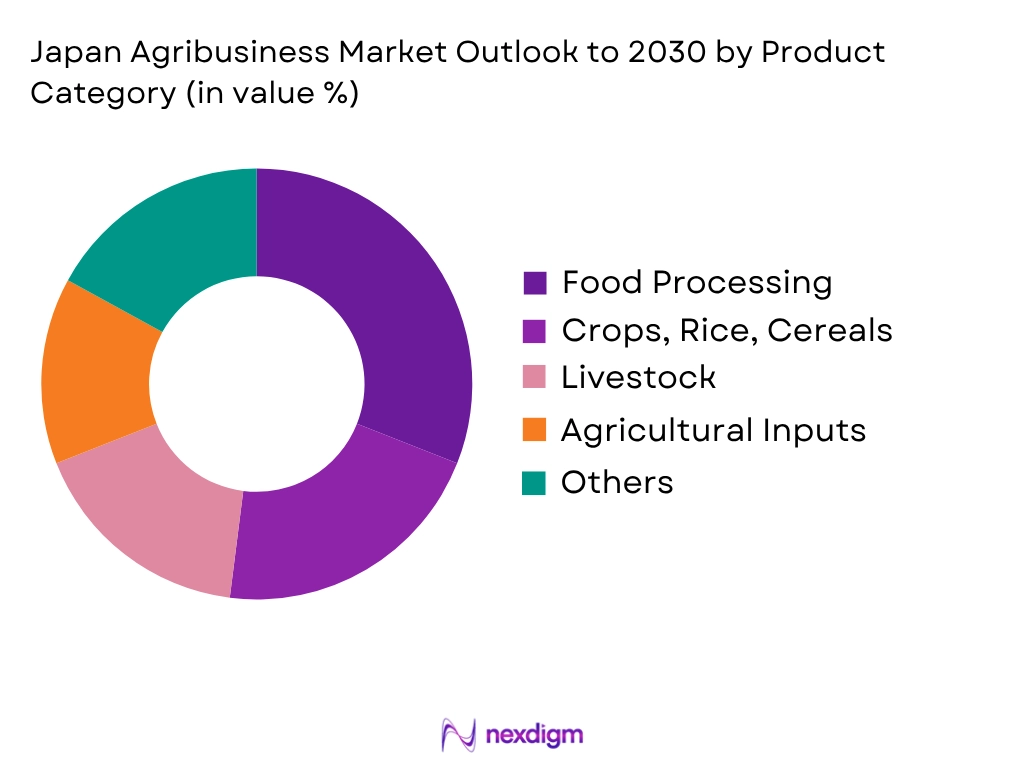
Japan Agribusiness Market is segmented by product category into processed foods and food ingredients, crops and cereals, livestock and dairy, agricultural inputs and machinery, fruits, vegetables and tea, agri-tech solutions, and organic and sustainable products. Processed foods and food ingredients dominate because Japan’s food economy is highly urbanized, convenience-oriented and quality-driven, with strong demand from supermarkets, convenience stores, foodservice chains and export buyers. Rice and cereals remain structurally important because rice is central to domestic food security, but value-added food categories generate broader commercial activity through milling, packaging, frozen processing, dairy processing, meat processing and ingredient manufacturing. Fruits, vegetables and tea are smaller in volume but strategically important due to premium pricing, export positioning and regional branding. Agri-tech and sustainable products are emerging faster because MAFF and OECD highlight automation, reduced chemical use and smart agriculture as policy priorities.
Competitive Landscape
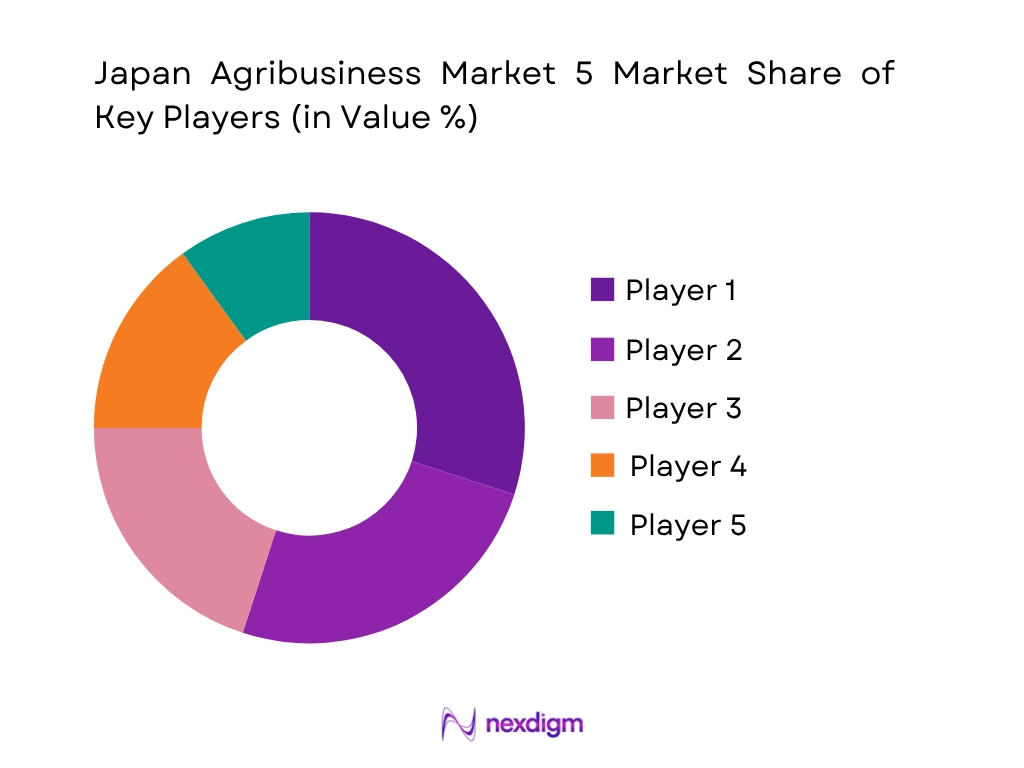
Japan Agribusiness Market is dominated by agricultural cooperatives, trading houses, food processors, farm input companies and machinery manufacturers. Zen-Noh and JA Group influence farmer procurement, produce aggregation and cooperative distribution, while Mitsubishi, Mitsui, Marubeni, Itochu and Sumitomo connect Japan to global grain, feed, food ingredient and protein supply chains. Kubota, Yanmar, Sumitomo Chemical and Meiji strengthen upstream machinery, crop input and downstream food-processing capabilities. This structure shows a highly integrated agribusiness market shaped by food security, export strategy, smart agriculture and domestic supply resilience.
| Company | Establishment Year | Headquarters | Core Agribusiness Role | Product / Service Focus | Procurement Network | Export Capability | Technology / Sustainability Position | Market Position |
| Zen-Noh | 1972 | Tokyo, Japan | ~ | ~ | ~ | ~ | ~ | ~ |
| JA Group | 1954 | Tokyo, Japan | ~ | ~ | ~ | ~ | ~ | ~ |
| Mitsubishi Corporation | 1950 | Tokyo, Japan | ~ | ~ | ~ | ~ | ~ | ~ |
| Kubota Corporation | 1890 | Osaka, Japan | ~ | ~ | ~ | ~ | ~ | ~ |
| Sumitomo Chemical | 1913 | Tokyo / Osaka, Japan | ~ | ~ | ~ | ~ | ~ | ~ |
 Japan Agribusiness Market
Growth Drivers
Export-oriented agribusiness is strengthening premium food, processing and distribution demand
Japan Agribusiness Market is being driven by export-oriented food production, premium Japanese food branding and stronger overseas demand for processed foods, green tea, beef, rice, yellowtail and regional specialty products. MAFF-reported agricultural, forestry, fishery and food exports reached JPY 1.507 trillion in 2024, and the same export category increased to JPY 1.701 trillion in 2025. The United States became a major outlet, with exports reaching JPY 242.9 billion in 2024 and JPY 276.2 billion in 2025, supporting agribusiness activity across farming, grading, cold chain, packaging, processing and export documentation. China-linked exports stood at JPY 168.1 billion in 2024 and JPY 179.9 billion in 2025, showing that market diversification remains important. Japan’s macroeconomic base supports this premium food system, with World Bank reporting USD 4.03 trillion GDP, USD 32,487.1 GDP per capita and 124 million population in 2024. These indicators justify agribusiness investment in export-ready production, traceability, branded products and value-added processing.
Smart agriculture adoption is supporting productivity across the agribusiness value chain
Japan Agribusiness Market is also being driven by smart agriculture because the sector needs higher productivity across farms, cooperatives, food processors and export supply chains. OECD reported that MAFF allocated JPY 4,500 million in 2024 to promote smart agricultural technologies, including automation systems, precision farming technologies and AI-driven decision-making tools. MAFF’s smart agriculture cases show practical agribusiness impact: in Gifu, community-based farming corporations introduced robot tractors and straight-drive rice planting machines, expanding managed area from 164 hectares to 196 hectares, while exported rice output rose from 70 tons to 194 tons. In Miyazaki, smart machinery helped planted area move from 16.7 hectares to 23.9 hectares, supporting scale, shipment planning and processor supply reliability. Japan’s World Bank macro indicators reinforce the ability to invest in high-value agricultural technology, with USD 4.03 trillion GDP and USD 32,487.1 GDP per capita in 2024. The agribusiness implication is direct: digital farming supports productivity, traceability, export consistency and labour-saving production.
Market Challenges
Aging farmers and limited farmland are constraining primary agribusiness supply capacity
Japan Agribusiness Market faces a structural challenge from a shrinking and aging production base, which affects primary farming, cooperative aggregation, food processing raw-material availability and export fulfilment. MAFF’s Basic Plan reference states that core persons mainly engaged in farming numbered 1.11 million in 2024, while their average age reached 69.2 years. Domestic farmland stood at 4.27 million hectares in 2024, limiting the ability to scale crop production through land expansion. This creates market-specific pressure because agribusiness companies require stable supply of rice, vegetables, fruits, livestock feed crops, dairy inputs and specialty crops, but fewer older operators must manage seasonal fieldwork, post-harvest handling and quality control. The challenge is more serious because Japan still has a large domestic consumer base; World Bank recorded 124 million people in 2024, alongside USD 4.03 trillion GDP and USD 32,487.1 GDP per capita. This combination means agribusiness demand remains large, while the domestic farming base faces capacity constraints that must be addressed through mechanization, corporate farming, contract production and smart agriculture.
Rice supply stress and climate-linked production risk are affecting food-security-linked agribusiness
Japan Agribusiness Market faces food-security pressure because rice remains a core agribusiness product across farming, milling, storage, distribution, retail and processed food channels. USDA FAS reported that Japan faced a table rice shortage during summer 2024, with demand outpacing production for the last 3 years and stocks falling to their lowest level in more than 20 years. The same report stated that demand spiked in August as consumers purchased additional rice during typhoon season and after a major earthquake warning. Media reporting using official and market data noted private-sector rice inventories of 1.56 million tons in June 2024, while Japan’s emergency stockpile stood at 910,000 tons. This challenge matters for agribusiness because rice shortages affect millers, wholesalers, retailers, foodservice operators and exporters. Japan’s macro environment shows the scale of exposure: World Bank reported 124 million population and USD 4.03 trillion GDP in 2024, while IMF lists Japan’s 2026 GDP at USD 4.38 trillion. The market therefore requires stronger inventory planning, heat-resilient varieties, digital demand forecasting and supply-chain coordination.
Market Opportunities
Organic and low-chemical agribusiness supply chains create scope for domestic substitution
Japan Agribusiness Market has an opportunity in organic, low-chemical and sustainable supply chains because domestic production is still limited relative to demand and imports. MAFF’s organic agriculture report states that Japan imports approximately 60,000 tons of organic farm products annually, with soybeans and fruit forming a large part of import volume. The same MAFF source identifies the promotion of 100 organic villages in 2025, creating localized platforms for organic production, farmer coordination, certification support, input conversion and regional branding. This opportunity is market-specific because Japan’s agribusiness ecosystem includes cooperatives, food processors, retailers, trading houses and exporters that can convert imported organic demand into domestic production programs. Organic and low-chemical products are relevant to vegetables, rice, wheat, fruit, tea, soybeans and processed foods. Japan’s macro purchasing base supports premium positioning: World Bank reported USD 4.03 trillion GDP, USD 32,487.1 GDP per capita and 124 million population in 2024. Agribusiness companies can use these conditions to develop certified domestic supply, traceability systems, organic processing and sustainable retail procurement models.
Smart farming services and cooperative mechanization can expand agribusiness productivity
Japan Agribusiness Market has a clear opportunity in smart farming services, cooperative mechanization, robotics-as-a-service and digital agribusiness platforms because farmers need productivity tools without taking on full operating complexity alone. MAFF’s smart agriculture material highlights agricultural cooperatives owning smart agricultural machines and outsourcing harvest operations to reduce farmer investment burden. It also describes sharing rice-planting machines with straight-drive assist and combine harvesters with taste and yield sensors across 3 locations in Okayama, showing how machine-sharing can support production, quality measurement and cooperative aggregation. The same MAFF material lists drones, remote water-management systems, robotic tea garden management machines, environmental sensors and centralized information systems across rice, vegetables, tea and sugarcane. The opportunity is supported by the farmer structure: MAFF recorded 1.11 million core persons mainly engaged in farming and an average age of 69.2 years in 2024, creating operational demand for service-based mechanization. IMF lists Japan’s 2026 GDP at USD 4.38 trillion, while World Bank records USD 4.03 trillion GDP in 2024, supporting technology-led agribusiness transformation.
Future Outlook
Over the next phase, Japan Agribusiness Market is expected to expand through food security investments, smart agriculture, export diversification, premium food branding, organic agriculture and value-added food processing. The market’s future will be shaped less by farmland expansion and more by productivity, traceability, automation, processing efficiency and export-ready supply chains. Smart agriculture will be a core growth lever because Japan faces an aging farm workforce and small farm structure. OECD notes that Japan’s average farm size remains small compared with other OECD economies, while MAFF’s smart agriculture agenda highlights drones, robot tractors, automatic harvesters, remote water management and data platforms. These technologies are expected to strengthen rice, vegetables, tea, sugarcane, greenhouse and specialty crop production.
Exports will remain a major commercial priority. Japan’s agricultural, forestry, fishery and food exports reached JPY 1.507 trillion, followed by JPY 1.701 trillion in the next reported year, with strong demand for green tea, beef, rice and yellowtail. Japan’s public export ambition is linked to a JPY 5 trillion target by 2030, making export-grade production, cold chain, traceability and overseas retail partnerships key opportunities. Sustainability will also reshape agribusiness. OECD highlights Japan’s MIDORI-linked targets, including reducing risk-weighted chemical pesticide use, lowering chemical fertilizer use, improving labour productivity and expanding organic farming area. These targets support demand for biological inputs, organic supply chains, precision spraying, circular agriculture, low-carbon farming and sustainability-certified food products.
Major Players
- Zen-Noh / National Federation of Agricultural Cooperative Associations
- JA Group
- Mitsubishi Corporation
- Mitsui & Co., Ltd.
- Marubeni Corporation
- Itochu Corporation
- Sumitomo Corporation
- Sojitz Corporation
- Kubota Corporation
- Yanmar Holdings Co., Ltd.
- Sumitomo Chemical Co., Ltd.
- Mitsui Chemicals Crop & Life Solutions, Inc.
- Nippn Corporation
- Meiji Holdings Co., Ltd.
- Ajinomoto Co., Inc.
Key Target Audience
- Agricultural cooperatives and produce aggregation networks
- Food processing companies
- Agricultural input manufacturers
- Agricultural machinery manufacturers
- Trading houses and food import-export companies
- Retail chains, foodservice operators and convenience store networks
- Investments and venture capitalist firms
- Government and regulatory bodies, including MAFF, METI, Consumer Affairs Agency, MHLW, JETRO and Japan Finance Corporation
Research Methodology
Step 1: Identification of Key Variables
The initial phase involves constructing an ecosystem map for the Japan Agribusiness Market, covering agricultural inputs, primary production, cooperatives, trading houses, food processors, exporters, retailers and smart agriculture providers. The objective is to identify variables such as agricultural output, export value, input demand, farm structure, technology adoption and distribution channels.
Step 2: Market Analysis and Construction
In this phase, historical data is compiled across crops, livestock, dairy, food processing, agricultural inputs, machinery, agri-logistics and export channels. Market construction uses top-down agricultural and food-sector indicators and bottom-up revenue mapping from key value-chain participants, regional crop clusters and product categories.
Step 3: Hypothesis Validation and Expert Consultation
Market hypotheses are validated through CATI-style interviews with cooperatives, food processors, trading houses, farm input companies, machinery OEMs, exporters and large farms. These discussions help verify market segmentation, value-chain margins, procurement behaviour, technology adoption, export requirements and farmer-level challenges.
Step 4: Research Synthesis and Final Output
The final phase integrates desk research, primary insights and statistical validation to prepare the market model. Segment shares, competitive positioning, growth drivers, challenges and future outlook are cross-checked against food security policy, export trends, smart agriculture adoption and regional agribusiness dynamics.

- Executive Summary
- Research Methodology (Market Definitions and Assumptions, Abbreviations, Agribusiness Scope, Market Sizing Approach, Top-to-Bottom Food and Agriculture Value Chain Validation, Bottom-to-Top Segment Revenue Build-Up, Primary Interviews with Cooperatives/Food Processors/Farm Input Suppliers/Distributors/Agri-Tech Providers/Exporters, Secondary Research Validation, Value Chain Mapping, Limitations and Future Conclusions)

- Definition and Scope
- Market Genesis
- Evolution of Japan’s Agribusiness Ecosystem
- Timeline of Major Players
- Business Cycle
- Supply Chain and Value Chain Analysis

- Growth Drivers (Food Security Policy, Export Expansion, Smart Agriculture Adoption, Premium Japanese Food Branding, Domestic Processing Demand, Retail and Foodservice Demand, Sustainability-Led Transformation)
- Market Challenges (Aging Farmer Base, Farmland Decline, Input Cost Volatility, Import Dependency, Climate Risk, Low Farm Profitability, Supply Chain Fragmentation)
- Opportunities (Organic Agriculture, Export-Oriented Production, Agritech, Smart Greenhouses, Food Processing Innovation, Farm Consolidation, Regional Branding, Circular Agriculture)
- Trends (Local Food Branding, Farm-to-Retail Traceability, Smart Farming Demonstrations, Retail Private Labels, Agri-Food Export Promotion, Plant-Based and Functional Foods, Sustainable Procurement)
- Government Regulation (Food, Agriculture and Rural Areas Basic Act, Food Security Policy, Food Sanitation Act, Agricultural Chemicals Regulation, JAS Standards, Organic JAS, Export Promotion Policy, MIDORI Strategy)
- SWOT Analysis
- PESTLE Analysis
- Porter’s Five Forces Analysis
- Stakeholder Ecosystem

- By Value (2020-2025)
- By Volume (2020-2025)
- By Average Transaction Value (2020-2025)

- By Value Chain Stage (In Value %)
Agricultural Inputs
Primary Agricultural Production
Aggregation and Wholesale
Food Processing - By Product Category (In Value %)
Rice and Cereals
Vegetables
Fruits
Livestock and Meat
Dairy Products - By End-Use Industry (In Value %)
Household Consumption
Food Processing Industry
Foodservice and HoReCa
Retail Chains
Export Markets - By Region (In Value %)
Hokkaido
Tohoku
Kanto
Chubu
Kansai

- Market Share of Major Players on the Basis of Value and Volume
- Cross Comparison Parameters (Farm Input Distribution Strength, Domestic Procurement Network, Food Processing Capacity, Export Channel Reach, JA/Cooperative Linkage, Smart Agriculture and Digital Capability, Sustainability and MIDORI Alignment, Cold Chain and Traceability Infrastructure)
- SWOT Analysis of Major Players
- Pricing Analysis of Major Players
- Detailed Profiles of Major Companies
Zen-Noh / National Federation of Agricultural Cooperative Associations
JA Group
Mitsubishi Corporation
Mitsui & Co., Ltd.
Marubeni Corporation
Itochu Corporation
Sumitomo Corporation
Sojitz Corporation
Kubota Corporation
Yanmar Holdings Co., Ltd.
Sumitomo Chemical Co., Ltd.
Mitsui Chemicals Crop & Life Solutions, Inc.
Nippon Flour Mills / Nippn Corporation
Meiji Holdings Co., Ltd.
Ajinomoto Co., Inc.

- Market Demand and Utilization
- Purchasing Power and Budget Allocation
- Regulatory and Compliance Requirements
- Needs, Desires and Pain Point Analysis
- Decision-Making Process

- By Value (2026-2035)
- By Volume (2026-2035)
- By Average Transaction Value (2026-2035)


 Request a Sample
 Ask for Customization
 Get a Quote
 Enquire Now