
 Download PDF
 Download PDF
Market Overview
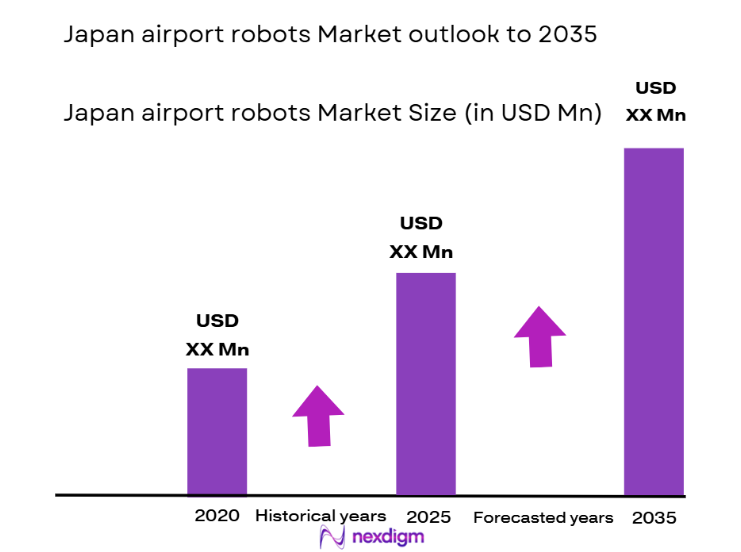
The Japan Airport Robots market has shown significant growth, driven by increasing demand for automation in the aviation sector. The value of this market is primarily fueled by the need to improve operational efficiency and reduce labor costs. As airports look to streamline processes such as baggage handling, passenger assistance, and security, robots are becoming an integral part of airport operations. With advancements in artificial intelligence and robotics technology, the market is expected to continue expanding as airports adopt more autonomous systems. As of 2025, the market has reached a valuation of USD ~ million and is projected to grow steadily in the coming years.
Japan’s dominance in the airport robots market is attributed to the country’s advanced technological capabilities, high adoption rate of automation solutions, and the presence of major international airports like Tokyo Narita, Osaka Kansai, and Chubu Centrair. These airports are not only highly developed but are also early adopters of innovative technologies, making Japan a leader in integrating robotics into airport operations. The country’s strong infrastructure and government support for technological advancements contribute to the ongoing success and market growth.
Market Segmentation
By System Type
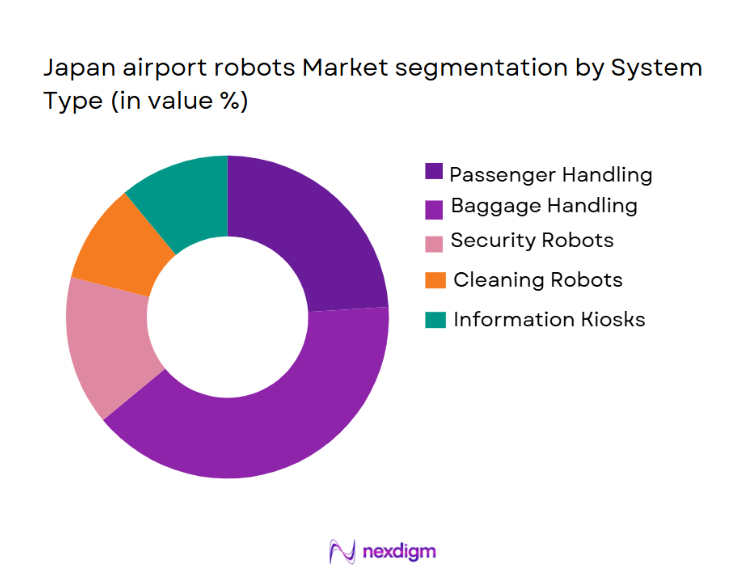
The Japan Airport Robots market is segmented by system type into passenger handling robots, baggage handling robots, security robots, cleaning robots, and information kiosk robots. Among these, baggage handling robots are expected to dominate the market share in 2024. This dominance is due to the growing need for automation in luggage processing, which helps reduce human labor costs and improves operational efficiency. As airports face increasing passenger numbers and tighter turnaround times, baggage handling robots are becoming essential for maintaining smooth operations. Key players in the market are focusing on developing robots that can autonomously transport and sort luggage, providing a reliable and scalable solution to meet the demand for faster baggage processing.
By Platform Type
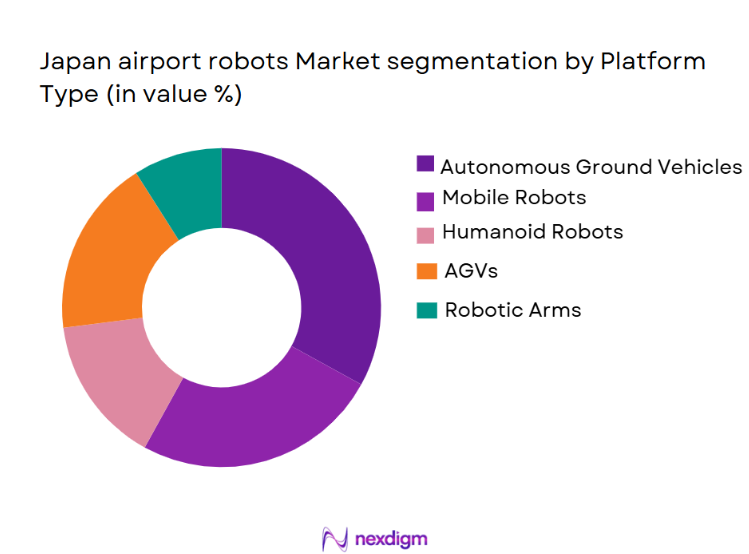
The market is also segmented by platform type, including autonomous ground vehicles, mobile robots, humanoid robots, automated guided vehicles (AGVs), and robotic arms. Autonomous ground vehicles (AGVs) are anticipated to dominate the market due to their wide application in baggage handling, transporting goods, and assisting with mobility around airports. AGVs offer a high level of flexibility, can navigate complex environments autonomously, and significantly reduce the need for manual labor. With their ability to operate 24/7 without human intervention, these systems provide cost-efficient solutions to airports, driving their continued dominance in the market.
Competitive Landscape
The Japan Airport Robots market is dominated by a few key players. These companies have solidified their presence through technological advancements, strong product portfolios, and strategic partnerships with major airports. Global players such as Panasonic, Hitachi, and Daifuku, along with robotics specialists like Savioke and Omron, have made substantial inroads into the market. Their consistent innovation in the automation and robotics space has contributed to their strong competitive positioning.
| Company Name | Establishment Year | Headquarters | Key Technology Focus | Product Portfolio | Market Share Influence | R&D Investment |
| Panasonic Corporation | 1918 | Osaka, Japan | ~ | ~ | ~ | ~ |
| Hitachi Ltd | 1910 | Tokyo, Japan | ~ | ~ | ~ | ~ |
| Daifuku Co., Ltd. | 1937 | Osaka, Japan | ~ | ~ | ~ | ~ |
| Savioke | 2013 | San Jose, USA | ~ | ~ | ~ | ~ |
| Omron Corporation | 1933 | Kyoto, Japan | ~ | ~ | ~ | ~ |
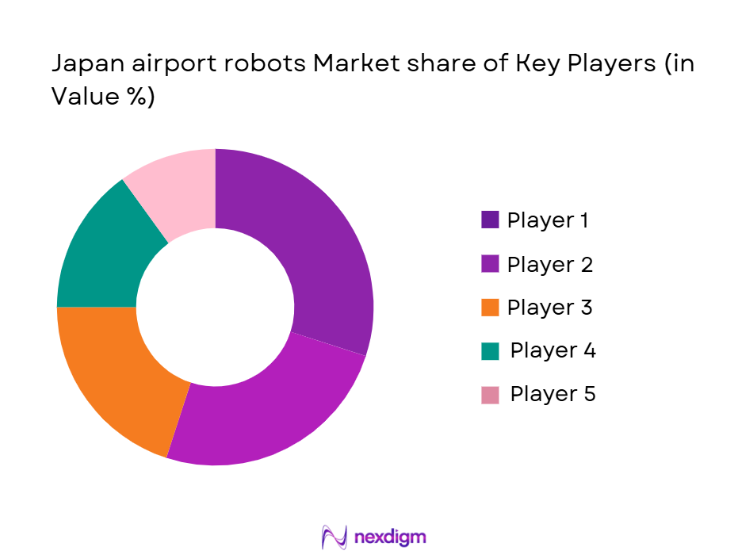
Japan Airport Robots Market Analysis
Growth Drivers
Technological Advancements
The continuous innovation in robotics, AI, and automation technologies is driving the growth of the Japan Airport Robots market. The development of more efficient and cost-effective solutions for passenger handling, baggage management, and security is contributing to the increasing adoption of robots at airports.
Rising Passenger Traffic
The increasing number of air travelers, particularly at major airports in Japan, is creating a need for more efficient and automated systems. To manage the growing passenger traffic, airports are adopting robotic solutions to streamline operations and reduce labor costs.
Market Challenges
High Initial Investment
The high upfront costs of implementing robotic systems in airport operations pose a significant challenge. While robots help reduce operational costs in the long run, the initial investment required for purchasing and integrating these systems can be prohibitive for some airports.
Integration with Existing Infrastructure
Integrating robots into existing airport infrastructure, which may be outdated or incompatible with advanced robotic systems, can be a complex and time-consuming process. Airports must overcome compatibility and interoperability challenges to fully benefit from automation technologies.
Opportunities
Expansion of Robotics Solutions to Regional Airports
While major airports in Japan are leading the way in adopting robotic solutions, there is significant growth potential in regional and smaller airports. The demand for automation in these airports presents an opportunity for robotics companies to expand their reach and develop tailored solutions for different airport sizes.
Collaborations and Partnerships
Partnerships between robotics manufacturers, technology providers, and airport operators present significant opportunities. By collaborating on the development and deployment of robotics systems, these stakeholders can drive innovation and create customized solutions to meet specific airport needs.
Future Outlook
Over the next five years, the Japan Airport Robots market is expected to experience substantial growth, driven by continuous advancements in robotics, AI technologies, and an increasing demand for automation in airport operations. Airports are increasingly adopting robots to improve operational efficiency, reduce labor costs, and enhance passenger experience. The continued integration of AI and robotics into various airport functions, including baggage handling, passenger services, and security, is anticipated to drive the market forward. Japan’s ongoing investment in infrastructure modernization and its supportive regulatory environment will play a pivotal role in fostering further growth.
Major Players
- Panasonic Corporation
- Hitachi Ltd
- Daifuku Co., Ltd.
- Savioke
- Omron Corporation
- Furukawa Electric Co. Ltd
- Guangzhou Yidian Technology
- Vanderlande Industries
- Aethon, Inc.
- Clearpath Robotics
- KUKA Robotics
- Locus Robotics
- Toshiba Corporation
- Siemens AG
- Robotizing Solutions
Key Target Audience
- Investments and venture capitalist firms
- Government and regulatory bodies
- Airport operators and airport authorities
- Ground services providers
- Robotics manufacturers and suppliers
- Security agencies and contractors
- Infrastructure development companies
- Technology development and AI companies
Research Methodology
Step 1: Identification of Key Variables
The initial phase involves mapping the major stakeholders within the Japan Airport Robots Market. This includes identifying key players, technologies, and market drivers. Secondary and proprietary data sources will be analyzed to construct a comprehensive understanding of the factors affecting market dynamics.
Step 2: Market Analysis and Construction
Historical data from industry reports, company filings, and databases will be compiled to analyze market performance. Key aspects such as market penetration, airport adoption rates, and product types will be assessed, followed by revenue generation and operational capacity evaluations.
Step 3: Hypothesis Validation and Expert Consultation
The next step involves validating market hypotheses through consultations with industry experts, including airport executives, robotics manufacturers, and AI specialists. This phase will provide deeper insights into the market’s technological trends and future potential.
Step 4: Research Synthesis and Final Output
The final phase will focus on synthesizing the data collected in the previous steps. This will involve validating results through direct engagement with industry players, refining conclusions, and finalizing the comprehensive market report on Japan Airport Robots.

- Executive Summary
- Research Methodology (Definitions, Scope, Industry Assumptions, Market Sizing Approach, Primary & Secondary Research Framework, Data Collection & Verification Protocol, Analytic Models & Forecast Methodology, Limitations & Research Validity Checks)

- Market Definition and Scope
- Value Chain & Stakeholder Ecosystem
- Regulatory / Certification Landscape
- Sector Dynamics Affecting Demand
- Strategic Initiatives & Infrastructure Growth

- Growth Drivers
Rising demand for automation in airports for improved efficiency
Increased focus on contactless and hygienic services due to COVID-19
Technological advancements in robotics and AI for enhanced functionality - Market Challenges
High upfront costs of robotics systems
Regulatory challenges for deployment and integration
Integration complexities with existing airport infrastructure - Market Opportunities
Expansion of robotics solutions to regional and international airports
Growing interest in AI-based robots for personalized passenger services
Partnerships between robotics companies and airport authorities for large-scale deployment - Trends
Increase in collaborative robots (cobots) for improved human-robot interaction
Focus on sustainability with energy-efficient and eco-friendly robots
Rising investment in R&D for next-generation autonomous airport robots

- By Market Value 2020-2025
- By Installed Units 2020-2025
- By Average System Price 2020-2025
- By System Complexity Tier 2020-2025

- By System Type (In Value%)
Passenger Handling Robots
Baggage Handling Robots
Security Robots
Cleaning Robots
Information Kiosk Robots - By Platform Type (In Value%)
Autonomous Ground Vehicles
Mobile Robots
Humanoid Robots
Automated Guided Vehicles (AGVs)
Robotic Arms - By Fitment Type (In Value%)
Stationary Fitment
Mobile Fitment
Modular Fitment
Integrated Fitment
Custom Fitment - By EndUser Segment (In Value%)
Airports
Ground Services Providers
Airport Operators
Security Companies
Cleaning Service Providers - By Procurement Channel (In Value%)
Direct Sales
Distributors
Online Sales
Third-party Integrators
OEMs (Original Equipment Manufacturers)

- Market Share Analysis
- CrossComparison Parameters (Technology Adoption Rate, Regional Expansion, Product Customization, Customer Base, After-Sales Service)
- SWOT Analysis of Key Competitors
- Pricing & Procurement Analysis
- Porter’s Five Forces
- Key Players
Furukawa Electric Co. Ltd
Panasonic Corporation
Hitachi Ltd
Vanderlande Industries
Savioke
Guangzhou Yidian Technology
Daifuku Co., Ltd.
Omron Corporation
Aethon, Inc.
Toshiba Corporation
Siemens AG
KUKA Robotics
Clearpath Robotics
Locus Robotics
Robotizing Solutions

- Airports looking to optimize operational efficiency and reduce labor costs
- Ground services providers adopting robots for faster turnaround times
- Security companies exploring robotic systems for enhanced safety measures
- Cleaning service providers integrating robots for 24/7 services

- Forecast Market Value 2026-2035
- Forecast Installed Units 2026-2035
- Price Forecast by System Tier 2026-2035
- Future Demand by Platform 2026-2035


 Request a Sample
 Ask for Customization
 Get a Quote
 Enquire Now