
 Download PDF
 Download PDF
Market Overview
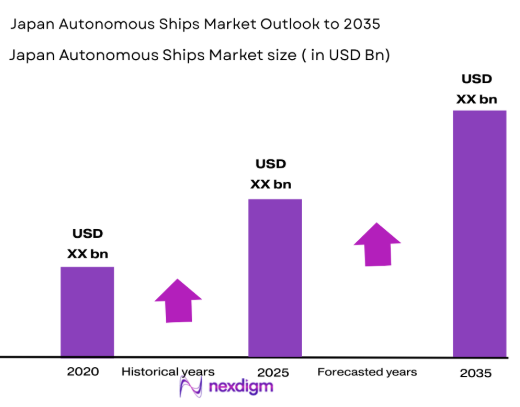
The Japan Autonomous Ships market is driven by substantial growth in maritime automation, with significant investments in autonomous navigation technologies, AI systems, and enhanced safety mechanisms. Based on recent historical assessments, the market size for autonomous ships in Japan is projected to reach approximately USD ~ billion, with increasing interest from both private and public sector players, aiming to integrate smart technologies for improved operational efficiency and safety in shipping. Rising demand for cost-effective, eco-friendly shipping solutions further propels market expansion, with autonomous vessels anticipated to transform the maritime industry.
Japan dominates the autonomous ships market due to its robust maritime industry, extensive shipbuilding capabilities, and strong government support for innovation. The country’s strategic maritime location, combined with investments in cutting-edge technologies like AI, IoT, and digital twin technology, positions it as a global leader. Additionally, Japan’s commitment to reducing emissions from maritime transport and enhancing port efficiency has solidified its position, with major cities like Tokyo and Yokohama serving as key hubs for autonomous shipping technology development.
Market Segmentation
By Product Type:
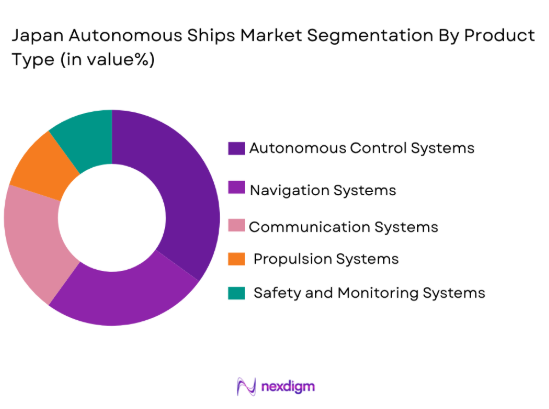
The Japan Autonomous Ships market is segmented by product type into autonomous control systems, navigation systems, communication systems, propulsion systems, and safety and monitoring systems. Recently, autonomous control systems have dominated market share due to their ability to provide fully autonomous navigation and decision-making capabilities. These systems drive efficiency and reduce human error, making them essential for operational safety and performance. Technological advancements in AI, machine learning, and real-time data processing have enabled autonomous control systems to become more reliable and accurate, making them a top choice for shipping companies looking to integrate autonomous technology into their fleets. With increasing pressure to adopt greener, safer, and more efficient maritime solutions, autonomous control systems have gained strong traction in the market, making them a key driver of overall growth.
By Platform Type:
The Japan Autonomous Ships market is segmented by platform type into cargo ships, passenger vessels, tugs & towboats, research and survey vessels, and naval ships. Recently, cargo ships have held the dominant market share due to the growing demand for large-scale, efficient transportation of goods across oceans. The integration of autonomous technology in cargo ships is largely driven by the need to reduce labor costs and enhance operational efficiency, especially in the face of global supply chain disruptions. Autonomous cargo ships also promise to improve safety by minimizing human error and optimizing routes for fuel efficiency. The shift towards automation in cargo vessels is further facilitated by technological advancements and significant investments from both public and private stakeholders, solidifying cargo ships as the leading platform for autonomous systems.

Competitive Landscape
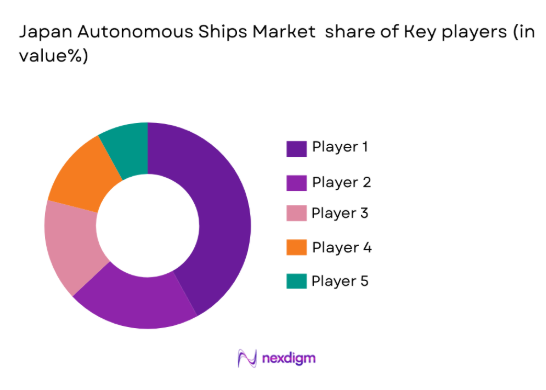
The Japan Autonomous Ships market is highly competitive, with both established players and new entrants racing to develop cutting-edge solutions. The market features strong consolidation, with major technology and shipbuilding companies collaborating to accelerate innovation and adoption. Companies like Mitsubishi Heavy Industries, Kawasaki Heavy Industries, and Rolls-Royce are leading the charge, supported by a favorable regulatory environment that encourages technological advancements. These major players influence the market significantly through large-scale investments in research and development, creating a competitive environment that pushes forward the commercialization of autonomous maritime technologies.
|
Company Name |
Establishment Year | Headquarters | Technology Focus | Market Reach | Key Products | Revenue (USD) |
| Mitsubishi Heavy Industries | 1884 | Tokyo, Japan | ~ | ~ | ~ | ~ |
| Kawasaki Heavy Industries | 1896 | Tokyo, Japan | ~ | ~ | ~ | ~ |
| Rolls-Royce | 1904 | London, UK | ~ | ~ | ~ | ~ |
| Kongsberg Gruppen | 1814 | Kongsberg, Norway | ~ | ~ | ~ | ~ |
| Hitachi | 1910 | Tokyo, Japan | ~ | ~ | ~ | ~ |
Japan autonomous ships Market Analysis
Growth Drivers
Technological Advancements in AI and Autonomous Systems:
The Japan Autonomous Ships market is significantly driven by continuous advancements in AI, machine learning, and autonomous navigation technologies. As maritime operators seek more efficient, cost-effective solutions, the development of AI-powered systems that can navigate and make decisions autonomously has proven to be a game changer. Autonomous ships can operate 24/7, with significantly reduced operational costs due to decreased reliance on human crew members, and they promise to improve safety through the elimination of human errors. As Japan heavily invests in the development and implementation of these technologies, the market for autonomous ships is projected to experience significant growth. Government incentives and public-private partnerships are accelerating the integration of these advanced technologies, enabling Japan to become a leader in autonomous maritime solutions. Additionally, the incorporation of IoT and data analytics in autonomous vessels further enhances their operational efficiency by optimizing fuel consumption, reducing emissions, and ensuring compliance with regulatory standards. These advancements have already started reshaping the global shipping industry, with Japan at the forefront of this transformation.
Environmental Regulations and Sustainability Goals:
Another key driver for the growth of the Japan Autonomous Ships market is the stringent environmental regulations that are pushing the shipping industry towards sustainability. As governments worldwide, including Japan, implement policies aimed at reducing carbon emissions and improving fuel efficiency, autonomous ships are seen as a crucial solution for meeting these goals. Autonomous vessels, powered by renewable energy sources, are designed to be more fuel-efficient and environmentally friendly, offering substantial reductions in emissions compared to traditional vessels. In Japan, this demand for sustainable shipping solutions aligns with the country’s long-term environmental goals and initiatives. Autonomous ships are expected to play a key role in reducing the carbon footprint of the shipping industry, making them attractive to regulatory bodies that emphasize eco-friendly technologies. The regulatory pressure is driving further investment in R&D for autonomous vessels, supporting the development of hybrid systems that integrate renewable energy and advanced propulsion technologies. This trend towards sustainability is not only aligning with Japan’s global environmental objectives but also attracting international customers looking to comply with stricter environmental standards.
Market Challenges
High Development Costs:
One of the major challenges facing the Japan Autonomous Ships market is the high development cost of autonomous maritime technologies. The integration of AI, machine learning, and other sophisticated systems into vessels requires significant capital investment, both for research and development and for testing and deployment. While autonomous ships promise long-term cost savings due to reduced manpower and operational efficiencies, the initial costs can be prohibitive for many shipping companies. For Japan’s shipbuilders and tech companies, these costs can create a barrier to entry for smaller firms and complicate the adoption of autonomous technologies across the wider maritime industry. High development costs are also compounded by the need for regulatory approval, further increasing the time and money required to bring autonomous vessels to market. Despite these challenges, major players in the Japanese market are working on overcoming these barriers through public-private partnerships and government subsidies aimed at driving innovation in autonomous shipping. However, as technology matures, it is expected that costs will gradually decrease, paving the way for more widespread adoption.
Cybersecurity Risks in Autonomous Systems:
Another significant challenge for the Japan Autonomous Ships market is the increasing risk of cybersecurity breaches in autonomous systems. As autonomous vessels become more reliant on digital infrastructure and connectivity, they are exposed to cyber threats that can compromise vessel security, disrupt operations, and pose safety risks. Cyberattacks targeting autonomous systems can potentially cause severe damage, including system malfunctions, loss of cargo, or even accidents. Given that autonomous ships rely on real-time data exchange and remote monitoring, the vulnerability to hacking and malware is a critical concern that must be addressed to ensure the safety and reliability of the technology. Japan, being a leader in maritime innovation, is actively investing in cybersecurity measures to protect autonomous vessels from cyber threats. However, as the adoption of autonomous ships grows, so too does the need for enhanced cybersecurity protocols, international standards, and regulations to safeguard the maritime ecosystem.
Opportunities
Expansion of Smart Ports and Maritime Infrastructure:
The development of smart ports and enhanced maritime infrastructure presents a significant opportunity for the Japan Autonomous Ships market. Smart ports, which leverage technologies such as IoT, AI, and big data to improve efficiency, connectivity, and security, can support the seamless integration of autonomous ships into global shipping networks. Japan, with its advanced port infrastructure, is in a prime position to capitalize on this trend. The country is already investing in the modernization of its port facilities to accommodate the next generation of automated vessels. The integration of smart port technologies can lead to faster turnaround times for autonomous vessels, reducing docking and unloading times while improving overall operational efficiency. Furthermore, the growing demand for global shipping hubs that can handle autonomous ships presents a lucrative opportunity for Japanese port authorities and private sector players. This will also encourage further advancements in port automation and the development of innovative logistics solutions, boosting the overall competitiveness of Japan’s maritime sector.
Partnerships with International Shipping Firms:
A growing opportunity for Japan’s autonomous ships market lies in forming strategic partnerships with international shipping companies looking to invest in autonomous vessel technology. With many global shipping firms actively exploring the use of autonomous vessels to reduce costs and improve operational efficiency, Japan’s market leaders can collaborate with these international players to expand their reach and market share. These partnerships can involve the exchange of technological expertise, joint ventures for R&D, and collaboration on the development of global standards for autonomous shipping. Japan’s established reputation as a leader in maritime technology, combined with its innovation in autonomous systems, makes it an attractive partner for international companies looking to leverage Japan’s capabilities in autonomous vessel development. Furthermore, these collaborations can help Japan’s autonomous ships market expand beyond domestic borders, positioning the country as a key player in the global autonomous shipping revolution.
Future Outlook
The Japan Autonomous Ships market is expected to experience substantial growth over the next five years, driven by ongoing technological innovations and government support for sustainable maritime solutions. Demand for autonomous vessels is expected to rise as shipping companies seek to reduce operating costs and improve efficiency, particularly in the face of rising fuel prices and labor shortages. Technological advancements in AI, machine learning, and autonomous navigation systems will continue to shape the market, along with growing investments in infrastructure and smart port solutions. The Japanese government’s commitment to environmental sustainability will also play a critical role in driving demand for greener, autonomous vessels. As these technologies mature and regulatory frameworks evolve, the Japan Autonomous Ships market is poised for significant expansion, transforming the future of maritime transportation.
Major Players
- Mitsubishi Heavy Industries
- Kawasaki Heavy Industries
- Rolls-Royce
- Kongsberg Gruppen
- Hitachi
- Hyundai Heavy Industries
- Wärtsilä
- Fujitsu
- Daewoo Shipbuilding & Marine Engineering
- Ocean Infinity
- ClassNK
- Japan Marine United
- STX Offshore & Shipbuilding
- DNV GL
- Lloyd’s Register
Key Target Audience
- Investments and venture capitalist firms
- Government and regulatory bodies
- Shipping companies
- Maritime technology providers
- Port authorities
- Naval and defense agencies
- Automation system manufacturers
- Shipping and logistics firms
Research Methodology
Step 1: Identification of Key Variables
The initial step involves identifying the key variables that impact the autonomous ships market, such as technological advancements, regulatory environment, and market demand.
Step 2: Market Analysis and Construction
Market segmentation and analysis are conducted to define sub-segments, market trends, growth drivers, and challenges that influence the overall market.
Step 3: Hypothesis Validation and Expert Consultation
Market assumptions and hypotheses are validated through consultations with industry experts, stakeholders, and data from primary and secondary research sources.
Step 4: Research Synthesis and Final Output
The gathered data is synthesized, analyzed, and presented in the final market report, providing actionable insights and recommendations for market participants.

- Executive Summary
- Research Methodology
(Definitions, Scope, Industry Assumptions, Market Sizing Approach, Primary & Secondary Research Framework, Data Collection & Verification Protocol, Analytic Models & Forecast Methodology, Limitations & Research Validity Checks)

- Market Definition and Scope
- Value Chain & Stakeholder Ecosystem
- Regulatory / Certification Landscape
- Sector Dynamics Affecting Demand
- Strategic Initiatives & Infrastructure Growth

- Growth Drivers
Government Investments in Maritime Safety and Innovation
Advancements in AI and Machine Learning for Autonomous Navigation
Increased Demand for Fuel Efficiency and Sustainability
Development of Smart Ports and Integrated Maritime Systems
Rising Adoption of Automation in the Shipping Industry - Market Challenges
High Development and Deployment Costs
Integration and Standardization of Technologies
Cybersecurity Concerns with Autonomous Systems
Regulatory and Compliance Challenges
Lack of Skilled Workforce for Advanced Maritime Technologies - Market Opportunities
Collaboration with Technology Providers for Seamless Integration
Emerging Demand for Autonomous Maritime Logistics Solutions
Growing Interest in Autonomous Shipping in Developing Economies - Trends
Increased Use of AI and Big Data in Autonomous Ships
Integration of Renewable Energy Sources in Autonomous Vessels
Focus on Enhanced Safety and Security Features in Autonomous Shipping
Growth of Maritime Autonomous Surface Ships (MASS) Regulations
Partnerships Between Maritime and Tech Companies for Innovation - Government Regulations & Defense Policy
International Maritime Organization (IMO) Guidelines for MASS
Regulations on Cybersecurity and Data Privacy in Maritime Operations
Government Support for Green and Sustainable Maritime Practices - SWOT Analysis
- Stakeholder and Ecosystem Analysis
- Porter’s Five Forces Analysis
- Competition Intensity and Ecosystem Mapping

- By Market Value, 2020-2025
- By Installed Units, 2020-2025
- By Average System Price, 2020-2025
- By System Complexity Tier, 2020-2025

- By System Type (In Value%)
Navigation Systems
Communication Systems
Propulsion Systems
Autonomous Control Systems
Safety and Monitoring Systems - By Platform Type (In Value%)
Cargo Ships
Passenger Vessels
Tugs & Towboats
Research and Survey Vessels
Naval Ships - By Fitment Type (In Value%)
Retrofit Systems
New Build Systems
Hybrid Systems
Integrated Systems
Modular Systems - By EndUser Segment (In Value%)
Commercial Shipping Companies
Naval & Defense Forces
Research Institutes
Shipping Port Authorities
Maritime Technology Providers - By Procurement Channel (In Value%)
Direct Procurement
Government Contracts
OEMs and System Integrators
Distributors & Resellers
Online Procurement Platforms - By Material / Technology (In Value%)
AI and Machine Learning Technologies
Advanced Propulsion Systems
Autonomous Navigation Technologies
Safety and Security Technologies
Marine Sensors & Monitoring Systems

- Market structure and competitive positioning
Market share snapshot of major players - Cross Comparison Parameters (System Type, Platform Type, End-user Segment, Procurement Channel, Material/Technology)
- SWOT Analysis of Key Competitors
- Pricing & Procurement Analysis
- Key Players
Mitsubishi Heavy Industries
Kawasaki Heavy Industries
ClassNK
Wärtsilä
Fujitsu
Kongsberg Gruppen
Rolls-Royce
Hitachi
Hyundai Heavy Industries
Japan Marine United
DAEWOO Shipbuilding & Marine Engineering
STX Offshore & Shipbuilding
Lloyd’s Register
DNV GL
Ocean Infinity

- Increasing Demand for Autonomous Shipping from Commercial Shipping
- Defense Forces’ Adoption of Autonomous Vessels for Strategic Operations
- R&D Institutions Driving Technological Innovation in Autonomous Ships
- Private Sector’s Interest in Cost-Effective and Sustainable Maritime Solutions

- Forecast Market Value, 2026-2035
- Forecast Installed Units, 2026-2035
- Price Forecast by System Tier, 2026-2035
- Future Demand by Platform, 2026-2035


 Request a Sample
 Ask for Customization
 Get a Quote
 Enquire Now