
 Download PDF
 Download PDF
Market Overview
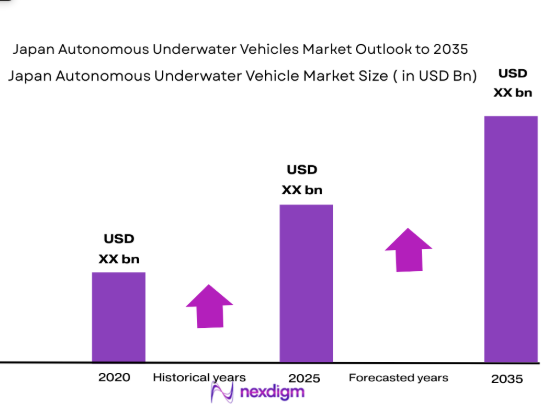
The Japan autonomous underwater vehicles market is experiencing significant growth, driven by increasing demand in various sectors such as defense, environmental monitoring, and offshore industries. The market size, based on a recent historical assessment, is expected to be valued at USD ~ billion. This growth is mainly attributed to advancements in technology, including improvements in battery efficiency and AI-based navigation systems, enabling AUVs to operate in deeper, more challenging environments. Additionally, the Japanese government’s strategic investments in maritime security and ocean research continue to bolster market expansion.
Japan has established itself as a dominant player in the autonomous underwater vehicle market, largely due to its strong maritime sector and technological expertise. Cities like Tokyo, Yokohama, and Kobe, along with the surrounding regions, are major hubs for AUV development and application. Japan’s advanced research institutions and collaborations between industry leaders and government bodies also play a crucial role in driving technological innovations. The country’s focus on offshore exploration and defense capabilities further solidifies its leadership in this growing market.
Market Segmentation
By Product Type
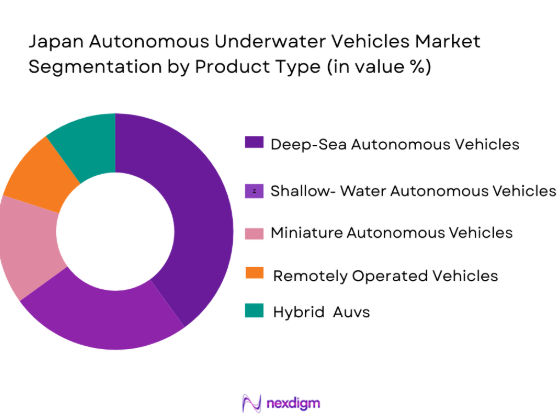
The Japan autonomous underwater vehicles market is segmented by product type into various sub-segments. Recently, the deep-sea autonomous vehicles segment has captured the largest market share due to increasing demand for subsea exploration, military applications, and environmental monitoring. Deep-sea AUVs are designed to withstand extreme depths and provide high-resolution data, making them essential for industries like defense, oil and gas, and marine research. Their ability to operate autonomously in remote and hazardous conditions has further propelled their market dominance. As technological advances enhance the capabilities of deep-sea AUVs, this segment is expected to continue leading the market in the coming years.
By Platform Type
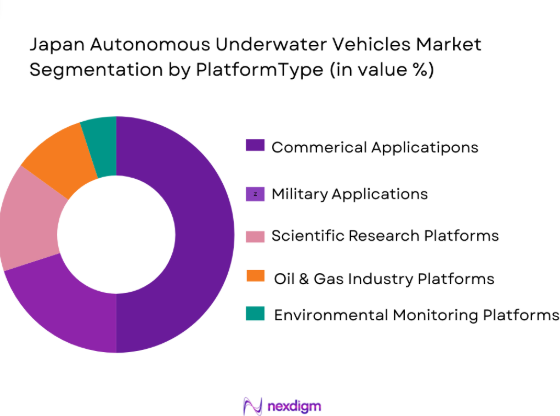
The market for Japan’s autonomous underwater vehicles is also segmented by platform type, with commercial applications dominating the sector. The increasing use of AUVs in offshore exploration, particularly in the oil and gas industry, has driven the demand for commercial AUVs. These vehicles offer operational flexibility, efficiency, and reduced operational costs, making them ideal for long-term use in commercial sectors. The military and scientific research platforms also contribute significantly to the market, as these vehicles are essential for surveillance, data collection, and underwater research operations. As commercial applications continue to expand, particularly in Japan’s rich maritime domain, this segment is projected to remain a dominant force in the market.
Competitive Landscape
The Japan autonomous underwater vehicle market is highly competitive, with several key players at the forefront of technological advancements and market expansion. The presence of major players like Teledyne Marine, Kongsberg Gruppen, and Fugro has led to significant consolidation in the market. These companies, through mergers and acquisitions, strategic partnerships, and technological innovations, continue to strengthen their position and expand their global market reach. The increasing demand for advanced AUV systems in defense, commercial, and scientific applications has intensified competition, driving companies to improve their product offerings and explore new market opportunities.
| Company Name | Establishment Year | Headquarters | Technology Focus | Market Reach | Key Products | Revenue |
| Teledyne Marine | 1960 | United States | ~ | ~ | ~ | ~ |
| Kongsberg Gruppen | 1814 | Norway | ~ | ~ | ~ | ~ |
| Fugro | 1962 | Netherlands | ~ | ~ | ~ | ~ |
| Oceaneering | 1964 | United States | ~ | ~ | ~ | ~ |
| Schilling Robotics | 1981 | United States | ~ | ~ | ~ | ~ |
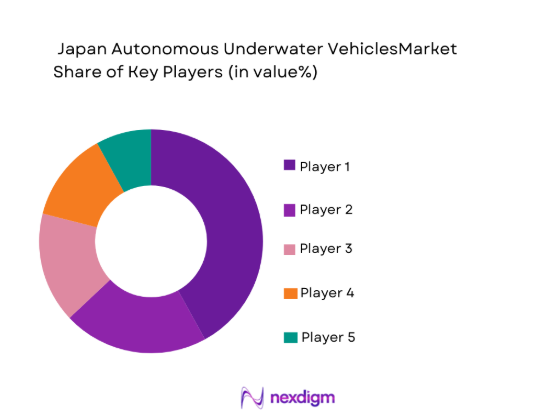
Japan Autonomous Underwater Vehicles Market Analysis
Growth Drivers
Advancements in AUV Technology
The rapid advancements in autonomous underwater vehicle technology have significantly contributed to the market’s growth. AUVs have evolved from simple tools used for basic data collection to highly sophisticated systems capable of conducting complex underwater missions in both shallow and deep-sea environments. Innovations in battery technology have led to extended operational times, while improvements in artificial intelligence and machine learning algorithms have enhanced navigation and decision-making abilities. These technological strides have made AUVs an indispensable tool in fields like marine research, defense, and offshore oil and gas exploration. As more industries recognize the benefits of autonomous underwater vehicles, the demand for these systems continues to increase, driving the market’s expansion.
Increased Demand in Environmental Monitoring:
Another key growth driver for the Japan autonomous underwater vehicle market is the increasing demand for environmental monitoring. AUVs play a crucial role in marine research, monitoring ocean health, and collecting data on underwater ecosystems. Japan, with its extensive coastline and focus on ocean sustainability, is investing heavily in AUVs to support environmental monitoring programs. These vehicles provide high-resolution data on water quality, sea floor conditions, and biodiversity, which is essential for understanding the effects of climate change, pollution, and human activities on marine environments. As environmental concerns grow, particularly around the protection of marine ecosystems, the demand for AUVs in environmental monitoring is expected to increase.
Market Challenges
High Initial Investment Costs
One of the significant challenges facing the Japan autonomous underwater vehicle market is the high initial investment required for these systems. While AUVs offer significant long-term operational cost savings, the upfront costs of these vehicles, including research, development, and manufacturing expenses, remain substantial. Smaller companies and startups often find it difficult to enter the market due to the financial barriers to entry. This challenge is compounded by the complexity of integrating AUVs with existing infrastructure, such as offshore platforms and marine research systems. The high cost of AUV systems, along with the need for continuous maintenance and technological upgrades, is a major hurdle for widespread adoption, particularly in developing sectors.
Regulatory and Environmental Barriers:
Another challenge to market growth is the regulatory and environmental hurdles associated with deploying autonomous underwater vehicles. As AUVs operate in sensitive marine environments, stringent environmental regulations govern their use, especially in protected areas and international waters. Compliance with these regulations can delay projects and increase operational costs. Furthermore, there is a lack of standardized regulations governing AUV operations globally, creating uncertainty for companies operating in multiple regions. These challenges hinder market growth, as players in the industry must navigate complex regulatory landscapes to ensure compliance and maintain sustainable operations.
Opportunities
Expanding Defense Applications:
The Japan autonomous underwater vehicle market is witnessing significant opportunities in defense applications. The Japanese government has increasingly recognized the strategic importance of autonomous underwater vehicles in maritime security. AUVs are being deployed for surveillance, reconnaissance, and anti-submarine warfare, enhancing Japan’s defense capabilities. As geopolitical tensions continue to rise in the Asia-Pacific region, the demand for AUVs in defense and military operations is expected to increase. Japan’s focus on bolstering its defense technology infrastructure and maritime security presents a prime opportunity for companies operating in the AUV sector to expand their market share by offering advanced systems tailored to military applications.
Growing Interest in Offshore Exploration:
The ongoing expansion of offshore oil and gas exploration presents a substantial opportunity for the Japan autonomous underwater vehicle market. AUVs are used extensively in the offshore industry for tasks such as pipeline inspection, subsea surveying, and infrastructure monitoring. As the demand for energy resources grows and the need for sustainable exploration techniques intensifies, the adoption of AUVs in offshore exploration will continue to increase. Japan’s technological expertise and its position as a leading player in the offshore energy sector provide significant opportunities for companies in the AUV market to strengthen their position by offering reliable and efficient solutions for the industry’s growing needs.
Future Outlook
The future outlook for the Japan autonomous underwater vehicle market over the next five years is highly promising. The market is expected to experience continued growth driven by technological innovations and expanding applications across various sectors. Advancements in AI, battery efficiency, and communication technologies will enhance the capabilities of AUVs, making them more versatile and cost-effective. Furthermore, increased government investments in maritime security and environmental research will create new avenues for market players to capitalize on. With Japan’s focus on ocean sustainability, the demand for AUVs in marine research and environmental monitoring is expected to remain strong. Regulatory support for autonomous technologies will also play a key role in shaping the market’s future.
Major Players
- Teledyne Marine
- Kongsberg Gruppen
- Fugro
- Oceaneering
- Schilling Robotics
- Saab AB
- Atlas Elektronik
- Hydroid
- L3 Technologies
- Bluefin Robotics
- ECA Group
- iRobot
- Boston Engineering
- International Submarine Engineering
- Ocean Infinity
Key Target Audience
- Investments and venture capitalist firms
- Government and regulatory bodies
- Defense and military agencies
- Marine research institutions
- Offshore oil and gas companies
- Environmental organizations
- Academic and scientific researchers
- AUV technology developers
Research Methodology
Step 1: Identification of Key Variables
We identified the key market drivers, challenges, and growth factors influencing the Japan autonomous underwater vehicles market, focusing on technological advancements, demand patterns, and industry dynamics.
Step 2: Market Analysis and Construction
In-depth analysis was conducted to construct the market size by evaluating historical data, current market trends, and industry reports from trusted sources such as government publications and industry research firms.
Step 3: Hypothesis Validation and Expert Consultation
Industry experts, market leaders, and stakeholders were consulted to validate assumptions and refine market predictions. This involved interviews with key players and experts in AUV technology and underwater exploration.
Step 4: Research Synthesis and Final Output
Data was synthesized into actionable insights, with final recommendations for market participants, highlighting the opportunities, challenges, and growth potential of the Japan autonomous underwater vehicle market.

- Executive Summary
- Market Research Methodology (Definitions, Scope, Industry Assumptions, Market Sizing Approach, Primary & Secondary Research Framework, Data Collection & Verification Protocol, Analytic Models & Forecast Methodology, Limitations & Research Validity Checks)

- Market Definition and Scope
- Value Chain & Stakeholder Ecosystem
- Regulatory / Certification Landscape
- Sector Dynamics Affecting Demand
- Strategic Initiatives & Infrastructure Growth

- Growth Drivers
Increasing Demand for Environmental Monitoring
Rising Military Applications for Surveillance
Growth in Subsea Oil & Gas Exploration
Technological Advancements in Battery and Sensors
Rising Investments in Research and Development - Market Challenges
High Initial Investment and Maintenance Costs
Regulatory Challenges and Environmental Concerns
Limited Battery Life and Energy Efficiency
Lack of Standardization in Technology
Complexity in Real-time Data Processing - Market Opportunities
Expanding Demand in the Aquaculture Industry
Technological Innovations in Autonomous Navigation
Emerging Markets in Environmental Research - Trends
Growing Integration of AI in Autonomous Vehicles
Development of Long-lasting Battery Technologies
Collaborations between Defense & Commercial Sectors
Advances in Subsea Communications
Increased Government Funding for Marine Research - Government Regulations & Defense Policy
Strict Environmental Regulations on Ocean Floor Interference
Government Defense Policies for Maritime Security
International Regulations on Autonomous Vehicle Navigation - SWOT Analysis
Stakeholder and Ecosystem Analysis
Porter’s Five Forces Analysis
Competition Intensity and Ecosystem Mapping

- By Market Value, 2020-2025
- By Installed Units, 2020-2025
- By Average System Price, 2020-2025
- By System Complexity Tier, 2020-2025

- By System Type (In Value%)
Deep-sea Autonomous Vehicles
Shallow-water Autonomous Vehicles
Miniature Autonomous Vehicles
Remotely Operated Vehicles (ROVs)
Hybrid AUVs - By Platform Type (In Value%)
Commercial Applications
Military Applications
Scientific Research Platforms
Oil & Gas Industry Platforms
Environmental Monitoring Platforms - By Fitment Type (In Value%)
Self-propelled Systems
Towed Systems
Hand-deployed Systems
Modular Systems
Docking & Recharging Systems - By End User Segment (In Value%)
Defense & Security
Environmental Monitoring & Research
Oil & Gas
Mining Industry
Aquaculture - By Procurement Channel (In Value%)
Direct Procurement
Third-party Distributors
OEMs (Original Equipment Manufacturers)
Government Procurement
Online Platforms - By Material / Technology (In Value%)
Metal-based Hulls
Composite Materials
Battery Technologies
Sensor Technologies
Control Systems & Software

- Market share snapshot of major players
- Cross Comparison Parameters (Technology Adoption, Market Penetration, R&D Investment, Regulatory Compliance, Product Portfolio)
- SWOT Analysis of Key Competitors
- Pricing & Procurement Analysis
- Key Players
Teledyne Marine
Saab AB
Kongsberg Gruppen
Oceaneering International
Fugro
Schilling Robotics
Bluefin Robotics
Hydroid
Triton Imaging
Atlas Elektronik
L3 Technologies
Boeing
Lockheed Martin
Raytheon
ECA Group

- Increased Military Spending on Surveillance Systems
- Growing Adoption in Environmental and Marine Research
- Rising Use of AUVs in Underwater Archaeology
- Aquaculture Industry Demand for Autonomous Monitoring Systems

- Forecast Market Value, 2026-2035
- Forecast Installed Units, 2026-2035
- Price Forecast by System Tier, 2026-2035
- Future Demand by Platform, 2026-2035


 Request a Sample
 Ask for Customization
 Get a Quote
 Enquire Now