
 Download PDF
 Download PDF
Market Overview
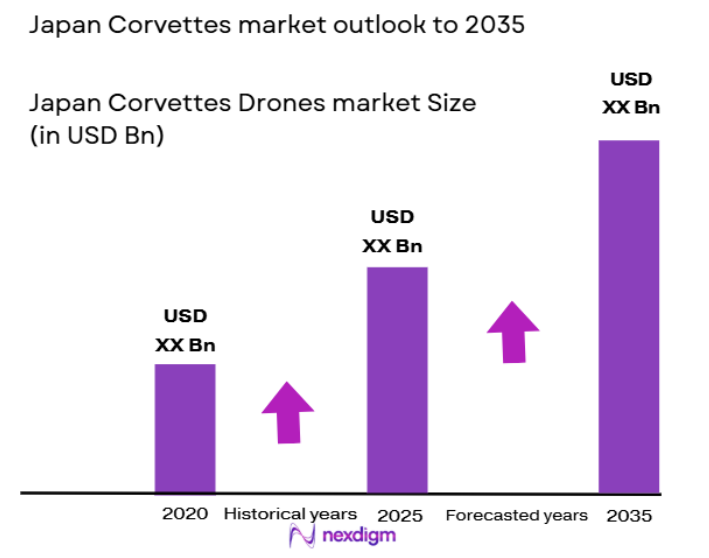
The Japan Corvettes market is valued at USD ~ billion, driven by increasing naval security needs, regional maritime tensions, and a rising focus on maritime defense technologies. Factors such as Japan’s emphasis on modernizing its naval fleet and enhancing operational capabilities are boosting demand for advanced corvette vessels. Strategic partnerships between the government and private sector, along with rising defense budgets, further support market growth. The market’s expansion is primarily propelled by the need for multi-role, versatile ships that can effectively address modern warfare and security challenges.
The market is predominantly driven by key coastal cities and regions such as Tokyo, Yokohama, and Kure, which serve as hubs for naval activities. Japan’s strategic positioning in the Pacific Ocean and its focus on strengthening national defense amid geopolitical tensions with neighboring countries have solidified its dominance in the naval defense sector. The growing investment in domestic shipbuilding facilities and robust infrastructure plays a crucial role in maintaining the country’s leading position in the global market.
Market Segmentation
By System Type
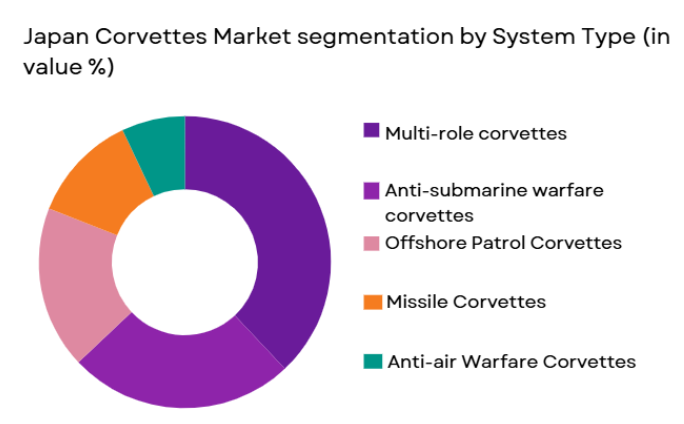
The Japan Corvettes market is segmented by system type into multi-role corvettes, anti-submarine warfare corvettes, offshore patrol corvettes, missile corvettes, and anti-air warfare corvettes. Recently, multi-role corvettes have dominated the market due to their versatility in fulfilling various operational roles, including anti-surface, anti-submarine, and anti-air capabilities. This versatility makes them highly desirable for defense forces, especially in regions requiring a flexible, rapid-response naval solution. The ability to integrate advanced technologies and provide multi-faceted defense capabilities has bolstered their demand, positioning multi-role corvettes as the dominant sub-segment.
By Platform Type
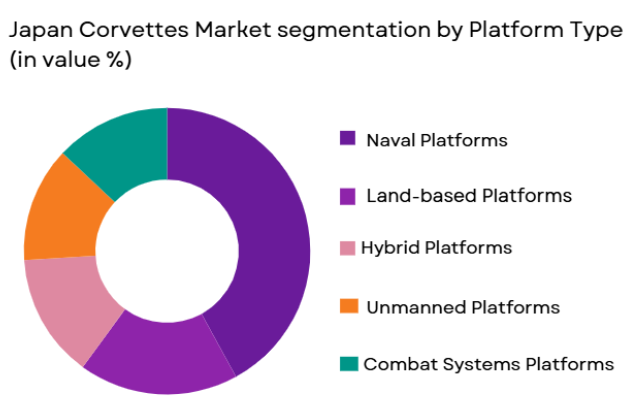
The Japan Corvettes market is segmented by platform type into naval platforms, land-based platforms, hybrid platforms, unmanned platforms, and combat systems platforms. Among these, naval platforms dominate due to their integral role in national defense strategies. Naval platforms are favored for their operational range, resilience, and suitability for deployment across various maritime zones, enabling them to perform an extensive array of missions, from defense to surveillance. Their capability to operate under diverse conditions, such as coastal and deep-sea environments, further strengthens their leading position in the market.
Competitive Landscape
The Japan Corvettes market exhibits a moderately consolidated competitive landscape, with major players dominating key segments of the market. The competitive dynamics are driven by technological advancements, government defense contracts, and strategic partnerships within the global naval defense industry. The presence of both local and international companies plays a crucial role in shaping the market, with prominent players focusing on enhancing ship designs, systems integration, and operational capabilities.
| Company Name | Establishment Year | Headquarters | Technology Focus | Market Reach | Key Products | Revenue (USD) | Additional Parameter |
| Mitsubishi Heavy Industries | 1884 | Tokyo, Japan | ~ | ~ | ~ | ~ | ~ |
| Kawasaki Heavy Industries | 1896 | Tokyo, Japan | ~ | ~ | ~ | ~ | ~ |
| IHI Corporation | 1853 | Tokyo, Japan | ~ | ~ | ~ | ~ | ~ |
| Saab AB | 1989 | Stockholm, Sweden | ~ | ~ | ~ | ~ | ~ |
| BAE Systems | 1999 | London, UK | ~ | ~ | ~ | ~ | ~ |
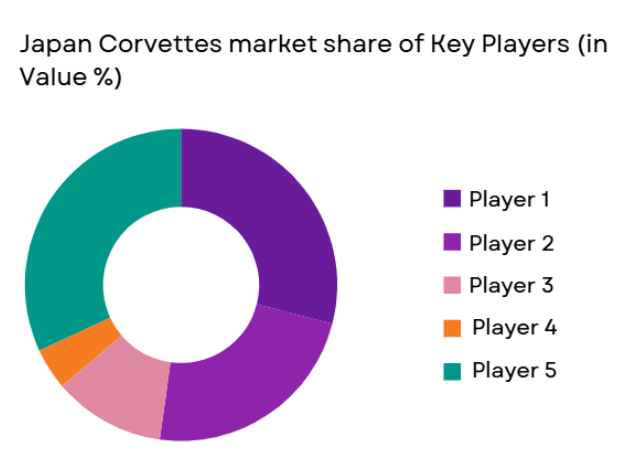
Japan Corvettes Market Analysis
Growth Drivers
Rising Maritime Security Threats
Rising maritime security threats have become a significant growth driver for the Japan Corvettes market. The increasing number of territorial disputes in the Pacific and broader Asia-Pacific region, combined with a growing focus on counter-terrorism and anti-piracy operations, necessitates the strengthening of naval forces. As nations within this region, including Japan, face potential threats from both conventional and unconventional forces, the demand for highly capable naval assets, such as corvettes, rises. This trend is further fueled by technological advancements in naval warfare systems, including enhanced surveillance and communications equipment, making corvettes an essential component of national defense strategies. Furthermore, the adaptability of corvettes to various missions, from military operations to humanitarian assistance, positions them as the ideal response to emerging maritime security challenges.
Technological Advancements in Naval Defense
Technological advancements in naval defense systems are accelerating the growth of the Japan Corvettes market. Innovations in radar, sonar, and anti-missile defense systems are transforming corvettes into highly effective platforms for naval combat. Moreover, developments in automation, navigation, and shipbuilding technologies are enabling corvettes to perform complex missions with greater precision, speed, and cost-efficiency. Japan’s focus on maintaining technological superiority in naval defense encourages the adoption of cutting-edge technologies, making corvettes integral to the nation’s naval modernization efforts. These advancements also provide opportunities for the export of highly sophisticated corvette systems to other countries seeking to enhance their naval capabilities, further expanding market growth. The adoption of digital technologies, such as AI-driven combat systems and cybersecurity solutions, enhances operational capabilities, solidifying the growing demand for advanced corvette systems.
Market Challenges
High Development and Maintenance Costs
One of the major challenges faced by the Japan Corvettes market is the high cost of development and maintenance. The design and construction of advanced corvettes require significant investment in materials, labor, and cutting-edge technologies. As these vessels are equipped with specialized systems, including advanced propulsion, weaponry, and defense mechanisms, their production costs remain elevated. Moreover, the long lifecycle of corvettes necessitates continuous maintenance and upgrades to ensure operational readiness, leading to substantial ongoing costs. These financial constraints pose challenges for both government defense budgets and private sector investment in naval assets. The high cost also limits the affordability of corvettes for smaller nations or non-defense entities, which affects the market’s accessibility and growth potential. Balancing the need for advanced capabilities with cost-effective solutions is crucial to overcoming this challenge.
Technological Integration Complexity
The complexity of integrating multiple technologies into a single corvette platform represents a key challenge for the Japan Corvettes market. Modern corvettes require integration of diverse systems, such as radar, sonar, communications, propulsion, and weaponry, to perform their multifunctional roles. Ensuring seamless interoperability between these systems while maintaining high levels of reliability and performance is a technical challenge. Additionally, the integration of emerging technologies, such as artificial intelligence, autonomous navigation, and cybersecurity systems, further complicates this process. Given the strategic importance of corvettes, any failure in system integration can compromise the vessel’s operational effectiveness. This technical complexity, combined with high costs, can hinder timely deliveries and reduce operational readiness, limiting the market’s growth prospects.
Opportunities
Exporting Advanced Naval Technology
One of the primary opportunities for the Japan Corvettes market lies in the export of advanced naval technology. Japan’s strong reputation for high-quality engineering and technological innovation in the defense sector makes its corvettes highly desirable for countries looking to enhance their naval forces. As several nations in the Asia-Pacific, the Middle East, and Africa face rising maritime security challenges, they are increasingly turning to Japan for modern, reliable, and cost-effective corvette solutions. This trend opens up significant opportunities for Japanese manufacturers to expand their global market presence and increase revenue through international defense contracts. Japan’s collaboration with other nations, particularly within defense alliances such as NATO and the ASEAN, will facilitate the spread of advanced corvette technology. Additionally, the growing demand for multi-role corvettes capable of addressing various maritime security needs is expected to fuel export opportunities.
Strategic Partnerships with Global Defense Firms
Another significant opportunity for the Japan Corvettes market lies in forming strategic partnerships with global defense firms. Collaborating with international companies allows Japanese firms to enhance their technological capabilities and expand their market footprint. These partnerships provide access to new markets and shared expertise in areas such as missile defense systems, navigation technologies, and combat integration. Additionally, collaborating with established international defense contractors can streamline the procurement process, reduce development time, and increase the competitiveness of Japanese corvettes in global markets. By aligning with global defense firms, Japanese manufacturers can mitigate the challenges posed by high development and operational costs, enhancing their market position in the global naval defense market.
Future Outlook
The future outlook for the Japan Corvettes market over the next five years indicates steady growth, fueled by increasing demand for advanced naval defense solutions. Technological developments in corvette design and defense systems, coupled with rising geopolitical tensions, will drive market expansion. Additionally, Japan’s commitment to strengthening its naval fleet and modernizing defense assets will further accelerate the adoption of new corvette models. As countries in the Asia-Pacific region continue to bolster their maritime security forces, the market for advanced naval platforms, including corvettes, will expand, supported by government initiatives and international defense collaborations.
Major Players
- Mitsubishi Heavy Industries
- Kawasaki Heavy Industries
- IHI Corporation
- Saab AB
- BAE Systems
- Naval Group
- General Dynamics
- Lockheed Martin
- Hyundai Heavy Industries
- ThyssenKrupp Marine Systems
- Damen Shipyards
- Fincantieri
- Naval Shipbuilding Corporation
- Huntington Ingalls Industries
- Navantia
Key Target Audience
- Investments and venture capitalist firms
- Government and regulatory bodies
- Defense contractors
- Naval defense authorities
- Military procurement agencies
- Naval training and simulation companies
- Shipbuilding companies
- International defense agencies
Research Methodology
Step 1: Identification of Key Variables
The first step involves identifying critical market variables such as product types, end-users, geographical regions, and technological advancements. This provides a foundation for in-depth analysis.
Step 2: Market Analysis and Construction
Detailed analysis is conducted by evaluating historical trends, market size, and dynamics. The data is then synthesized into a comprehensive model reflecting current market conditions.
Step 3: Hypothesis Validation and Expert Consultation
Insights from industry experts and market participants are used to validate research hypotheses, ensuring accuracy and reliability of the forecast.
Step 4: Research Synthesis and Final Output
The final stage involves integrating all gathered data and insights, presenting a consolidated and actionable market report that addresses all identified research objectives.

- Executive Summary
- Research Methodology (Definitions, Scope, Industry Assumptions, Market Sizing Approach, Primary & Secondary Research Framework, Data Collection & Verification Protocol, Analytic Models & Forecast Methodology, Limitations & Research Validity Checks)

- Market Definition and Scope
- Value Chain & Stakeholder Ecosystem
- Regulatory / Certification Landscape
- Sector Dynamics Affecting Demand
- Strategic Initiatives & Infrastructure Growth

- Growth Drivers
Rising Maritime Security Threats
Technological Advancements in Naval Warfare
Increased Defense Budgets by Japan
Geopolitical Tensions in the Pacific Region
Global Naval Modernization Programs - Market Challenges
High Development and Maintenance Costs
Technological Integration Complexity
Limited Naval Shipbuilding Capacity
International Trade and Export Restrictions
Changing Defense Priorities - Market Opportunities
Collaborations with Global Naval Technology Providers
Expansion of Coastal Security Initiatives
Enhanced Naval Warfare Training Programs - Trends
Growing Demand for Multi-role Corvettes
Increasing Adoption of Autonomous Naval Platforms
Shift Toward Modular and Flexible Combat Systems
Advancements in Underwater Combat Technologies
Rise in Offshore and Coastal Surveillance Activities - Government Regulations & Defense Policy
Enhanced Naval Defense Budgets in Japan
International Maritime Defense Agreements
Japan’s Naval Modernization Policy - SWOT Analysis
- Stakeholder and Ecosystem Analysis
- Porter’s Five Forces Analysis
- Competition Intensity and Ecosystem Mapping

- By Market Value, 2020-2025
- By Installed Units, 2020-2025
- By Average System Price, 2020-2025
- By System Complexity Tier, 2020-2025

- By System Type (In Value%)
Multi-role Corvettes
Anti-submarine Warfare Corvettes
Offshore Patrol Corvettes
Missile Corvettes
Anti-air Warfare Corvettes - By Platform Type (In Value%)
Naval Platforms
Land-based Platforms
Hybrid Platforms
Unmanned Platforms
Combat Systems Platforms - By Fitment Type (In Value%)
Shipborne Systems
Integrated Defense Systems
Combat Navigation Systems
Surveillance Systems
Missile Launchers - By EndUser Segment (In Value%)
Defense Forces
Maritime Security Agencies
Coast Guards
Research & Development Agencies
Private Sector Naval Contractors - By Procurement Channel (In Value%)
Government Procurement
Private Procurement
Defense Procurement
Direct Sales
International Collaboration - By Material / Technology (in Value%)
Advanced Alloys
Composite Materials
Electronics & Control Systems
Missile & Rocket Technology
Navigation & Surveillance Technology

- Market structure and competitive positioning
- Market share snapshot of major players
- CrossComparison Parameters (Design Innovation, Production Capacity, Market Reach, Technological Advancement, Military Integration, Strategic Alliances, Cost Efficiency, Government Contracts, International Partnerships, Customer Support)
- SWOT Analysis of Key Players
- Pricing & Procurement Analysis
- Key Players
Mitsubishi Heavy Industries
Japan Marine United
Sumitomo Heavy Industries
Kawasaki Heavy Industries
IHI Corporation
Saab AB
BAE Systems
Navantia
ThyssenKrupp Marine Systems
Lockheed Martin
Huntington Ingalls Industries
General Dynamics
DCN International
Fincantieri
Lürssen

- Increased Investment in Naval Research & Development
- Focus on Coastal and Offshore Security
- Adoption of Hybrid and Unmanned Platforms
- Integration of AI in Maritime Defense Systems

- Forecast Market Value, 2026-2035
- Forecast Installed Units, 2026-2035
- Price Forecast by System Tier, 2026-2035
- Future Demand by Platform, 2026-2035


 Request a Sample
 Ask for Customization
 Get a Quote
 Enquire Now