
 Download PDF
 Download PDF
Market Overview
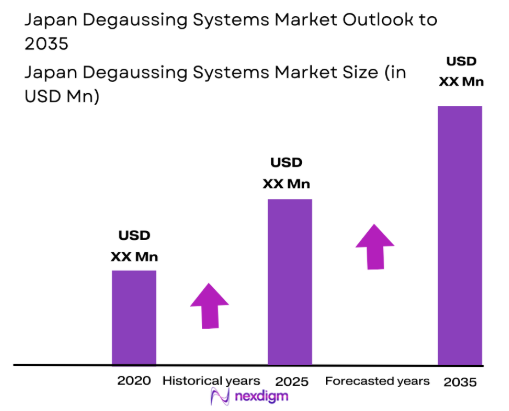
The Japan Degaussing Systems Market is valued at approximately USD ~ million based on a recent historical assessment. The market’s growth is driven by increasing naval defense investments and rising demand for advanced technologies to protect maritime vessels from magnetic mines and underwater threats. This surge is fueled by technological advancements in degaussing systems, specifically tailored for the Japanese maritime defense needs, offering enhanced security features and operational efficiency.
Japan’s dominance in the Degaussing Systems Market is mainly attributed to its robust naval defense sector, strategic geopolitical position, and continuous investments in defense technologies. The country’s ongoing maritime security concerns, combined with a strong infrastructure for naval defense, make it a global leader in this space. Furthermore, Japan’s alliances and partnerships with global defense entities contribute to the expansion and development of its degaussing system capabilities.
Market Segmentation
By Product Type
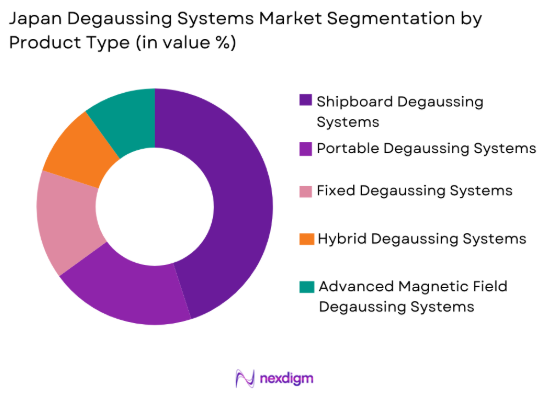
Japan Degaussing Systems Market is segmented by product type into shipboard, portable, fixed, hybrid, and advanced magnetic field degaussing systems. Recently, shipboard degaussing systems have a dominant market share due to increasing demand for naval defense capabilities and the need for protection of naval vessels from underwater mines and electromagnetic interference. These systems have gained preference due to their high reliability, advanced technology, and ability to integrate with modern naval platforms, ensuring superior protection and operational efficiency.
By Platform Type
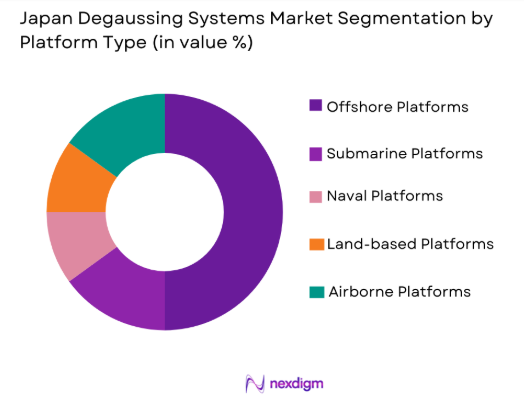
Japan Degaussing Systems Market is segmented by platform type into naval, offshore, submarine, land-based, and airborne platforms. Naval platforms have a dominant market share due to the country’s advanced naval fleet, which requires sophisticated systems to defend against underwater mines and other electromagnetic threats. These platforms benefit from the integration of degaussing systems, which enhance their operational capacity and security against evolving underwater threats, making them crucial for Japan’s defense infrastructure.
Competitive Landscape
The Japan Degaussing Systems Market is highly competitive, with several key players dominating the landscape. Major players have contributed to consolidation in the market by introducing advanced technologies and expanding their product portfolios. These companies are focused on continuous technological advancements and forming strategic partnerships to enhance market presence. The competitive dynamics are influenced by product innovation, pricing strategies, and collaboration with government defense agencies to fulfill specific defense requirements.
| Company Name | Establishment Year | Headquarters | Technology Focus | Market Reach | Key Products | Revenue (USD) | Defense Partnerships |
| Japan Radio Co., Ltd. | 1915 | Tokyo, Japan | ~ | ~ | ~ | ~ | ~ |
| Furuno Electric Co., Ltd. | 1948 | Nishinomiya, Japan | ~ | ~ | ~ | ~ | ~ |
| Toshiba Corporation | 1875 | Tokyo, Japan | ~ | ~ | ~ | ~ | ~ |
| Mitsubishi Heavy Industries | 1884 | Tokyo, Japan | ~ | ~ | ~ | ~ | ~ |
| Thales Group | 2000 | Paris, France | ~ | ~ | ~ | ~ | ~ |
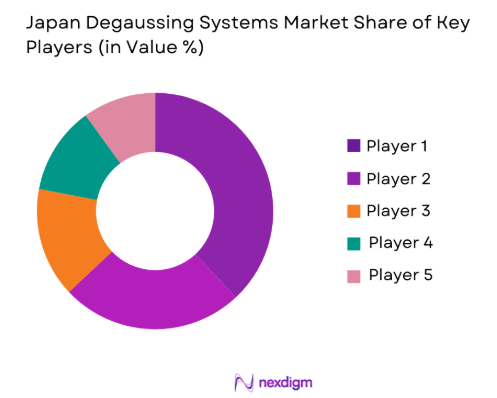
Japan Degaussing Systems Market Analysis
Growth Drivers
Increased Naval Defense Investments
One of the primary growth drivers in the Japan Degaussing Systems Market is the increased investment in naval defense. Japan’s commitment to securing its maritime borders and maintaining a strong naval presence in the Asia-Pacific region has led to substantial investments in modernizing its fleet and incorporating cutting-edge technologies like degaussing systems. These systems are essential for ensuring the protection of naval assets from underwater threats such as magnetic mines and other electromagnetic risks. The Japanese government has allocated significant funds toward strengthening national security, including naval capabilities. This focus on bolstering maritime defense infrastructure has directly contributed to the demand for advanced degaussing systems. Furthermore, Japan’s strategy of maintaining a technologically superior naval force has resulted in an ongoing modernization program, leading to the continuous adoption of degaussing systems across various types of naval platforms. As defense budgets rise, the market for these systems is expected to continue growing.
Technological Advancements in Degaussing Systems
Another key growth driver is the continuous advancement in degaussing technologies. Japan has been at the forefront of integrating sophisticated technologies into its defense systems, including advanced magnetic field detection, underwater threat countermeasures, and AI-powered automation in degaussing systems. These technological innovations are crucial to adapting to new and evolving underwater threats, such as the increasing sophistication of magnetic mines and electromagnetic devices. As the complexity of these threats grows, Japan’s naval forces are relying more on automated, intelligent degaussing systems that can autonomously detect and neutralize risks in real-time. Additionally, these advancements have led to systems that are more compact, efficient, and cost-effective. The push for cutting-edge solutions, such as AI integration and real-time threat analysis, makes Japan a leader in developing these technologies. Consequently, this continued innovation is expected to drive the demand for more sophisticated degaussing systems, boosting the market’s growth.
Market Challenges
High Cost of Advanced Systems
One of the most significant challenges in the Japan Degaussing Systems Market is the high cost associated with deploying advanced degaussing technologies. The development of state-of-the-art systems requires significant investment in research and development, which translates to high procurement costs for end-users, particularly within Japan’s defense sector. Additionally, the integration of these complex systems into existing naval platforms often involves substantial retrofitting and maintenance expenses. The cost of these systems is a barrier for smaller naval fleets and defense contractors, as it limits the number of degaussing systems they can procure. For defense budgets already stretched by other priorities, allocating funds for these high-tech systems may be difficult, slowing their widespread adoption. The cost challenge is compounded by the high maintenance requirements of these systems, as regular updates and system recalibrations are necessary to maintain their effectiveness. This financial strain could hinder the overall growth of the market in the short term.
Regulatory Barriers and Compliance Issues
Another challenge is the complex regulatory environment governing the use of degaussing systems in Japan. All defense technologies, including those designed for naval platforms, must meet stringent government regulations, particularly those concerning performance, safety, and environmental impact. These rigorous certification processes can delay the deployment of new systems, as each piece of technology must undergo extensive testing and verification before being integrated into active military operations. Moreover, Japan’s defense procurement procedures are heavily scrutinized, with various compliance checks required at every stage. The lengthy and sometimes cumbersome regulatory processes can create bottlenecks that hinder the speed at which new technologies, including advanced degaussing systems, can be brought to market. International regulations, particularly those concerning the export of military technologies, also complicate the acquisition of foreign products, further slowing the introduction of the latest innovations into Japan’s naval defense infrastructure. These regulatory hurdles present significant challenges to the growth of the market.
Opportunities
Integration of AI and Automation
One of the key opportunities in the Japan Degaussing Systems Market lies in the integration of artificial intelligence (AI) and automation. The incorporation of AI technologies into degaussing systems allows for real-time analysis of potential threats, which significantly enhances the responsiveness and effectiveness of these systems. AI-powered systems can detect magnetic anomalies, predict threats, and activate countermeasures without requiring human intervention, making naval platforms more autonomous and efficient. Additionally, the automation of degaussing systems reduces the reliance on manual controls, allowing for faster reaction times and more accurate responses to underwater threats. As AI technologies continue to evolve, their integration into degaussing systems will not only improve system performance but also make these systems more cost-effective by reducing the need for constant human oversight. This technological advancement presents a promising opportunity for Japan’s defense sector, as the country looks to modernize and enhance the capabilities of its naval fleet. As such, the market for AI-integrated degaussing systems is expected to see significant growth.
Expansion of Maritime Security Alliances
Another significant opportunity in the Japan Degaussing Systems Market is the expansion of maritime security alliances with global defense partners. Japan’s strategic location in the Asia-Pacific region makes it a key player in global maritime security efforts. As regional security concerns increase, particularly with the rise of underwater threats and territorial disputes, Japan has the opportunity to strengthen its defense ties with neighboring countries and global powers like the United States and Australia. These alliances could facilitate the development of joint defense programs, including the procurement and deployment of advanced degaussing systems. Collaborating with international partners offers Japan the opportunity to share the costs and benefits of developing cutting-edge defense technologies, making them more accessible and enabling faster adoption. Furthermore, this collaboration could open up new markets for Japan’s defense industry, allowing local manufacturers to expand their reach beyond national borders. The growing importance of maritime security in the Asia-Pacific region presents a valuable opportunity for Japan to enhance its technological offerings and solidify its position as a global leader in defense innovation.
Future Outlook
The Japan Degaussing Systems Market is expected to grow steadily over the next five years, driven by increasing defense budgets, technological advancements, and heightened security concerns in the maritime domain. With a focus on protecting naval fleets and critical infrastructure from underwater threats, Japan is poised to continue its leadership in the global degaussing systems market. In the coming years, the market will see greater integration of AI and automation into these systems, as well as closer collaboration with international defense agencies to tackle emerging challenges in maritime security.
Major Players
- Japan Radio Co., Ltd.
- Furuno Electric Co., Ltd.
- Toshiba Corporation
- Mitsubishi Heavy Industries
- Thales Group
- Kongsberg Gruppen
- L3 Technologies
- Raytheon Technologies
- Lockheed Martin Corporation
- BAE Systems
- Northrop Grumman Corporation
- General Electric
- Harris Corporation
- Siemens AG
- Rheinmetall AG
Key Target Audience
- Investments and venture capitalist firms
- Government and regulatory bodies
- Naval defense contractors
- Military and defense organizations
- Maritime security companies
- Offshore oil and gas companies
- Shipping companies
- Aerospace and defense equipment manufacturers
Research Methodology
Step 1: Identification of Key Variables
This step involves defining the critical variables influencing the market, including product types, platform types, and geographic scope.
Step 2: Market Analysis and Construction
In this step, we analyze historical data and segment the market to understand the current market structure, dynamics, and competitive landscape.
Step 3: Hypothesis Validation and Expert Consultation
Expert interviews, discussions with industry professionals, and consultations are used to validate hypotheses and refine the analysis.
Step 4: Research Synthesis and Final Output
This step involves synthesizing the gathered data, refining insights, and delivering the final market report with actionable recommendations.

- Executive Summary
- Research Methodology (Definitions, Scope, Industry Assumptions, Market Sizing Approach, Primary & Secondary Research Framework, Data Collection & Verification Protocol, Analytic Models & Forecast Methodology, Limitations & Research Validity Checks)

- Market Definition and Scope
- Value Chain & Stakeholder Ecosystem
- Regulatory / Certification Landscape
- Sector Dynamics Affecting Demand
- Strategic Initiatives & Infrastructure Growth

- Growth Drivers
Rising Naval Defense Budgets
Increased Marine Threats & Security Concerns
Technological Advancements in Magnetic Field Degaussing - Market Challenges
High Capital Investment Requirements
Complex System Integration
Geopolitical Risks in Global Maritime Security - Market Opportunities
Technological Integration with AI for Enhanced Security
Growing Demand for Off-shore Platform Protection
Partnerships with Private Sector for System Development - Trends
Adoption of Autonomous Degaussing Systems
Increased Focus on Environmental Impact of Naval Systems
Growing Demand for Multi-functional Degaussing Solutions - Government Regulations
Maritime Security Regulations
Environmental Protection Standards for Naval Systems
Government Funding for Defense Technology Development

- By Market Value, 2020-2025
- By Installed Units, 2020-2025
- By Average System Price, 2020-2025
- By System Complexity Tier, 2020-2025

- By System Type (In Value%)
Shipboard Degaussing Systems
Portable Degaussing Systems
Fixed Degaussing Systems
Hybrid Degaussing Systems
Advanced Magnetic Field Degaussing Systems - By Platform Type (In Value%)
Naval Platforms
Offshore Platforms
Submarine Platforms
Land-based Platforms
Airborne Platforms - By Fitment Type (In Value%)
On-board Solutions
Retrofit Solutions
New Installations
Integrated Solutions
Modular Solutions - By End User Segment (In Value%)
Navies
Defense Contractors
Marine Research Organizations
Shipping Companies
Offshore Oil & Gas Operators - By Procurement Channel (In Value%)
Direct Procurement
Government Tenders
Private Sector Procurement
Online Bidding Platforms
Third-party Distributors

- Market Share Analysis
- Cross Comparison Parameters (System Type, Platform Type, End-user Segment, Procurement Channel, Material/Technology, Fitment Type, System Complexity Tier, Pricing Strategy, Technology Adoption, Innovation Rate)
- SWOT Analysis of Key Competitors
- Pricing & Procurement Analysis
- Porter’s Five Forces
- Key Players
Japan Radio Co., Ltd.
Furuno Electric Co., Ltd.
Toshiba Corporation
Mitsubishi Heavy Industries, Ltd.
Japan Marine United Corporation
Kongsberg Gruppen
L3 Technologies
Raytheon Technologies
Lockheed Martin Corporation
BAE Systems
Northrop Grumman Corporation
General Electric
Thales Group
Harris Corporation
Siemens AG

- Navies Increasing Investment in Advanced Defense Systems
- Research Organizations Seeking Improved Degaussing Capabilities
- Shipping Industry’s Demand for Enhanced Security
- Offshore Oil & Gas Operators Focusing on Threat Prevention

- Forecast Market Value, 2026-2035
- Forecast Installed Units, 2026-2035
- Price Forecast by System Tier, 2026-2035
- Future Demand by Platform, 2026-2035


 Request a Sample
 Ask for Customization
 Get a Quote
 Enquire Now