
 Download PDF
 Download PDF
Market Overview
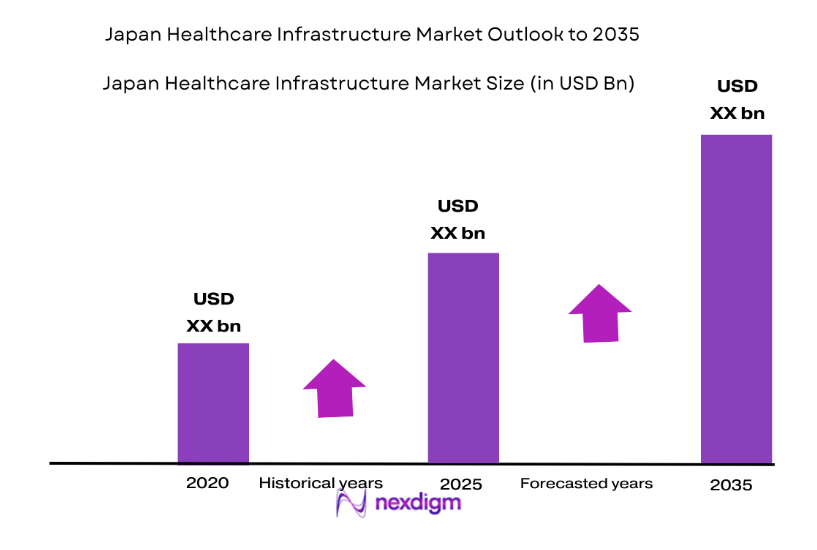
The Japan Healthcare Infrastructure Market has seen substantial growth, driven by an aging population and increased demand for advanced medical technologies. In recent historical assessments, the market size has been valued at approximately USD ~ billion. This growth is largely attributed to significant government investments in healthcare modernization, with a focus on improving medical equipment, hospital facilities, and healthcare IT solutions. Furthermore, advancements in telemedicine and patient monitoring technologies have played a major role in expanding the market.
Japan’s healthcare infrastructure dominance is centered around major metropolitan areas such as Tokyo, Osaka, and Yokohama. These cities lead the market due to their high population density, advanced healthcare systems, and strong government support for healthcare facilities. The country’s aging population and rising demand for specialized healthcare services have positioned Japan as a regional leader in healthcare infrastructure. Additionally, the country’s well-established healthcare network and technological expertise further support its dominance in the sector.
Market Segmentation
By Product Type
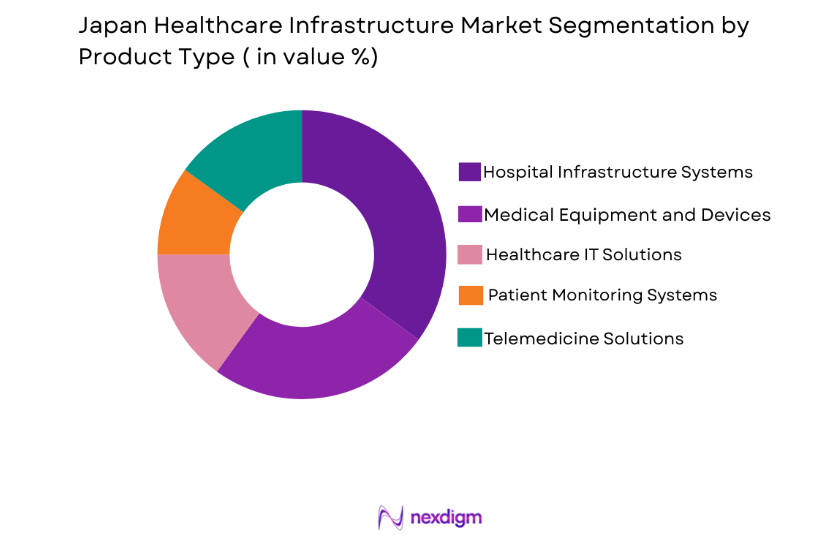
The Japan Healthcare Infrastructure market is segmented by product type into hospital infrastructure systems, medical equipment and devices, healthcare IT solutions, patient monitoring systems, and telemedicine solutions. Recently, hospital infrastructure systems have dominated the market due to the increasing demand for advanced medical facilities and the growing number of healthcare institutions. These systems are essential for improving the operational efficiency of hospitals, enhancing patient care, and optimizing resource management. The expansion of healthcare facilities, supported by both public and private investments, drives the need for modernized infrastructure solutions.
By Platform Type
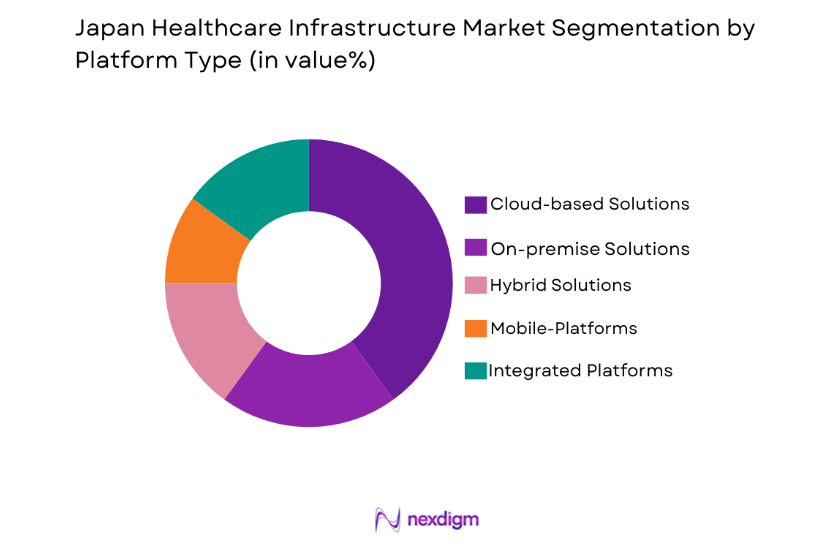
The Japan Healthcare Infrastructure market is also segmented by platform type, including cloud-based platforms, on-premise platforms, hybrid platforms, mobile platforms, and integrated platforms. Among these, cloud-based platforms have a dominant market share due to their scalability, cost-effectiveness, and flexibility in healthcare operations. The growing adoption of electronic health records (EHR) and the increasing use of telemedicine services in Japan have contributed to the growth of cloud-based healthcare solutions. These platforms enable seamless data sharing and real-time monitoring, which are essential for modern healthcare management.
Competitive Landscape
The competitive landscape in the Japan Healthcare Infrastructure market is characterized by a mix of large, well-established companies and innovative startups. Consolidation is occurring as major players look to expand their portfolios through acquisitions and partnerships, especially in the areas of medical devices and healthcare IT solutions. Key players are focusing on technology integration, particularly cloud and telemedicine solutions, to maintain a competitive edge in the rapidly evolving market.
| Company Name | Establishment Year | Headquarters | Technology Focus | Market Reach | Key Products | Revenue (USD) | Additional Parameter |
| Siemens Healthineers | 1847 | Erlangen, Germany | ~ | ~ | ~ | ~ | ~ |
| GE Healthcare | 1892 | Chicago, USA | ~ | ~ | ~ | ~ | ~ |
| Philips Healthcare | 1891 | Amsterdam, Netherlands | ~ | ~ | ~ | ~ | ~ |
| Toshiba Corporation | 1939 | Tokyo, Japan | ~ | ~ | ~ | ~ | ~ |
| Hitachi Ltd. | 1910 | Tokyo, Japan | ~ | ~ | ~ | ~ | ~ |
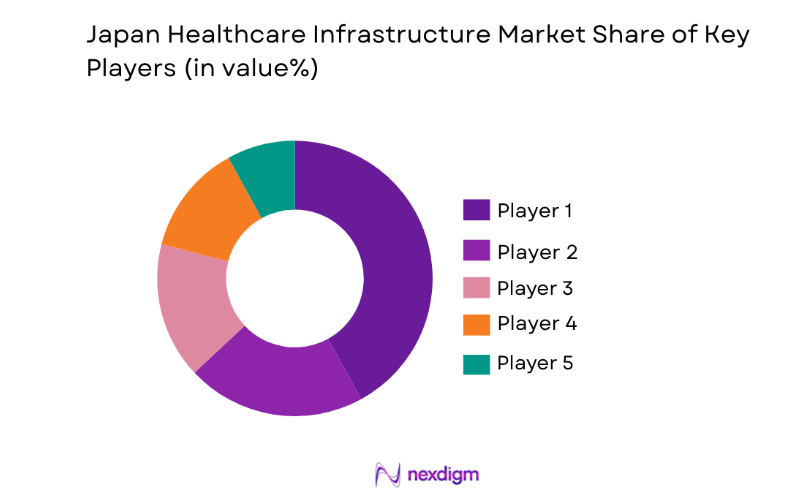
Japan Healthcare Infrastructure Market Analysis
Growth Drivers
Rising Demand for Healthcare Services
The rising aging population in Japan is one of the key drivers for healthcare infrastructure growth. As the elderly population continues to increase, there is an escalating demand for long-term care, specialized medical equipment, and healthcare services tailored to chronic conditions. Japan’s government has responded by implementing policies to support healthcare services expansion, leading to the construction of new healthcare facilities and investment in state-of-the-art medical technologies. This demographic shift is expected to further drive the demand for modern healthcare infrastructure in the coming years, making healthcare more accessible to the aging population. As hospitals and clinics face increasing pressure to accommodate a growing patient base, investments in healthcare systems become essential for improving operational efficiency and patient care quality. With this trend, the demand for healthcare infrastructure systems, including patient monitoring systems, telemedicine solutions, and advanced hospital infrastructure, is expected to remain robust.
Technological Advancements in Healthcare Solutions
Technological innovations in healthcare systems, including the development of telemedicine and remote monitoring technologies, are contributing significantly to the market’s growth. Japan’s healthcare sector is increasingly adopting cloud-based platforms, telemedicine, and artificial intelligence (AI)-driven diagnostic tools to improve care delivery. These advancements facilitate better management of healthcare data, enhanced patient monitoring, and the ability to provide healthcare services remotely. The integration of AI and machine learning in diagnostic tools, as well as the widespread use of EHR systems, is enhancing the accuracy of diagnoses and patient outcomes. These technologies are revolutionizing healthcare services in Japan, improving efficiency, reducing costs, and enabling better access to care, especially for the aging population.
Market Challenges
High Infrastructure Costs
One of the primary challenges faced by the Japan healthcare infrastructure market is the high cost of developing and upgrading healthcare facilities. While Japan has made significant progress in healthcare modernization, the costs associated with building new healthcare facilities or upgrading existing ones remain substantial. The construction of state-of-the-art hospitals, the integration of advanced medical equipment, and the installation of healthcare IT systems require substantial investment. This makes it difficult for smaller healthcare providers to modernize their infrastructure and meet the growing demand for advanced healthcare services. Despite the Japanese government’s support for healthcare development, financial constraints continue to pose a significant challenge to the widespread adoption of modern healthcare infrastructure solutions.
Data Security and Privacy Concerns
As Japan increasingly adopts digital health technologies, data security and privacy concerns are emerging as a major challenge for the healthcare infrastructure market. The implementation of electronic health records (EHR) and the rise of telemedicine services have increased the risk of data breaches and unauthorized access to sensitive patient information. To address these challenges, the Japanese government has established strict data protection regulations to ensure the confidentiality of patient data. However, the evolving nature of cyber threats and the need for continuous updates to security protocols pose ongoing challenges for healthcare providers and technology developers. The healthcare sector must therefore invest heavily in cybersecurity measures to protect patient information from cyberattacks and data breaches.
Opportunities
Telemedicine and Remote Care Solutions
The growing demand for telemedicine and remote care services in Japan presents significant opportunities for the healthcare infrastructure market. Telemedicine enables healthcare providers to offer medical consultations and care remotely, reducing the need for in-person visits, improving patient accessibility, and addressing the challenges posed by Japan’s aging population. The Japanese government has been supportive of telemedicine adoption, especially after the COVID-19 pandemic, which highlighted the need for remote healthcare solutions. This support has led to an increase in telemedicine infrastructure, such as cloud-based platforms, mobile applications, and teleconsultation services. As Japan continues to embrace telemedicine, there will be increased demand for telemedicine solutions, creating opportunities for market players to expand their product offerings and service coverage.
Smart Healthcare Solutions
The demand for smart healthcare solutions in Japan is growing rapidly, driven by the need for more efficient healthcare services and better patient care. Smart hospitals, equipped with advanced medical devices, IoT-enabled devices, and AI-powered healthcare solutions, are becoming increasingly popular. These solutions not only enhance the efficiency of healthcare operations but also improve patient outcomes by providing real-time data and predictive analytics. The integration of smart technologies into healthcare infrastructure is expected to revolutionize patient care, enabling more personalized treatments, reducing operational costs, and improving the overall healthcare experience. With the continuous development of smart healthcare solutions, there is significant potential for growth in the market.
Future Outlook
Over the next five years, the Japan Healthcare Infrastructure market is expected to witness substantial growth, driven by advancements in medical technology and the increasing demand for specialized healthcare services. The aging population will continue to drive the demand for healthcare infrastructure, with investments focused on upgrading medical equipment and expanding healthcare facilities. Technological developments, particularly in telemedicine and AI-driven healthcare solutions, will continue to shape the market’s future. Government policies and incentives supporting healthcare modernization will further contribute to the market’s growth, ensuring a strong foundation for the coming years.
Major Players
- Fujifilm Holdings Corporation
- Canon Medical Systems
- Mitsubishi Electric Corporation
- Panasonic Corporation
- Toshiba Corporation
- Siemens Healthineers
- GE Healthcare
- Philips Healthcare
- Hitachi Ltd.
- Schneider Electric
- Medtronic
- Abbott Laboratories
- Stryker Corporation
- Cerner Corporation
- Allscripts Healthcare Solutions
Key Target Audience
- Investments and venture capitalist firms
- Government and regulatory bodies
- Healthcare providers
- Medical device manufacturers
- IT solution providers
- Healthcare insurers
- Healthcare system integrators
Research Methodology
Step 1: Identification of Key Variables
Key variables such as market trends, technological innovations, and regulatory factors are identified to understand the scope of the market.
Step 2: Market Analysis and Construction
Comprehensive analysis is conducted using both primary and secondary research to construct a detailed market overview.
Step 3: Hypothesis Validation and Expert Consultation
The market model is validated through consultations with industry experts, stakeholders, and healthcare professionals.
Step 4: Research Synthesis and Final Output
The research findings are synthesized, ensuring accuracy and relevance before presenting the final market report.

- Executive Summary
- Research Methodology (Definitions, Scope, Industry Assumptions, Market Sizing Approach, Primary & Secondary Research Framework, Data Collection & Verification Protocol, Analytic Models & Forecast Methodology, Limitations & Research Validity Checks)

- Market Definition and Scope
- Value Chain & Stakeholder Ecosystem
- Regulatory / Certification Landscape
- Sector Dynamics Affecting Demand

- Growth Drivers
Rising Aging Population and Chronic Disease Management
Government Investment in Healthcare Modernization
Technological Advancements in Medical Equipment
Increase in Healthcare Infrastructure Spending
Growth of Telemedicine and Remote Care Solutions - Market Challenges
High Costs of Healthcare Infrastructure Development
Limited Availability of Skilled Healthcare Workforce
Data Security and Privacy Concerns
Regulatory Hurdles and Compliance
Technology Integration and Interoperability Issues - Market Opportunities
Expansion of Digital Health Solutions
Increasing Demand for Smart Hospitals
Government Policies Supporting Healthcare Investments - Trends
Shift Toward Healthcare Automation and AI Integration
Growing Adoption of Remote Patient Monitoring Technologies - Government Regulations
Data Protection and Privacy Regulations
Government Funding for Healthcare Infrastructure
Regulatory Compliance for Healthcare Devices - SWOT Analysis
- Porter’s Five Forces

- By Market Value, 2020-2025
- By Installed Units, 2020-2025
- By Average System Price, 2020-2025
- By System Complexity Tier, 2020-2025

- By System Type (In Value%)
Hospital Infrastructure Systems
Medical Equipment and Devices
Healthcare IT Solutions
Patient Monitoring Systems
Telemedicine Solutions - By Platform Type (In Value%)
Cloud-based Platforms
On-premise Platforms
Hybrid Platforms
Mobile Platforms
Integrated Platforms - By Fitment Type (In Value%)
New Installations
Upgrades and Replacements
Hybrid Solutions
System Integrations - By End User Segment (In Value%)
Hospitals
Clinics and Diagnostic Centers
Ambulatory Surgical Centers
Home Healthcare Providers

- Market Share Analysis
- Cross Comparison Parameters (System Type, Platform Type, Procurement Channel, End User Segment, Fitment Type, Pricing, Technology Adoption)
- SWOT Analysis of Key Competitors
- Pricing & Procurement Analysis
- Key Players
Fujifilm Holdings Corporation
Canon Medical Systems
Mitsubishi Electric Corporation
Panasonic Corporation
Toshiba Corporation
Siemens Healthineers
GE Healthcare
Philips Healthcare
Hitachi Ltd.
Schneider Electric
Medtronic
Abbott Laboratories
Stryker Corporation
Cerner Corporation
Allscripts Healthcare Solutions

- Hospitals’ Investment in Advanced Healthcare Systems
- Rising Demand for Telemedicine Solutions by Clinics
- Focus on Healthcare Workforce Development
- Expansion of Home Healthcare Services

- Forecast Market Value, 2026-2035
- Forecast Installed Units, 2026-2035
- Price Forecast by System Tier, 2026-2035
- Future Demand by Platform, 2026-2035


 Request a Sample
 Ask for Customization
 Get a Quote
 Enquire Now