
 Download PDF
 Download PDF
Market Overview
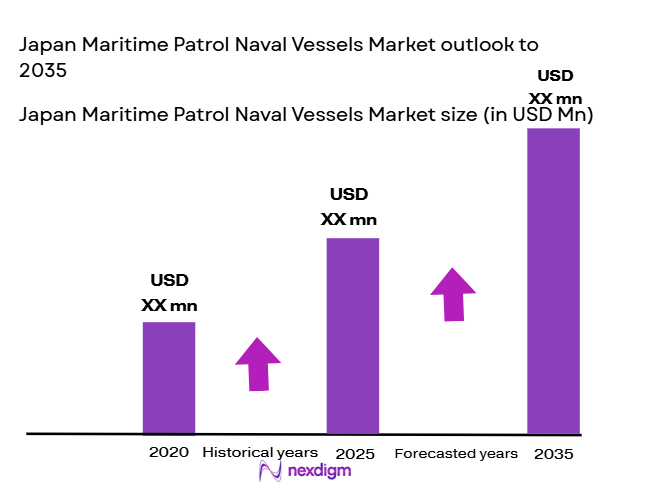
The Japan Maritime Patrol Naval Vessels market is valued at USD ~ billion, based on a comprehensive historical analysis. The market has been driven by factors such as increased maritime security threats in the Indo-Pacific region, technological advancements in naval vessel capabilities, and significant defense budgets allocated to naval modernization. The Japanese government, alongside global defense contractors, is focused on enhancing the operational effectiveness of its naval forces. These vessels serve a critical role in monitoring and safeguarding Japan’s extensive maritime territory, contributing to the robust demand for advanced naval patrol systems.
The dominance of Japan in the Maritime Patrol Naval Vessels market can be attributed to its strategic geographical location and strong naval forces. Japan’s extensive coastline and its position in the Indo-Pacific region make maritime security a national priority. The country’s investment in cutting-edge surveillance, communication, and weapon systems for its maritime patrol vessels solidifies its role as a leader in the market. Additionally, collaboration with global defense manufacturers and the enhancement of naval fleet capabilities ensure Japan’s continuing dominance in this sector.
Market Segmentation
By System Type
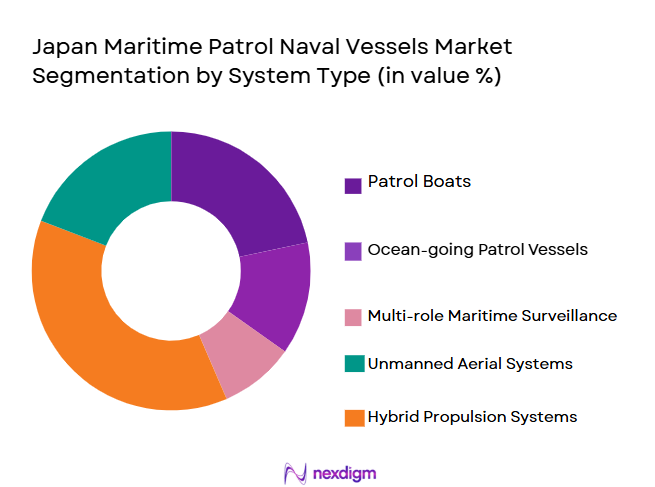
The Japan Maritime Patrol Naval Vessels market is segmented by system type into surveillance systems, communication systems, weapon systems, navigation systems, and command & control systems. Surveillance systems dominate the market share due to their critical role in identifying potential threats and ensuring maritime safety. As the security threats in the Indo-Pacific region continue to rise, Japan’s maritime forces are heavily investing in the latest radar, sonar, and imaging systems to improve the detection of submerged and surface threats. These technologies enhance the overall effectiveness of naval patrol vessels in securing territorial waters and preventing illegal activities like piracy and smuggling.
By Platform Type
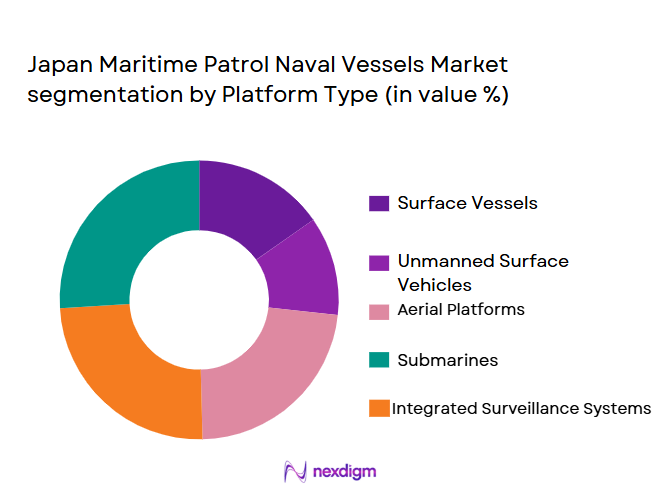
The market is segmented by platform type into surface ships, submarines, aerial platforms, unmanned systems, and hybrid systems. Surface ships currently dominate the platform type segmentation in the Japan Maritime Patrol Naval Vessels market due to their versatility and operational capabilities. These vessels are equipped with advanced surveillance, navigation, and weapon systems, making them ideal for a wide range of maritime security operations. Additionally, the capability to conduct long-duration patrols and carry a significant number of personnel and systems makes surface ships the preferred choice for Japan’s naval operations. Submarines, while important, hold a smaller share of the market due to their specialized nature and high operational costs.
Competitive Landscape
The Japan Maritime Patrol Naval Vessels market is dominated by several key players, including both local manufacturers and international defense contractors. These companies are focused on providing cutting-edge technology and ensuring the highest levels of security and reliability for naval vessels. The competition is intense, with companies such as Mitsubishi Heavy Industries and Kawasaki Heavy Industries leveraging advanced manufacturing capabilities and extensive research and development efforts. Global giants like Lockheed Martin and BAE Systems also play a key role in the market, contributing to advanced systems integration and international collaborations.
| Company Name | Establishment Year | Headquarters | Product Focus | Research & Development | Technological Innovation | Strategic Alliances | Market Focus | Government Contracts | Global Presence |
| Mitsubishi Heavy Industries | 1884 | Tokyo, Japan | ~ | ~ | ~ | ~ | ~ | ~ | ~ |
| Kawasaki Heavy Industries | 1896 | Kobe, Japan | ~ | ~ | ~ | ~ | ~ | ~ | ~ |
| Lockheed Martin | 1912 | Bethesda, USA | ~ | ~ | ~ | ~ | ~ | ~ | ~ |
| BAE Systems | 1999 | London, UK | ~ | ~ | ~ | ~ | ~ | ~ | ~ |
| Leonardo | 1948 | Rome, Italy | ~ | ~ | ~ | ~ | ~ | ~ | ~ |
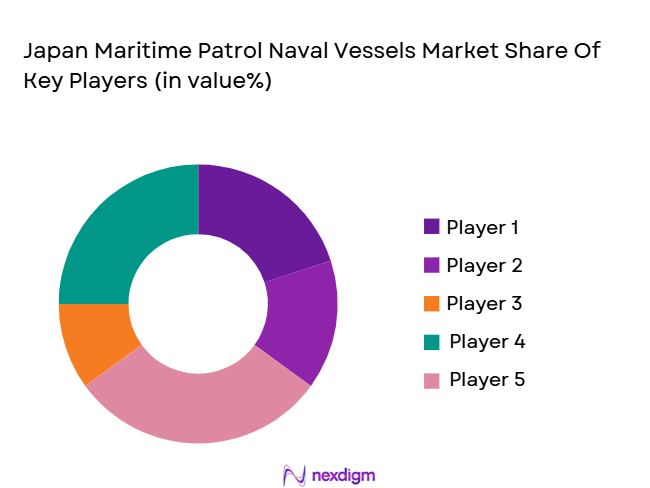
Japan maritime patrol naval vessels Market Dynamics
Growth Drivers
Increasing naval security threats in the Indo-Pacific region
The Indo-Pacific region has become a hotspot for maritime security challenges, including territorial disputes and increasing threats from piracy, terrorism, and illegal fishing. This has prompted countries like Japan to enhance their naval capabilities, especially for maritime patrol. These security threats have led to a heightened focus on advanced surveillance and patrol vessels to safeguard vast maritime borders and ensure national security. The rising importance of securing critical shipping lanes and natural resources in the region has significantly driven the demand for maritime patrol vessels.
Technological advancements in naval surveillance and communication systems
Rapid advancements in naval surveillance and communication systems have played a crucial role in boosting the demand for maritime patrol vessels. Modern systems such as radar, sonar, and satellite communication technologies enhance the capabilities of these vessels, enabling better detection of threats and communication across vast distances. These innovations allow for more efficient monitoring of both surface and sub-surface activities in Japan’s maritime zones, providing critical data to naval forces. The growing integration of Artificial Intelligence (AI) and machine learning further improves threat identification and response times, thereby advancing the effectiveness of patrol missions.
Market Challenges
High cost of naval vessels and maintenance
One of the significant challenges faced by countries in acquiring and maintaining maritime patrol vessels is the high cost associated with both procurement and ongoing maintenance. Naval vessels require advanced systems, sophisticated sensors, and robust construction materials, which make them expensive to build. Additionally, the long lifespan of these vessels means that maintaining them, including routine repairs, system upgrades, and personnel training, incurs ongoing costs. These financial pressures can strain defense budgets, especially for countries with competing priorities, potentially delaying upgrades or the procurement of new vessels.
Geopolitical tensions impacting defense budgets
Geopolitical tensions, particularly in the Indo-Pacific region, can have a significant impact on defense budgets. Countries may face shifting priorities as political and security dynamics change, leading to either a reduction in defense spending or a realignment of resources towards other areas. These tensions, particularly surrounding territorial disputes in the South China Sea or tensions with neighboring countries, can complicate budget allocations for naval defense. The unpredictable nature of these geopolitical situations means that defense budgets may fluctuate, affecting the timely procurement and modernization of maritime patrol vessels.
Market Opportunities
Expansion of defense budgets in emerging economies
Emerging economies, particularly in the Indo-Pacific region, are increasingly recognizing the importance of strengthening their maritime security and are therefore expanding their defense budgets. Countries like India, Australia, and Southeast Asian nations are investing heavily in naval defense to secure their maritime borders and protect their economic interests. This expansion in defense spending is driving demand for advanced naval vessels, including maritime patrol ships. These nations are keen to enhance their naval capabilities to protect trade routes, safeguard territorial waters, and address emerging security threats, offering significant growth opportunities for manufacturers of naval patrol vessels.
Integration of autonomous systems in naval platforms
The integration of autonomous systems in naval platforms represents a significant opportunity for the Japan Maritime Patrol Naval Vessels market. Autonomous systems, including unmanned aerial vehicles (UAVs), unmanned underwater vehicles (UUVs), and robotic systems, can enhance the effectiveness of maritime patrol vessels. These systems provide improved surveillance, reconnaissance, and target identification capabilities without the need for a human crew, thus reducing operational costs. Moreover, they allow for more prolonged and efficient missions, especially in high-risk or remote areas. As technology advances, the increasing deployment of autonomous systems will revolutionize maritime patrol operations, providing new growth opportunities for the market.
Future Outlook
Over the next decade, the Japan Maritime Patrol Naval Vessels market is expected to experience significant growth, primarily driven by increasing defense budgets and the rising need for advanced maritime security systems in the region. Japan’s focus on modernizing its naval fleet, including the integration of AI, machine learning, and autonomous systems into naval vessels, is expected to enhance the efficiency and effectiveness of its maritime patrol operations. Furthermore, as regional security concerns continue to escalate, the demand for high-tech naval vessels that can operate in various conditions will only rise.
Key Players in the Market
- Mitsubishi Heavy Industries
- Kawasaki Heavy Industries
- Lockheed Martin
- BAE Systems
- Leonardo
- Navantia
- Thales Group
- General Dynamics
- L3 Technologies
- Huntington Ingalls Industries
- Northrop Grumman
- Fincantieri
- Naval Group
- ST Engineering
- Saab
Key Target Audience
- Naval Defense Agencies (Japan Ministry of Defense)
- Government and Regulatory Bodies (Japan Coast Guard)
- Defense Contractors
- Investment and Venture Capitalist Firms
- Military Technology Suppliers
- Maritime Security Firms
- International Naval Forces
- Government Procurement Agencies
Research Methodology
Step 1: Identification of Key Variables
The initial phase involves constructing an ecosystem map encompassing all major stakeholders within the Japan Maritime Patrol Naval Vessels Market. This step is underpinned by extensive desk research, utilizing a combination of secondary and proprietary databases to gather comprehensive industry-level information. The primary objective is to identify and define the critical variables that influence market dynamics.
Step 2: Market Analysis and Construction
In this phase, we will compile and analyze historical data pertaining to the Japan Maritime Patrol Naval Vessels Market. This includes assessing market penetration, the ratio of marketplaces to service providers, and the resultant revenue generation. Furthermore, an evaluation of service quality statistics will be conducted to ensure the reliability and accuracy of the revenue estimates.
Step 3: Hypothesis Validation and Expert Consultation
Market hypotheses will be developed and subsequently validated through computer-assisted telephone interviews (CATIS) with industry experts representing a diverse array of companies. These consultations will provide valuable operational and financial insights directly from industry practitioners, which will be instrumental in refining and corroborating the market data.
Step 4: Research Synthesis and Final Output
The final phase involves direct engagement with multiple maritime defense manufacturers to acquire detailed insights into product segments, sales performance, consumer preferences, and other pertinent factors. This interaction will serve to verify and complement the statistics derived from the bottom-up approach, thereby ensuring a comprehensive, accurate, and validated analysis of the Japan Maritime Patrol Naval Vessels market.

- Executive Summary
- Japan Maritime Patrol Naval Vessels Research Methodology
(Definitions, Scope, Industry Assumptions, Market Sizing Approach, Primary & Secondary Research Framework, Data Collection & Verification Protocol, Analytic Models & Forecast Methodology, Limitations & Research Validity Checks)

- Market Definition and Scope
- Value Chain & Stakeholder Ecosystem
- Regulatory / Certification Landscape
- Sector Dynamics Affecting Demand
- Strategic Initiatives & Infrastructure Growth

- Growth Drivers
Increasing naval security threats in the Indo-Pacific region
Technological advancements in naval surveillance and communication systems
Growing demand for multi-role maritime patrol capabilities - Market Challenges
High cost of naval vessels and maintenance
Geopolitical tensions impacting defense budgets
Slow pace of technology adoption in certain regional markets - Market Opportunities
Expansion of defense budgets in emerging economies
Integration of autonomous systems in naval platforms
Advances in sustainable naval vessel technologies - Trends
Shift towards more advanced surveillance systems
Increased focus on unmanned and autonomous maritime platforms
Integration of AI and machine learning in naval defense systems
- Government Regulations & Defense Policy
FDI Rules
Offset Obligations
Export Licenses - SWOT Analysis (Capability Strengths, Cost Vulnerabilities, Competitive Pressures)
- Porter’s Five Forces (Procurement Power, Supplier Concentration, Substitutes, Barriers to Entry)

- By Market Value, 2020-2025
- By Installed Units, 2020-2025
- By Average System Price, 2020-2025
- By System Complexity Tier, 2020-2025

- By System Type (In Value%)
Surveillance Systems
Communication Systems
Weapon Systems
Navigation Systems
Command & Control Systems - By Platform Type (In Value%)
Surface Ships
Submarines
Aerial Platforms
Unmanned Systems
Hybrid Systems - By Fitment Type (In Value%)
New Fitments
Retrofit & Upgrades
Integrated Solutions
Modular Systems
Customizable Fitments - By EndUser Segment (In Value%)
Government & Defense
Coast Guard
Naval Forces
Border Security Agencies
Private Sector Contractors - By Procurement Channel (In Value%)
Direct Procurement
Indirect Procurement
Government Tenders
Military Alliances
Public-Private Partnerships

- Market Share Analysis
- Cross Comparison Parameters
(Market Share by Region, Market Share by System Type, Key Technological Innovations, Price Competitiveness, Customer Satisfaction) - SWOT Analysis of Key Competitors
- Pricing & Procurement Analysis
- Key Players
Mitsubishi Heavy Industries
Kawasaki Heavy Industries
Hyundai Heavy Industries
Lockheed Martin
Navantia
BAE Systems
Leonardo
Thales Group
General Dynamics
L3 Technologies
Huntington Ingalls Industries
Northrop Grumman
Fincantieri
Naval Group
ST Engineering

- Government agencies increasing investment in maritime defense
- Coast guard modernization programs expanding demand
- Naval forces seeking versatile multi-role platforms
- Private sector contractors supporting naval upgrades

- Forecast Market Value, 2026-2035
- Forecast Installed Units, 2026-2035
- Price Forecast by System Tier, 2026-2035
- Future Demand by Platform, 2026-2035


 Request a Sample
 Ask for Customization
 Get a Quote
 Enquire Now