
 Download PDF
Market Overview
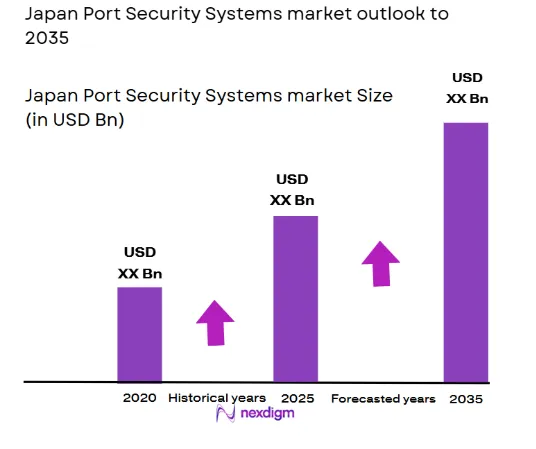
The market for Japan port security systems is driven by increasing trade volumes and a heightened need for comprehensive security measures. Based on a recent historical assessment, the market size is valued at approximately USD ~ billion, reflecting the rising importance of safeguarding port infrastructure from threats such as terrorism, smuggling, and cyberattacks. Key growth drivers include advancements in technology, increasing regulatory requirements, and growing demand for automated security systems. These factors contribute significantly to market expansion.
Japan’s dominance in the port security systems market is largely driven by its status as one of the busiest maritime nations, with major ports such as Yokohama and Kobe facilitating large volumes of international trade. These ports are vital to global logistics and have been heavily investing in advanced security infrastructure to protect critical assets and ensure safe operations. The country’s focus on technological innovation and high standards for security systems further strengthens its position in the market.
Market Segmentation
By System Type
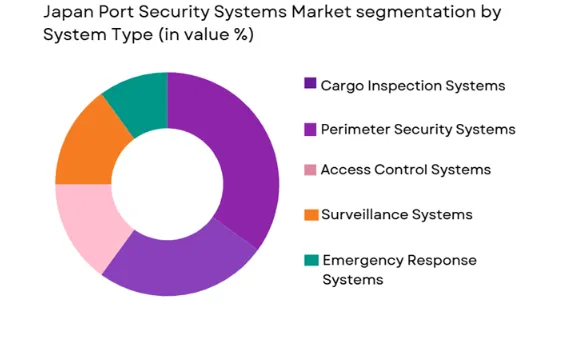
The Japan port security systems market is segmented by system type into cargo inspection systems, perimeter security systems, access control systems, surveillance systems, and emergency response systems. Recently, cargo inspection systems have gained a dominant market share due to the increasing need for detecting illicit goods and contraband. These systems are critical in ensuring that all incoming and outgoing shipments are thoroughly checked for security threats, thus improving efficiency and compliance with international trade standards.
By Platform Type
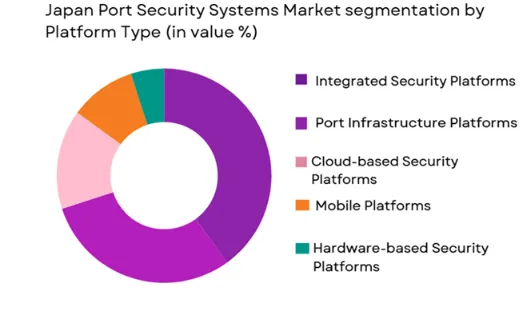
The Japan port security systems market is segmented by platform type into port infrastructure platforms, integrated security platforms, cloud-based security platforms, mobile platforms, and hardware-based security platforms. Integrated security platforms have been the dominant sub-segment, as ports increasingly require comprehensive, all-in-one solutions that combine surveillance, access control, and cargo inspection into a unified system. This trend is driven by the demand for efficiency and seamless operation in managing complex port security needs.
Competitive Landscape
The Japan port security systems market is highly competitive, with consolidation occurring among major players to strengthen technological capabilities and market position. Large multinational corporations with established reputations for developing advanced security technologies dominate the market. These companies often collaborate with government agencies and private stakeholders to provide integrated solutions tailored to specific security needs. Increasing government regulations surrounding port security further fuel competition in this market.
| Company Name | Establishment Year | Headquarters | Technology Focus | Market Reach | Key Products | Revenue (USD Million) | Market-specific Parameter |
| Mitsubishi Electric | 1921 | Tokyo, Japan | ~ | ~ | ~ | ~ | ~ |
| Hitachi Ltd. | 1910 | Tokyo, Japan | ~ | ~ | ~ | ~ | ~ |
| NEC Corporation | 1899 | Tokyo, Japan | ~ | ~ | ~ | ~ | ~ |
| Thales Group | 2000 | Paris, France | ~ | ~ | ~ | ~ | ~ |
| Honeywell International | 1906 | Morris Plains, USA | ~ | ~ | ~ | ~ | ~ |
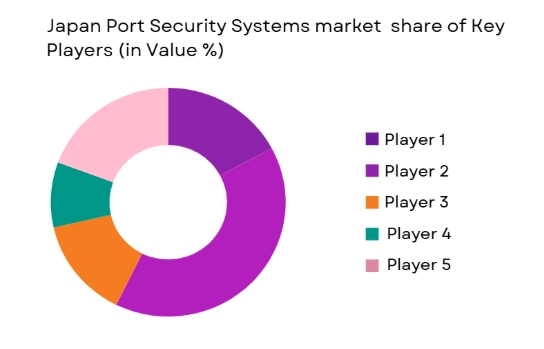
Japan Port Security Systems Market Analysis
Growth Drivers
Growing Demand for Automated Security Systems
The increasing global trade volumes and heightened security concerns are driving the demand for automated security systems in Japan’s ports. The need for faster, more efficient security measures has led to the adoption of automated inspection systems, AI-driven surveillance, and access control systems that reduce human intervention. Automated systems ensure quicker processing times, improved accuracy in detecting threats, and lower operational costs. Ports like Yokohama and Kobe are increasingly relying on such systems to enhance their security and operational efficiency. Government regulations also play a critical role, as they mandate the implementation of modern security solutions to comply with international trade regulations. The growing integration of Artificial Intelligence (AI) and Internet of Things (IoT) technologies further fuels this shift. These advancements enable ports to automate cargo inspection and monitoring, increasing operational throughput while reducing manual labor. Moreover, smart systems equipped with machine learning capabilities allow for better prediction and real-time threat analysis, enhancing port security on a global scale. The demand for automation will continue to rise as ports face growing pressure to secure their infrastructures without compromising trade flow efficiency.
Regulatory Compliance and Government Investments
Another key driver of growth in the Japan port security systems market is the stringent regulatory frameworks and government-backed initiatives aimed at enhancing port security. Japan has established robust standards for port security in response to global trade risks and threats such as terrorism and smuggling. The government has heavily invested in modernizing port infrastructure, including the adoption of advanced security systems. International security regulations, such as the International Ship and Port Facility Security (ISPS) Code, require ports to enhance their security infrastructure. These regulations have compelled Japanese ports to invest in advanced technologies like biometric systems, surveillance cameras, and automated cargo scanning systems to meet compliance standards. Additionally, government initiatives, such as subsidies and funding programs for upgrading port security, contribute significantly to market growth. Government spending in this sector continues to rise, ensuring that Japan’s ports maintain top-tier security standards. This push for compliance ensures steady demand for high-tech security solutions, creating opportunities for system integrators and security companies to further innovate and provide state-of-the-art solutions to meet regulatory demands.
Market Challenges
High Initial Costs of Advanced Security Systems
One of the major challenges hindering the widespread adoption of advanced port security systems in Japan is the high initial cost involved. Ports are often required to install complex, integrated security systems that combine various technologies such as surveillance cameras, biometric access controls, and cargo inspection systems. These systems require significant capital investment, which may deter smaller port operators or those with limited budgets. In addition to the high initial costs, the maintenance and integration of new systems with existing infrastructure can further increase expenditures. While the long-term benefits of enhanced security and operational efficiency are clear, the upfront financial burden is a significant barrier. Port authorities often need to secure substantial funding from government grants or private investments to support the installation of these systems. This challenge can delay or limit the implementation of advanced security solutions, particularly for ports that are less financially equipped. Furthermore, the rapid pace of technological advancements means that systems can quickly become outdated, requiring additional investments to remain up to date with the latest security technologies.
Integration Issues with Legacy Systems
Another challenge faced by the Japan port security systems market is the difficulty of integrating new security technologies with existing legacy systems. Many Japanese ports are operating on outdated infrastructure and security systems, which were not designed to accommodate modern technologies such as AI, IoT, or automated inspection systems. Upgrading these legacy systems to integrate with new security solutions requires substantial resources and can result in significant disruptions to port operations. The complexity of integrating these technologies into an already established system also introduces risks, including data incompatibility, technical malfunctions, and system downtimes. These integration challenges make it difficult for port operators to adopt cutting-edge security systems quickly. Furthermore, the need for specialized personnel with expertise in both old and new systems further complicates the integration process, leading to delays and increased costs. The adaptation of these legacy systems to accommodate advanced technologies presents a significant challenge for the market.
Opportunities
Adoption of Artificial Intelligence (AI) in Security Systems
A significant opportunity for the Japan port security systems market lies in the growing adoption of Artificial Intelligence (AI) for predictive security management. AI-enabled systems can process large volumes of data in real-time, identifying potential threats and anomalies faster than human operators. The integration of AI with surveillance cameras, access control, and cargo inspection systems allows for enhanced decision-making, as AI systems can continuously learn and adapt to evolving security threats. The application of AI in port security enables automated threat detection and response, ensuring a quicker and more accurate reaction to potential risks. Moreover, AI can optimize the operational efficiency of port security systems by reducing false alarms and increasing the accuracy of inspections. The development of AI-powered systems that can predict and prevent security breaches before they occur presents a major opportunity for market growth. Port authorities and private security companies are increasingly exploring AI technologies to create smarter, more efficient port security systems. The demand for AI-integrated systems will continue to rise, as these systems are not only more effective but also cost-efficient in the long run, leading to widespread adoption in Japan’s ports.
Cybersecurity Solutions for Port Infrastructure
With the rise of digitalization in port operations, the need for robust cybersecurity measures has become increasingly critical. Japan’s ports are heavily reliant on digital systems for operations such as cargo management, tracking, and customs clearance. This reliance on digital infrastructure exposes ports to the risk of cyberattacks, which could disrupt operations, compromise sensitive information, and cause financial losses. As a result, there is a growing demand for advanced cybersecurity solutions to protect port infrastructure from cyber threats. Cybersecurity solutions that protect digital systems, networks, and data from cyberattacks are becoming an integral part of port security systems. The implementation of firewalls, encryption technologies, and intrusion detection systems helps to secure port operations and ensure business continuity. Given the increasing sophistication of cyberattacks, ports are actively investing in advanced cybersecurity technologies to safeguard their operations. The need for cybersecurity solutions presents a significant opportunity for security vendors specializing in cyber defense, creating a promising market for cybersecurity products and services tailored to port infrastructure.
Future Outlook
The Japan port security systems market is expected to experience steady growth over the next five years. Technological advancements, particularly in AI, IoT, and cybersecurity, will continue to drive innovation in port security systems. Government regulations and international compliance standards will remain key factors influencing market growth, prompting further investments in modern security solutions. As ports continue to modernize and expand their operations, the demand for integrated and automated security systems will increase, presenting opportunities for both new market entrants and established players. The evolution of digital threats and the need for advanced cybersecurity solutions will further shape the market, encouraging further innovation and development in security technologies.
Major Players
- Mitsubishi Electric
- Hitachi Ltd.
- NEC Corporation
- Thales Group
- Honeywell International
- Siemens AG
- Bosch Security Systems
- Johnson Controls
- Raytheon Technologies
- Indra Sistemas
- Toshiba Corporation
- Fujitsu Ltd.
- Panasonic Corporation
- Assa Abloy
- Honeywell Building Technologies
Key Target Audience
- Investments and venture capitalist firms
- Government and regulatory bodies
- Port authorities and operators
- Logistics companies
- Maritime shipping companies
- Port security system integrators
- Private security service providers
- Infrastructure developers
Research Methodology
Step 1: Identification of Key Variables
We identify and define the key variables affecting the port security systems market, including technological developments, regulatory frameworks, and consumer demands.
Step 2: Market Analysis and Construction
We analyze historical data, market trends, and projections, constructing a model to quantify market size and forecast future trends.
Step 3: Hypothesis Validation and Expert Consultation
We validate our hypotheses through expert interviews, industry reports, and consultations with stakeholders to ensure market assumptions are accurate.
Step 4: Research Synthesis and Final Output
We synthesize all collected data and insights to produce a comprehensive report detailing market dynamics, segmentation, and competitive landscape.

- Executive Summary
- Japan Port Security Systems Research Methodology (Definitions, Scope, Industry Assumptions, Market Sizing Approach, Primary & Secondary Research Framework, Data Collection & Verification Protocol, Analytic Models & Forecast Methodology, Limitations & Research Validity Checks)

- Market Definition and Scope
- Value Chain & Stakeholder Ecosystem
- Regulatory / Certification Landscape
- Sector Dynamics Affecting Demand
- Strategic Initiatives & Infrastructure Growth

- Growth Drivers
Growing global trade and cargo volumes
Increased demand for automated security solutions
Government investments in port infrastructure
Rising concerns over port security breaches
Advancements in biometric and surveillance technologies
- Market Challenges
High initial costs for advanced security systems
Integration complexities with legacy systems
Cybersecurity risks in port security systems
Limited skilled workforce for advanced systems
Lack of standardization in security protocols
- Market Opportunities
Adoption of AI and machine learning for predictive security
Expansion of seaport operations in emerging markets
Increasing demand for integrated port security solutions
- Trends
Automation and robotics in port security
Integration of IoT in security systems
Focus on real-time data processing and analytics
Growing emphasis on cyber-physical security convergence
Use of drones and autonomous vehicles for surveillance
- Government Regulations & Defense Policy
Strengthening maritime security regulations
Increased collaboration between governments and private sectors
Adoption of global standards for port security systems
- SWOT Analysis
- Stakeholder and Ecosystem Analysis
- Porter’s Five Forces Analysis
- Competition Intensity and Ecosystem Mapping

- By Market Value, 2020-2025
- By Installed Units, 2020-2025
- By Average System Price, 2020-2025
- By System Complexity Tier, 2020-2025

- By System Type (In Value%)
Cargo Inspection Systems
Perimeter Security Systems
Access Control Systems
Surveillance Systems
Emergency Response Systems - By Platform Type (In Value%)
Port Infrastructure Platforms
Integrated Security Platforms
Cloud-based Security Platforms
Mobile Platforms
Hardware-based Security Platforms - By Fitment Type (In Value%)
New Installations
Retrofit Installations
Upgrade Installations
Modular Installations
Fully Integrated Systems - By EndUser Segment (In Value%)
Port Authorities
Logistics and Freight Companies
Shipping Companies
Customs and Border Control Agencies
Private Security Firms - By Procurement Channel (In Value%)
Direct Sales
Distributors
Online Sales
Government Tenders
System Integrators - By Material / Technology (In Value%)
Smart Sensors
Surveillance Cameras
Biometric Technology
RFID Technology
Cybersecurity Solutions

- Market structure and competitive positioning
Market share snapshot of major players - Cross Comparison Parameters (Technology Innovation, Product Range, Market Penetration, Strategic Alliances, Pricing Strategy, Customer Service, Brand Recognition, Supply Chain Strength, Regulatory Compliance, Technological Integration)
- SWOT Analysis of Key Players
- Pricing & Procurement Analysis
- Key Players
Mitsubishi Electric
Hitachi Ltd.
NEC Corporation
Fujitsu Ltd.
Honeywell International
Siemens AG
Thales Group
Raytheon Technologies
Indra Sistemas
Toshiba Corporation
Bosch Security Systems
Johnson Controls
Motorola Solutions
Zebra Technologies
FLIR Systems

- Increased collaboration with international shipping firms
- Port authorities driving technology adoption
- Shift towards fully integrated security solutions
- Growing demand for automated and real-time monitoring

- Forecast Market Value, 2026-2035
- Forecast Installed Units, 2026-2035
- Price Forecast by System Tier, 2026-2035
- Future Demand by Platform, 2026-2035


 Request a Sample
 Ask for Customization
 Get a Quote
 Enquire Now