

 Download PDF
Market Overview
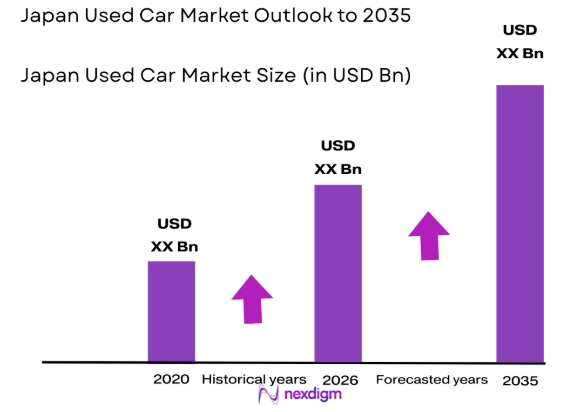
The Japan Used Car Market size, based on a recent historical assessment, is valued at USD ~ billion, with growth primarily driven by consumer demand for affordable alternatives to new vehicles and the increasing role of used cars in daily transportation. The availability of high-quality Japanese used cars at competitive prices has further enhanced market attractiveness. The export sector also significantly contributes to the market size, as Japanese used cars are highly sought after in emerging markets due to their reliability and advanced technology.
Tokyo, Osaka, and Yokohama dominate the Japan Used Car Market, largely due to their established infrastructure and high population densities, which fuel both local and international demand. These cities have well-developed networks for vehicle distribution, making them attractive hubs for the used car industry. Additionally, cities like Nagoya and Fukuoka are emerging players, benefiting from strategic locations and regional economic activities that support both local and export-driven demand for pre-owned vehicles.
Market Segmentation
By Vehicle Type
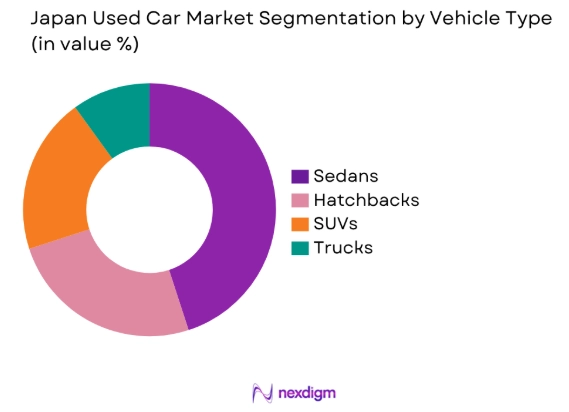
The Japan Used Car Market is segmented by vehicle type into sedans, hatchbacks, SUVs, and trucks. Recently, sedans have dominated the market due to consumer preference for cost-effective, fuel-efficient vehicles and a high number of models available in the used-car sector. Sedans, due to their affordable price range and suitability for both urban and rural environments, have remained a popular choice in both local and international markets, with increasing interest in fuel-efficient models.
By Fuel Type
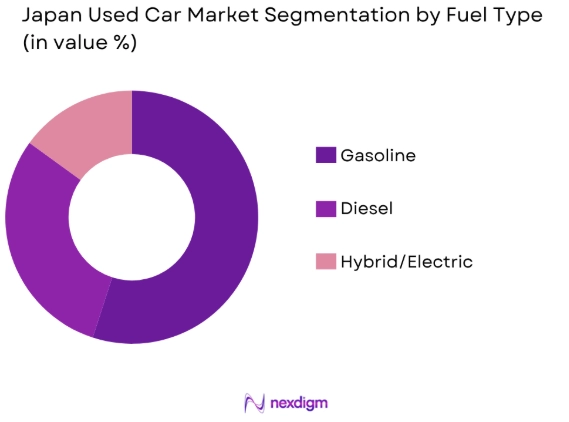
The market is also segmented by fuel type into gasoline, diesel, and hybrid/electric vehicles. Hybrid and electric vehicles (EVs) have gained significant traction in recent years due to the growing consumer awareness about environmental impact and government incentives promoting green energy solutions. These segments are particularly appealing to eco-conscious consumers and government organizations prioritizing emissions reductions.
Competitive Landscape
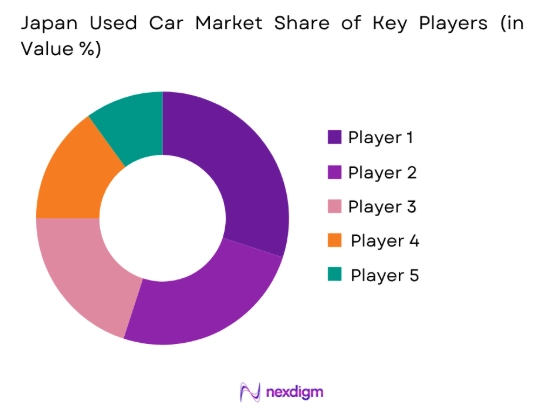
The Japan Used Car Market is highly competitive, characterized by a mix of large automakers and specialized dealers that offer both local and export-focused services. The market has seen considerable consolidation, with major automotive players such as Toyota and Nissan playing key roles, alongside specialized used car export firms such as Bigmotor Co. and CarNext Japan. The market is also shaped by the growing role of digital platforms that facilitate car sales, creating a competitive and dynamic environment. These major players exert substantial influence, leveraging extensive dealer networks and strong brand presence to secure their position.
| Company Name | Establishment Year | Headquarters | Technology Focus | Market Reach | Key Products | Revenue (USD) | Additional Parameter |
| Toyota Motor Corporation | 1937 | Aichi, Japan | ~ | ~ | ~ | ~ | ~ |
| Nissan Motor Co., Ltd. | 1933 | Yokohama, Japan | ~ | ~ | ~ | ~ | ~ |
| Bigmotor Co., Ltd. | 1980 | Tokyo, Japan | ~ | ~ | ~ | ~ | ~ |
| CarNext Japan | 2000 | Tokyo, Japan | ~ | ~ | ~ | ~ | ~ |
| Honda Motor Co., Ltd. | 1946 | Tokyo, Japan | ~ | ~ | ~ | ~ | ~ |
Japan Used Car Market Analysis
Growth Drivers
Increasing Demand for Affordable Vehicles
As economic conditions evolve, an increasing number of consumers are turning to pre-owned vehicles as a more affordable option compared to purchasing new cars. The affordability of used cars, combined with the renowned reliability and longevity of Japanese vehicles, has significantly contributed to the rising demand for pre-owned models. Consumers, particularly those conscious of cost, are opting for used cars to avoid the steep depreciation that comes with new vehicles. Japanese used cars, known for their superior build quality, remain attractive due to their well-maintained condition and lower price points, offering a smart alternative without sacrificing performance or durability. This shift is evident across various consumer segments seeking value without compromising on vehicle reliability.
Growth in Export Markets
The global export of Japanese used cars has experienced significant growth, driven by increasing demand from emerging markets. Countries in Africa, the Middle East, and Southeast Asia favor Japanese used vehicles for their exceptional reliability, advanced technology, and durability. Japanese cars are renowned for their longevity, which makes them a desirable option in regions where new vehicles are often too expensive. The reputation of Japanese used cars for maintaining high performance over time further enhances their appeal, offering consumers a cost-effective solution without compromising quality. As these regions continue to develop, the demand for affordable, high-quality vehicles from Japan is expected to rise, solidifying the country’s position as a key player in the global used car export market.
Market Challenges
Economic Uncertainty and Exchange Rate Fluctuations
A significant challenge for the Japan Used Car Market is economic uncertainty, particularly in global trade. The value of the Japanese Yen can fluctuate dramatically against other currencies, impacting the affordability of used cars in international markets. When the Yen strengthens, Japanese used cars become more expensive for foreign buyers, reducing their attractiveness and demand. This exchange rate volatility creates an unpredictable market environment, as price changes can directly affect export volumes. As a result, fluctuations in currency value can hinder the competitiveness of Japanese used cars, especially in markets where consumers are price-sensitive. Consequently, these currency movements pose a challenge for exporters, who must navigate the impact of exchange rate shifts on their sales and profits.
Government Regulations and Environmental Standards
Regulatory challenges, particularly around environmental standards and vehicle age restrictions, are a major hurdle in the used car sector. Stricter emission regulations and limits on the age of vehicles allowed for import can significantly reduce export opportunities for older used cars, especially in regions with stringent environmental laws. These regulations are becoming more common as governments worldwide tighten policies to address climate change and reduce emissions. The growing concerns over the environmental impact of used car emissions further exacerbate the issue. As countries adopt more rigid environmental standards, exporters of used vehicles face the challenge of ensuring compliance, which can limit market access and reduce the global appeal of older Japanese used cars.
Opportunities
Rise in Online Sales Platforms
The growing adoption of online platforms for buying and selling used cars presents a significant opportunity for the market. Digital transactions, including online dealerships and auctions, provide consumers with enhanced convenience, transparency, and accessibility. Platforms like Bigmotor and GAZOO are transforming the market by enabling online sales and offering detailed vehicle inspections. These digital solutions simplify the car-buying process, allowing buyers to make informed decisions from the comfort of their homes. The shift to online sales not only reaches a broader audience but also streamlines the process, providing better customer experience. As consumer preferences move towards digital platforms, the used car market is poised for further growth, with increased efficiency and expanded reach through e-commerce solutions.
Technological Advancements in Vehicle Inspections
Advancements in vehicle inspection technology are significantly improving the accuracy and reliability of used car assessments. AI-based diagnostics and digital service records are enabling dealerships to offer more comprehensive information to potential buyers, boosting consumer confidence in purchasing pre-owned vehicles. These technologies enhance the transparency of the car-buying process, allowing buyers to better evaluate a vehicle’s condition remotely. As a result, consumers can make more informed decisions, leading to increased trust and higher demand for used cars. This shift toward more precise and accessible vehicle inspections is fueling growth in both domestic and international markets, as it reduces uncertainty and promotes the purchase of used cars through online and digital channels.
Future Outlook
The Japan Used Car Market is expected to see continued growth over the next five years, with rising demand driven by affordability, quality, and the growing adoption of online platforms. Technological advancements, particularly in vehicle diagnostics and digital sales platforms, are expected to reshape the industry, making it more accessible and efficient. Furthermore, ongoing regulatory support for electric vehicles and hybrid models is likely to boost the popularity of these segments within the used car market, creating new avenues for growth.
Major Players
- Toyota Motor Corporation
- Nissan Motor Co., Ltd.
- Honda Motor Co., Ltd.
- Suzuki Motor Corporation
- Mazda Motor Corporation
- Daihatsu Motor Co., Ltd.
- Subaru Corporation
- Isuzu Motors Ltd.
- Mitsubishi Motors Corporation
- Bigmotor Co., Ltd.
- GAZOO.com
- CarNext Japan
- Autotrader Japan
- Used Car Japan
- JUMVEA
Key Target Audience
- Investments and venture capitalist firms
- Government and regulatory bodies
- Used car dealers and distributors
- Vehicle manufacturers with used car divisions
- Exporters and international distributors
- Automotive technology developers
- Car leasing companies
- Fleet operators
Research Methodology
Step 1: Identification of Key Variables
The first step in the research process involves identifying the key variables affecting the Japan Used Car Market, including economic trends, technological advancements, consumer preferences, and regulatory changes. These variables help shape the scope of the study.
Step 2: Market Analysis and Construction
Next, a comprehensive market analysis is conducted, taking into account historical data, market dynamics, segmentation, and trends. The construction of the market model involves evaluating current market conditions and forecasting future growth.
Step 3: Hypothesis Validation and Expert Consultation
To ensure accuracy, the market hypotheses are validated through consultations with industry experts, key players, and stakeholders. This step helps refine the analysis by incorporating expert opinions and insights.
Step 4: Research Synthesis and Final Output
Finally, the research findings are synthesized to produce the market report. The final output includes a detailed assessment of the Japan Used Car Market, providing actionable insights and recommendations based on the research data.

- Executive Summary
- Research Methodology (Definitions, Scope, Industry Assumptions, Market Sizing Approach, Primary & Secondary Research Framework, Data Collection & Verification Protocol, Analytic Models & Forecast Methodology, Limitations & Research Validity Checks)

- Definition and Scope
- Overview Genisis
- Timeline of Major Players
- Business Cycle
- Supply Chain and Value Chain Analysis

- Growth Drivers
Increasing domestic demand for affordable vehicles
Rising consumer preference for certified pre-owned cars
Expanding export market for Japanese used cars - Market Challenges
Regulatory restrictions on used car exports
Fluctuating market prices due to exchange rate volatility
Competition from local car manufacturers offering new vehicles - Market Opportunities
Growth in online platforms for used car sales
Increasing demand in emerging markets for Japanese used cars
Technological advancements in vehicle inspection and certification - Trends
Shift towards hybrid and electric used cars
Integration of digital technologies for vehicle transactions
Growing role of vehicle leasing in used car market - Government Regulations
- SWOT Analysis of Key Competitors
- Porter’s Five Forces

- By Value, 2020-2025
- By Volume, 2020-2025
- By Average Price, 2020-2025

- By Vehicle Type (In Value %)
Sedane
-Compact Sedans
-Mid-size Sedana
-Full-size Sedanas
SUVs
-Compact SUV
-Mid-nize SUVs
-Full-size SUVs
-Luxury SUVs
Vans
-Passenger Vans
-Mini Vans
-Commercial Vans
Others
-Pickup Trucks
-Coupes & Convertibles
-Hatchbacks
-Crossovera - By Age of Vehicle (In Value %)
Less than 2 Years
2 to 5 Years
More than 5 Years - By Sales Channel (In Value %)
Online Platform
-Aggregator Marketplaces
-Certified Platform Sales
-Auction Blased Online Portals
Dealerships
-Authorized OEM-Backed Used Car Dealers
-Multibrand Franchise Dealers
-Exhibition Showrooms
Auctions
-Insurance Recovery Auctions
-Bank Repo Auctions
-Commercial Vehicle Fleet Disposals
Others
-Corporate or Government Fleet Sales
-B2B Institutional Bulk Resale - By Region (In Values %)
Tokyo
Osaka
Yokohama
Nagoya
Fukuoka
Others - By Fuel Type (In Values %)
Gasoline
Diesel
Electric - By Market Structure (In Value %)
Organized
-Certified dealers
-Digtally integrated players
-Wanarty and finance avalabilly
-Unorganised Local deverships

- Market Share Analysis
- Cross Comparison Parameters (Fuel Type, Transmission Type, Model Year, Accident History, Service History, Vehicle Features, Ownership History, Exterior Condition, Interior Condition, Warranty Availability)
- SWOT Analysis of Key Competitors
- Pricing & Procurement Analysis
- Key Players
Toyota Motor Corporation
Nissan Motor Co., Ltd.
Honda Motor Co., Ltd.
Suzuki Motor Corporation
Mazda Motor Corporation
Daihatsu Motor Co., Ltd.
Subaru Corporation
Isuzu Motors Ltd.
Mitsubishi Motors Corporation
Used Car Japan
Autotrader Japan
Bigmotor Co., Ltd.
GAZOO.com
CarNext Japan
JUMVEA \

- First-time car buyers
- Budget-conscious consumers
- Fleet buyers (corporate or government organizations)
- International buyers seeking quality used vehicles

- Forecast Market Value, 2026-2035
- Forecast Installed Units, 2026-2035
- Price Forecast by System Tier, 2026-2035
- Future Demand by Platform, 2026-2035


 Request a Sample
 Ask for Customization
 Get a Quote
 Enquire Now