

 Download PDF
Market Overview
Based on a recent historical assessment, the Kenya 3PL market size is valued at approximately USD ~ billion. The market is driven by factors such as the rapid expansion of the e-commerce sector, increasing demand for logistics solutions, and rising government investments in infrastructure development. The growth in retail trade, coupled with increased industrialization, is contributing to the demand for efficient supply chain solutions. Enhanced connectivity and technological advancements also support the growth of third-party logistics services across the country.
Kenya’s market dominance is attributed to its strategic position as a regional hub for trade and logistics in East Africa. Nairobi, Mombasa, and Kisumu are key cities contributing to the growth due to their robust infrastructure and access to international shipping routes. Nairobi, as the capital, attracts numerous global logistics providers due to its well-established business environment. Mombasa, with its major seaport, plays a critical role in regional trade and distribution. The combination of strong governmental support and private investments drives the market’s growth in these cities.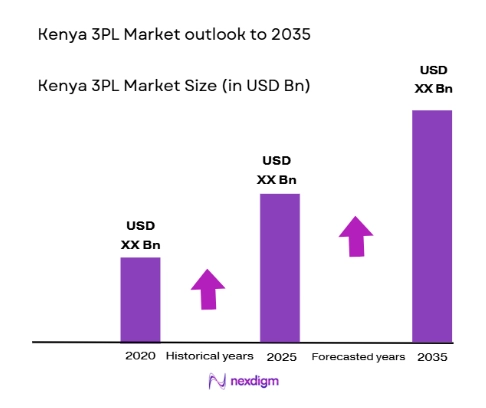
Market Segmentation
By Product Type:
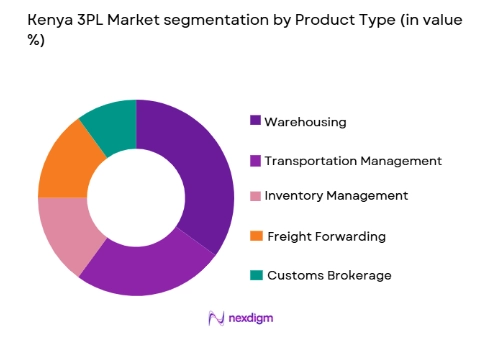
Kenya 3PL market is segmented by product type into warehousing, transportation management, inventory management, freight forwarding, and customs brokerage. Recently, warehousing has a dominant market share due to the increasing demand for storage solutions, which are critical in the e-commerce and retail sectors. As retail chains expand and online sales rise, the need for large-scale, efficient warehousing facilities has surged. Warehouses serve as key nodes in the supply chain, offering services such as inventory management and order fulfillment, and this segment is benefiting from technological advancements in automation and data analytics, which help in optimizing space and managing goods more effectively.
By Platform Type:
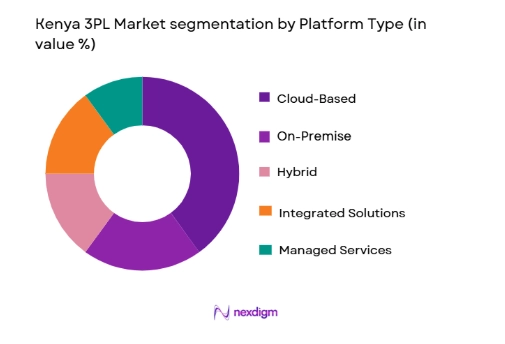
Kenya 3PL market is segmented by platform type into cloud-based, on-premise, hybrid, integrated solutions, and managed services. Recently, cloud-based platforms have gained a dominant market share due to the increased demand for scalable and flexible solutions in logistics operations. Cloud solutions allow logistics providers to manage their operations efficiently while reducing infrastructure costs. These platforms offer real-time tracking, inventory management, and data analytics, providing visibility into supply chains, improving decision-making, and enhancing customer satisfaction. The growing trend of digitalization in the logistics industry is expected to further boost the cloud-based platform segment.
Competitive Landscape
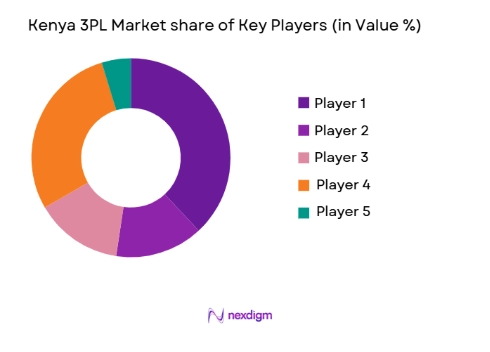
The competitive landscape of the Kenya 3PL market is characterized by both global and local players, with consolidation occurring as firms seek to expand their service offerings and regional reach. Major players in the logistics sector are increasing their investment in technology, strategic partnerships, and infrastructure development to stay competitive. These players are diversifying their services to include value-added solutions like last-mile delivery and inventory management. The market is influenced by large logistics providers, alongside smaller local firms, which allows for a highly competitive environment with price sensitivity and operational efficiency being key factors for success.
| Company Name | Establishment Year | Headquarters | Technology Focus | Market Reach | Key Products | Revenue (USD billion) | Additional Parameter |
| DHL | 1969 | Bonn, Germany | ~ | ~ | ~ | ~ | ~ |
| Kuehne + Nagel | 1890 | Schindellegi, Switzerland | ~ | ~ | ~ | ~ | ~ |
| DB Schenker | 1872 | Essen, Germany | ~ | ~ | ~ | ~ | ~ |
| Maersk | 1904 | Copenhagen, Denmark | ~ | ~ | ~ | ~ | ~ |
| Agility Logistics | 1977 | Kuwait City, Kuwait | ~ | ~ | ~ | ~ | ~ |
Kenya 3PL Market Analysis
Growth Drivers
E-commerce Growth:
The rapid growth of e-commerce in Kenya is a significant driver of the 3PL market. As online shopping becomes more mainstream, businesses are looking for efficient logistics solutions to manage orders, track inventory, and provide faster deliveries. The demand for third-party logistics services is amplified by this growing e-commerce trend, as companies seek out 3PL providers to handle warehousing, order fulfillment, and last-mile delivery. Additionally, consumers are increasingly expecting faster and more reliable delivery services, which further fuels the need for robust logistics solutions that can manage complex and high-volume shipments. As e-commerce businesses expand, so too does the demand for logistics services capable of meeting the challenges of scaling operations.
Infrastructure Investment:
The Kenyan government and private sector are making significant investments in infrastructure, including new ports, railways, and roads, which directly benefit the logistics sector. The development of transportation infrastructure improves the efficiency of moving goods across the country and the wider East African region. This growth in logistics infrastructure provides the foundation for the 3PL sector, helping providers to offer more reliable and cost-effective services. Additionally, the improved connectivity between urban and rural areas opens up new markets and facilitates better supply chain management. These infrastructure developments help to streamline the delivery of goods, reduce bottlenecks, and lower logistics costs, creating a more competitive environment for third-party logistics services.
Market Challenges
Infrastructure Gaps:
Despite the ongoing improvements in infrastructure, Kenya still faces significant gaps in logistics infrastructure that hinder the growth of the 3PL market. While large cities like Nairobi and Mombasa benefit from advanced infrastructure, rural areas often face poor road conditions, unreliable power supply, and limited transport options. These gaps create logistical inefficiencies and increase the overall cost of delivering goods, making it difficult for logistics companies to provide competitive services in underserved areas. The lack of sufficient warehousing space, particularly in key regional hubs, further exacerbates the challenges in managing inventory and optimizing supply chain operations. To address these issues, Kenya must continue investing in infrastructure upgrades and connectivity across the country to facilitate smoother movement of goods and lower operational costs.
Regulatory Complexities:
The logistics sector in Kenya faces several regulatory challenges that complicate operations for 3PL providers. Bureaucratic delays in customs clearance, complex tax policies, and a lack of standardization in logistics regulations can hinder the efficiency of supply chains. Logistics companies must navigate a maze of regulations that can lead to delays and higher compliance costs. Furthermore, frequent changes to trade policies and import/export tariffs can create uncertainty and increase operational risks for 3PL providers. Streamlining the regulatory environment and creating clear, stable policies would help to reduce the operational burden on logistics firms and foster a more favorable business climate.
Opportunities
Technology Adoption in Logistics:
One of the key opportunities in the Kenya 3PL market is the growing adoption of advanced technologies such as artificial intelligence, the Internet of Things (IoT), and automation within logistics operations. These technologies can enhance supply chain efficiency by providing real-time tracking, improving inventory management, and streamlining warehouse operations. As logistics providers increasingly adopt these technologies, they can reduce operational costs, minimize human error, and offer better services to customers. The integration of these technologies also allows for predictive analytics, helping businesses to forecast demand, optimize routing, and manage capacity more effectively. Furthermore, the use of digital platforms for managing logistics operations enables companies to offer more scalable solutions, making them better equipped to meet the growing demands of e-commerce and global supply chains.
Last-Mile Delivery Solutions:
With the rise of online shopping and changing consumer expectations, last-mile delivery has become a critical area of focus for 3PL providers. Consumers increasingly demand faster and more convenient delivery options, especially in urban areas where traffic congestion and complex delivery routes can pose significant challenges. Companies that offer flexible last-mile solutions, such as crowd-sourced deliveries or localized delivery hubs, are likely to see increased demand. Additionally, the expansion of delivery services to underserved rural areas presents an opportunity for 3PL companies to tap into new markets and drive growth. Investing in sustainable last-mile delivery solutions, such as electric vehicles or bicycle couriers, can also give logistics providers a competitive edge in a market that increasingly values sustainability.
Future Outlook
Over the next five years, the Kenya 3PL market is expected to experience continued growth driven by the expansion of the e-commerce sector and increased investment in infrastructure. Technological advancements, such as the use of AI and IoT for real-time tracking and automated systems, will further enhance the efficiency of logistics operations. Additionally, government policies aimed at supporting logistics and trade infrastructure will continue to create favorable conditions for 3PL providers. The growing demand for faster, more efficient delivery services will further stimulate the adoption of innovative last-mile solutions, making Kenya a key logistics hub in the East African region.
Major Players
- DHL
- Kuehne + Nagel
- DB Schenker
- Maersk
- Agility Logistics
- XPO Logistics
- CEVA Logistics
- UPS
- Panalpina
- DSV
- Hellmann Worldwide Logistics
- Nippon Express
- Rhenus Logistics
- Yusen Logistics
- Jumia Logistics
Key Target Audience
- Investments and venture capitalist firms
- Government and regulatory bodies
- Logistics and supply chain managers
- Retailers and e-commerce platforms
- Manufacturing companies
- Freight forwarding companies
- Third-party logistics service providers
- Infrastructure development firms
Research Methodology
Step 1: Identification of Key Variables
The first step involves identifying the key variables that influence the Kenya 3PL market, such as e-commerce growth, infrastructure development, and technological trends.
Step 2: Market Analysis and Construction
This step includes analyzing market data and constructing a detailed model that evaluates current and projected market dynamics.
Step 3: Hypothesis Validation and Expert Consultation
We validate hypotheses and refine market assumptions by consulting industry experts and stakeholders in the logistics and supply chain sectors.
Step 4: Research Synthesis and Final Output
The final step synthesizes all gathered data, insights, and expert opinions into a cohesive and comprehensive market report.

- Executive Summary
- Research Methodology (Definitions, Scope, Industry Assumptions, Market Sizing Approach, Primary & Secondary Research Framework, Data Collection & Verification Protocol, Analytic Models & Forecast Methodology, Limitations & Research Validity Checks)

- Market Definition and Scope
- Value Chain & Stakeholder Ecosystem
- Regulatory / Certification Landscape
- Sector Dynamics Affecting Demand
- Strategic Initiatives & Infrastructure Growth

- Growth Drivers
Increased E-commerce Growth
Expansion of Infrastructure Projects
Government Initiatives for Logistics Optimization
Rising Demand for Efficient Supply Chains
Technological Advancements in Logistics - Market Challenges
Infrastructure Deficiencies
High Operational Costs
Regulatory Complexities
Dependence on International Logistics
Security Risks in Supply Chains - Market Opportunities
Integration of AI in Supply Chain
Growth of Retail & E-Commerce Market
Expanding Investments in Infrastructure - Trends
Shift to Automation and Robotics
Rising Adoption of Green Logistics
Growing Use of Data Analytics for Decision Making
E-commerce-Focused Logistics Expansion
Technological Innovation in Warehouse Management - Government Regulations & Defense Policy
Logistics Policy Developments
Safety Regulations for Freight Transport
Government Investment in Logistics Infrastructure - SWOT Analysis
- Stakeholder and Ecosystem Analysis
- Porter’s Five Forces Analysis
- Competition Intensity and Ecosystem Mapping

- By Market Value, 2020-2025
- By Installed Units, 2020-2025
- By Average System Price, 2020-2025
- By System Complexity Tier, 2020-2025

- By System Type (In Value%)
Warehousing
Transportation Management
Inventory Management
Freight Forwarding
Customs Brokerage - By Platform Type (In Value%)
Cloud-Based
On-Premise
Hybrid
Integrated Solutions
Managed Services - By Fitment Type (In Value%)
End-to-End Solutions
Standalone Solutions
Modular Solutions
Integrated Systems
Custom Solutions - By EndUser Segment (In Value%)
Retail & E-Commerce
Manufacturing
Automotive
Consumer Goods
Pharmaceutical - By Procurement Channel (In Value%)
Direct Procurement
Third-Party Distributors
Online Bidding Platforms
Government Contracts
Private Sector Procurement - By Material / Technology (In Value%)
Artificial Intelligence
Automation Solutions
Internet of Things (IoT)
Blockchain
Robotics

- Market structure and competitive positioning
- Market share snapshot of major players
- CrossComparison Parameters (Warehousing, Transportation Management, Inventory Management, Freight Forwarding, Customs Brokerage, Cloud-Based, On-Premise, E-Commerce, Automation, Robotics)
- SWOT Analysis of Key Players
- Pricing & Procurement Analysis
- Key Players
DHL
Maersk
Kuehne + Nagel
DB Schenker
CEVA Logistics
Triton International
Rhenus Logistics
Schenker AG
Agility Logistics
Safmarine
UPS
XPO Logistics
Ziegler Group
DSV Panalpina
Hellmann Worldwide Logistics

- Growing Demand from E-Commerce Sector
- Retailers Seeking Optimized Supply Chains
- Manufacturers Investing in Logistics Efficiency
- Pharmaceuticals and Healthcare Expanding Logistics Needs

- Forecast Market Value, 2026-2035
- Forecast Installed Units, 2026-2035
- Price Forecast by System Tier, 2026-2035
- Future Demand by Platform, 2026-2035


 Request a Sample
 Ask for Customization
 Get a Quote
 Enquire Now