

 Download PDF
 Download PDF
Market Overview
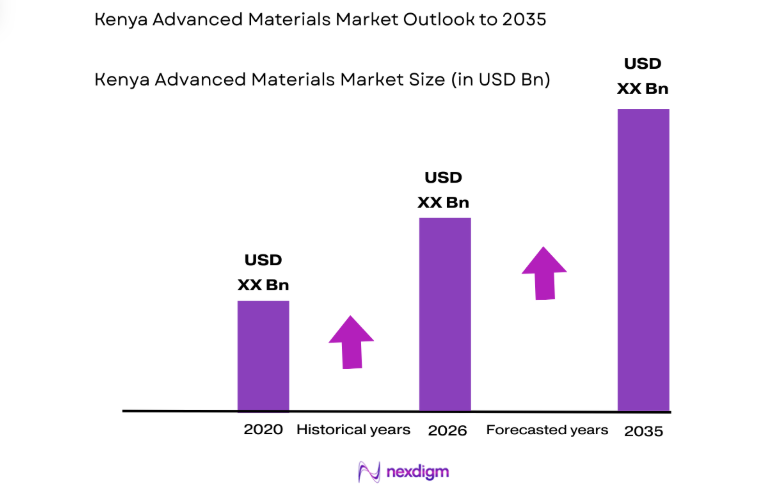
The Kenya Advanced Materials market is valued at approximately USD ~ billion based on a recent historical assessment, driven by the growing demand for high-performance materials in various sectors such as construction, automotive, electronics, and manufacturing. Innovations in materials science, particularly in composites, nanomaterials, and smart materials, are fueling this growth. Additionally, industries are increasingly focusing on sustainability, energy efficiency, and high-performance materials to meet global standards, contributing to the market’s expansion.
Dominant cities in Kenya such as Nairobi, Mombasa, and Kisumu play key roles in the development and adoption of advanced materials. Nairobi, as the capital and hub for technology and industrial innovation, drives demand in sectors like construction and electronics. Mombasa’s port activities and growing infrastructure development enhance the need for advanced materials in logistics and construction. Kisumu, with a focus on industrial manufacturing and agriculture, increasingly requires materials that boost efficiency and sustainability in both sectors.
Market Segmentation
By Product Type
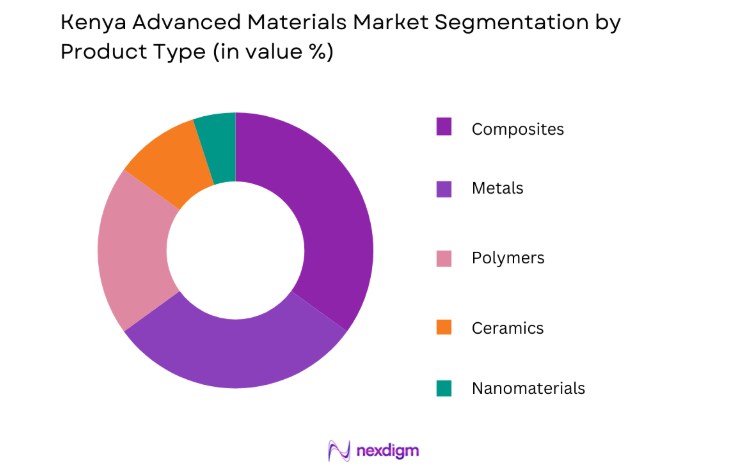
The Kenya Advanced Materials market is segmented by product type into metals, polymers, ceramics, composites, and nanomaterials. Recently, composites have dominated the market share due to their widespread application in industries like automotive, aerospace, and construction. Their lightweight, high-strength, and corrosion-resistant properties make them ideal for improving efficiency, performance, and sustainability in various products. Composites are particularly favored for their ability to reduce weight and increase fuel efficiency in automotive and aerospace sectors, driving their dominance in the market.
By Application Type
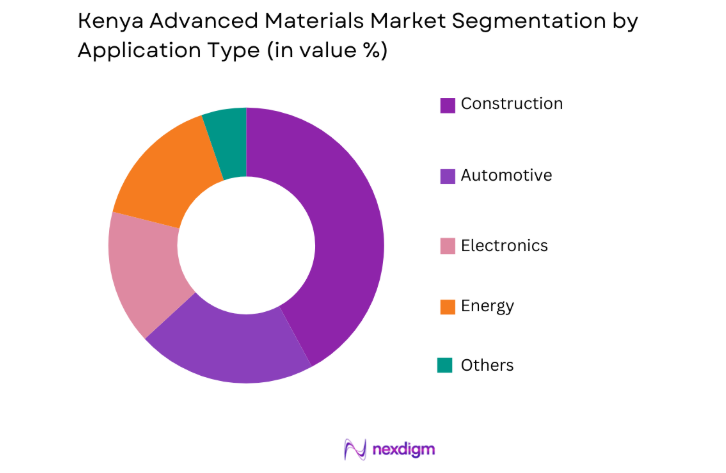
The Kenya Advanced Materials market is also segmented by application type into construction, automotive, electronics, energy, and others. Construction holds the largest market share due to the growing demand for advanced materials that enhance the durability, energy efficiency, and safety of buildings and infrastructure. High-performance materials such as advanced concrete, insulation materials, and energy-efficient glass are increasingly being used in the construction of both commercial and residential buildings. As Kenya focuses on modernizing infrastructure and meeting sustainability goals, advanced materials are becoming a vital component in the construction sector.
Competitive Landscape
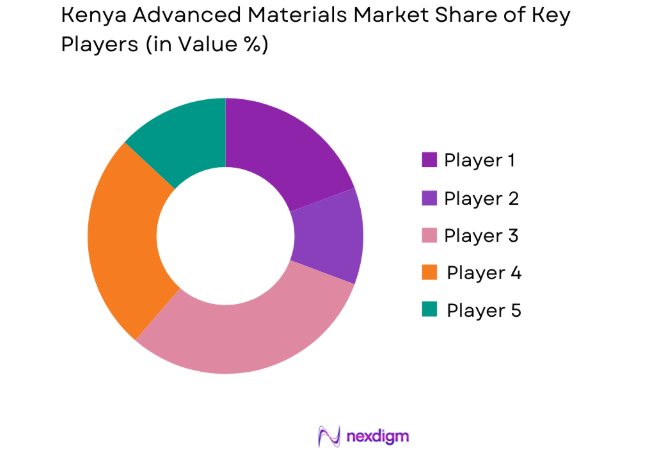
The Kenya Advanced Materials market is characterized by a mix of international players and local innovators. Global companies such as BASF, 3M, and Dow Chemical are leading the market with advanced material technologies, particularly in construction, automotive, and electronics. Local companies are gaining momentum by tailoring advanced material solutions to the unique needs of the Kenyan market, particularly in agriculture and construction. As the market continues to grow, consolidation is expected through partnerships and joint ventures between international firms and local players, expanding the reach of advanced materials in Kenya.
| Company Name | Establishment Year | Headquarters | Technology Focus | Market Reach | Key Products | Revenue | Industry-Specific Focus |
| BASF | 1865 | Ludwigshafen, Germany | ~ | ~ | ~ | ~ | ~ |
| 3M | 1902 | St. Paul, USA | ~ | ~ | ~ | ~ | ~ |
| Dow Chemical Company | 1897 | Midland, USA | ~ | ~ | ~ | ~ | ~ |
| Saint-Gobain | 1665 | Courbevoie, France | ~ | ~ | ~ | ~ | ~ |
| 3D Systems | 1986 | Rock Hill, USA | ~ | ~ | ~ | ~ | ~ |
Kenya Advanced Materials Market Analysis
Growth Drivers
Technological Advancements in Materials Science
The Kenya Advanced Materials market is experiencing significant growth due to continuous innovations in materials science, particularly in the development of composites, nanomaterials, and smart materials. These advancements allow industries to create products that are stronger, lighter, and more energy-efficient. For example, in the automotive and aerospace sectors, advanced composites are replacing traditional metals to reduce weight and improve fuel efficiency. Similarly, in construction, high-performance materials such as advanced concrete and insulation are being used to enhance the durability and energy efficiency of buildings. As industries in Kenya increasingly focus on improving product performance and sustainability, the demand for advanced materials is expected to grow. Furthermore, the ability to design materials that are environmentally friendly and cost-effective is accelerating the adoption of advanced materials across sectors such as manufacturing, automotive, and construction.
Government Support for Infrastructure Development
The Kenyan government’s ongoing investments in infrastructure, as part of the “Kenya Vision 2030” plan, are a significant driver for the growth of the Advanced Materials market. The focus on modernizing urban areas, improving transportation networks, and expanding energy infrastructure is creating increased demand for advanced materials in construction, automotive, and energy sectors. Government-backed initiatives, such as funding for energy-efficient building projects and sustainable transportation solutions, are spurring the use of high-performance materials that can meet environmental and safety standards. As the government continues to prioritize infrastructure development, the demand for advanced materials in construction, automotive, and energy will continue to rise, further fueling the growth of the market.
Market Challenges
High Production Costs and Import Dependency
A major challenge in the Kenya Advanced Materials market is the high cost of producing and sourcing advanced materials. Many high-performance materials, such as advanced composites and nanomaterials, require specialized manufacturing processes that are capital intensive. Additionally, Kenya is heavily reliant on imports for many of the raw materials and advanced technologies required for producing these materials. This dependency on international suppliers increases material costs and exposes the market to supply chain disruptions, especially in the face of global economic fluctuations or trade barriers. Local manufacturers face challenges in scaling production and improving cost efficiency, which limits the accessibility of advanced materials for smaller businesses in Kenya.
Lack of Local Manufacturing Capacity
Another challenge facing the Kenya Advanced Materials market is the limited local manufacturing capacity for advanced materials. While Kenya has seen growth in industrial sectors like construction, automotive, and manufacturing, the production of high-end materials such as nanomaterials, advanced composites, and specialty polymers is still underdeveloped. The lack of local facilities for producing these materials results in high costs due to reliance on imports. To foster growth in the advanced materials sector, Kenya needs to invest in building local manufacturing facilities, improving technological capabilities, and fostering a robust research and development (R&D) ecosystem.
Opportunities
Rising Demand for Sustainable Building Materials
The increasing focus on sustainability in the construction sector presents significant opportunities for the Kenya Advanced Materials market. With the government’s push for green building initiatives and the growing awareness of environmental issues, the demand for sustainable building materials is rising. Advanced materials such as energy-efficient insulation, low-emission concrete, and sustainable cladding solutions are gaining traction in the Kenyan construction industry. These materials not only help reduce energy consumption but also meet the growing demand for environmentally friendly and cost-effective building solutions. As urbanization accelerates and the need for eco-friendly infrastructure grows, there is a substantial opportunity for manufacturers to develop and supply advanced materials that align with these trends.
Growth of the Automotive and Transport Sectors
The automotive and transportation sectors in Kenya present promising opportunities for the Advanced Materials market. As demand for vehicles continues to rise, there is an increasing need for lightweight, high-strength materials that improve fuel efficiency and performance. Composites, advanced polymers, and metals are increasingly used in vehicle manufacturing to reduce weight, enhance safety, and improve fuel economy. In addition to conventional vehicles, the adoption of electric vehicles (EVs) is also driving demand for advanced materials such as high-performance batteries and lightweight composites. As the automotive sector in Kenya continues to expand, manufacturers of advanced materials will benefit from the growing demand for innovative, high-performance materials that meet both consumer and regulatory requirements.
Future Outlook
Over the next five years, the Kenya Advanced Materials market is expected to grow steadily, driven by ongoing technological advancements, increased demand for sustainable and energy-efficient products, and government investment in infrastructure development. Key sectors such as construction, automotive, and energy will continue to drive demand for advanced materials, particularly in urbanization, sustainable building projects, and automotive manufacturing. As local manufacturing capabilities for advanced materials improve and the industry becomes more integrated into global supply chains, Kenya is poised to become a regional hub for high-performance materials, contributing to the overall growth of the market.
Major Players
- BASF
- 3M
- Dow Chemical Company
- Saint-Gobain
- Hexcel Corporation
- Owens Corning
- Solvay
- AkzoNobel
- Toray Industries
- Mitsubishi Chemical
- PPG Industries
- Huntsman Corporation
- Asahi Kasei Corporation
- LG Chem
- DuPont
Key Target Audience
- Investments and venture capitalist firms
- Government and regulatory bodies
- Automotive manufacturers
- Construction firms
- Energy providers
- Industrial equipment suppliers
- Advanced materials manufacturers
Research Methodology
Step 1: Identification of Key Variables
Identify key variables affecting the Advanced Materials market, including technological advancements, consumer demand, infrastructure needs, and government policies.
Step 2: Market Analysis and Construction
Analyze historical data, current trends, and future forecasts to construct a comprehensive model for the Advanced Materials market in Kenya.
Step 3: Hypothesis Validation and Expert Consultation
Consult with industry experts, local manufacturers, and stakeholders to validate the research hypotheses and ensure the findings reflect real market conditions.
Step 4: Research Synthesis and Final Output
Synthesize the research findings into a final, actionable report, incorporating data analysis, insights, and expert opinions for market stakeholders.

- Executive Summary
- Research Methodology (Definitions, Scope, Industry Assumptions, Market Sizing Approach, Primary & Secondary Research Framework, Data Collection & Verification Protocol, Analytic Models & Forecast Methodology, Limitations & Research Validity Checks)

- Market Definition and Scope
- Value Chain & Stakeholder Ecosystem
- Regulatory / Certification Landscape
- Sector Dynamics Affecting Demand

- Growth Drivers
Growing demand for lightweight materials in automotive
Technological advancements in smart materials
Increase in construction projects and urbanization - Market Challenges
High cost of advanced material production
Limited availability of raw materials
Lack of local production capabilities - Market Opportunities
Expanding adoption of advanced materials in automotive
Development of eco-friendly and sustainable materials
Growing demand for advanced electronics - Trends
Increase in research and development for innovative materials
Shift towards eco-friendly material production - Government Regulations
Environmental sustainability standards
Certification and regulation for new material technologies
Government incentives for material innovation - SWOT Analysis
- Porter’s Five Forces

- By Market Value, 2020-2025
- By Installed Units, 2020-2025
- By Average System Price, 2020-2025
- By System Complexity Tier, 2020-2025

- By System Type (In Value%)
Composite Materials
Smart Materials
Nanomaterials
Ceramic Materials
Polymeric Materials - By Platform Type (In Value%)
Automotive
Construction
Aerospace
Electronics - By Fitment Type (In Value%)
Pre-fabricated Systems
Modular Systems
Custom Fit Solutions
Integrated Fit Systems - By End User Segment (In Value%)
Manufacturing
Construction
Automotive

- Market Share Analysis
- Cross Comparison Parameters (Material Type, End User, Production Cost, Technology Adoption, Supplier Concentration, Demand Growth, Regional Presence)
- SWOT Analysis of Key Competitors
- Pricing & Procurement Analysis
- Key Players
Dow Chemical
BASF
Saint-Gobain
3M
Hexcel
DuPont
LG Chem
Toray Industries
SABIC
Mitsubishi Chemical
BASF
Solvay
Teijin
Covestro
Huntsman

- Automotive sector focusing on lightweight materials
- Construction industry’s growing demand for sustainable solutions
- Electronics sector driving demand for nanomaterials

- Forecast Market Value, 2026-2035
- Forecast Installed Units, 2026-2035
- Price Forecast by System Tier, 2026-2035
- Future Demand by Platform, 2026-2035


 Request a Sample
 Ask for Customization
 Get a Quote
 Enquire Now