
 Download PDF
 Download PDF
Market Overview
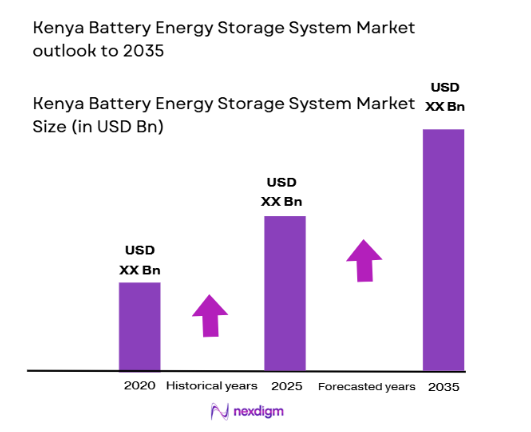
The Kenya Battery Energy Storage System market is currently valued at approximately USD ~ billion, driven by the country’s increasing demand for sustainable energy solutions and its significant reliance on renewable energy sources such as solar and wind. The market is witnessing growth due to the government’s supportive policies and incentives aimed at enhancing energy efficiency and reducing the carbon footprint. Furthermore, advancements in energy storage technologies, such as lithium-ion batteries, are also contributing to the market’s expansion by improving system reliability and affordability. The continued development of grid infrastructure and integration of renewable energy sources further drives the adoption of energy storage systems.
Kenya has become a regional leader in renewable energy adoption and energy storage systems due to its abundant natural resources, including solar and wind. Key cities like Nairobi, Mombasa, and Kisumu are at the forefront of this shift due to their advanced infrastructure and energy demands. Nairobi, being the capital and an economic hub, plays a pivotal role in driving investments and policy reforms in the energy sector. The growing number of private sector investments in renewable energy projects in these urban centers further accelerates the demand for energy storage solutions to balance intermittent energy sources, ensuring a stable energy supply across the country.
Market Segmentation
By Product Type:
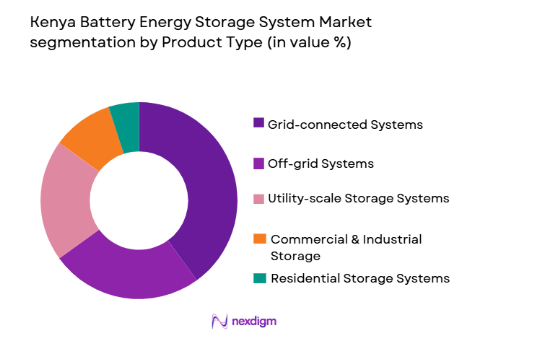
The Kenya Battery Energy Storage System market is segmented by product type into grid-connected systems, off-grid systems, utility-scale storage systems, commercial & industrial storage systems, and residential storage systems. Recently, grid-connected systems have the dominant market share due to increasing demand for large-scale storage to support the national grid’s stability and efficiency. The ongoing push towards renewable energy integration into the national grid has fueled the demand for such systems, as they are essential for balancing fluctuating energy supply from renewable sources. With the government’s focus on expanding grid infrastructure and enhancing energy security, grid-connected systems are crucial for achieving sustainability goals. These systems offer benefits like reliable storage for peak load management, making them highly sought after by both private and public sectors.
By Platform Type:
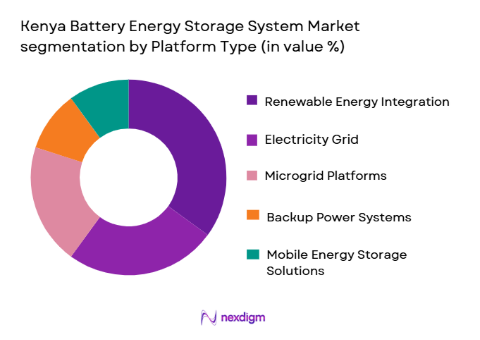
The Kenya Battery Energy Storage System market is segmented by platform type into electricity grid, renewable energy integration, microgrid platforms, backup power systems, and mobile energy storage solutions. Renewable energy integration platforms dominate the market due to Kenya’s significant investments in solar and wind energy projects. As the country moves towards more sustainable energy sources, energy storage solutions have become indispensable for storing excess renewable energy and ensuring continuous power availability. This segment is growing rapidly as energy storage technologies are increasingly seen as a critical solution to the intermittency of renewable energy. Integration with microgrid platforms, especially in rural and remote areas, also adds to the strong market demand for these platforms.
Competitive Landscape
The competitive landscape of the Kenya Battery Energy Storage System market is evolving with several key players leading the charge. The market is marked by consolidation, with large international players such as Tesla and LG Chem, alongside local and regional entities. The increasing involvement of private and public sector players has led to a more competitive market, where technological advancements and price competitiveness are crucial for market dominance. Major players are focusing on providing cost-effective, scalable, and efficient energy storage systems to meet the growing demand for sustainable energy solutions. This competitive intensity has spurred innovation, particularly in battery technology and system integration, making the market increasingly dynamic and attractive to both local and international investors.
| Company Name | Establishment Year | Headquarters | Technology Focus | Market Reach | Key Products | Revenue (USD Million) | Technology Integration |
| Tesla | 2003 | USA | ~ | ~ | ~ | ~ | ~ |
| LG Chem | 1947 | South Korea | ~ | ~ | ~ | ~ | ~ |
| Siemens Energy | 2020 | Germany | ~ | ~ | ~ | ~ | ~ |
| BYD | 1995 | China | ~ | ~ | ~ | ~ | ~ |
| Schneider Electric | 1836 | France | ~ | ~ | ~ | ~ | ~ |
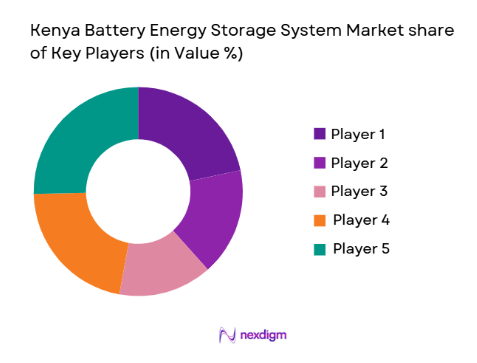
Kenya Battery Energy Storage System Market Analysis
Growth Drivers
Government Incentives and Support for Renewable Energy:
The Kenyan government has introduced numerous policies and incentives to promote renewable energy sources and enhance the adoption of energy storage systems. These initiatives include subsidies, tax breaks, and grants to both businesses and consumers. The government’s long-term strategy to achieve 100% renewable energy by 2030 has created a favorable environment for energy storage systems to support the grid and ensure a continuous power supply, especially from renewable sources such as solar and wind. This policy-driven environment has attracted significant investments in the energy sector, providing a solid foundation for the market’s growth. As Kenya continues to push for energy independence and reduce its reliance on fossil fuels, the adoption of energy storage solutions will become increasingly critical to achieving these objectives.
Technological Advancements in Energy Storage Solutions:
Advancements in energy storage technology, particularly in lithium-ion and solid-state batteries, are driving the market’s expansion. The efficiency, affordability, and scalability of these technologies have made them increasingly accessible to a broader range of consumers and industries. These innovations have lowered the cost of energy storage systems, making them more competitive against traditional energy solutions. Furthermore, the improvement in battery life and energy density has significantly enhanced the performance of storage systems, making them more reliable and efficient in grid balancing, especially as renewable energy penetration increases. The growing focus on research and development in energy storage technology is expected to continue to drive the market forward as new, more efficient solutions become available.
Market Challenges
High Initial Costs of Energy Storage Systems:
One of the major challenges facing the Kenya Battery Energy Storage System market is the high upfront costs associated with purchasing and installing energy storage systems. Although the prices of batteries have decreased over the years, the cost of large-scale storage systems remains a significant barrier for both commercial and residential consumers. The capital expenditure required for these systems can be prohibitive, especially for small and medium-sized businesses and rural households. While government incentives and subsidies help to offset some of these costs, many consumers are still reluctant to invest in these systems due to the high initial financial commitment, slowing down the adoption rate in the market.
Grid Infrastructure Limitations:
Despite the growing demand for energy storage systems, Kenya’s grid infrastructure is still underdeveloped, particularly in rural areas. The lack of a robust and reliable electricity grid in these regions makes it difficult to deploy large-scale energy storage solutions effectively. This infrastructural challenge limits the market’s potential, as energy storage systems require a stable and well-maintained grid to operate efficiently. Furthermore, the sporadic power outages and grid failures further hinder the implementation of storage systems, making it challenging for both the private and public sectors to achieve consistent energy storage and distribution.
Opportunities
Expansion of Renewable Energy Projects:
Kenya has abundant renewable energy resources, including wind, solar, and geothermal energy. The continued expansion of renewable energy projects in the country presents a significant opportunity for the growth of energy storage systems. As the country increases its renewable energy capacity, there will be an increasing need for energy storage solutions to ensure the stability and reliability of the power supply. This will provide opportunities for both local and international energy storage companies to expand their market share and contribute to the growth of the energy storage sector. Additionally, the integration of energy storage systems with renewable energy projects will help Kenya meet its sustainable energy goals and reduce its reliance on fossil fuels.
Development of Off-grid and Microgrid Solutions:
The development of off-grid and microgrid solutions presents another significant opportunity for the market. Kenya’s rural areas, which are often disconnected from the national grid, have been increasingly adopting microgrids powered by renewable energy sources. These microgrids rely heavily on energy storage systems to provide continuous power to remote communities. As demand for off-grid solutions increases, energy storage systems will play a crucial role in ensuring that these microgrids are capable of operating efficiently and reliably. This trend will drive the growth of energy storage systems in rural areas, opening up new markets for companies in the sector.
Future Outlook
The future outlook for Kenya’s Battery Energy Storage System market is highly positive, with strong growth expected over the next five years. Continued investments in renewable energy infrastructure and government policies promoting sustainable energy will drive demand for energy storage solutions. Technological advancements in battery efficiency and affordability will further accelerate market expansion, particularly in off-grid and microgrid applications. The increased integration of renewable energy into the national grid will also create significant opportunities for energy storage systems to stabilize and balance power supply. With a growing focus on energy independence and sustainability, the market for energy storage solutions in Kenya is poised for rapid growth.
Major Players
- Tesla
- LG Chem
- Siemens Energy
- BYD
- Schneider Electric
- Vestas Wind Systems
- General Electric
- Enel X
- Panasonic Energy
- ABB
- Hitachi ABB Power Grids
- SunPower Corporation
- AES Energy Storage
- Exide Technologies
- Samsung SDI
Key Target Audience
- Investments and venture capitalist firms
- Government and regulatory bodies
- Energy producers and suppliers
- Renewable energy developers
- Commercial and industrial energy users
- Utility companies
- Microgrid developers
- Off-grid energy solution providers
Research Methodology
Step 1: Identification of Key Variables
The first step in the research methodology involves identifying the key variables that influence the Kenya Battery Energy Storage System market. These include factors such as technological advancements, government policies, and market demand for renewable energy storage solutions.
Step 2: Market Analysis and Construction
Market analysis is conducted using both qualitative and quantitative methods, analyzing historical data and market trends to construct a reliable market model. This helps in understanding current market dynamics and estimating future trends.
Step 3: Hypothesis Validation and Expert Consultation
Hypothesis validation is performed through consultations with industry experts, key stakeholders, and market participants to ensure the accuracy and relevance of the research findings.
Step 4: Research Synthesis and Final Output
The final research synthesis involves compiling the data into a comprehensive report, which includes insights, market trends, forecasts, and strategic recommendations. The report is then validated before being finalized and presented.

- Executive Summary
- Research Methodology (Definitions, Scope, Industry Assumptions, Market Sizing Approach, Primary & Secondary Research Framework, Data Collection & Verification Protocol, Analytic Models & Forecast Methodology, Limitations & Research Validity Checks)

- Market Definition and Scope
- Value Chain & Stakeholder Ecosystem
- Regulatory / Certification Landscape
- Sector Dynamics Affecting Demand
- Strategic Initiatives & Infrastructure Growth

- Growth Drivers
Government incentives for renewable energy integration
Rising demand for reliable energy storage solutions
Increased investment in renewable energy infrastructure
Advancements in battery storage technology
Declining costs of energy storage systems - Market Challenges
High initial investment for energy storage systems
Limited awareness of energy storage solutions
Regulatory and policy challenges
Grid infrastructure limitations
Technological risks related to battery efficiency - Market Opportunities
Expansion of renewable energy projects
Integration of battery storage in electric vehicle infrastructure
Public-private partnerships for energy storage - Trends
Growth of hybrid energy storage systems
Rise in energy storage for off-grid applications
Increasing adoption of energy storage in commercial sectors
Development of sustainable battery technologies
Enhanced grid resilience through energy storage - Government Regulations & Defense Policy
Policies supporting clean energy transition
Energy storage integration regulations
Government-funded storage pilot projects - SWOT Analysis
- Stakeholder and Ecosystem Analysis
- Porter’s Five Forces Analysis
- Competition Intensity and Ecosystem Mapping

- By Market Value, 2020-2025
- By Installed Units, 2020-2025
- By Average System Price, 2020-2025
- By System Complexity Tier, 2020-2025

- By System Type (In Value%)
Grid-connected Systems
Off-grid Systems
Utility-scale Storage Systems
Commercial & Industrial Storage Systems
Residential Storage Systems - By Platform Type (In Value%)
Electricity Grid
Renewable Energy Integration
Microgrid Platforms
Backup Power Systems
Mobile Energy Storage Solutions - By Fitment Type (In Value%)
On-site Storage
Off-site Storage
Centralized Storage
Distributed Storage
Hybrid Storage Solutions - By EndUser Segment (In Value%)
Energy Providers
Commercial & Industrial Users
Residential Users
Government & Regulatory Bodies
Renewable Energy Developers - By Procurement Channel (In Value%)
Direct Procurement
Distributor/Reseller Channels
Online Bidding Platforms
Government Procurement Programs
Third-party Partners - By Material / Technology (in Value%)
Lithium-ion Batteries
Lead-acid Batteries
Flow Batteries
Sodium-ion Batteries
Solid-state Batteries

- Market structure and competitive positioning
- Market share snapshot of major players
- CrossComparison Parameters (System Type, Platform Type, Procurement Channel, EndUser Segment, Fitment Type, Material / Technology, Market Share, Installed Units, System Complexity, Price Trends)
- SWOT Analysis of Key Players
- Pricing & Procurement Analysis
- Key Players
SolarGen
JinkoSolar
Schneider Electric
Siemens Energy
Tesla
BYD
LG Chem
Sungrow Power Supply
Exide Technologies
EDF Renewables
Caterpillar Energy Solutions
Hitachi ABB Power Grids
Panasonic Energy
GE Renewable Energy
Vestas Wind Systems

- Energy providers seeking stable storage solutions
- Industrial sectors investing in backup storage
- Government bodies supporting energy storage initiatives
- Residential consumers demanding reliable energy access

- Forecast Market Value, 2026-2030
- Forecast Installed Units, 2026-2030
- Price Forecast by System Tier, 2026-2030
- Future Demand by Platform, 2026-2030


 Request a Sample
 Ask for Customization
 Get a Quote
 Enquire Now