
 Download PDF
 Download PDF
Market Overview
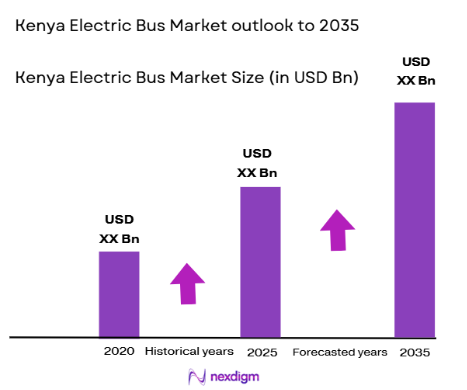
The Kenya Electric Bus Market is currently valued at approximately USD ~ Billion, driven by increasing government efforts to reduce carbon emissions and implement sustainable transport solutions. A recent push from the government towards electrifying the transportation sector, supported by international climate agreements, is accelerating the adoption of electric buses in the region. Moreover, this market growth is being further driven by investments in the development of electric bus infrastructure, which includes charging stations and related facilities. These efforts are positioned to support the transition towards a greener public transport system and reduce reliance on fossil fuel-powered vehicles.
Kenya has emerged as a dominant player in the African electric bus sector, driven by its urbanization, government policies, and active environmental goals. Cities like Nairobi have seen substantial growth in the electric bus fleet, boosted by favorable policies aimed at reducing greenhouse gas emissions and enhancing air quality. Nairobi’s public transport system, the largest in East Africa, plays a crucial role in the demand for electric buses, with public agencies and private companies increasingly adopting electric vehicles. The government’s focus on sustainable development, paired with the rising demand for cleaner transport solutions, positions Kenya as a leader in the region.
Market Segmentation
By System Type:
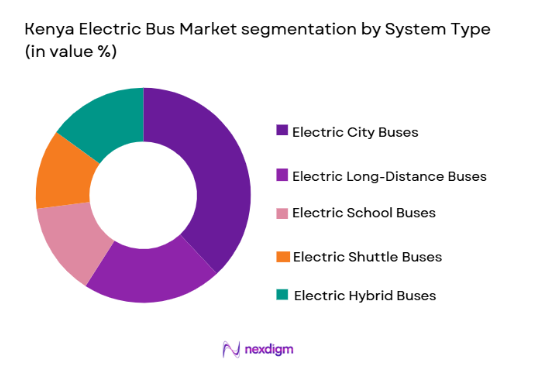
The Kenya Electric Bus market is segmented by system type into Electric City Buses, Electric Long-Distance Buses, Electric School Buses, Electric Shuttle Buses, and Electric Hybrid Buses. Recently, Electric City Buses have dominated the market share due to urbanization trends and increasing demand for sustainable public transport options. These buses are well-suited for daily operations in congested city areas, offering an eco-friendly solution to the problems of urban air pollution and traffic congestion. The preference for electric city buses is supported by government incentives, subsidies, and the growing availability of charging infrastructure in major cities.
By Platform Type:
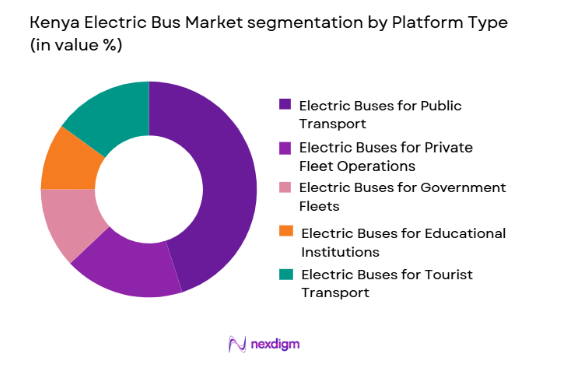
The Kenya Electric Bus market is segmented by platform type into Electric Buses for Public Transport, Electric Buses for Private Fleet Operations, Electric Buses for Government Fleets, Electric Buses for Educational Institutions, and Electric Buses for Tourist Transport. Recently, Electric Buses for Public Transport have a dominant market share due to the increasing adoption by public transport agencies aiming to reduce carbon emissions. Urban cities are moving towards cleaner transportation solutions, driven by government policies that support electric mobility. Public transport agencies are at the forefront of this shift, making electric buses a popular choice for eco-friendly and efficient public transit solutions.
Competitive Landscape
The competitive landscape of the Kenya Electric Bus market is highly dynamic, with several major players investing in electric vehicle (EV) technology. The market sees substantial consolidation, with global EV manufacturers collaborating with local firms to strengthen their market presence. Major players such as BYD and Volvo are focusing on electric bus production, while also navigating local regulatory landscapes to secure contracts. With increasing government support for green mobility and the rise of sustainable transport, these companies are keen on expanding their footprint. The growing emphasis on infrastructure development and government incentives for electric buses has also made this market more attractive for both international and local manufacturers.
| Company Name | Establishment Year | Headquarters | Technology Focus | Market Reach | Key Products | Revenue (USD Billion) | Additional Parameter |
| BYD | 1995 | China | ~ | ~ | ~ | ~ | ~ |
| Volvo | 1927 | Sweden | ~ | ~ | ~ | ~ | ~ |
| Yutong | 1999 | China | ~ | ~ | ~ | ~ | ~ |
| Proterra | 2004 | USA | ~ | ~ | ~ | ~ | ~ |
| Alexander Dennis | 1991 | UK | ~ | ~ | ~ | ~ | ~ |
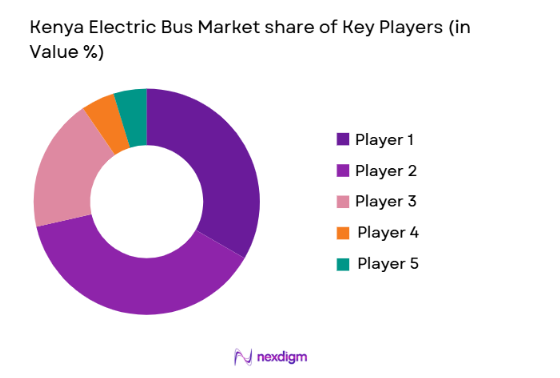
Kenya Electric Bus Market Analysis
Growth Drivers
Government Investment in Sustainable Mobility:
The Kenyan government’s strategic push for clean energy and sustainable transport solutions is driving the demand for electric buses. In recent years, the government has launched various programs and policies that support the adoption of electric vehicles, including electric buses, to meet its climate change and urban air quality objectives. These efforts have seen increased funding and regulatory incentives for electric mobility, including tax exemptions and subsidies for manufacturers and operators of electric buses. Additionally, government-led initiatives have focused on developing the necessary infrastructure for the widespread adoption of electric buses, such as the installation of charging stations and the development of supporting technologies. With these policies in place, there has been a significant uptake of electric buses by public transport agencies across the country. The government’s dedication to reducing greenhouse gas emissions has played a crucial role in driving the expansion of the electric bus market in Kenya.
Technological Advancements in Battery and Charging Infrastructure:
The rapid advancement in battery technology and charging infrastructure is another major driver of the electric bus market in Kenya. Battery life and energy density improvements, along with faster charging technologies, have greatly enhanced the efficiency and range of electric buses, making them more attractive to fleet operators and government agencies. This has contributed to the growing adoption of electric buses, as they are now seen as viable alternatives to traditional diesel-powered buses, particularly in urban environments. Additionally, the increasing development of charging infrastructure in major cities like Nairobi and Mombasa has made it easier for bus operators to manage their fleets without worrying about limited charging capabilities. The growing availability of fast-charging stations across the country has addressed concerns about the operational limitations of electric buses, ensuring their success in the long term. These technological developments are paving the way for the broader adoption of electric buses in Kenya, with more cities and regions expected to follow suit.
Market Challenges
High Initial Capital Investment:
One of the major challenges facing the Kenya Electric Bus market is the high initial cost of purchasing electric buses. Despite the long-term cost benefits of electric vehicles, such as reduced fuel and maintenance costs, the upfront capital required for electric buses remains a significant barrier. Many transport operators, particularly in low-budget markets, are hesitant to make such a large investment, especially when compared to traditional diesel buses. The cost of electric buses is higher due to the advanced technology required to build electric powertrains, batteries, and charging systems. Although government incentives and financing options are available to mitigate this issue, the high initial investment remains a challenge, particularly in emerging markets where financial resources may be limited. As a result, the pace of adoption of electric buses in Kenya has been slower than expected, despite the favorable long-term cost savings.
Insufficient Charging Infrastructure:
Another significant challenge for the Kenya Electric Bus market is the lack of sufficient charging infrastructure, which limits the operational range and convenience of electric buses. Charging infrastructure in Kenya is still in its early stages, and many cities do not have a widespread network of fast-charging stations. While major cities like Nairobi and Mombasa have begun to establish charging infrastructure, there is a need for a more comprehensive and accessible network across the entire country. Bus operators are often concerned about the availability of charging stations, especially in rural or less-developed areas, where infrastructure development may lag. This challenge affects the overall efficiency and reliability of electric bus fleets, making operators reluctant to fully transition from conventional vehicles. Overcoming this hurdle will require substantial investments in infrastructure, as well as greater collaboration between government agencies and private sector players to build a nationwide charging network.
Opportunities
Expanding Public-Private Partnerships:
The Kenyan Electric Bus market presents a unique opportunity for growth through expanding public-private partnerships (PPP). With the government actively seeking to promote sustainable public transport solutions, private companies can collaborate with local authorities to develop electric bus fleets, charging infrastructure, and service stations. These partnerships allow for shared resources, risk mitigation, and the pooling of expertise between public entities and private companies. Moreover, such collaborations can attract international investments and funding, helping to overcome financial barriers and accelerate the deployment of electric buses. Public-private partnerships will play a vital role in scaling the adoption of electric buses in Kenya, especially in metropolitan areas where the need for sustainable transport solutions is most urgent. By strengthening the PPP model, both the government and private firms can benefit from improved environmental and economic outcomes, making it a key opportunity for market players to capitalize on.
Integration of Electric Buses with Renewable Energy:
A significant opportunity for the Kenya Electric Bus market lies in the integration of electric buses with renewable energy sources, such as solar and wind power. As Kenya continues to invest heavily in renewable energy, particularly geothermal and wind power, the potential to charge electric buses using clean energy sources presents a sustainable solution that further reduces carbon emissions. By coupling electric buses with renewable energy, cities can create a completely green public transport system, reducing dependence on fossil fuels while simultaneously addressing climate change. This integration also presents cost-saving opportunities, as electricity generated from renewable sources is often cheaper than conventional grid electricity, leading to lower operational costs for electric bus fleets. Operators who adopt this model will benefit from long-term sustainability and reduced energy costs, making it a promising opportunity for both fleet owners and the government in Kenya.
Future Outlook
Over the next five years, the Kenya Electric Bus market is expected to see steady growth, driven by continued government support, technological advancements, and a shift towards sustainable urban transport solutions. The market will likely benefit from further investments in infrastructure development, including more charging stations and service facilities. Technological improvements in battery life, charging speeds, and powertrain efficiency will enhance the performance and range of electric buses, making them more attractive to fleet operators. Government incentives and public-private partnerships will continue to drive market expansion, enabling cities to implement cleaner, more efficient public transport systems. Furthermore, as Kenya aims to meet its environmental goals, the demand for electric buses is expected to increase, contributing to the market’s future growth and sustainability.
Major Players
- BYD
- Volvo
- Yutong
- Proterra
- Alexander Dennis
- Scania
- MAN Truck & Bus
- Daimler AG
- GreenPower Motor Company
- Solaris Bus & Coach
- New Flyer
- Zhongtong Bus
- VDL Bus & Coach
- Chanje Energy
- Isuzu Motors
Key Target Audience
- Investments and venture capitalist firms
- Government and regulatory bodies
- Public transportation agencies
- Bus fleet operators
- Environmental advocacy groups
- Electric vehicle manufacturers
- Charging infrastructure developers
- Local municipalities
Research Methodology
Step 1: Identification of Key Variables
Identification of key market variables, including market trends, technologies, and stakeholder interests, is crucial to shaping the research framework.
Step 2: Market Analysis and Construction
Market data is gathered through both primary and secondary research to develop an in-depth market model, highlighting key market dynamics.
Step 3: Hypothesis Validation and Expert Consultation
The hypotheses derived from preliminary analysis are validated by consulting industry experts, key stakeholders, and market participants.
Step 4: Research Synthesis and Final Output
The research findings are synthesized into actionable insights, with the final report providing a comprehensive market analysis.

- Executive Summary
- Research Methodology (Definitions, Scope, Industry Assumptions, Market Sizing Approach, Primary & Secondary Research Framework, Data Collection & Verification Protocol, Analytic Models & Forecast Methodology, Limitations & Research Validity Checks)

- Market Definition and Scope
- Value Chain & Stakeholder Ecosystem
- Regulatory / Certification Landscape
- Sector Dynamics Affecting Demand
- Strategic Initiatives & Infrastructure Growth

- Growth Drivers
Government investment in electric mobility
Decreasing battery prices and technology advancements
Government incentives and subsidies for electric buses
Growing urbanization and demand for eco-friendly transport
Environmental concerns and policies targeting carbon reduction - Market Challenges
High initial cost of electric buses
Limited charging infrastructure
Regulatory barriers and slow adoption rates
Energy storage capacity limitations
Lack of skilled workforce for EV maintenance - Market Opportunities
Expansion of electric bus charging infrastructure
Collaborations with international EV manufacturers
Growth in public-private partnerships for sustainable transport - Trends
Rising demand for zero-emission public transport
Technological innovations in electric bus batteries
Integration of AI and IoT in electric buses for efficiency
Growing adoption of electric buses in regional transport networks
Government’s push for carbon-free cities - Government Regulations & Defense Policy
Policies for reduced emissions in public transport
Incentives for electric vehicle adoption
National energy transition plans for renewable transport - SWOT Analysis
- Stakeholder and Ecosystem Analysis
- Porter’s Five Forces Analysis
- Competition Intensity and Ecosystem Mapping

- By Market Value, 2020-2025
- By Installed Units, 2020-2025
- By Average System Price, 2020-2025
- By System Complexity Tier, 2020-2025

- By System Type (In Value%)
Electric City Buses
Electric Long-Distance Buses
Electric School Buses
Electric Shuttle Buses
Electric Hybrid Buses - By Platform Type (In Value%)
Electric Buses for Public Transport
Electric Buses for Private Fleet Operations
Electric Buses for Government Fleets
Electric Buses for Educational Institutions
Electric Buses for Tourist Transport - By Fitment Type (In Value%)
On-road Buses
Off-road Buses
Hybrid Systems
Plug-in Electric Buses
Fully Electric Buses - By EndUser Segment (In Value%)
Public Transportation Agencies
Private Transport Operators
Educational Institutions
Tourism and Hospitality Industry
Government Fleets - By Procurement Channel (In Value%)
Direct Procurement
Government Tenders
Private Sector Procurement
Leasing & Financing Models
Online Bidding Platforms - By Material / Technology (in Value%)
Lithium-Ion Batteries
Solid-State Batteries
Hybrid Battery Systems
Advanced Charging Systems
Electric Powertrain Technologies

- Market structure and competitive positioning
- Market share snapshot of major players
- CrossComparison Parameters (System Type, Platform Type, Procurement Channel, EndUser Segment, Fitment Type, Material/Technology, Market Growth, Regulatory Policies, Price Trends, Government Subsidies)
- SWOT Analysis of Key Players
- Pricing & Procurement Analysis
- Key Players
BYD Company
Proterra
Ebusco
Volvo Group
New Flyer
Alexander Dennis
BYD Auto
Electric Bus Company
Yutong Bus
Scania
Mercedes-Benz
MAN Truck & Bus
Nikola Corporation
Xiamen King Long
Isuzu Motors

- Increased demand for sustainable transportation from city authorities
- Private fleet operators’ shift towards electric vehicles
- Government agencies pushing for electric mobility
- Tourism sector’s interest in eco-friendly travel options

- Forecast Market Value, 2026-2035
- Forecast Installed Units, 2026-2035
- Price Forecast by System Tier, 2026-2035
- Future Demand by Platform, 2026-2035


 Request a Sample
 Ask for Customization
 Get a Quote
 Enquire Now