
 Download PDF
 Download PDF
Market Overview
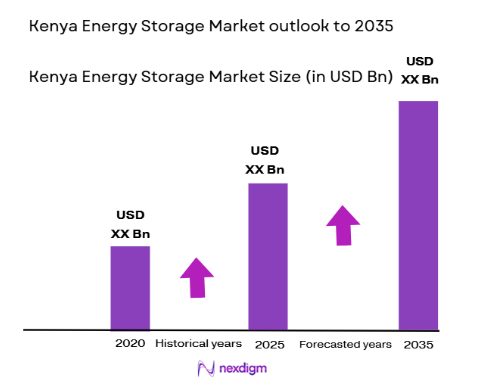
The Kenya Energy Storage Market is expected to reach a market size of USD ~ billion based on a recent historical assessment. The market is driven by the increasing adoption of renewable energy sources, especially solar power, and the need for energy storage solutions to support grid stability. With government initiatives and infrastructure investments focused on renewable energy, the market is witnessing steady growth. Technological advancements and falling costs of energy storage systems further fuel the market demand.
Kenya’s dominance in the energy storage market is driven by its strategic position within East Africa, its expanding renewable energy capacity, and significant government support for green energy projects. Nairobi, as the capital, is a focal point due to its robust infrastructure and technological adoption, while other regions benefit from off-grid solutions to reach remote areas. The government’s commitment to enhancing the energy sector and international collaborations are major contributors to the country’s leadership in the region.
Market Segmentation
By System Type:
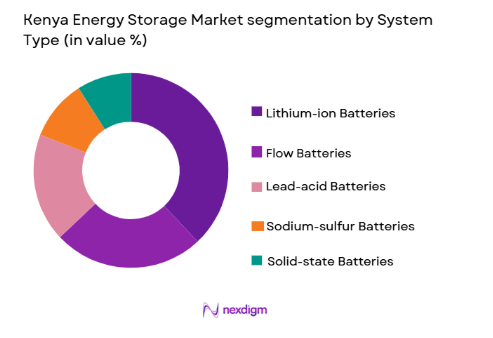
The Kenya Energy Storage Market is segmented by system type into lithium-ion batteries, flow batteries, lead-acid batteries, sodium-sulfur batteries, and solid-state batteries. Recently, lithium-ion batteries have dominated the market share due to factors such as demand patterns, brand presence, and consumer preference. Lithium-ion batteries are increasingly favored for their higher energy density, efficiency, and declining costs, making them suitable for both residential and commercial energy storage applications. The widespread adoption of electric vehicles (EVs) in Kenya has also contributed to the growing demand for lithium-ion batteries in the energy storage sector. As the technology matures, further cost reductions and improved performance are expected to enhance the appeal of lithium-ion batteries in the market.
By Platform Type:
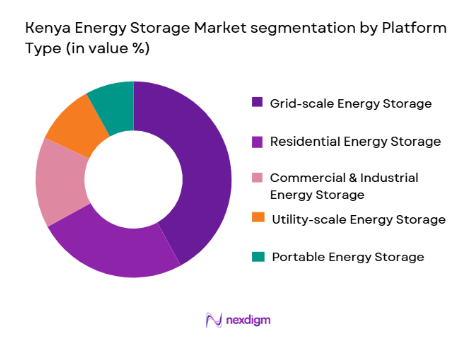
The Kenya Energy Storage Market is segmented by platform type into grid-scale energy storage, residential energy storage, commercial & industrial energy storage, utility-scale energy storage, and portable energy storage. Grid-scale energy storage has a dominant market share due to its ability to stabilize the grid by storing excess energy from renewable sources like solar. With increasing investments in renewable energy infrastructure, grid-scale storage systems have become essential to ensure reliable power delivery during periods of low generation. Furthermore, these systems are crucial for mitigating the intermittent nature of renewable energy generation, making them indispensable for Kenya’s energy landscape. As large-scale solar farms expand, grid-scale storage platforms are expected to maintain their dominance in the market.
Competitive Landscape
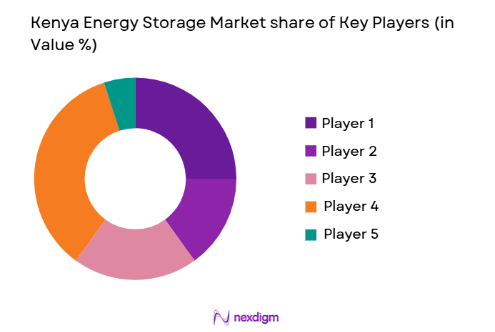
The competitive landscape of the Kenya Energy Storage Market is characterized by significant consolidation, with key players focusing on technological innovation and strategic collaborations. Major global companies dominate the market, while local players are establishing themselves through partnerships with international firms. As the demand for energy storage solutions increases, large-scale investments and the development of cutting-edge technologies are expected to fuel competition further.
| Company Name | Establishment Year | Headquarters | Technology Focus | Market Reach | Key Products | Revenue (USD) | Additional Parameter |
| Tesla | 2003 | USA | ~ | ~ | ~ | ~ | ~ |
| LG Chem | 1947 | South Korea | ~ | ~ | ~ | ~ | ~ |
| BYD | 1995 | China | ~ | ~ | ~ | ~ | ~ |
| Panasonic | 1918 | Japan | ~ | ~ | ~ | ~ | ~ |
| Saft | 1905 | France | ~ | ~ | ~ | ~ | ~ |
Kenya Energy Storage Market Analysis
Growth Drivers
Increase in Renewable Energy Adoption:
Kenya’s energy storage market is significantly driven by the increasing adoption of renewable energy, particularly solar power. As the country strives to diversify its energy sources, solar energy has become the leading renewable source, contributing to more than 90% of Kenya’s renewable energy generation. The government’s support through initiatives such as the Vision 2030 plan and its commitment to reducing carbon emissions have accelerated investments in renewable energy projects. The availability of abundant solar resources, combined with a push for energy independence, makes solar energy adoption economically viable. However, one major challenge in utilizing solar power lies in its intermittent nature. Energy storage solutions, especially batteries, provide a solution by storing excess energy generated during the day for use at night or during periods of low solar generation. This dual benefit—enhanced energy security and reduced reliance on fossil fuels—positions energy storage systems as a crucial part of Kenya’s energy strategy. As more solar energy is integrated into the grid, the demand for energy storage solutions continues to rise, thereby driving market growth.
Falling Battery Costs:
The reduction in the cost of energy storage systems, particularly lithium-ion batteries, has been a major growth driver for the Kenya energy storage market. Over the past decade, the cost of lithium-ion batteries has declined by over 80%, making energy storage systems more accessible to both consumers and businesses. This cost reduction is attributed to technological advancements in battery chemistry, economies of scale, and increased production capacity from key global players. In addition, the decline in manufacturing costs is complemented by advances in energy storage technologies that increase energy efficiency and extend battery life. With falling battery prices, the adoption of energy storage systems has become more affordable for various segments, including residential, commercial, and industrial users. This affordability is crucial in a developing country like Kenya, where cost considerations often influence technology adoption. The shift to more affordable energy storage solutions, combined with the growing focus on renewable energy, is expected to continue driving market growth in the years to come.
Market Challenges
High Initial Investment Costs:
Despite the declining prices of energy storage systems, the initial capital investment remains a significant barrier for both consumers and businesses in Kenya. The cost of installing energy storage systems, especially for large-scale infrastructure projects such as grid-scale energy storage, requires substantial financial resources. Many small and medium-sized enterprises (SMEs) in Kenya are unable to afford such high upfront costs, thus limiting the potential for widespread adoption of energy storage solutions. Even though the long-term benefits, such as reduced energy bills and increased energy security, may justify the investment, the lack of affordable financing options remains a critical challenge. Additionally, energy storage solutions typically have long payback periods, making them less attractive to potential investors who require quicker returns on investments. The Kenyan government’s efforts to provide subsidies and incentives to promote clean energy technologies, including energy storage, have not fully addressed this issue. As the market matures, finding ways to reduce initial capital expenditure, such as through financing mechanisms or technological advancements, will be essential for overcoming this challenge.
Regulatory and Policy Barriers:
While Kenya has made significant strides in developing its renewable energy sector, the regulatory and policy framework for energy storage systems remains underdeveloped. The lack of clear, comprehensive policies on energy storage deployment and grid integration has created uncertainty for both local and international investors. For instance, there are limited standards for energy storage system installations, which has led to inconsistent implementation and reduced confidence among stakeholders. Additionally, the regulatory framework governing energy storage systems is not yet fully aligned with the growing renewable energy market, resulting in bureaucratic hurdles that slow down the adoption of energy storage solutions. The government’s focus on promoting renewable energy generation without simultaneous development of storage regulations means that many renewable projects face challenges related to grid stability and power distribution. To unlock the full potential of energy storage systems, the government needs to implement more robust policies and regulatory frameworks that encourage storage deployment, integration, and investment in the long term.
Opportunities
Expansion in Off-grid Energy Solutions:
One of the key opportunities in Kenya’s energy storage market lies in the expansion of off-grid energy solutions. A significant portion of the Kenyan population, particularly in rural areas, lacks access to a reliable power supply. Off-grid energy solutions, including solar-powered systems with integrated energy storage, offer an ideal solution to address this issue. With the increasing availability of solar panels and battery storage systems, off-grid solutions are becoming more affordable and accessible. Energy storage enables consumers in remote areas to store surplus energy generated during the day for use at night, ensuring a stable electricity supply. Moreover, the Kenyan government’s support for rural electrification projects, combined with international development initiatives, provides a conducive environment for the growth of off-grid energy storage solutions. As off-grid energy solutions become more widespread, energy storage will be crucial for enhancing energy access, improving quality of life, and enabling sustainable development in underserved regions.
Collaborations with Electric Vehicle Market:
Another opportunity for the Kenya energy storage market lies in the growing electric vehicle (EV) market. With the rising popularity of electric vehicles in Kenya, the need for energy storage solutions to support EV charging infrastructure is becoming increasingly evident. Energy storage systems can help address the intermittent nature of renewable energy generation and provide a reliable power source for EV charging stations. By integrating battery storage with solar power systems, EV charging infrastructure can become more sustainable and less reliant on the national grid. Additionally, as Kenya is focusing on reducing emissions from the transportation sector, the shift towards electric vehicles presents an opportunity for energy storage providers to collaborate with EV manufacturers and charging infrastructure developers. By offering energy storage solutions that enhance the efficiency and sustainability of EV charging stations, energy storage companies can tap into this growing market while supporting Kenya’s clean energy goals.
Future Outlook
Over the next five years, the Kenya Energy Storage Market is expected to experience strong growth driven by the increasing adoption of renewable energy, falling storage costs, and expanding infrastructure. The government’s commitment to enhancing its energy security through clean energy projects and off-grid solutions will continue to stimulate demand. Technological innovations in battery chemistry and energy storage systems will further drive the market, enabling more cost-effective and efficient solutions. Additionally, favorable policies and incentives for energy storage systems will support market expansion, while increasing investments in both grid-scale and off-grid projects will ensure a steady rise in demand.
Major Players
- Tesla
- LG Chem
- BYD
- Panasonic
- Saft
- Vestas
- Siemens Gamesa
- AES Corporation
- Fluence
- Samsung SDI
- Sunverge
- Gridtential Energy
- Hitachi
- Kokam
- Energizer
Key Target Audience
- Investments and venture capitalist firms
- Government and regulatory bodies
- Energy producers
- Solar power companies
- Renewable energy developers
- Industrial and commercial enterprises
- Off-grid energy solution providers
- Utilities
Research Methodology
Step 1: Identification of Key Variables
Identify the key factors influencing the market, including demand drivers, barriers, technology trends, and competitive landscape.
Step 2: Market Analysis and Construction
Analyze market data, segmentations, and historical growth trends, constructing a clear market framework to understand the dynamics.
Step 3: Hypothesis Validation and Expert Consultation
Validate the findings through consultations with industry experts and stakeholders to ensure accuracy and relevance.
Step 4: Research Synthesis and Final Output
Synthesize research findings into a final comprehensive market report, ensuring all data points are cross-verified and aligned with market expectations.

- Executive Summary
- Research Methodology (Definitions, Scope, Industry Assumptions, Market Sizing Approach, Primary & Secondary Research Framework, Data Collection & Verification Protocol, Analytic Models & Forecast Methodology, Limitations & Research Validity Checks)

- Market Definition and Scope
- Value Chain & Stakeholder Ecosystem
- Regulatory / Certification Landscape
- Sector Dynamics Affecting Demand
- Strategic Initiatives & Infrastructure Growth

- Growth Drivers
Increase in Renewable Energy Adoption
Government Incentives for Clean Energy
Declining Battery Costs
Rising Energy Demand in Off-grid Areas
Technological Advancements in Battery Storage - Market Challenges
High Initial Investment Costs
Technological Limitations of Existing Systems
Regulatory and Policy Barriers
Limited Grid Infrastructure in Rural Areas
Lack of Awareness and Education on Energy Storage - Market Opportunities
Increasing Demand for Off-grid Energy Solutions
Collaborations with Renewable Energy Companies
Growing Interest in Electric Vehicle Charging Infrastructure - Trends
Integration of Energy Storage with Smart Grids
Rise of Battery-as-a-Service Models
Advancements in Battery Recycling Technologies
Adoption of Long-duration Storage Solutions
Increase in Energy Storage Project Investments - Government Regulations & Defense Policy
Regulatory Support for Energy Storage Systems
Policies Promoting Renewable Energy Integration
Incentives for Local Manufacturing of Storage Systems - SWOT Analysis
- Stakeholder and Ecosystem Analysis
- Porter’s Five Forces Analysis
- Competition Intensity and Ecosystem Mapping

- By Market Value, 2020-2025
- By Installed Units, 2020-2025
- By Average System Price, 2020-2025
- By System Complexity Tier, 2020-2025

- By System Type (In Value%)
Lithium-ion Batteries
Flow Batteries
Lead-acid Batteries
Sodium-sulfur Batteries
Solid-state Batteries - By Platform Type (In Value%)
Grid-scale Energy Storage
Residential Energy Storage
Commercial & Industrial Energy Storage
Utility-scale Energy Storage
Portable Energy Storage - By Fitment Type (In Value%)
On-grid Solutions
Off-grid Solutions
Hybrid Solutions
Modular Solutions
Integrated Solutions - By EndUser Segment (In Value%)
Utilities
Residential Consumers
Industrial Facilities
Government Projects
Commercial Enterprises - By Procurement Channel (In Value%)
Direct Procurement
Government Tenders
Private Sector Procurement
Online Bidding Platforms
Third-party Distributors - By Material / Technology (In Value%)
Lithium-ion Technology
Lead-acid Technology
Vanadium Technology
Zinc-bromine Technology
Sodium-ion Technology

- Market structure and competitive positioning
- Market share snapshot of major players
- CrossComparison Parameters (System Type, Platform Type, Procurement Channel, EndUser Segment, Fitment Type, Material / Technology, Geographical Reach, Pricing Strategies, Innovation Rate, Brand Reputation)
- SWOT Analysis of Key Players
- Pricing & Procurement Analysis
- Key Players
Sungrow Power Supply
Tesla
LG Chem
Saft
BYD
Panasonic
VARTA AG
CATL
Samsung SDI
AES Corporation
GE Renewable Energy
Siemens Energy
Fluence
TotalEnergies
E.ON

- Increased Focus on Renewable Energy Integration
- Rising Electricity Prices Driving Consumer Demand
- Government Initiatives for Rural Electrification
- Growing Commercial Sector Adoption of Storage Solutions

- Forecast Market Value, 2026-2035
- Forecast Installed Units, 2026-2035
- Price Forecast by System Tier, 2026-2035
- Future Demand by Platform, 2026-2035


 Request a Sample
 Ask for Customization
 Get a Quote
 Enquire Now