
 Download PDF
 Download PDF
Market Overview
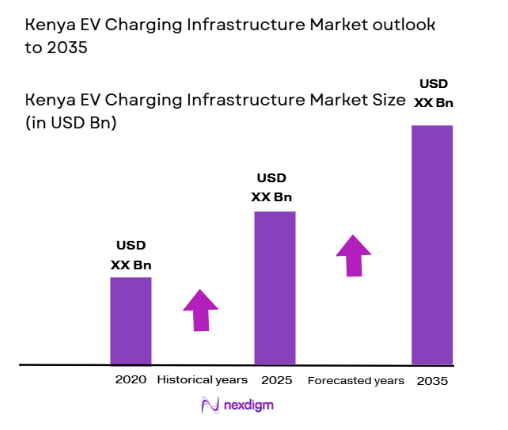
The Kenya Electric Vehicle (EV) Charging Infrastructure market is valued at approximately USD ~ billion, driven by the growth of electric vehicles, government policies promoting renewable energy, and an increasing shift towards sustainable transport solutions. The demand for EV charging stations is also being propelled by advancements in battery technology and the increased adoption of electric vehicles across the country. A key driver of this market is the governmental push for a cleaner environment and reduced emissions, backed by fiscal incentives and policy support. Additionally, urban areas such as Nairobi, Mombasa, and Kisumu are experiencing increased adoption of electric vehicles, further fueling the need for robust charging infrastructure.
The major cities contributing to the Kenya EV Charging Infrastructure market are Nairobi, Mombasa, and Kisumu. These cities are not only the largest urban centers but also have the highest number of electric vehicles on the road. Their dominance can be attributed to several factors, including better infrastructure, government incentives for electric vehicles, and a more supportive regulatory environment. Nairobi, being the capital, leads in terms of both policy-driven investments and private sector initiatives aimed at developing EV charging stations. In addition, increasing environmental awareness and the push for green energy solutions have made these cities the focal points for EV charging infrastructure investments.
Market Segmentation
By Product Type:
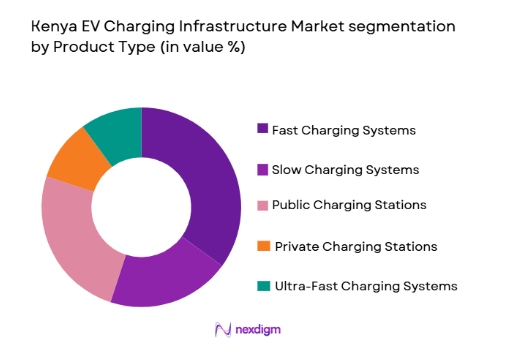
Kenya EV Charging Infrastructure market is segmented by product type into fast charging systems, slow charging systems, public charging stations, private charging stations, and ultra-fast charging systems. Recently, fast charging systems have dominated the market share due to their higher consumer demand, the increasing number of electric vehicles on the road, and the growing need for quicker and more efficient charging options. Fast charging systems are particularly favored by urban dwellers and businesses that require rapid turnaround times for EVs. This preference is also supported by the expansion of commercial and public charging networks that focus on providing fast, reliable, and widespread charging points for consumers.
By Platform Type:
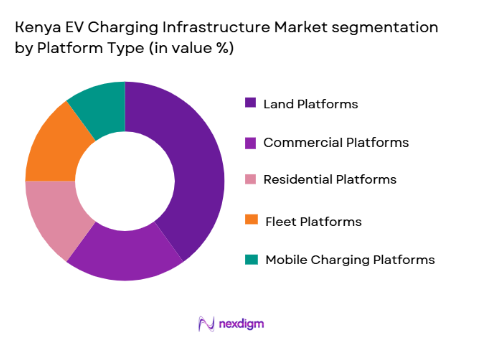
Kenya EV Charging Infrastructure market is segmented by platform type into land platforms, commercial platforms, residential platforms, fleet platforms, and mobile charging platforms. Land platforms are the dominant segment, mainly due to the development of EV charging stations along key urban roads, highways, and residential areas. Land platforms are also growing in response to the government’s initiatives to expand infrastructure in both private and public sectors. The increasing adoption of EVs in urban centers such as Nairobi and Mombasa, along with demand from commercial fleets, has driven growth in land-based platforms, which are strategically placed to cater to high-traffic areas and key business hubs.
Competitive Landscape
The competitive landscape of the Kenya EV Charging Infrastructure market is characterized by a mix of international and local players, with both the public and private sectors playing a significant role. The sector is experiencing consolidation as large players collaborate with the government to deploy charging infrastructure. The key players in this market are focusing on expanding their charging networks and improving charging speed and accessibility. Collaboration between automotive manufacturers, energy providers, and technology firms has also contributed to the development of efficient and innovative charging solutions.
| Company Name | Establishment Year | Headquarters | Technology Focus | Market Reach | Key Products | Revenue (USD) | Additional Parameter |
| Safaricom | 1997 | Nairobi, Kenya | ~ | ~ | ~ | ~ | ~ |
| Kenya Power | 1954 | Nairobi, Kenya | ~ | ~ | ~ | ~ | ~ |
| SolarTurtle | 2015 | Nairobi, Kenya | ~ | ~ | ~ | ~ | ~ |
| M-KOPA | 2011 | Nairobi, Kenya | ~ | ~ | ~ | ~ | ~ |
| Voltia | 2012 | Warsaw, Poland | ~ | ~ | ~ | ~ | ~ |
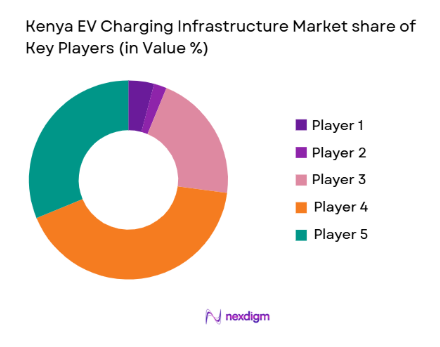
Kenya EV Charging Infrastructure Market Analysis
Growth Drivers
Government Support for Green Energy Transition:
Government policies in Kenya have significantly driven the demand for EV charging infrastructure. The government’s commitment to reducing carbon emissions through its Vision 2030 and the Energy Policy supports renewable energy initiatives, including EV adoption. These policies provide tax incentives and subsidies for electric vehicles, encouraging both consumers and businesses to transition to EVs. This, in turn, creates a higher demand for accessible charging stations across the country. Additionally, Kenya’s energy policies align with the global shift towards sustainability, fostering growth in EV infrastructure. The government’s funding and regulatory support have led to the establishment of a robust policy framework that ensures the development of charging stations across major cities and transportation corridors. As more investments pour into the renewable energy sector, Kenya is poised to enhance its electric vehicle infrastructure further.
Rising EV Adoption and Demand for Charging Stations:
The increasing adoption of electric vehicles in Kenya is one of the primary growth drivers for EV charging infrastructure. Consumers and businesses are becoming more inclined to invest in EVs, thanks to rising fuel prices, environmental concerns, and government incentives. Additionally, major automotive manufacturers are investing heavily in the electric vehicle market in Kenya, ensuring an influx of affordable EV models suitable for various consumer segments. This growth in EV sales directly translates into an increasing need for a widespread and efficient EV charging infrastructure. Moreover, as the demand for EVs expands, the need for fast and reliable charging stations will continue to rise, driving market growth. This trend is expected to continue as electric vehicles become more mainstream, particularly in urban areas like Nairobi, where demand for green transportation solutions is accelerating.
Market Challenges
High Initial Infrastructure Costs:
One of the most significant challenges faced by the Kenya EV charging infrastructure market is the high upfront cost of setting up charging stations. Despite the government’s support, private sector players often face financial barriers when establishing charging networks in less accessible areas. The installation of EV charging stations requires significant investment in hardware, land acquisition, and network integration, making it a capital-intensive process. Additionally, the high cost of electricity infrastructure and the need for continuous maintenance of charging units further complicate the financial viability of the infrastructure. These challenges make it difficult for smaller players to enter the market, limiting competition and slowing overall market growth. Overcoming these financial barriers will require a combination of public-private partnerships, international funding, and innovative financing models to ensure infrastructure expansion.
Lack of Standardization Across Charging Networks:
Another challenge hindering the growth of Kenya’s EV charging infrastructure is the lack of standardization across the existing charging networks. Different charging station operators in the market may use varying technologies and charging plugs, making it difficult for consumers to access charging stations across different locations. This inconsistency in charging standards creates confusion among consumers and hampers the ease of use for electric vehicle owners. Additionally, there is a need for greater collaboration between stakeholders, including government bodies, charging station providers, and car manufacturers, to establish universally compatible systems. Without standardization, the market will struggle to scale up, limiting the overall user experience and growth potential of EV charging infrastructure in Kenya.
Opportunities
Expansion of Charging Networks in Rural Areas:
There is a significant opportunity for expanding EV charging networks into rural and underserved areas of Kenya. While major cities like Nairobi and Mombasa are seeing an increase in electric vehicle adoption, the rural areas still have limited access to charging stations. Expanding charging infrastructure into these regions will not only support the growth of electric vehicles but also contribute to the sustainable development of Kenya’s energy sector. Rural electrification through solar-powered charging solutions presents a viable opportunity to serve communities where the grid infrastructure is either absent or unreliable. By providing accessible and affordable EV charging options in rural Kenya, stakeholders can drive both EV adoption and overall development in these areas.
Integration of Renewable Energy Sources with Charging Stations:
Another promising opportunity lies in integrating renewable energy sources, particularly solar power, with EV charging stations. Kenya is rich in solar energy potential, and combining solar power with electric vehicle charging can lead to a more sustainable and cost-effective infrastructure solution. Solar-powered charging stations can reduce the dependency on the national grid, lower operational costs, and help mitigate electricity supply challenges in certain regions. This will also align with Kenya’s long-term goals of reducing carbon emissions and achieving a greener, more sustainable transportation system. Stakeholders in the EV sector have a unique opportunity to capitalize on the country’s renewable energy resources and enhance the environmental benefits of EV adoption through solar-powered charging networks.
Future Outlook
The Kenya EV charging infrastructure market is expected to witness substantial growth over the next five years, driven by increasing electric vehicle adoption and government policies promoting renewable energy. The demand for charging stations will rise, especially in urban centers, supported by advancements in technology and increased investments in EV infrastructure. The growing emphasis on reducing carbon emissions and fostering a greener environment will continue to fuel the market’s expansion. As the country embraces the future of sustainable mobility, the market will witness a shift toward faster and more efficient charging solutions, integrating renewable energy sources to ensure cost-effective and eco-friendly options for consumers.
Major Players
- Safaricom
- Kenya Power
- SolarTurtle
- M-KOPA
- Voltia
- EkoRent
- ChargeNet
- Greenpark Group
- BasiGo
- BYD Auto
- EVgo
- Ecotact
- GreenTech Solutions
- Tesvolt
- Bosch
Key Target Audience
- Investments and venture capitalist firms
- Government and regulatory bodies
- Automobile manufacturers
- Energy providers and distributors
- EV fleet operators
- Public transportation agencies
- Real estate developers
- Infrastructure developers
Research Methodology
Step 1: Identification of Key Variables
The identification of key market variables such as infrastructure development, adoption rates, consumer behavior, and government policies.
Step 2: Market Analysis and Construction
Comprehensive analysis of the Kenya EV charging infrastructure market, including segmentation, technological advancements, and consumer preferences.
Step 3: Hypothesis Validation and Expert Consultation
Expert consultations and primary research through interviews with stakeholders in the EV and infrastructure sectors to validate hypotheses.
Step 4: Research Synthesis and Final Output
Consolidation of all research findings into actionable insights and the final report, ensuring accuracy and clarity.

- Executive Summary
- Research Methodology (Definitions, Scope, Industry Assumptions, Market Sizing Approach, Primary & Secondary Research Framework, Data Collection & Verification Protocol, Analytic Models & Forecast Methodology, Limitations & Research Validity Checks)

- Market Definition and Scope
- Value Chain & Stakeholder Ecosystem
- Regulatory / Certification Landscape
- Sector Dynamics Affecting Demand
- Strategic Initiatives & Infrastructure Growth

- Growth Drivers
Government Incentives for EV Charging Infrastructure
Increasing Demand for Electric Vehicles
Technological Advancements in Charging Technology
Government Policies on Environmental Sustainability
Urbanization and the Growth of Electric Transport - Market Challenges
High Initial Capital Investment
Limited Charging Infrastructure in Rural Areas
Lack of Standardization in Charging Systems
Interoperability Issues Between Charging Stations
Regulatory Challenges in Setting Up Charging Stations - Market Opportunities
Expansion of Charging Stations in Major Urban Centers
Integration of Renewable Energy with Charging Systems
Development of Ultra-fast Charging Networks - Trends
Adoption of Smart Charging Solutions
Increase in Public-Private Partnerships for Infrastructure
Growth of Electric Public Transport Networks
Focus on Solar-powered Charging Solutions
Advancements in Autonomous EV Charging - Government Regulations & Defense Policy
Government Subsidies for EV Charging Infrastructure
Regulations on Emission Reduction Targets
Policy Incentives for Charging Stations in Urban Areas - SWOT Analysis
- Stakeholder and Ecosystem Analysis
- Porter’s Five Forces Analysis
- Competition Intensity and Ecosystem Mapping

- By Market Value, 2020-2025
- By Installed Units, 2020-2025
- By Average System Price, 2020-2025
- By System Complexity Tier, 2020-2025

- By System Type (In Value%)
Fast Charging Systems
Slow Charging Systems
Public Charging Stations
Private Charging Stations
Ultra-fast Charging Systems - By Platform Type (In Value%)
Land Platforms
Commercial Platforms
Residential Platforms
Fleet Platforms
Mobile Charging Platforms - By Fitment Type (In Value%)
On-grid Charging Solutions
Off-grid Charging Solutions
Hybrid Charging Solutions
Integrated Charging Solutions
Modular Charging Solutions - By EndUser Segment (In Value%)
Electric Vehicle Owners
Fleet Operators
Public Transport Agencies
Private Sector Enterprises
Government Agencies - By Procurement Channel (In Value%)
Direct Procurement
Government Tenders
Private Sector Procurement
Online Bidding Platforms
Third-party Distributors - By Material / Technology (in Value%)
Lithium-Ion Batteries
Solar-powered Charging Solutions
Smart Grid Technologies
Wireless Charging Systems
Battery Management Systems

- Market structure and competitive positioning
- Market share snapshot of major players
- CrossComparison Parameters (System Type, Platform Type, Procurement Channel, EndUser Segment, Fitment Type, Material/Technology, Region, Pricing Strategy, Product Innovation, Customer Base)
- SWOT Analysis of Key Players
- Pricing & Procurement Analysis
- Key Players
Safaricom
Kenya Power and Lighting Company
EkoRent
SolarNow
KPLC
Olkaria Geothermal Power
Greenpark Group
M-KOPA
ChargeNet
Kenya Electric Vehicles
SolarTurtle
Voltia
BMW Group
BYD Auto
Tesla

- Increased Adoption of Electric Vehicles in Urban Areas
- Growth in Fleet Operators Switching to Electric
- Government Agencies Promoting Sustainable Transport
- Private Sector Investment in Charging Infrastructure

- Forecast Market Value, 2026-2035
- Forecast Installed Units, 2026-2035
- Price Forecast by System Tier, 2026-2035
- Future Demand by Platform, 2026-2035


 Request a Sample
 Ask for Customization
 Get a Quote
 Enquire Now