
 Download PDF
 Download PDF
Market Overview
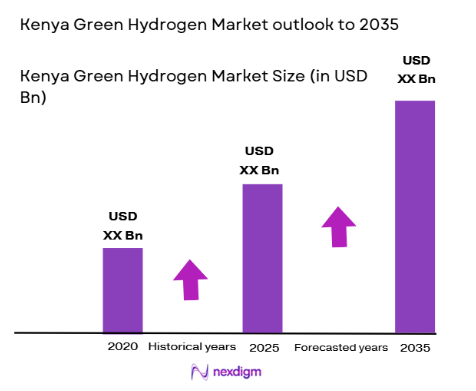
The Kenya Green Hydrogen market is expected to reach a substantial size, driven by the growing emphasis on sustainable energy solutions in the region. The market is primarily influenced by the increasing adoption of renewable energy sources, government initiatives supporting clean energy, and global commitments to reducing carbon emissions. The total market value is projected to be in the billions of USD, supported by the rising demand for green hydrogen in industrial applications and transportation. Additionally, the country’s natural resources, including abundant solar and wind energy, facilitate the production of green hydrogen, propelling the market’s growth.
Kenya, along with several other East African nations, is emerging as a leader in the green hydrogen space. The country’s strategic location near major trade routes, along with its favorable climate for renewable energy production, makes it an attractive destination for investment in green hydrogen projects. Nairobi, Mombasa, and Kisumu are among the dominant cities driving the growth of the green hydrogen sector, owing to their well-established infrastructure and proximity to key energy production zones. The government’s push for cleaner energy solutions further strengthens the country’s position as a regional leader in the green hydrogen market.
Market Segmentation
By Product Type:
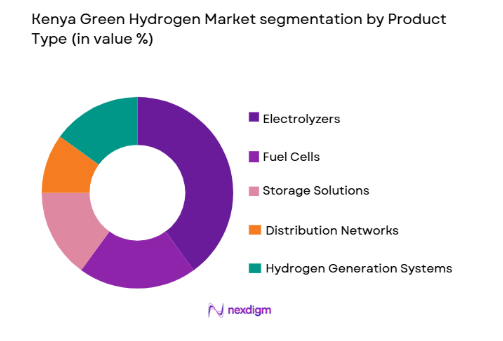
Kenya Green Hydrogen market is segmented by product type into electrolyzers, fuel cells, storage solutions, distribution networks, and hydrogen generation systems. Recently, electrolyzers have a dominant market share due to factors such as demand for efficient hydrogen production, growing technological advancements, and investments in green energy infrastructure. The increasing need for large-scale hydrogen production to support various industries has made electrolyzers the preferred solution. Furthermore, the accessibility of renewable energy sources like wind and solar in Kenya plays a significant role in this trend.
By End User:
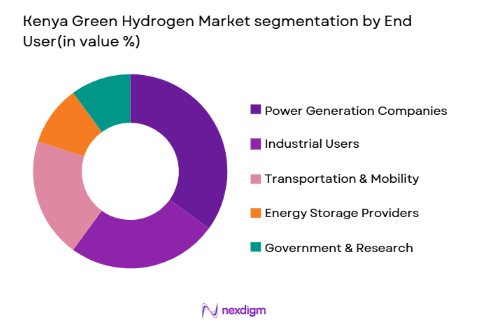
Kenya Green Hydrogen market is segmented by end user into power generation companies, industrial users, transportation and mobility companies, energy storage providers, and government & research institutions. Power generation companies hold a dominant market share due to the growing need for clean energy generation and the country’s commitment to transitioning away from fossil fuels. As Kenya aims to meet its clean energy goals, power generation firms are increasingly adopting green hydrogen to complement their renewable energy sources, leading to a higher market share.
Competitive Landscape
The competitive landscape of the Kenya Green Hydrogen market is highly dynamic, with a mixture of global energy companies and regional players aiming to capitalize on the growing demand for clean energy solutions. The market is witnessing increasing consolidation as large corporations enter the green hydrogen space, aiming to establish a foothold in Kenya. These major players are focusing on strategic partnerships, advanced technologies, and the scaling of renewable energy production to meet the market demand. Their influence in the market is shaping the future direction of the industry.
| Company Name | Establishment Year | Headquarters | Technology Focus | Market Reach | Key Products | Revenue (USD Billion) |
| Kenya Power and Lighting | 1922 | Nairobi, Kenya | ~ | ~ | ~ | ~ |
| KenGen | 1954 | Nairobi, Kenya | ~ | ~ | ~ | ~ |
| Siemens Energy | 2020 | Munich, Germany | ~ | ~ | ~ | ~ |
| Air Liquide | 1902 | Paris, France | ~ | ~ | ~ | ~ |
| Shell | 1907 | The Hague, Netherlands | ~ | ~ | ~ | ~ |
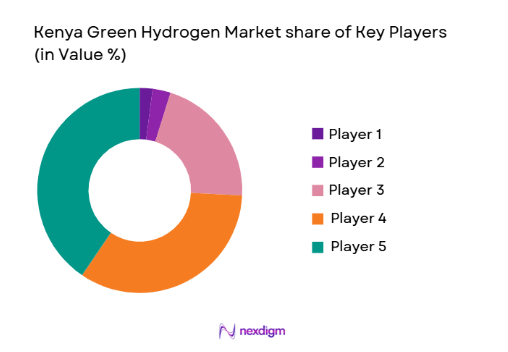
Kenya Green Hydrogen Market Analysis
Growth Drivers
Government Initiatives and Policy Support:
Government initiatives play a pivotal role in the growth of the Kenya Green Hydrogen market. The Kenyan government has shown a strong commitment to promoting renewable energy through various policies, regulations, and strategic plans aimed at fostering a clean energy future. The National Energy Policy and the Kenya Green Energy Strategy focus on reducing greenhouse gas emissions, supporting the shift to sustainable energy sources, and integrating green hydrogen into the national grid. These initiatives provide incentives for private-sector investment and create a favorable environment for green hydrogen development, making it a key driver of market growth. Additionally, the government’s target of reducing dependency on fossil fuels further bolsters the demand for hydrogen as a cleaner alternative energy source.
Technological Advancements in Hydrogen Production:
Another critical growth driver for the Kenya Green Hydrogen market is technological advancements in hydrogen production, particularly electrolyzer technology. Electrolyzers are essential for the green hydrogen production process, and as technology continues to improve, they are becoming more efficient and cost-effective. This reduction in production costs, coupled with Kenya’s vast renewable energy resources, has created an ideal environment for the mass adoption of green hydrogen. Furthermore, global advancements in electrolysis techniques, such as proton exchange membrane (PEM) and alkaline electrolysis, are making it increasingly feasible for countries like Kenya to scale up production. The improved efficiency and lower operational costs are significant factors that are driving the green hydrogen market in Kenya.
Market Challenges
High Capital Investment and Infrastructure Development:
One of the primary challenges facing the Kenya Green Hydrogen market is the high capital investment required to establish the necessary infrastructure for hydrogen production, storage, and distribution. The development of hydrogen production plants and the associated infrastructure is capital-intensive, which poses a barrier for new entrants and smaller companies in the market. The cost of purchasing and installing electrolyzers and setting up distribution networks further contributes to the financial burden. Despite the long-term benefits of green hydrogen, the initial investment required to build the infrastructure and ensure operational efficiency remains a significant challenge in Kenya.
Technological Barriers and Skill Shortages:
The rapid technological advancements in hydrogen production have also presented challenges, particularly in terms of integrating these technologies into existing infrastructure. Kenya lacks a highly skilled workforce capable of implementing and maintaining the latest hydrogen production technologies, creating a skill gap in the market. Moreover, the availability of cost-effective technologies that can scale up to meet growing demand for green hydrogen in various industries is still limited. Overcoming these technological barriers and addressing the shortage of skilled labor is essential for accelerating the growth of the green hydrogen sector in Kenya.
Opportunities
Strategic Partnerships and Collaborations:
A significant opportunity in the Kenya Green Hydrogen market is the potential for strategic partnerships and collaborations between local and international players. These partnerships can provide access to advanced technologies, financial resources, and expertise that will help in the large-scale development of the green hydrogen sector. International firms with established experience in hydrogen production can collaborate with local companies to leverage Kenya’s renewable energy resources, facilitating faster adoption and integration of hydrogen technologies. Such collaborations will also help in overcoming infrastructure challenges and accelerating market expansion.
Expansion of Renewable Energy Infrastructure:
The ongoing expansion of renewable energy infrastructure in Kenya presents a substantial opportunity for the green hydrogen market. With abundant resources in solar and wind energy, Kenya has the potential to become a leading producer of green hydrogen, especially for export. As the government and private sector continue to invest in renewable energy projects, there will be a corresponding increase in hydrogen production. This expansion is expected to drive the growth of green hydrogen, not only for domestic consumption but also for export to international markets, as global demand for clean energy solutions continues to rise.
Future Outlook
The future outlook for the Kenya Green Hydrogen market is promising, with expected growth driven by continued investments in renewable energy infrastructure, technological advancements, and favorable government policies. Over the next five years, the market is likely to witness significant expansion, with more players entering the market and scaling up production capabilities. The increasing global focus on reducing carbon emissions will further drive demand for clean energy solutions, positioning Kenya as a regional leader in green hydrogen production. Technological innovations in electrolyzers and storage solutions will continue to reduce production costs, making green hydrogen more accessible for industrial and power generation applications. Regulatory support and international partnerships are also expected to play a critical role in the market’s growth.
Major Players
- Kenya Power and Lighting Company
- KenGen
- Siemens Energy
- Air Liquide
- Shell
- Linde
- Uniper
- Green Hydrogen Systems
- Vestas
- HyGear
- Plug Power
- Ballard Power Systems
- Nel ASA
- Mitsubishi Power
- General Electric
Key Target Audience
- Investments and venture capitalist firms
- Government and regulatory bodies
- Energy utilities and developers
- Industrial manufacturers
- Power generation companies
- Energy storage companies
- Research and development organizations
- Environmental agencies
Research Methodology
Step 1: Identification of Key Variables
In this step, the key variables that influence the green hydrogen market in Kenya are identified, including market drivers, challenges, technology adoption, and regulatory frameworks.
Step 2: Market Analysis and Construction
A comprehensive analysis of market trends, segmentation, and the competitive landscape is conducted. Data is gathered from primary and secondary sources to build a robust market model.
Step 3: Hypothesis Validation and Expert Consultation
Hypotheses regarding market growth and barriers are validated through expert consultations and interviews with industry stakeholders, ensuring accuracy and reliability.
Step 4: Research Synthesis and Final Output
The findings from market analysis and expert inputs are synthesized into a comprehensive report, providing actionable insights into the Kenya Green Hydrogen market.

- Executive Summary
- Research Methodology (Definitions, Scope, Industry Assumptions, Market Sizing Approach, Primary & Secondary Research Framework, Data Collection & Verification Protocol, Analytic Models & Forecast Methodology, Limitations & Research Validity Checks)

- Market Definition and Scope
- Value Chain & Stakeholder Ecosystem
- Regulatory / Certification Landscape
- Sector Dynamics Affecting Demand
- Strategic Initiatives & Infrastructure Growth

- Growth Drivers
Government Incentives for Clean Energy
Expansion of Renewable Energy Infrastructure
Private Sector Investments in Green Technologies
Advancements in Electrolyzer Efficiency
Global Demand for Sustainable Hydrogen - Market Challenges
High Initial Capital Investment
Lack of Domestic Infrastructure
Technological Barriers in Large-scale Hydrogen Production
Energy Transmission & Distribution Issues
Limited Skilled Workforce in Emerging Technologies - Market Opportunities
Expansion of Hydrogen Transportation Infrastructure
Increasing Demand for Clean Mobility Solutions
Strategic Partnerships for Research & Development - Trends
Growth in Green Hydrogen for Heavy Industry
Advancements in Hydrogen Storage Solutions
Investment in Clean Energy Startups
Increased Research in Hydrogen Fuel Cell Vehicles
Emerging Hydrogen Economy in East Africa - Government Regulations & Defense Policy
Government Policies Supporting Green Hydrogen
Regulations on Hydrogen Safety Standards
International Trade Agreements on Hydrogen Export - SWOT Analysis
- Stakeholder and Ecosystem Analysis
- Porter’s Five Forces Analysis
- Competition Intensity and Ecosystem Mapping

- By Market Value, 2020-2025
- By Installed Units, 2020-2025
- By Average System Price, 2020-2025
- By System Complexity Tier, 2020-2025

- By System Type (In Value%)
Electrolyzers
Fuel Cells
Storage Solutions
Distribution Networks
Hydrogen Generation Systems - By Platform Type (In Value%)
Land-based Platforms
Transportation Platforms
Industrial Platforms
Energy Generation Platforms
Storage Platforms - By Fitment Type (In Value%)
On-site Solutions
Off-site Solutions
Modular Solutions
Hybrid Solutions
Integrated Solutions - By EndUser Segment (In Value%)
Power Generation Companies
Industrial Users
Transportation & Mobility Companies
Energy Storage Providers
Government & Research Institutions - By Procurement Channel (In Value%)
Direct Procurement
Government Tenders
Private Sector Procurement
Partnerships with Tech Firms
Third-party Distributors - By Material / Technology (in Value%)
Electrolyte Materials
Membranes
Catalysts
Energy Storage Materials
Renewable Energy Technologies

- Market structure and competitive positioning
- Market share snapshot of major players
- CrossComparison Parameters (System Type, Platform Type, Procurement Channel, EndUser Segment, Fitment Type, Material/Technology, Market Value, Installed Units, System Complexity Tier, Average System Price)
- SWOT Analysis of Key Players
- Pricing & Procurement Analysis
- Key Players
Kenya Power and Lighting Company
KenGen
Ola Energy
BASF
Siemens Energy
Shell
Nel ASA
Green Hydrogen Systems
Vestas
HyGear
Air Liquide
Plug Power
Linde
Uniper
ENGIE

- Government Initiatives to Promote Green Hydrogen
- Increasing Corporate Sustainability Goals
- Large Industrial Players Adopting Clean Technologies
- Expanding Demand for Zero-emission Technologies

- Forecast Market Value, 2026-2035
- Forecast Installed Units, 2026-2035
- Price Forecast by System Tier, 2026-2035
- Future Demand by Platform, 2026-2035


 Request a Sample
 Ask for Customization
 Get a Quote
 Enquire Now