

 Download PDF
Market Overview
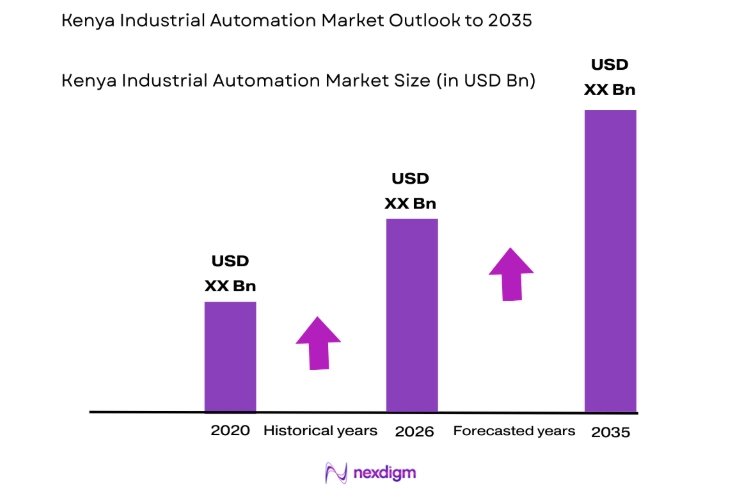
The Kenya Industrial Automation market is valued at approximately USD ~ billion based on a recent historical assessment, driven by the growing adoption of automation technologies across manufacturing, agriculture, and energy sectors. The market’s growth is fueled by the increasing demand for efficiency, safety, and cost reduction, coupled with technological advancements in robotics, artificial intelligence (AI), and industrial IoT. The integration of automation solutions in industries is enhancing operational capabilities, which in turn contributes to overall productivity and sustainability.
The key cities driving the industrial automation market in Kenya include Nairobi, Mombasa, and Kisumu. Nairobi, being the capital, is the primary hub for innovation and industrial activity, hosting a variety of sectors including manufacturing, agriculture, and services. Mombasa, with its strategic port, facilitates trade and logistics, promoting automation in supply chain management. Kisumu, located in a growing industrial zone, is becoming an emerging center for manufacturing and agricultural automation, further contributing to the country’s industrial automation landscape.
Market Segmentation
By Product Type
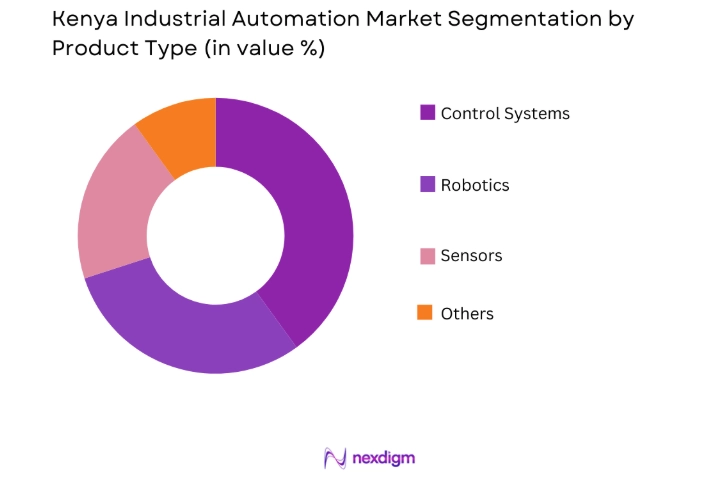
The Kenya Industrial Automation market is segmented by product type into robotics, sensors, control systems, and others. Recently, control systems have dominated the market share due to their pivotal role in regulating industrial processes. These systems help in managing machinery and production lines with high efficiency, ensuring consistency and accuracy in operations. As industries in Kenya, especially in manufacturing and energy, increasingly focus on optimizing productivity and reducing downtime, control systems have become essential. Their ability to integrate seamlessly with other automation technologies makes them the cornerstone of industrial automation solutions in the country.
By Application Type
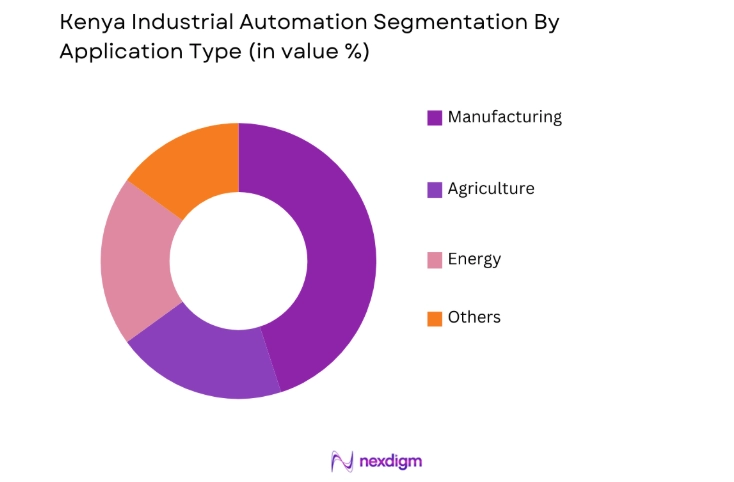
The Kenya Industrial Automation market is also segmented by application type into manufacturing, agriculture, energy, and others. Manufacturing holds the largest market share as automation plays a crucial role in streamlining production processes, improving quality, and enhancing output. The Kenyan manufacturing sector, including automotive, electronics, and textiles, has increasingly adopted automation technologies to meet global standards and drive efficiency. Automation in manufacturing helps reduce labor costs, improve product quality, and optimize supply chain management, making it the most significant application in the market.
Competitive Landscape
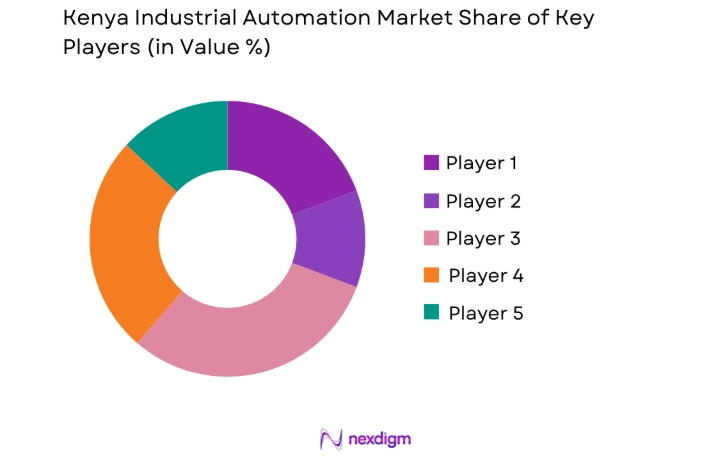
The competitive landscape of the Kenya Industrial Automation market is characterized by the presence of both global players and local innovators. Large multinational corporations are leading the market by offering advanced automation solutions across various industries. However, local companies are also making strides in automation, particularly in agricultural and manufacturing sectors, with a focus on affordable, customized solutions. As the market continues to expand, consolidation is likely, with more collaborations and strategic alliances between international companies and local firms to leverage technological advancements and expand market reach.
| Company Name | Establishment Year | Headquarters | Technology Focus | Market Reach | Key Products | Revenue | Industry-Specific Focus |
| Siemens AG | 1847 | Munich, Germany | ~ | ~ | ~ | ~ | ~ |
| Schneider Electric | 1836 | Rueil-Malmaison, France | ~ | ~ | ~ | ~ | ~ |
| Rockwell Automation | 1903 | Milwaukee, USA | ~ | ~ | ~ | ~ | ~ |
| ABB | 1988 | Zurich, Switzerland | ~ | ~ | ~ | ~ | ~ |
| Honeywell | 1906 | Charlotte, USA | ~ | ~ | ~ | ~ | ~ |
Kenya Industrial Automation Market Analysis
Growth Drivers
Technological Advancements in Robotics
The Kenya Industrial Automation market is significantly driven by the advancements in robotics technology. Robotics, particularly in manufacturing and agriculture, is revolutionizing productivity by automating repetitive tasks, reducing human error, and improving safety. The demand for robotic solutions in Kenya’s industrial sectors has grown, especially in assembly lines, packaging, and material handling, due to their ability to enhance efficiency and minimize operational costs. Robotics in agriculture has also gained traction, with automated systems being used for tasks like planting, harvesting, and irrigation management, thus improving crop yields and labor productivity. As robotics technology continues to evolve and become more affordable, industries in Kenya are increasingly adopting these solutions to remain competitive in the global market.
Growth of Industrial IoT and Data Analytics
The integration of Industrial IoT (IIoT) is another key driver for the growth of the Kenya Industrial Automation market. The IIoT allows industries to connect devices and sensors across the entire production line, providing real-time data and insights that enhance operational efficiency. In sectors such as manufacturing, energy, and agriculture, IIoT enables predictive maintenance, optimized resource usage, and improved supply chain management. The use of data analytics in tandem with IIoT systems allows companies to make informed decisions, reducing downtime and enhancing overall performance. As Kenya’s industrial sectors continue to modernize, the adoption of IIoT technologies will further fuel the demand for automation solutions, driving market growth.
Market Challenges
High Initial Investment and Infrastructure Requirements
One of the major challenges facing the Kenya Industrial Automation market is the high initial investment required to implement automation systems. These systems require advanced technologies, infrastructure, and skilled labor, which can be a significant barrier for small and medium-sized enterprises (SMEs). The upfront cost of robotics, control systems, and sensor networks, along with the expenses associated with setting up automation infrastructure, can be prohibitive for many businesses in Kenya. Although automation offers long-term cost savings, the initial financial burden remains a challenge, particularly for SMEs in industries like manufacturing and agriculture that are still in the early stages of adopting automation technologies.
Lack of Skilled Workforce
The lack of a skilled workforce in automation and robotics is another challenge facing the Kenyan market. As industrial automation technologies advance, the demand for professionals with expertise in robotics, industrial control systems, and data analytics is growing. However, the current labor market in Kenya does not always meet the demand for skilled workers, creating a skills gap in key sectors such as manufacturing, energy, and agriculture. The need for specialized training programs and education in automation-related fields is essential for addressing this challenge. Without an adequately trained workforce, industries may struggle to fully implement and benefit from automation technologies, hindering market growth.
Opportunities
Expansion of the Manufacturing Sector
The continued growth of the manufacturing sector in Kenya presents significant opportunities for the industrial automation market. As the country focuses on industrialization under initiatives like “Kenya Vision 2030,” there is increasing demand for automation solutions to improve production efficiency, product quality, and safety in various manufacturing industries such as automotive, food processing, and textiles. Automation technologies such as robotics, control systems, and industrial IoT are being adopted to streamline processes and reduce labor costs. The government’s emphasis on creating a more competitive manufacturing environment provides a favorable landscape for the growth of the industrial automation market, particularly in sectors looking to scale production and meet international standards.
Adoption of Automation in Agriculture
The adoption of industrial automation in Kenya’s agricultural sector presents a promising opportunity for market expansion. With the rising demand for food production and the challenges of labor shortages in agriculture, automation technologies offer solutions to improve crop yields, reduce waste, and increase efficiency. Automated systems for irrigation, planting, harvesting, and sorting are gaining popularity, especially in large-scale farming operations. As the government continues to focus on modernizing agriculture and improving food security, the demand for automation in agriculture will grow, providing a substantial market opportunity for automation providers in Kenya.
Future Outlook
Over the next five years, the Kenya Industrial Automation market is expected to experience significant growth, driven by advancements in robotics, IIoT, and automation technologies. The manufacturing, agriculture, and energy sectors will continue to be key adopters of automation solutions, fueled by the need for increased productivity, cost reduction, and competitiveness. Additionally, the Kenyan government’s continued support for industrialization and infrastructure development will create favorable conditions for the adoption of automation technologies. As the country progresses towards its vision of becoming a middle-income industrialized economy, the market for industrial automation will expand, with increasing demand for more advanced and cost-effective solutions.
Major Players
- Siemens AG
- Schneider Electric
- Rockwell Automation
- ABB
- Honeywell
- Mitsubishi Electric
- Emerson Electric
- Yokogawa Electric
- Bosch Rexroth
- Fanuc Corporation
- Omron Corporation
- KUKA AG
- GE Digital
- Endress+Hauser
- B&R Industrial Automation
Key Target Audience
- Investments and venture capitalist firms
- Government and regulatory bodies
- Manufacturing companies
- Agricultural firms
- Energy providers
- Industrial equipment suppliers
- Automation technology developers
Research Methodology
Step 1: Identification of Key Variables
Identify key variables, including technological trends, industrial growth drivers, and demand patterns across key sectors like manufacturing, agriculture, and energy.
Step 2: Market Analysis and Construction
Analyze historical data, current trends, and future forecasts to construct a comprehensive model of the Kenya Industrial Automation market.
Step 3: Hypothesis Validation and Expert Consultation
Consult with industry experts, government bodies, and key market players to validate the research hypotheses and ensure the findings are accurate.
Step 4: Research Synthesis and Final Output
Synthesize the findings into a detailed report that includes actionable insights, strategic recommendations, and market forecasts for stakeholders.

- Executive Summary
- Research Methodology (Definitions, Scope, Industry Assumptions, Market Sizing Approach, Primary & Secondary Research Framework, Data Collection & Verification Protocol, Analytic Models & Forecast Methodology, Limitations & Research Validity Checks)

- Market Definition and Scope
- Value Chain & Stakeholder Ecosystem
- Regulatory / Certification Landscape
- Sector Dynamics Affecting Demand

- Growth Drivers
Government initiatives in automation
Increasing demand for energy-efficient systems
Rise of smart manufacturing practices - Market Challenges
High initial cost of automation technologies
Skilled workforce shortage
Integration issues with legacy systems - Market Opportunities
Advancements in AI and machine learning for automation
Growth in the automotive sector
Increased investment in smart factories - Trends
Rise in adoption of Industry 4.0 technologies
Emergence of collaborative robots (cobots) - Government Regulations
Compliance with international automation standards
Environmental regulations impacting industrial automation
Government incentives for automation adoption - SWOT Analysis
- Porter’s Five Forces

- By Market Value, 2020-2025
- By Installed Units, 2020-2025
- By Average System Price, 2020-2025
- By System Complexity Tier, 2020-2025

- By System Type (In Value%)
Robotic Systems
Control Systems
Automation Software
Sensors
Drives & Motors - By Platform Type (In Value%)
On-premise Platforms
Cloud-based Platforms
Hybrid Platforms
Edge Computing Platforms - By Fitment Type (In Value%)
Standard Fitment
Custom Fitment
Integrated Fitment
Modular Fitment - By End User Segment (In Value%)
Manufacturing
Energy & Utilities
Automotive
Food & Beverages

- Market Share Analysis
- Cross Comparison Parameters (System Type, Platform Type, End User Segment, Technology Integration, Price, Demand Growth, Market Penetration)
- SWOT Analysis of Key Competitors
- Pricing & Procurement Analysis
- Key Players
Siemens AG
Rockwell Automation
Schneider Electric
Honeywell
ABB Ltd.
Mitsubishi Electric
Emerson Electric
Yokogawa Electric Corporation
Fanuc Corporation
KUKA AG
Beckhoff Automation
Bosch Rexroth AG
Omron Corporation
Panasonic Corporation
Rexroth

- Manufacturers’ increasing reliance on automated systems
- Energy and utility sector’s push for automation
- Automotive industry driving automation adoption
- Growing demand from the food and beverage sector

- Forecast Market Value, 2026-2035
- Forecast Installed Units, 2026-2035
- Price Forecast by System Tier, 2026-2035
- Future Demand by Platform, 2026-2035


 Request a Sample
 Ask for Customization
 Get a Quote
 Enquire Now