

 Download PDF
 Download PDF
Market Overview
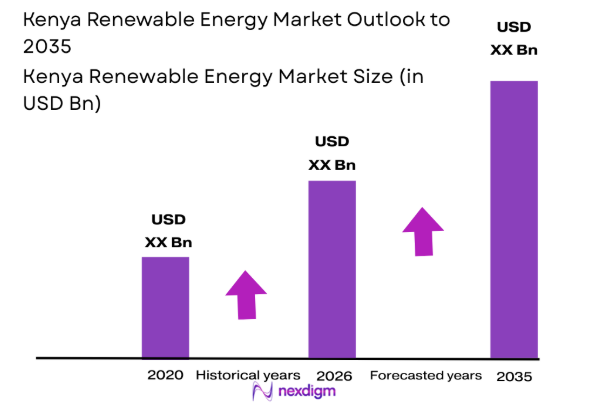
The Kenya Renewable Energy market is valued at USD ~ billion, driven by government investments, policy support, and growing demand for clean energy solutions. With an increasing focus on reducing dependence on traditional fossil fuels, both the private and public sectors have shown heightened interest in developing renewable energy infrastructures. Technological advancements in solar, wind, and geothermal power generation have significantly contributed to the market’s growth. Additionally, Kenya’s strategic geographic location and abundant natural resources support the expansion of clean energy projects, which further boost the market’s value.
The dominant regions in Kenya’s renewable energy market are Nairobi, Mombasa, and Kisumu. Nairobi, as the capital, serves as a central hub for policy development and financing initiatives. Mombasa, with its access to the coast, plays a pivotal role in supporting offshore wind and solar power projects. Kisumu is strategically positioned to develop geothermal energy resources due to its proximity to the East African Rift System. These cities benefit from both governmental and private sector investments, making them key players in Kenya’s renewable energy landscape.
Market Segmentation
By Product Type
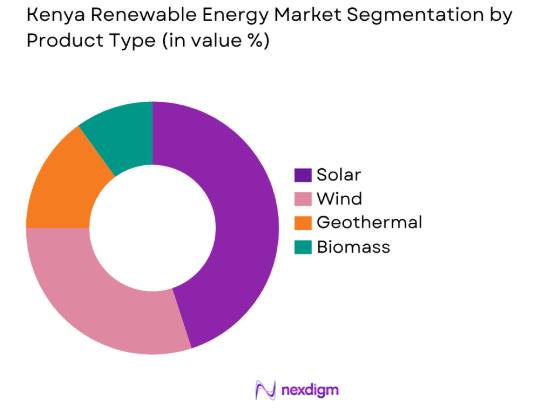
The Kenyan renewable energy market is segmented by product type into solar, wind, geothermal, and biomass systems. Recently, solar energy systems have seen a significant market share due to factors such as affordable pricing, government incentives, and the rise of off-grid solutions. As a clean, reliable, and increasingly cost-effective energy source, solar systems are favored in both urban and rural areas for their scalability and ease of installation. This trend is supported by large-scale solar farms and small home solar solutions that meet the energy needs of diverse users.
By Platform Type
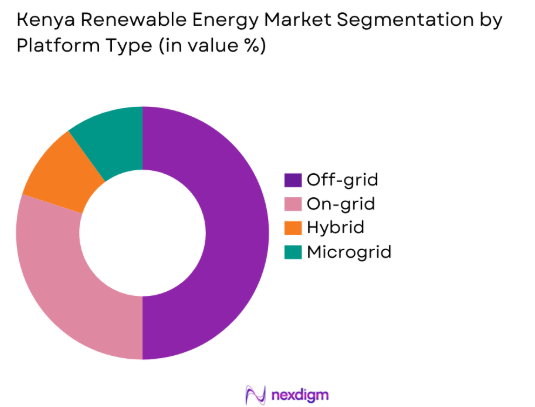
The Kenya renewable energy market is segmented by platform type into on-grid, off-grid, hybrid, and microgrid systems. Off-grid systems, especially solar-based, dominate the market due to the growing need for rural electrification. These solutions are designed to serve remote areas that are not connected to the main power grid, making them crucial for Kenya’s energy expansion efforts. Moreover, off-grid systems are growing in popularity due to declining costs and advancements in battery storage technology, allowing for reliable energy storage and consistent power supply.
Competitive Landscape
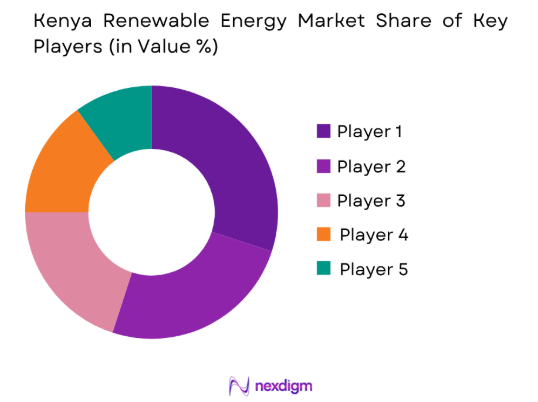
The competitive landscape of Kenya’s renewable energy market is characterized by a mix of local and international players who are working towards driving the adoption of clean energy solutions. The market is highly fragmented, with significant opportunities for consolidation, especially as renewable energy becomes increasingly integrated into the national grid and infrastructure projects. Several international companies have established partnerships with local firms, further boosting innovation and market reach.
| Company Name | Establishment Year | Headquarters | Technology Focus | Market Reach | Key Products | Revenue (USD) | Additional Parameter |
| KenGen | 1997 | Nairobi, Kenya | ~ | ~ | ~ | ~ | ~ |
| M-KOPA | 2011 | Nairobi, Kenya | ~ | ~ | ~ | ~ | ~ |
| First Solar | 1999 | Arizona, USA | ~ | ~ | ~ | ~ | ~ |
| Siemens Gamesa | 1976 | Zamudio, Spain | ~ | ~ | ~ | ~ | ~ |
| BBOXX | 2010 | Nairobi, Kenya | ~ | ~ | ~ | ~ | ~ |
Kenya Renewable Energy Market Analysis
Growth Drivers
Government Support and Policy Initiatives
The growth of Kenya’s renewable energy market is significantly driven by government policies aimed at reducing the nation’s dependence on fossil fuels. The government’s commitment to achieving clean energy targets through initiatives such as the Renewable Energy Feed-in Tariff (REFIT) has encouraged investments in solar, wind, and geothermal energy. Incentives such as tax breaks, grants, and favorable regulations have further stimulated the market, allowing both large-scale energy producers and small businesses to access affordable financing for renewable energy projects. These policies align with Kenya’s Vision 2030, which seeks to increase the share of renewable energy in the national grid, thereby ensuring long-term energy security.
Technological Advancements in Energy Storage
Technological advancements in energy storage have been a key growth driver for Kenya’s renewable energy market. With solar and wind energy being intermittent, the ability to store excess energy for use during periods of low production is critical. Recent improvements in battery storage systems, along with decreasing costs of storage solutions, have allowed for more reliable and efficient energy usage. Energy storage systems are now being integrated into both large-scale power plants and small-scale off-grid solutions, ensuring a consistent supply of electricity even during non-sunny or non-windy periods. This innovation has made renewable energy more viable and accessible to both rural and urban populations.
Market Challenges
High Capital Investment in Renewable Energy Projects
One of the significant challenges hindering the growth of Kenya’s renewable energy market is the high initial capital investment required for renewable energy projects. Despite the declining costs of solar and wind energy technologies, the upfront cost of installing infrastructure remains prohibitive for many developers, especially in off-grid and remote areas. Government gives subsidies and financial incentives to have helped alleviate some of these costs, but access to financing remains a challenge for small and medium-sized enterprises (SMEs). Additionally, investors remain cautious about the payback period and long-term returns, which can slow down project development and hinder the pace of market expansion.
Limited Grid Infrastructure in Rural Areas
Kenya has made significant progress in expanding its renewable energy capacity, but the lack of reliable grid infrastructure in rural areas remains a key challenge. While off-grid solutions are vital, their coverage is limited, and expanding the grid to remote regions is both costly and slow. The absence of robust transmission and distribution networks complicates the efficient integration of renewable energy into the national grid, resulting in energy losses and inefficiencies. This infrastructure gap significantly hampers the overall growth of the renewable energy market and poses a major obstacle to meeting the energy needs of all regions, particularly in rural areas where access to reliable electricity is still scarce.
Opportunities
Expansion of Off-grid Solar Solutions
The growth of off-grid solar solutions represents a major opportunity for Kenya’s renewable energy market. With around 70% of the population residing in rural areas, many of which lack access to the national grid, off-grid solar systems such as solar home systems and mini-grids are gaining traction as reliable and affordable energy sources. The introduction of pay-as-you-go (PAYG) models and microfinancing has further increased the accessibility of these systems for low-income households. As demand for clean energy solutions in rural areas continues to rise, the expansion of off-grid solar systems presents substantial growth potential for market players, offering a cost-effective way to meet the energy needs of underserved populations across the country.
Technological Innovations in Geothermal Energy
Kenya is well-positioned to harness its abundant geothermal resources, which are primarily located along the East African Rift System. As advancements in geothermal technology continue, the potential for large-scale geothermal power plants increases, offering a reliable and stable energy source for the country. Recent innovations in drilling technology have made it more cost-effective to access previously untapped geothermal resources, further boosting the sector’s growth. With significant geothermal potential still to be explored, this area presents a valuable opportunity for energy developers and investors. As demand for renewable energy grows, geothermal energy stands as a crucial driver for expanding Kenya’s renewable energy market, ensuring a sustainable and reliable energy future.
Future Outlook
The future outlook for Kenya’s renewable energy market remains highly optimistic, with continued growth expected across all segments. As government policies continue to prioritize green energy, technological advancements in solar, wind, and geothermal power are expected to reduce costs and increase efficiency. Additionally, the growing demand for clean energy solutions from both residential and commercial users will further propel market growth. The expansion of off-grid systems, along with investments in energy storage technologies, will ensure that even remote and underserved areas benefit from renewable energy. With strong regulatory support and rising foreign investment, Kenya’s renewable energy market is poised for long-term success.
Major Players
- KenGen
- M-KOPA
- First Solar
- Siemens Gamesa
- BBOXX
- Enel Green Power
- JinkoSolar
- GE Renewable Energy
- Vestas
- Schneider Electric
- SunPower
- TotalEnergies
- Nexant
- BayWar.e.
- Ormat Technologies
Key Target Audience
- Investments and venture capitalist firms
- Government and regulatory bodies
- Energy utility companies
- Renewable energy developers
- Financial institutions
- Independent power producers
- Environmental NGOs
- Large-scale energy consumers
Research Methodology
Step 1: Identification of Key Variables
This step involves identifying the key market variables that influence the renewable energy sector in Kenya, including government policies, technology trends, and energy demand drivers.
Step 2: Market Analysis and Construction
Data is collected through a combination of primary and secondary research methods, focusing on market trends, growth drivers, and technological advancements in Kenya’s renewable energy sector.
Step 3: Hypothesis Validation and Expert Consultation
Expert consultations and industry interviews are conducted to validate the hypotheses generated from market data, ensuring that all insights are accurate and reliable.
Step 4: Research Synthesis and Final Output
The final research report synthesizes all data collected, analyzes trends, and presents actionable insights to guide stakeholders in the renewable energy market.

- Executive Summary
- Research Methodology (Definitions, Scope, Industry Assumptions, Market Sizing Approach, Primary & Secondary Research Framework, Data Collection & Verification Protocol, Analytic Models & Forecast Methodology, Limitations & Research Validity Checks)

- Market Definition and Scope
- Value Chain & Stakeholder Ecosystem
- Regulatory / Certification Landscape
- Sector Dynamics Affecting Demand
- Strategic Initiatives & Infrastructure Growth

- Growth Drivers
Increased Government Support and Policy Initiatives
Technological Advancements and Cost Reduction
Growing Energy Demand and Energy Security Concerns - Market Challenges
High Initial Capital Investment
Limited Grid Infrastructure in Rural Areas
Regulatory and Bureaucratic Challenges - Market Opportunities
Expansion of Off-grid and Hybrid Systems
Increasing Foreign Investments in Green Energy
Technological Innovations in Energy Storage - Trends
Shift Towards Distributed Energy Resources
Increased Adoption of Hybrid and Microgrid Systems
Focus on Sustainable and Green Energy Solutions - Government Regulations
- SWOT Analysis of Key Competitors
- Porter’s Five Forces

- By Market Value, 2020-2025
- By Installed Units, 2020-2025
- By Average System Price, 2020-2025
- By System Complexity Tier, 2020-2025

- By System Type (In Value%)
Solar Power Systems
Wind Power Systems
Biomass Power Systems
Hydropower Systems
Geothermal Power Systems - By Platform Type (In Value%)
On-grid Systems
Off-grid Systems
Hybrid Systems
Microgrid Systems
Utility-scale Systems - By Fitment Type (In Value%)
Commercial Fitment
Industrial Fitment
Residential Fitment
Utility Fitment
Agricultural Fitment - By End User Segment (In Value%)
Government
Industrial & Commercial
Residential
Agricultural
Private Sector - By Procurement Channel (In Value%)
Direct Procurement
Government Tender Procurement
Private Sector Procurement
Third-Party Distributors
Online Procurement Platforms

- Market Share Analysis
- Cross Comparison Parameters (System Type, Platform Type, Procurement Channel, End User Segment, Fitment Type, Technology Integration, Geographic Region, Market Size, Government Support, Energy Storage Solutions)
- SWOT Analysis of Key Competitors
- Pricing & Procurement Analysis
- Key Players
KenGen
M-KOPA
Globeleq
BBOXX
Siemens Gamesa
Davis & Shirtliff
First Solar
Schneider Electric
Vestas
Enel Green Power
JinkoSolar
BayWa r.e.
GE Renewable Energy
TotalEnergies
Senvion

- Government’s Role in Regulating and Promoting Renewable Energy
- Growth of Private Sector Investments
- Increasing Industrial Adoption of Renewable Energy Solutions
- Rural Electrification and Agricultural Applications

- Forecast Market Value, 2026-2035
- Forecast Installed Units, 2026-2035
- Price Forecast by System Tier, 2026-2035
- Future Demand by Platform, 2026-2035


 Request a Sample
 Ask for Customization
 Get a Quote
 Enquire Now