

 Download PDF
 Download PDF
Market Overview
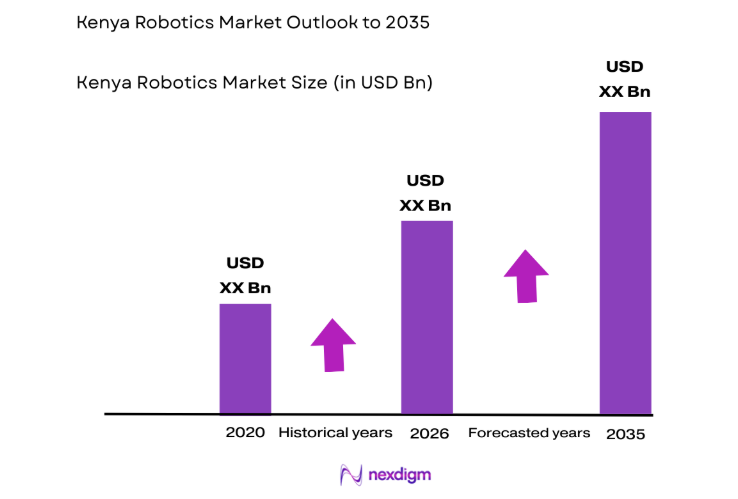
The Kenya Robotics market is valued at approximately USD ~ million based on a recent historical assessment, driven by increasing automation demand across sectors such as manufacturing, agriculture, and logistics. Advancements in robotic technology, including AI and machine learning, are fueling growth by improving operational efficiency, reducing labor costs, and enhancing precision. Furthermore, the growing adoption of robotics in industries like healthcare and agriculture is expanding the market’s reach, addressing the need for automation in both urban and rural regions.
Key regions driving Kenya’s robotics market include Nairobi, Mombasa, and Kisumu. Nairobi, as the capital city, hosts numerous technology startups and industrial hubs where robotic solutions are being integrated to increase productivity in manufacturing and service sectors. Mombasa, with its strategic port, promotes the adoption of robotics in logistics, warehousing, and shipping. Kisumu is witnessing increased investments in agriculture and manufacturing, making it a growing center for robotics applications in precision farming and industrial automation.
Market Segmentation
By Product Type
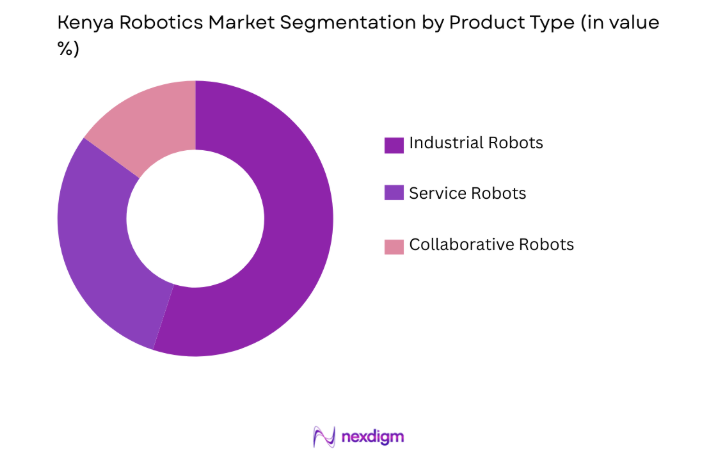
The Kenya Robotics market is segmented by product type into industrial robots, service robots, and collaborative robots. Recently, industrial robots have dominated the market share due to their significant application in manufacturing sectors such as automotive, textiles, and electronics. The increasing need for high precision, faster production cycles, and reducing labor costs in these industries has contributed to the dominance of industrial robots. With advancements in automation technology, industries in Kenya are increasingly investing in industrial robots to stay competitive, enhancing both productivity and operational efficiency.
By Application Type
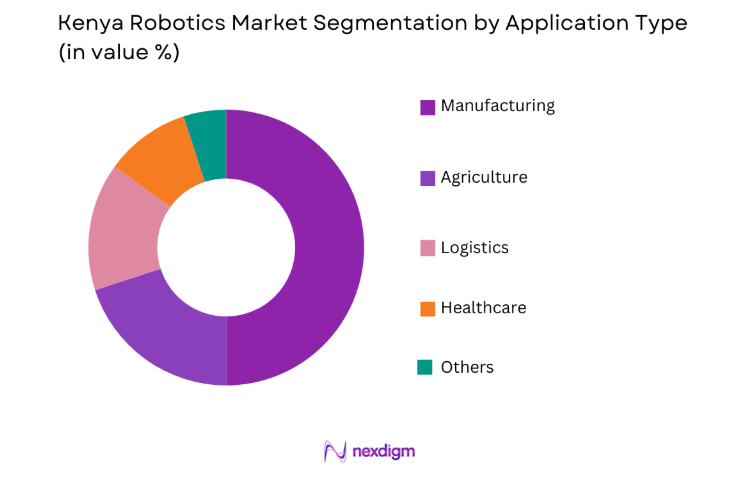
The Kenya Robotics market is also segmented by application type into manufacturing, agriculture, logistics, healthcare, and others. Manufacturing applications hold the largest market share, driven by the increasing adoption of robotics to automate production lines, improve product quality, and reduce operational costs. The automotive and textile industries in Kenya are particularly focused on integrating robotics to streamline operations and meet international standards. As these industries evolve, robotics continues to be essential in scaling production and increasing efficiency in manufacturing.
Competitive Landscape
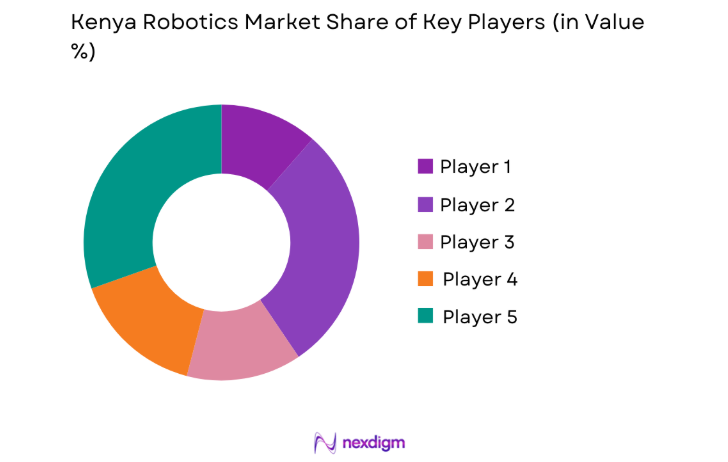
The competitive landscape of the Kenya Robotics market is marked by both international and local players vying for a share of the growing automation sector. Global companies, such as ABB and Siemens, are leading the charge by providing advanced robotics solutions for industrial, healthcare, and logistics applications. Local firms are gaining momentum by focusing on cost-effective and customizable solutions that meet the specific needs of industries in Kenya. As the market grows, partnerships between international robotics companies and local firms are expected to increase, driving further innovation and market expansion.
| Company Name | Establishment Year | Headquarters | Technology Focus | Market Reach | Key Products | Revenue | Industry-Specific Focus |
| ABB | 1988 | Zurich, Switzerland | ~ | ~ | ~ | ~ | ~ |
| FANUC Corporation | 1956 | Oshino, Japan | ~ | ~ | ~ | ~ | ~ |
| KUKA AG | 1898 | Augsburg, Germany | ~ | ~ | ~ | ~ | ~ |
| Universal Robots | 2005 | Odense, Denmark | ~ | ~ | ~ | ~ | |
| Yaskawa Electric | 1915 | Kitakyushu, Japan | ~ | ~ | ~ | ~ | ~ |
Kenya Robotics Market Analysis
Growth Drivers
Technological Advancements in Robotics
The rapid advancements in robotics technology are one of the key growth drivers in the Kenya Robotics market. New technologies such as AI, machine learning, and advanced sensors are enabling robots to perform more complex tasks with higher accuracy and efficiency. These advancements are particularly important in the manufacturing and agriculture sectors, where robots are increasingly being used for tasks such as assembly, packaging, and planting. As automation becomes more affordable and accessible, industries in Kenya are looking to robotics to boost productivity and remain competitive on a global scale. The integration of AI in robotics also enables robots to improve over time, adapt to changing environments, and collaborate with human workers, which further enhances their appeal across industries.
Government Support and Industrialization Initiatives
The Kenyan government’s efforts to boost industrialization under its “Kenya Vision 2030” development plan are contributing to the growth of the robotics market. Policies supporting the development of the manufacturing sector, coupled with initiatives to attract foreign investments in robotics and automation technologies, are paving the way for increased adoption of robotics solutions. The government has also been focusing on improving infrastructure, including energy and transport systems, to support the efficient implementation of automation technologies. Additionally, there are tax incentives and grants available for businesses that invest in automation, which has spurred the adoption of robotics in manufacturing, agriculture, and other sectors. This government support has created a favorable environment for robotics companies to expand their operations and contribute to the industrial automation revolution in Kenya.
Market Challenges
High Initial Investment Costs
One of the main challenges facing the Kenya Robotics market is the high initial investment required for deploying robotic systems. Robotics technology, particularly industrial robots and AI-driven solutions, can be expensive to acquire, install, and maintain. This is a significant barrier for small and medium-sized enterprises (SMEs) in Kenya, which often face financial constraints and struggle to justify the high upfront costs. While the long-term benefits of robotics, such as cost savings from improved efficiency and reduced labor costs, are evident, many companies are hesitant to invest in automation due to the large capital expenditure required. Overcoming this challenge requires addressing affordability issues, providing financing options, and demonstrating the long-term return on investment.
Skilled Labor Shortage
The adoption of robotics in Kenya is hindered by a shortage of skilled labor in fields such as robotics engineering, AI, and automation. Robotics systems require specialized knowledge for design, programming, and maintenance, but the local workforce lacks sufficient expertise in these areas. This shortage of skilled workers creates a barrier to the widespread implementation of robotics technologies across industries. Additionally, there is a lack of local training programs and educational institutions offering specialized robotics courses, which limits the development of a skilled workforce in the country. To address this challenge, Kenya must invest in education and vocational training to equip the labor force with the necessary skills to operate and maintain advanced robotics systems.
Opportunities
Growth of Robotics in Agriculture
One of the most promising opportunities in the Kenya Robotics market is the adoption of robotics in agriculture. Agriculture is a vital sector in Kenya, contributing significantly to the economy. However, it faces challenges such as labor shortages, inefficient production methods, and unpredictable climate conditions. Robotics offers a solution by automating tasks such as planting, harvesting, and irrigation, thereby improving productivity and reducing labor costs. The rise of precision farming, where robots are used to monitor crops and optimize resource usage, is also driving demand for robotics in agriculture. As Kenya continues to focus on modernizing its agricultural sector, robotics will play a critical role in improving food production and ensuring food security. With the government’s focus on agribusiness development, there are substantial opportunities for robotics companies to expand their offerings and tailor solutions to the needs of the agricultural market.
Robotics for Healthcare
The healthcare sector in Kenya also presents significant growth opportunities for robotics. With the increasing demand for healthcare services due to a growing population and urbanization, robotics offers a way to improve service delivery and efficiency. Surgical robots, rehabilitation robots, and robotic assistants are all gaining traction in hospitals and healthcare centers across the country. These robots help improve the precision of surgeries, reduce recovery times, and assist with patient care, particularly in rural and underserved areas where healthcare professionals are in short supply. The adoption of robotics in healthcare is also supported by the growing awareness of the benefits of robotic technologies in enhancing patient outcomes. As Kenya continues to invest in healthcare infrastructure, the demand for medical robots is expected to grow significantly, presenting a lucrative opportunity for robotics companies to expand into the sector.
Future Outlook
Over the next five years, the Kenya Robotics market is expected to experience substantial growth, driven by technological advancements in robotics, AI, and automation. The manufacturing, agriculture, and healthcare sectors will continue to be key adopters of robotics, seeking to enhance efficiency, reduce costs, and improve quality. The government’s initiatives to promote industrialization and infrastructure development will further stimulate the demand for robotics in various sectors. However, addressing challenges such as high initial investment costs and the shortage of skilled labor will be critical for ensuring sustainable growth in the market. With continued technological innovation and increased investment in education and training, the Kenya Robotics market is set to expand and become an essential component of the country’s industrial and technological landscape.
Major Players
- ABB
- FANUC Corporation
- KUKA AG
- Universal Robots
- Yaskawa Electric
- Siemens
- Kawasaki Robotics
- Mitsubishi Electric
- Omron Corporation
- Teradyne
- Rethink Robotics
- Epson Robotics
- Denso Robotics
- Hyundai Robotics
- Rockwell Automation
Key Target Audience
- Investments and venture capitalist firms
- Government and regulatory bodies
- Robotics manufacturers and developers
- Manufacturing companies
- Agricultural firms
- Healthcare institutions
- Industrial equipment manufacturers
Research Methodology
Step 1: Identification of Key Variables
Identify key drivers, challenges, and trends affecting the robotics market, including technological advancements, industry demands, and regulatory policies.
Step 2: Market Analysis and Construction
Analyze historical and current market data, along with growth trends and regional dynamics, to build a comprehensive market model.
Step 3: Hypothesis Validation and Expert Consultation
Consult industry experts and stakeholders to validate hypotheses and ensure alignment with real market conditions.
Step 4: Research Synthesis and Final Output
Synthesize all collected data and expert opinions into a final, actionable market report, providing insights and forecasts for stakeholders.

- Executive Summary
- Research Methodology (Definitions, Scope, Industry Assumptions, Market Sizing Approach, Primary & Secondary Research Framework, Data Collection & Verification Protocol, Analytic Models & Forecast Methodology, Limitations & Research Validity Checks)

- Market Definition and Scope
- Value Chain & Stakeholder Ecosystem
- Regulatory / Certification Landscape
- Sector Dynamics Affecting Demand

- Growth Drivers
Rising automation adoption in manufacturing
Increase in demand for healthcare robots
Government initiatives promoting robotics technologies - Market Challenges
High cost of robotics technology
Integration with existing systems
Lack of skilled labor for robotic operations - Market Opportunities
Growth in the e-commerce and logistics sector
Technological advancements in AI and machine learning for robotics
Expanding applications in agriculture - Trends
Increase in the use of collaborative robots (cobots)
Advances in AI and machine learning integration with robotics - Government Regulations
Regulations surrounding robot safety
Government funding for robotics research
Intellectual property laws in robotics - SWOT Analysis
- Porter’s Five Forces

- By Market Value, 2020-2025
- By Installed Units, 2020-2025
- By Average System Price, 2020-2025
- By System Complexity Tier, 2020-2025

- By System Type (In Value%)
Industrial Robots
Service Robots
Collaborative Robots (Cobots)
Medical Robots
Agricultural Robots - By Platform Type (In Value%)
Fixed Robots
Mobile Robots
Hybrid Robots
Autonomous Robots - By Fitment Type (In Value%)
Integrated Systems
Modular Systems
Stand-alone Systems
Custom Solutions - By End User Segment (In Value%)
Manufacturing
Healthcare
Agriculture
Logistics

- Market Share Analysis
- Cross Comparison Parameters (System Type, End User Segment, Platform Type, Fitment Type, Price, Technological Integration, Market Penetration)
- SWOT Analysis of Key Competitors
- Pricing & Procurement Analysis
- Key Players
KUKA AG
ABB Ltd.
Fanuc Corporation
Yaskawa Electric Corporation
Universal Robots
iRobot Corporation
Intuitive Surgical
Adept Technology
FANUC Robotics
Boston Dynamics
OMRON Corporation
Kawasaki Robotics
Epson Robots
Robot System Products
Stäubli Robotics

- Manufacturers increasingly adopting robotics for precision and efficiency
- Healthcare providers investing in medical robots for surgery and care
- Agricultural robotics becoming more prevalent for smart farming

- Forecast Market Value, 2026-2035
- Forecast Installed Units, 2026-2035
- Price Forecast by System Tier, 2026-2035
- Future Demand by Platform, 2026-2035


 Request a Sample
 Ask for Customization
 Get a Quote
 Enquire Now