
 Download PDF
 Download PDF
Market Overview
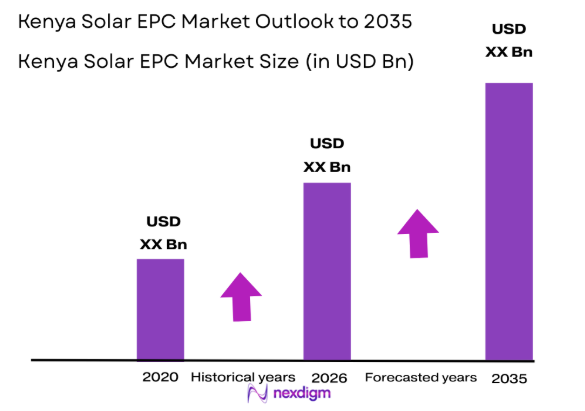
The Kenya Solar EPC Market is experiencing substantial growth, valued at USD ~ billion, driven by the increasing demand for renewable energy sources to meet both domestic and industrial power needs. This growth is largely supported by government incentives, infrastructure development, and falling technology costs for solar power systems. Moreover, there is a significant push for energy independence in both urban and rural areas, fueling the demand for solar EPC (Engineering, Procurement, and Construction) services across the country.
Kenya, along with several East African nations, is a key player in the solar energy sector due to its geographic location and an increasing focus on sustainable energy solutions. Nairobi, Mombasa, and Kisumu are major cities where solar projects have gained prominence, supported by both governmental initiatives and private sector investments. These regions, due to their proximity to equatorial sunlight, make solar energy a highly feasible and growing market. Additionally, the drive toward rural electrification is significantly increasing the demand for decentralized solar systems.
Market Segmentation
By System Type
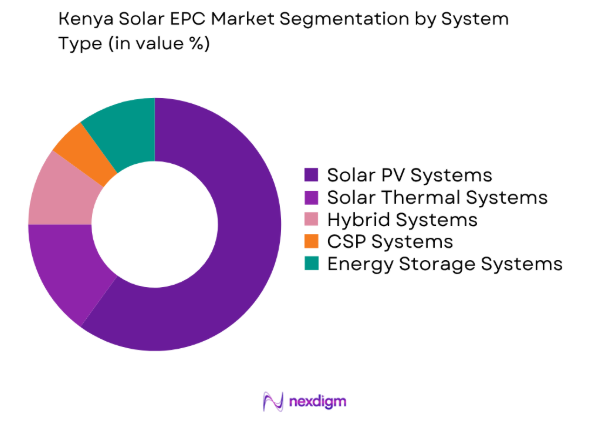
The Kenya Solar EPC market is segmented by system type into Solar PV Systems, Solar Thermal Systems, Hybrid Systems, Concentrated Solar Power (CSP) Systems, and Energy Storage Systems. Recently, Solar PV Systems have gained dominant market share due to cost-effective technology, efficiency, and the scalability of installations. Government-backed incentives, improved consumer awareness, and lower system costs contribute to this dominance. Solar PV systems, being the most accessible and versatile, are increasingly preferred by residential, commercial, and utility-scale clients.
By Platform Type
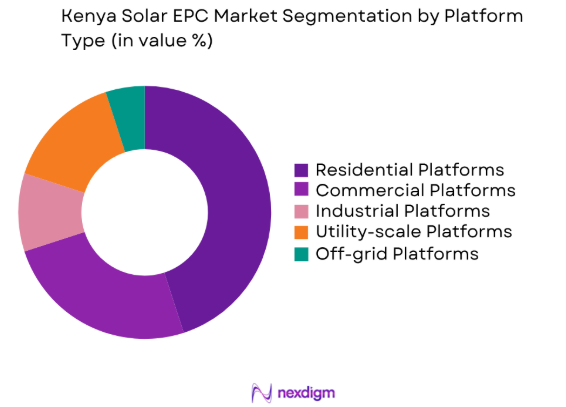
The Kenya Solar EPC market is segmented by platform type into Residential Platforms, Commercial Platforms, Industrial Platforms, Utility-scale Platforms, and Off-grid Platforms. Residential platforms dominate the market share as a result of government incentives, declining costs of solar panels, and rising consumer interest in energy independence. Kenya’s push for rural electrification and the growth in middle-income households further bolster the adoption of residential solar systems, making this segment the most attractive.
Competitive Landscape
The Kenya Solar EPC market is competitive, with significant participation from local and international companies. The market is witnessing increasing consolidation, where major players are partnering with smaller firms to expand their market reach and technological capabilities. The entry of international EPC players has intensified competition, contributing to market growth. Key players are focusing on innovation in solar technology and energy storage solutions to maintain a competitive edge. The market structure is evolving as the sector attracts more investment from both private and public entities.
| Company Name | Establishment Year | Headquarters | Technology Focus | Market Reach | Key Products | Revenue (USD) | Additional Parameter |
| M-KOPA Solar | 2011 | Nairobi, Kenya | ~ | ~ | ~ | ~ | ~ |
| BBOXX | 2010 | London, UK | ~ | ~ | ~ | ~ | ~ |
| Jinko Solar | 2006 | Shanghai, China | ~ | ~ | ~ | ~ | ~ |
| Powerhive | 2011 | Nairobi, Kenya | ~ | ~ | ~ | ~ | ~ |
| SunPower Corporation | 1985 | California, USA | ~ | ~ | ~ | ~ | ~ |
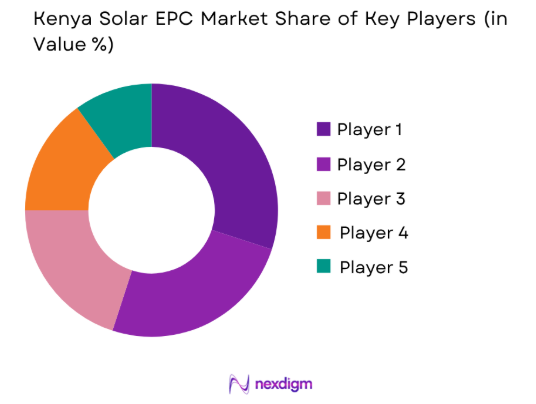
Kenya Solar EPC Market Analysis
Growth Drivers
Government Support for Solar Energy
Kenya’s government has played a crucial role in driving the growth of the Solar EPC market through various incentives and subsidies. Initiatives such as tax exemptions on solar equipment, low-interest financing, and energy subsidies have made solar energy solutions more accessible to both businesses and households. These policies aim to reduce reliance on fossil fuels, address energy shortages, and promote sustainable growth. The government’s commitment to achieving renewable energy targets continues to foster the adoption of solar technologies. Moving forward, additional supportive policies are expected to further enhance the integration of solar energy, ensuring continued market expansion and progress toward energy sustainability.
Technological Advancements in Solar Power
Technological advancements have significantly contributed to the growth of Kenya’s solar EPC market. Improved solar panel efficiency and advancements in battery storage technology have made solar solutions more affordable and dependable, benefiting both commercial and residential sectors. The falling cost of solar panels and enhanced energy storage capabilities have increased the scalability of solar projects, making them viable in remote areas and large-scale installations. Additionally, the introduction of hybrid systems and smart grid technology has facilitated better integration of solar power into Kenya’s national grid, improving overall energy efficiency and supporting the continued expansion of the sector. These innovations are driving increased adoption across the country.
Market Challenges
High Initial Capital Investment
The high upfront capital required for solar installations is a major challenge in Kenya’s Solar EPC market. Although solar power offers long-term savings, the initial investment can be prohibitive for small businesses and low-income households. While financing options and government incentives are available, more accessible and flexible financing models are needed to alleviate the financial burden of solar system installations. This issue is especially pronounced in the off-grid market, where the cost of solar equipment and installation remains high. As a result, the adoption of solar solutions in rural areas is limited, hindering the broader uptake of solar energy across the country.
Regulatory and Policy Barriers
Despite significant progress in Kenya’s renewable energy sector, regulatory and policy challenges remain a barrier to growth. The absence of a clear, streamlined regulatory framework for solar energy projects often results in delays in approvals and increased operational costs for developers. Additionally, some local authorities face challenges in enforcing renewable energy standards, which further hampers the effective implementation of solar power initiatives. Although the government is making efforts to address these issues, such as creating supportive policies, ongoing regulatory hurdles continue to impede the rapid growth of the solar EPC market. Until these barriers are effectively addressed, the sector’s expansion may experience slower progress.
Opportunities
Expansion of Off-grid Solar Solutions
Expanding off-grid solar solutions presents a significant opportunity to address the energy needs of Kenya’s rural and underserved populations. With around 70% of Kenya’s population living in rural areas without reliable electricity, off-grid solar systems offer a sustainable and viable solution. The government’s rural electrification efforts, combined with private sector investments in off-grid solar technologies, create a strong foundation for growth. Off-grid solutions like solar home systems and mini-grids provide EPC companies with the chance to access untapped markets and play a crucial role in achieving the country’s development goals. These opportunities contribute to increased energy access and improved living standards in remote regions.
Integration of Energy Storage Solutions
Integrating energy storage systems with solar power solutions offers a significant growth opportunity in Kenya’s Solar EPC market. Since solar power generation is intermittent, the ability to store excess energy during peak production times is essential for maintaining a reliable electricity supply. As demand for energy storage solutions rises, combined with advancements in battery technology and falling costs, EPC companies have substantial opportunities to expand their offerings. This is especially important in remote areas, where energy storage allows for efficient use of solar power even during periods of low sunlight. The growing adoption of storage systems will enhance the overall viability and reliability of solar energy across the country.
Future Outlook
The Kenya Solar EPC market is expected to continue its upward trajectory over the next five years. The market is likely to be driven by government incentives, advancements in solar technology, and increased demand for off-grid solutions. Regulatory support, including the development of favorable policies and financing models, will also play a critical role in encouraging further investments in the solar sector. As energy demands continue to rise and environmental concerns grow, the solar market is poised to play an even more significant role in Kenya’s energy mix.
Major Players
- M-KOPA Solar
- BBOXX
- Jinko Solar
- Powerhive
- SunPower Corporation
- Schneider Electric
- REC Solar
- Engie Energy Access
- East African Solar Solutions
- Solinc
- Solar century
- Total Energies
- Solar Now
- Ecoligo
- Light source BP
Key Target Audience
- Investments and venture capitalist firms
- Government and regulatory bodies
- Solar energy system integrators
- Utility providers
- Private sector energy developers
- Commercial building developers
- Off-grid solution providers
- Non-governmental organizations (NGOs)
Research Methodology
Step 1: Identification of Key Variables
Key market variables such as system type, platform type, procurement channels, and growth drivers were identified through primary and secondary research sources.
Step 2: Market Analysis and Construction
Market sizing was carried out by analyzing historical data and growth trends from government and industry reports, with an emphasis on the 2025 market assessment.
Step 3: Hypothesis Validation and Expert Consultation
Expert consultations were conducted to validate market assumptions, and in-depth interviews were held with key stakeholders across the value chain.
Step 4: Research Synthesis and Final Output
Data was synthesized, and insights were formulated to produce a comprehensive report on the Kenya Solar EPC market, identifying key drivers, challenges, and opportunities.

- Executive Summary
- Research Methodology (Definitions, Scope, Industry Assumptions, Market Sizing Approach, Primary & Secondary Research Framework, Data Collection & Verification Protocol, Analytic Models & Forecast Methodology, Limitations & Research Validity Checks)

- Market Definition and Scope
- Value Chain & Stakeholder Ecosystem
- Regulatory / Certification Landscape
- Sector Dynamics Affecting Demand
- Strategic Initiatives & Infrastructure Growth

- Growth Drivers
Increased Government Support for Solar Energy
Declining Solar Panel Costs
Rising Energy Demand in Kenya
Environmental Concerns and Sustainability Efforts
Private Sector Investments in Solar Energy - Market Challenges
High Initial Capital Costs
Lack of Skilled Labor for Installation
Regulatory and Policy Barriers
Grid Integration Challenges
Financing Issues for Large Projects - Market Opportunities
Expansion of Off-grid Solar Solutions
Technological Advancements in Solar Power
Integration of Energy Storage Solutions - Trends
Rising Adoption of Solar Power in Rural Areas
Shift Towards Integrated Energy Systems
Increased Investment in Solar R&D - Government Regulations
- SWOT Analysis of Key Competitors
- Porter’s Five Forces

- By Market Value, 2020-2025
- By Installed Units, 2020-2025
- By Average System Price, 2020-2025
- By System Complexity Tier, 2020-2025

- By System Type (In Value%)
Solar PV Systems
Solar Thermal Systems
Hybrid Systems
Concentrated Solar Power (CSP) Systems
Energy Storage Systems - By Platform Type (In Value%)
Residential Platforms
Commercial Platforms
Industrial Platforms
Utility-scale Platforms
Off-grid Platforms - By Fitment Type (In Value%)
On-grid Solutions
Off-grid Solutions
Hybrid Solutions
Modular Solutions
Integrated Solutions - By End User Segment (In Value%)
Government & Public Sector
Residential Consumers
Commercial Enterprises
Industrial Sector
Utilities & Energy Providers - By Procurement Channel (In Value%)
Direct Procurement
Government Tenders
Private Sector Procurement
Online Bidding Platforms
Third-party Distributors

- Market Share Analysis
- Cross Comparison Parameters (System Type, Platform Type, Procurement Channel, End User Segment, Fitment Type, Installation Location, Energy Storage Integration, Project Size, Financing Models, Regulatory Compliance)
- SWOT Analysis of Key Competitors
- Pricing & Procurement Analysis
- Key Players
M-KOPA Solar
BBOXX
Jinko Solar
First Solar
Green Energy Solutions
SolarNow
Powerhive
SunPower Corporation
Siemens Gamesa Renewable Energy
Vestas Wind Systems
Enel Green Power
D.light Design
Solinc
Sungrow Power Supply
Scatec Solar
Solarcentury

- Government’s Role in Solar Energy Projects
- Rural Electrification through Solar Power
- Private Sector Adoption of Solar Energy
- Growth in Solar Installations for Commercial Use

- Forecast Market Value, 2026-2035
- Forecast Installed Units, 2026-2035
- Price Forecast by System Tier, 2026-2035
- Future Demand by Platform, 2026-2035


 Request a Sample
 Ask for Customization
 Get a Quote
 Enquire Now