

 Download PDF
 Download PDF
Market Overview
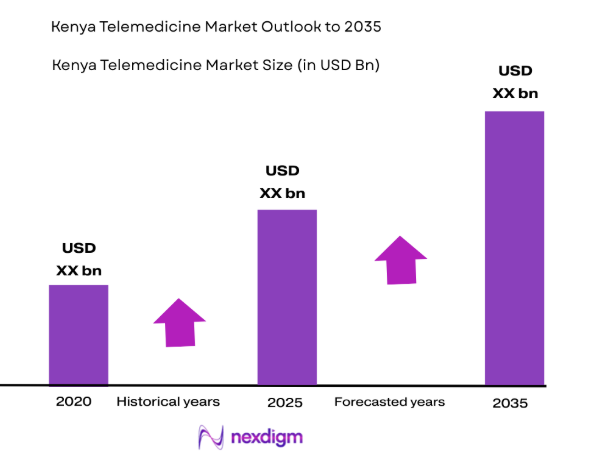
Kenya telemedicine market was valued at approximately USD ~ billion based on a recent historical assessment supported by digital health adoption data from the Ministry of Health Kenya, the World Bank, and International Telecommunication Union healthcare technology statistics. Market expansion is driven by increasing deployment of teleconsultation platforms, remote patient monitoring technologies, and mobile health applications across hospitals and digital health providers. Expanding broadband infrastructure and rising smartphone penetration enable healthcare providers to deliver remote medical consultations and diagnostic services across geographically dispersed populations.
Nairobi remains the dominant city in the Kenya telemedicine market due to the concentration of tertiary hospitals, digital health startups, and advanced telecommunications infrastructure that supports telehealth platforms and remote medical consultations. The presence of private hospitals and international healthcare technology companies in Nairobi encourages deployment of advanced telemedicine systems and integrated digital healthcare platforms. Other urban centers including Mombasa and Kisumu are also emerging telemedicine hubs as regional healthcare institutions deploy digital consultation services to improve healthcare accessibility.
Market Segmentation
By Product Type
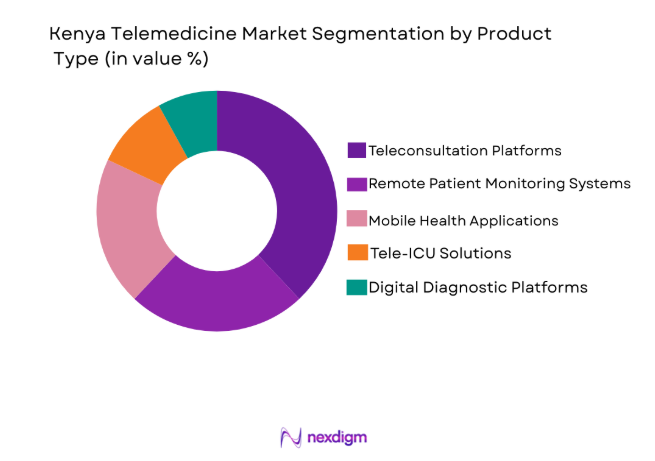
Kenya Telemedicine market is segmented by product type into teleconsultation platforms, remote patient monitoring systems, mobile health applications, tele-ICU systems, and digital diagnostic platforms. Recently, teleconsultation platforms have a dominant market share due to factors such as widespread smartphone penetration, increasing patient demand for remote medical consultations, and rapid adoption by hospitals seeking to reduce outpatient congestion. Teleconsultation platforms enable physicians to conduct remote consultations, prescribe treatments digitally, and access patient medical records through integrated hospital systems. Healthcare providers favor these solutions because they reduce operational pressure on physical clinics while extending specialist services to rural populations where medical infrastructure remains limited.
By Platform Type
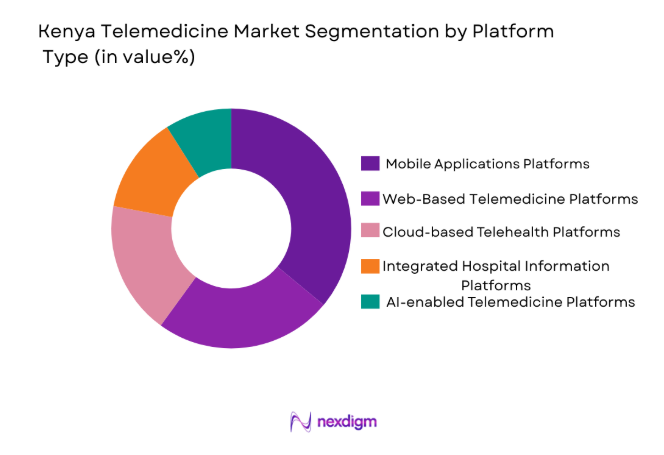
Kenya Telemedicine market is segmented by platform type into web based telemedicine platforms, mobile application platforms, cloud based telehealth platforms, integrated hospital information platforms, and AI enabled telemedicine platforms. Recently, mobile application platforms have a dominant market share due to the widespread availability of smartphones, affordable mobile internet connectivity, and the rapid expansion of mobile based healthcare services. Mobile platforms allow patients to schedule consultations, access prescriptions, and communicate with healthcare professionals directly through secure digital interfaces. Healthcare providers also prefer mobile based telemedicine services because they allow scalable healthcare delivery across geographically dispersed populations where access to hospitals remains constrained.
Competitive Landscape
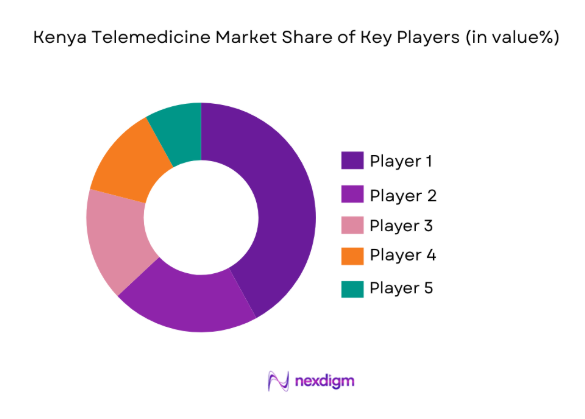
Kenya telemedicine market remains moderately fragmented with the presence of global digital health companies, regional telehealth service providers, and domestic digital healthcare startups. International healthcare technology firms supply telemedicine infrastructure and remote monitoring technologies, while local providers focus on mobile based teleconsultation services adapted to Kenya’s healthcare accessibility challenges. Partnerships between hospitals, technology companies, and telecommunications providers are strengthening digital healthcare ecosystems and accelerating telemedicine platform adoption across public and private healthcare networks.
| Company Name | Establishment Year | Headquarters | Technology Focus | Market Reach | Key Products | Revenue | Healthcare Integration Capability |
| Teladoc Health | 2002 | United States | ~ | ~ | ~ | ~ | ~ |
| Amwell | 2006 | United States | ~ | ~ | ~ | ~ | ~ |
| Babylon Health | 2013 | United Kingdom | ~ | ~ | ~ | ~ | ~ |
| Philips Healthcare | 1891 | Netherlands | ~ | ~ | ~ | ~ | ~ |
| Ilara Health | 2018 | Kenya | ~ | ~ | ~ | ~ | ~ |
Kenya Telemedicine Market Analysis
Growth Drivers
Expansion of National Digital Health Infrastructure Programs
Expansion of Kenya’s national digital health ecosystem significantly accelerates telemedicine adoption by enabling hospitals and healthcare providers to deploy integrated telehealth platforms across clinical operations. The government has invested heavily in national electronic health records, digital patient registries, and hospital information systems designed to improve healthcare coordination across public hospitals and county level facilities. Telemedicine platforms benefit from these digital health networks because physicians can access patient records remotely during consultations and share diagnostic information instantly with specialists located in other cities. Hospitals increasingly integrate teleconsultation systems with digital imaging technologies, laboratory databases, and electronic prescription platforms that enable remote clinical decision making. The expansion of broadband connectivity infrastructure across counties further strengthens telehealth accessibility because remote medical consultations depend heavily on reliable internet connectivity and secure digital data transmission. Telecommunications providers have expanded 4G network coverage across rural areas, enabling mobile telemedicine platforms to reach communities where hospital infrastructure remains limited. Healthcare technology companies therefore collaborate with public hospitals to deploy digital consultation platforms that reduce patient travel time and improve specialist access across underserved populations. As Kenya continues expanding its national digital health infrastructure, telemedicine platforms are becoming an essential component of healthcare service delivery.
Rising Smartphone Penetration and Mobile Internet Connectivity
Rising smartphone adoption across Kenya significantly strengthens the demand for mobile based telemedicine services because smartphones enable patients to access healthcare consultations without visiting physical clinics. Mobile health applications allow patients to schedule appointments, conduct video consultations with physicians, receive digital prescriptions, and access laboratory results directly through secure mobile interfaces. Telecommunications infrastructure expansion has also increased mobile internet coverage across rural and semi urban regions, allowing healthcare providers to deliver remote consultations to populations living far from hospitals and specialist clinics. Mobile network operators increasingly collaborate with digital health companies to integrate telemedicine services with mobile payment platforms and healthcare insurance systems. These integrations simplify payment processing and improve patient access to remote healthcare services. Hospitals also favor mobile telemedicine platforms because they reduce overcrowding in outpatient departments while maintaining clinical oversight of patients receiving treatment remotely. Mobile applications additionally support chronic disease monitoring by allowing patients to transmit health data such as blood glucose levels or blood pressure readings directly to physicians. As smartphone penetration continues expanding across the country, mobile health platforms are becoming a primary channel for digital healthcare delivery.
Market Challenges
Limited Healthcare IT Infrastructure in Rural Regions
limited healthcare information technology infrastructure across rural counties significantly restricts the scalability of telemedicine platforms despite increasing demand for remote healthcare services. Many rural hospitals and primary care clinics operate with outdated digital systems that lack interoperability with modern telehealth platforms and cloud based patient record systems. Healthcare providers therefore face challenges integrating telemedicine solutions with existing hospital infrastructure, which slows telehealth implementation and reduces operational efficiency. Reliable broadband connectivity remains inconsistent across several remote areas where telecommunications infrastructure development continues gradually. Telemedicine consultations require stable internet connectivity for video communication and secure transmission of medical data, and network disruptions can compromise clinical interactions between physicians and patients. Rural healthcare facilities also lack sufficient digital diagnostic equipment required for remote medical assessment and teleconsultation support. In addition, technical expertise among healthcare staff remains limited in many facilities, making it difficult to deploy and maintain telehealth systems without specialized IT training. These infrastructure constraints collectively slow telemedicine expansion outside major urban healthcare centers.
Regulatory and Data Privacy Compliance Complexities
Regulatory compliance requirements surrounding patient data protection and digital healthcare governance present operational challenges for telemedicine service providers operating in Kenya. Healthcare data is highly sensitive and telemedicine platforms must ensure strict security standards to protect patient medical records, consultation transcripts, and diagnostic reports transmitted through digital networks. The implementation of digital health regulations requires telemedicine providers to comply with national health data protection laws, cybersecurity frameworks, and patient confidentiality standards established by government regulatory authorities. Compliance processes often require significant investment in secure cloud infrastructure, encryption technologies, and digital identity authentication systems to prevent unauthorized access to medical information. Healthcare providers must also ensure that telemedicine consultations meet clinical quality standards equivalent to physical medical appointments. Cross facility licensing requirements can further complicate service delivery when physicians provide consultations across multiple counties or healthcare institutions. Regulatory approval processes for digital health platforms may also take extended periods, delaying the commercialization of innovative telemedicine technologies. These regulatory and compliance complexities increase operational costs and slow the expansion of telemedicine platforms within the national healthcare system.
Opportunities
Expansion of Mobile Health Platforms for Rural Healthcare Access
Expansion of mobile based healthcare platforms presents significant growth opportunities for telemedicine providers because large segments of Kenya’s population reside in rural and semi urban regions where access to hospitals and specialist physicians remains limited. Mobile health applications enable healthcare providers to deliver medical consultations, remote monitoring services, and follow up care through smartphones without requiring patients to travel long distances to urban hospitals. Healthcare providers increasingly develop mobile platforms capable of supporting video consultations, electronic prescriptions, digital medical records, and remote patient monitoring functionalities integrated into single digital healthcare ecosystems. Telecommunications companies also collaborate with telemedicine providers to bundle telehealth services with mobile connectivity packages that increase affordability and encourage adoption among low income populations. Mobile payment systems widely used across Kenya further strengthen telemedicine accessibility because patients can pay consultation fees securely through mobile financial platforms. Healthcare insurers are also exploring mobile telehealth partnerships that enable policyholders to access digital consultations as part of health insurance coverage. These developments significantly increase the reach of telemedicine services while improving healthcare accessibility across geographically dispersed populations.
Integration of Artificial Intelligence and Remote Diagnostic Technologies
the integration of artificial intelligence and digital diagnostic technologies creates strong opportunities for telemedicine platforms to improve diagnostic accuracy and healthcare efficiency. AI driven clinical decision support tools can analyze patient symptoms, medical histories, and diagnostic imaging data to assist physicians during remote consultations. Telemedicine platforms increasingly incorporate AI powered triage systems that help prioritize patient cases and recommend appropriate treatment pathways based on symptom analysis. Remote diagnostic devices capable of measuring vital signs, imaging results, and laboratory test data can transmit patient information directly to physicians through telemedicine platforms. These technologies enable doctors to conduct more comprehensive remote medical assessments without requiring patients to visit hospitals physically. Healthcare technology companies therefore invest in integrated telemedicine ecosystems that combine consultation platforms with diagnostic hardware and AI analytics tools. As digital health technologies continue advancing, telemedicine systems equipped with AI diagnostics and connected medical devices will enable more efficient healthcare delivery while improving clinical outcomes for patients receiving remote medical care.
Future Outlook
Kenya telemedicine market is expected to experience strong expansion over the next five years as healthcare systems increasingly adopt digital consultation platforms and remote patient monitoring technologies. Continued government investment in national digital health infrastructure and electronic medical record systems will strengthen the technological foundation supporting telemedicine adoption. Rapid expansion of broadband connectivity and smartphone usage will further increase accessibility to mobile healthcare platforms. Healthcare providers are also expected to integrate artificial intelligence driven diagnostic tools and remote monitoring devices to improve clinical decision making and patient outcomes.
Major Players
- Teladoc Health
- Amwell
- Babylon Health
- Philips Healthcare
- Siemens Healthineers
- GE HealthCare
- VSee
- Medtronic
- Doctor on Demand
- MDLive
- CarePay
- Ilara Health
- Tiba
- MyDawa
- Access Afya
Key Target Audience
- Digital health platform providers
- Telemedicine technology vendors
- Healthcare infrastructure investors
- Investments and venture capitalist firms
- Government and regulatory bodies
- Hospitals and healthcare networks
- Telecommunications companies
Research Methodology
Step 1: Identification of Key Variables
Primary research identifies key market variables influencing telemedicine adoption including digital health infrastructure, teleconsultation usage, mobile healthcare penetration, and hospital technology investments. Secondary research sources such as government healthcare databases, international health organizations, and telecommunications reports are analyzed to define measurable market indicators.
Step 2: Market Analysis and Construction
Collected datasets are analyzed to construct the telemedicine market framework by evaluating healthcare infrastructure development, hospital digitization trends, telehealth platform adoption, and patient demand for remote healthcare services across Kenya’s healthcare ecosystem.
Step 3: Hypothesis Validation and Expert Consultation
Market assumptions and data estimates are validated through interviews with healthcare technology specialists, hospital administrators, telemedicine platform providers, and digital health policy experts to ensure reliability of the analytical framework.
Step 4: Research Synthesis and Final Output
All validated insights are synthesized into a comprehensive market model including segmentation analysis, competitive landscape assessment, regulatory evaluation, and technology adoption trends to produce a structured telemedicine market outlook.

- Executive Summary
- Research Methodology (Definitions, Scope, Industry Assumptions, Market Sizing Approach, Primary & Secondary Research Framework, Data Collection & Verification Protocol, Analytic Models & Forecast Methodology, Limitations & Research Validity Checks)

- Market Definition and Scope
- Value Chain & Stakeholder Ecosystem
- Regulatory / Certification Landscape
- Sector Dynamics Affecting Demand
- Strategic Initiatives & Infrastructure Growth

- Growth Drivers
Expansion of Digital Healthcare Infrastructure and National eHealth Initiatives
Increasing Smartphone Penetration and Mobile Internet Connectivity
Growing Demand for Remote Healthcare Services in Rural Regions - Market Challenges
Limited Healthcare IT Infrastructure in Remote Areas
Data Privacy and Cybersecurity Concerns in Digital Healthcare
Regulatory and Licensing Barriers for Cross Facility Telemedicine Services - Market Opportunities
Expansion of Mobile Health Platforms for Rural Healthcare Access
Public Private Partnerships Supporting Digital Healthcare Programs
Integration of Artificial Intelligence in Teleconsultation and Diagnostics - Trends
Adoption of Mobile Based Telehealth Platforms for Primary Healthcare Services
Integration of Remote Patient Monitoring Devices with Telemedicine Systems - Government Regulations
- SWOT Analysis
- Porter’s Five Forces

- By Market Value, 2020-2025
- By Installed Units, 2020-2025
- By Average System Price, 2020-2025
- By System Complexity Tier, 2020-2025

- By System Type (In Value%)
Teleconsultation Platforms
Remote Patient Monitoring Systems
Mobile Health Applications
Tele-ICU Systems
Digital Diagnostic Platforms - By Platform Type (In Value%)
Web-Based Telemedicine Platforms
Mobile Application Platforms
Cloud-Based Telehealth Platforms
Integrated Hospital Information Platforms
AI-Enabled Telemedicine Platforms - By Fitment Type (In Value%)
Standalone Telemedicine Solutions
Integrated Hospital Telehealth Systems
Cloud Hosted Telemedicine Systems
Hybrid Telehealth Platforms - By End User Segment (In Value%)
Hospitals and Clinics
Government Healthcare Institutions
Homecare and Remote Patient Monitoring Providers

- Market Share Analysis
- Cross Comparison Parameters (Technology Platform Capability, Remote Monitoring Integration, Clinical Workflow Integration, Data Security Compliance, AI Diagnostic Capability, Geographic Service Coverage, Pricing Model Flexibility)
- SWOT Analysis of Key Competitors
- Pricing & Procurement Analysis
- Key Players
Teladoc Health
Amwell
Doctor on Demand
Babylon Health
MDLive
Philips Healthcare
Siemens Healthineers
GE HealthCare
VSee
Medtronic
CarePay
Access Afya
Ilara Health
mTiba
MyDawa

- Hospitals Increasingly Integrating Teleconsultation Platforms into Clinical Workflows
- Government Healthcare Facilities Deploying Telehealth Systems to Expand Rural Access
- Private Healthcare Providers Investing in Digital Patient Engagement Platforms
- Home Healthcare Providers Utilizing Remote Monitoring Technologies for Chronic Care

- Forecast Market Value, 2026-2035
- Forecast Installed Units, 2026-2035
- Price Forecast by System Tier, 2026-2035
- Future Demand by Platform, 2026-2035


 Request a Sample
 Ask for Customization
 Get a Quote
 Enquire Now