

 Download PDF
 Download PDF
Market Overview
The Kenya Warehousing Market is estimated to reach a value of approximately USD ~ billion based on recent assessments, driven by rapid urbanization, the growth of e-commerce, and the increasing demand for logistics services. The warehousing infrastructure has expanded significantly due to both domestic demand and the country’s position as a logistics hub for East Africa. Factors like improved transport networks, infrastructure investments, and favorable government policies are fueling the market’s growth, creating opportunities for modern warehousing solutions to cater to various industries such as retail, pharmaceuticals, and food processing.
The market dominance is concentrated in urban centers like Nairobi, Mombasa, and Kisumu, with Nairobi being the leading city due to its strategic location, proximity to the port of Mombasa, and its thriving commercial sector. The significant growth in e-commerce and the increase in consumer demand for efficient supply chain management in these cities have made them attractive hubs for warehousing development. Mombasa, with its port facilities, is another key contributor, serving as a gateway for imports and exports in the region. 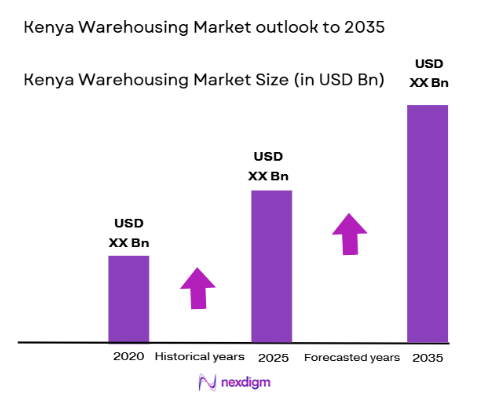
Market Segmentation
By Product Type:
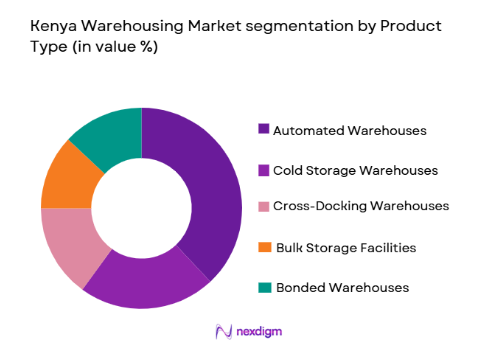
The Kenya Warehousing Market is segmented by product type into automated warehouses, cold storage warehouses, cross-docking warehouses, bulk storage facilities, and bonded warehouses. Recently, automated warehouses have dominated the market share due to increasing demand for fast and efficient storage solutions in sectors like retail and e-commerce. These warehouses offer high operational efficiency by integrating technology, reducing manual labor, and providing scalability. The need for quick inventory turnover and real-time tracking systems, coupled with the adoption of Industry 4.0 technologies, has made automated warehouses a preferred choice for large-scale retailers and logistics companies seeking to optimize their supply chains.
By Platform Type:
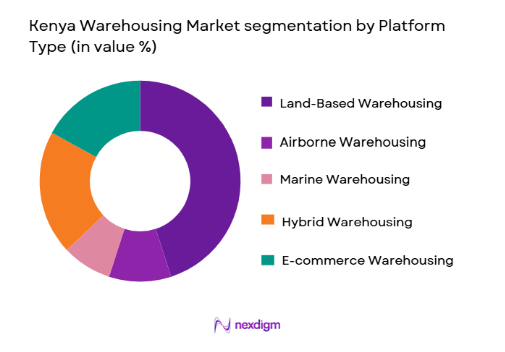
The Kenya Warehousing Market is segmented by platform type into land-based warehousing, airborne warehousing, marine warehousing, hybrid warehousing, and e-commerce warehousing. The dominant sub-segment is land-based warehousing, which accounts for a significant portion of the market share. This is primarily due to the development of large warehouse complexes on land with proximity to key transport networks, such as highways and ports. The growth of the retail and e-commerce sectors has contributed to the expansion of land-based warehousing solutions to accommodate increased goods volumes and facilitate rapid distribution across the region.
Competitive Landscape
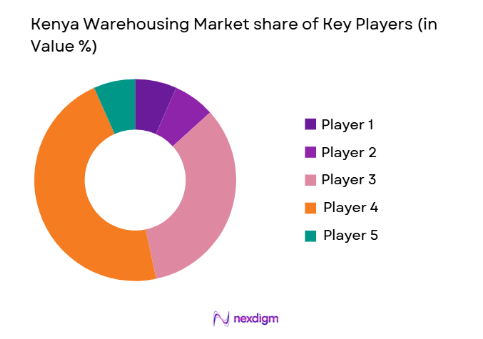
The competitive landscape of the Kenya Warehousing Market is characterized by a few large, well-established players as well as smaller firms offering specialized services. Major players in the market are consolidating to gain a competitive edge by investing in state-of-the-art infrastructure and automated warehousing solutions. The influence of these players is crucial in setting trends, as they focus on expanding their market presence and improving service efficiency. A significant portion of the market is expected to remain highly competitive as companies innovate and adapt to the growing demand for logistics solutions.
| Company Name | Establishment Year | Headquarters | Technology Focus | Market Reach | Key Products | Revenue (USD Billion) | Market-Specific Parameter |
| Kenya Ports Authority | 1978 | Mombasa | ~ | ~ | ~ | ~ | ~ |
| Transworld Cargo | 2000 | Nairobi | ~ | ~ | ~ | ~ | ~ |
| DHL Global Forwarding | 1969 | Nairobi | ~ | ~ | ~ | ~ | ~ |
| Maersk Line | 1904 | Nairobi | ~ | ~ | ~ | ~ | ~ |
| Bidco Africa | 1985 | Nairobi | ~ | ~ | ~ | ~ | ~ |
Kenya Warehousing Market Analysis
Growth Drivers
Increased E-commerce Growth:
The expansion of the e-commerce sector has been a major growth driver for the Kenya Warehousing Market. The shift towards online shopping, especially during the pandemic, has led to an unprecedented rise in demand for warehousing solutions that can handle large volumes of goods. E-commerce platforms require faster and more efficient warehousing solutions to store and distribute products to consumers in a timely manner. Companies like Jumia and Kilimall, along with other retail giants, are investing in warehousing and logistics infrastructure to meet the growing demand for quick deliveries. Furthermore, the integration of automation technologies into warehouses has allowed businesses to streamline their operations, reducing the need for manual labor and improving order fulfillment speeds. This growth in e-commerce, combined with Kenya’s strategic location as a logistics hub in East Africa, is expected to continue driving demand for warehousing solutions in the coming years.
Infrastructure Development in Kenya:
Another significant driver for the growth of the warehousing market in Kenya is the continuous development of infrastructure, particularly transport networks. Major projects such as the expansion of Mombasa Port, the construction of the Standard Gauge Railway (SGR), and improvements in road networks are facilitating smoother transportation of goods. These advancements make it more cost-effective for companies to move products across the country and the region, creating a demand for advanced storage solutions. Warehousing facilities located near these transport hubs can take advantage of the efficiency brought by improved infrastructure, thus enhancing operational efficiencies and reducing logistical costs. These infrastructure projects, supported by both government and private investments, are expected to continue playing a significant role in the growth of the Kenya Warehousing Market.
Market Challenges
High Operational Costs:
A key challenge for the Kenya Warehousing Market is the high operational costs associated with establishing and maintaining warehousing facilities. The rising costs of land, construction, and labor pose significant barriers to entry for many players in the market. Furthermore, maintaining high-quality standards, especially for temperature-sensitive storage like cold chain logistics, requires considerable investments in specialized equipment and technology. These costs can be prohibitive for smaller players, limiting their ability to compete with large, established companies in the market. Despite these challenges, larger companies with access to capital are able to navigate these cost pressures and expand their market share. The inability of smaller players to keep up with these operational demands could hinder their growth prospects in the competitive warehousing sector.
Lack of Skilled Workforce:
The shortage of skilled labor in the warehousing sector is another critical challenge affecting the market. As the demand for modern warehousing solutions grows, so does the need for qualified workers who can manage automated systems, advanced inventory management tools, and other cutting-edge technologies. The lack of a sufficiently trained workforce in Kenya has resulted in operational inefficiencies and lower productivity levels at some facilities. Companies are required to invest in employee training programs, but this adds to their overall operational costs. Without a continuous supply of skilled workers, the development of the warehousing market could face significant setbacks in the long term.
Opportunities
Investment in Smart Warehousing Solutions:
There is a significant opportunity for investment in smart warehousing solutions in Kenya. With the adoption of technologies like IoT, robotics, and artificial intelligence, the warehousing sector can achieve higher levels of automation, reduce operational costs, and enhance the efficiency of supply chains. These innovations allow for real-time tracking, predictive maintenance, and improved inventory management, which can lead to faster fulfillment and more accurate deliveries. Companies that are able to integrate these smart solutions into their warehousing operations will gain a competitive edge, allowing them to attract more customers from sectors like retail, e-commerce, and food distribution. Moreover, the government’s support for technology-driven solutions is likely to foster further growth in this area.
Development of Cold Chain Logistics:
Another lucrative opportunity lies in the development of cold chain logistics to support the growing demand for perishable goods, especially in the food and pharmaceutical sectors. As consumer preferences shift towards fresh and organic products, the need for specialized cold storage facilities has become more pronounced. Kenya’s strategic location in East Africa positions it as an ideal base for cold chain operations, especially for exports to regional markets. Companies investing in temperature-controlled warehouses and transportation systems can capitalize on this growing trend, creating a robust supply chain for perishable products. This presents a significant opportunity for both local and international players in the warehousing sector to diversify their offerings and expand into new markets.
Future Outlook
Over the next five years, the Kenya Warehousing Market is expected to experience substantial growth, driven by the continued expansion of e-commerce, infrastructural improvements, and the adoption of technology-driven solutions. Technological advancements in automation, robotics, and smart warehousing will further enhance operational efficiency and streamline supply chains. The government’s ongoing efforts to improve transport infrastructure, including road networks and the Standard Gauge Railway, will continue to facilitate smoother and faster logistics operations. Regulatory support for businesses investing in modern warehousing solutions is also expected to bolster the market’s growth.
Major Players
- Kenya Ports Authority
- Transworld Cargo
- DHL Global Forwarding
- Maersk Line
- Bidco Africa
- Bollore Logistics
- Kuehne + Nagel
- A.P. Moller-Maersk
- DP World
- Cargill
- BOC Kenya
- Total Kenya
- Safaricom Logistics
- Metro Logistics
- Siginon Group
Key Target Audience
- Investments and venture capitalist firms
- Government and regulatory bodies
- Logistics and supply chain managers
- E-commerce retailers
- Importers and exporters
- Cold chain solution providers
- Industrial manufacturers
- Warehouse technology providers
Research Methodology
Step 1: Identification of Key Variables
The key variables for market analysis are identified based on relevant data sources, including historical trends, market behavior, and expert insights.
Step 2: Market Analysis and Construction
Detailed analysis is performed to understand current market dynamics, trends, and future projections. This involves collecting data through surveys, interviews, and market reports.
Step 3: Hypothesis Validation and Expert Consultation
Expert consultations are carried out to validate initial hypotheses, using feedback from industry leaders and market stakeholders.
Step 4: Research Synthesis and Final Output
Data synthesis is performed to ensure comprehensive insights, followed by the generation of the final research report containing actionable findings.

- Executive Summary
- Research Methodology (Definitions, Scope, Industry Assumptions, Market Sizing Approach, Primary & Secondary Research Framework, Data Collection & Verification Protocol, Analytic Models & Forecast Methodology, Limitations & Research Validity Checks)

- Market Definition and Scope
- Value Chain & Stakeholder Ecosystem
- Regulatory / Certification Landscape
- Sector Dynamics Affecting Demand
- Strategic Initiatives & Infrastructure Growth

- Growth Drivers
Rapid Growth in E-commerce
Increasing Demand for Cold Chain Solutions
Expansion of the Retail Sector
Growing Imports and Exports
Technological Advancements in Automation - Market Challenges
High Initial Investment Costs
Lack of Skilled Workforce
Infrastructure Deficiencies
Regulatory Challenges
Environmental Sustainability Issues - Market Opportunities
Investment in Smart Warehousing Solutions
Development of Specialized Warehousing for Perishables
Collaborations with Global E-commerce Giants - Trends
Rising Adoption of Automation and Robotics
Growth of Green Warehousing Solutions
Shift Towards Multi-Modal Warehousing
Increased Focus on Supply Chain Resilience
Integration of AI and Data Analytics - Government Regulations & Defense Policy
Regulations on Warehouse Safety Standards
Import and Export Regulations Affecting Warehousing
Government Incentives for Green Warehousing - SWOT Analysis
- Stakeholder and Ecosystem Analysis
- Porter’s Five Forces Analysis

- By Market Value, 2020-2025
- By Installed Units, 2020-2025
- By Average System Price, 2020-2025
- By System Complexity Tier, 2020-2025

- By System Type (In Value%)
Automated Warehousing Systems
Cold Storage Warehouses
Cross-Docking Warehouses
Bulk Storage Facilities
Bonded Warehouses - By Platform Type (In Value%)
Land-Based Warehousing
Airborne Warehousing
Marine Warehousing
Hybrid Warehousing
E-commerce Warehousing - By Fitment Type (In Value%)
On-Premise Warehousing Solutions
Cloud-Based Warehousing Solutions
Hybrid Warehousing Solutions
Modular Warehousing Solutions
Integrated Warehousing Solutions - By EndUser Segment (In Value%)
Retail and E-commerce
Food and Beverage
Pharmaceuticals
Automotive
Consumer Electronics - By Procurement Channel (In Value%)
Direct Procurement
Government Tenders
Private Sector Procurement
Online Bidding Platforms
Third-Party Distributors - By Material / Technology (in Value%)
Steel Structures
Robotic Systems
Cold Storage Materials
Automation Systems
RFID and IoT Technologies

- Market structure and competitive positioning
- Market share snapshot of major players
- CrossComparison Parameters (System Type, Platform Type, Procurement Channel, EndUser Segment, Fitment Type, Material/Technology, Automation Level, Geographic Reach, Distribution Network, Financial Stability)
- SWOT Analysis of Key Players
- Pricing & Procurement Analysis
- Key Players
Kenya Ports Authority
China Communications Construction Company
DHL Global Forwarding
Puma Energy
Maersk Line
A.P. Moller-Maersk
Bidco Africa
Kenya Pipeline Company
Bollore Logistics
Sokowatch
Tanzania Ports Authority
Kuehne + Nagel
Transworld Cargo
Nairobi Logistics Park
Aurecon Kenya

- Increasing Demand for E-commerce Warehousing Solutions
- Shift Towards Cold Chain Logistics in Food Sector
- Adoption of Automated Warehousing Solutions by Large Retailers
- Government Investment in Infrastructure to Support Growth

- Forecast Market Value, 2026-2035
- Forecast Installed Units, 2026-2035
- Price Forecast by System Tier, 2026-2035
- Future Demand by Platform, 2026-2035


 Request a Sample
 Ask for Customization
 Get a Quote
 Enquire Now