
 Download PDF
Market Overview
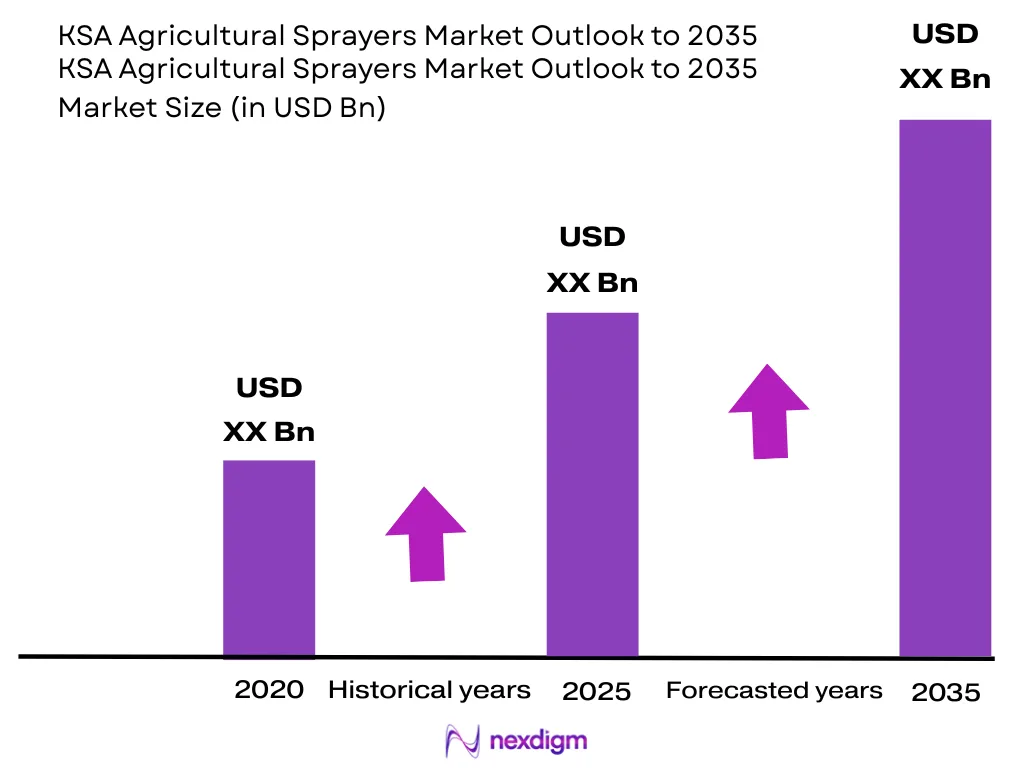
The KSA Agricultural Sprayers Market was valued at approximately USD ~ billion in 2024 based on a comprehensive assessment of agricultural machinery imports, crop protection equipment demand, and mechanisation trends across the Kingdom’s cultivated farming regions and controlled environment agriculture facilities. The market operates within a uniquely demanding environment defined by extreme aridity, intense solar radiation, high summer temperatures, severe water scarcity, and limited cultivable land, which fundamentally shape the nature of agricultural activity and the types of spraying equipment deployed. According to data published by the Ministry of Environment, Water and Agriculture (MEWA) and the National Centre for Agricultural Research and Extension (NCARE), the Kingdom of Saudi Arabia cultivates approximately 1.5 to 1.8 million hectares of agricultural land, with date palm cultivation, wheat and barley production, vegetable growing, and fodder crop farming constituting the primary agricultural activities. Saudi Arabia’s Vision 2030 agricultural transformation agenda, the National Date Palm Programme, and the broader food security strategy articulated through the Saudi Agricultural Development Fund (SADF) have significantly elevated government investment in agricultural modernisation, precision farming technologies, and controlled environment agriculture, creating a strategically important enabling environment for advanced spraying equipment adoption across the Kingdom.
Market Segmentation
By Sprayer Type
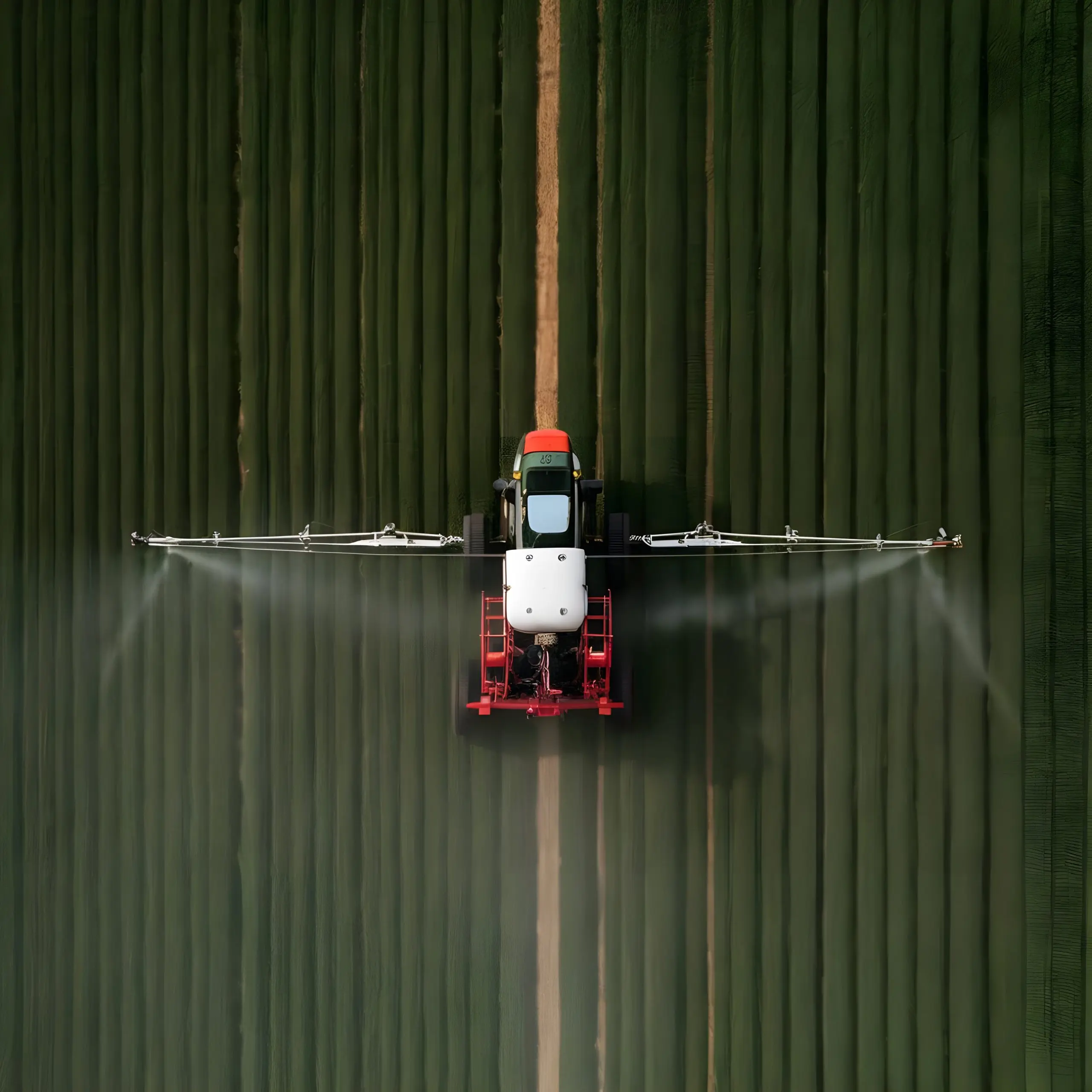
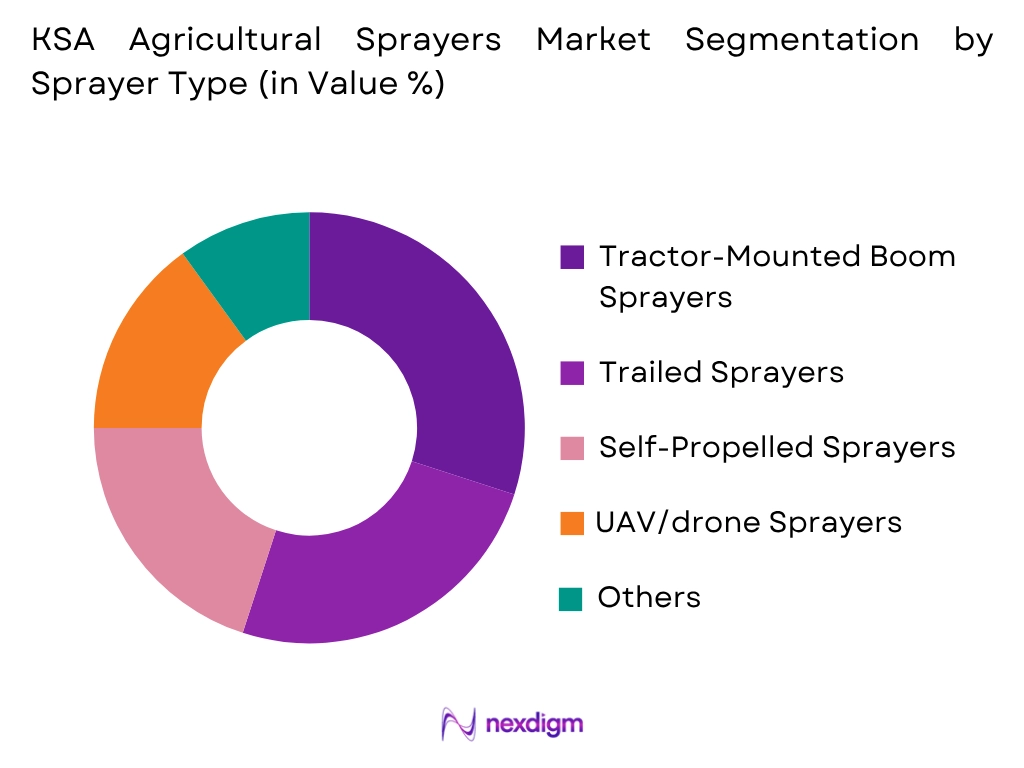
KSA Agricultural Sprayers Market is segmented by sprayer type into self-propelled sprayers, trailed sprayers, tractor-mounted boom sprayers, power knapsack sprayers, manual knapsack sprayers, motorised mist blowers, UAV/drone sprayers, and backpack and portable sprayers. Tractor-mounted boom sprayers and trailed sprayers dominate the commercial farming segment, particularly across large-scale wheat, barley, and fodder crop operations concentrated in the Al-Qassim, Al-Jouf, and Riyadh regions, where pivot-irrigated farms frequently exceed several thousand hectares in operational area. These systems offer compatibility with the powerful agricultural tractors operated on Saudi Arabia’s large commercial farms and deliver the tank capacity and boom width necessary for efficient coverage of extensive field areas. Power knapsack and manual knapsack sprayers constitute the largest segment by unit volume, serving the large number of smallholder date palm garden owners, vegetable plot operators, and subsistence farmers across the southwestern highlands of Asir, Jizan, and Najran. UAV/drone sprayers are emerging as the most strategically significant growth segment, supported by government agricultural modernisation programmes and the specific challenges posed by the height and density of mature date palm trees that limit the effectiveness of conventional ground-based spray equipment. Electrostatic and mist blower technologies are also gaining adoption within greenhouse and protected horticulture facilities expanding across the Kingdom under Vision 2030 food security initiatives.
By Crop Type
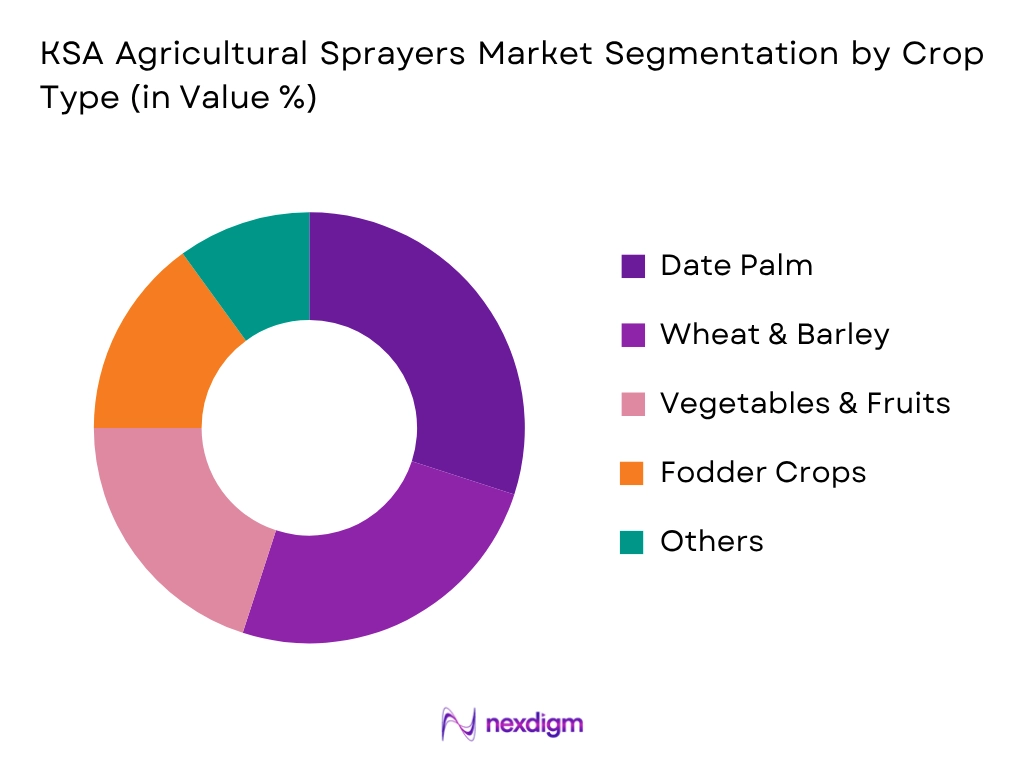
KSA Agricultural Sprayers Market is segmented by crop type into date palms, wheat and barley, vegetables, fodder crops, fruits, greenhouse horticultural crops, medicinal and aromatic plants, and other field crops. Date palm cultivation accounts for the largest market share, reflecting Saudi Arabia’s position as one of the world’s leading date-producing nations and the deep cultural and economic significance of this crop throughout the Kingdom. Saudi Arabia is estimated to host over 30 million date palm trees, producing in excess of one million metric tonnes of dates annually, with major cultivation zones in Al-Ahsa, Al-Qassim, Madinah, and Riyadh regions. Date palms require targeted crop protection applications for red palm weevil management, lesser date moth control, Bayoud disease prevention, and foliar nutrition, demanding specialised spraying equipment capable of delivering treatments effectively at canopy heights of up to fifteen metres in mature specimens. Wheat and barley cultivation, historically practised under pivot irrigation across Al-Qassim, Al-Jouf, Tabuk, and the Northern Borders region, generates significant demand for large-capacity boom sprayers, though strategic reduction in wheat production in accordance with fossil groundwater conservation policies has moderated this segment’s growth trajectory. Vegetable production, increasingly concentrated in greenhouse and controlled environment facilities across Riyadh, Al-Ahsa, and Hail, represents a growing and technology-intensive demand segment for precision spraying systems.
Competitive Landscape
The KSA Agricultural Sprayers Market is characterised almost entirely by imported agricultural equipment distributed through authorised dealers, trading companies, and government-affiliated agricultural enterprises, reflecting the Kingdom’s absence of domestic agricultural machinery manufacturing. The competitive landscape is shaped by the UAE and Bahrain serving as regional distribution hubs for European, American, Chinese, and Japanese equipment brands supplying the Gulf agricultural market. Premium international brands including John Deere, Case IH, Massey Ferguson, Hardi, and Amazone maintain strong institutional relationships with large government-linked farming enterprises such as NADEC, SALIC, ARASCO, and Al Safi Danone Farms, which collectively represent a significant proportion of the Kingdom’s commercial agricultural land. Chinese agricultural drone manufacturers DJI Agriculture and XAG have established growing distribution networks across KSA, benefiting from competitive pricing, capable technical support partnerships, and alignment with government agricultural modernisation ambitions under Vision 2030.
| Company | Establishment Year | Headquarters | Product Portfolio | Precision Agriculture Integration
|
Tank Capacity Range | Dealer Network Strength | After-Sales Support | Innovation Capability |
| John Deere KSA | 1837 | ~ | ~ | ~ | ~ | ~ | ~ | ~ |
| Al Rajhi Agriculture | 1981 | ~ | ~ | ~ | ~ | ~ | ~ | ~ |
| Saudi Agricultural & Livestock Investment Co. (SALIC) | 2009 | ~ | ~ | ~ | ~ | ~ | ~ | ~ |
| Hardi KSA | 1957 | ~ | ~ | ~ | ~ | ~ | ~ | ~ |
| DJI Agriculture (KSA) | 2006 | ~ | ~ | ~ | ~ | ~ | ~ | ~ |
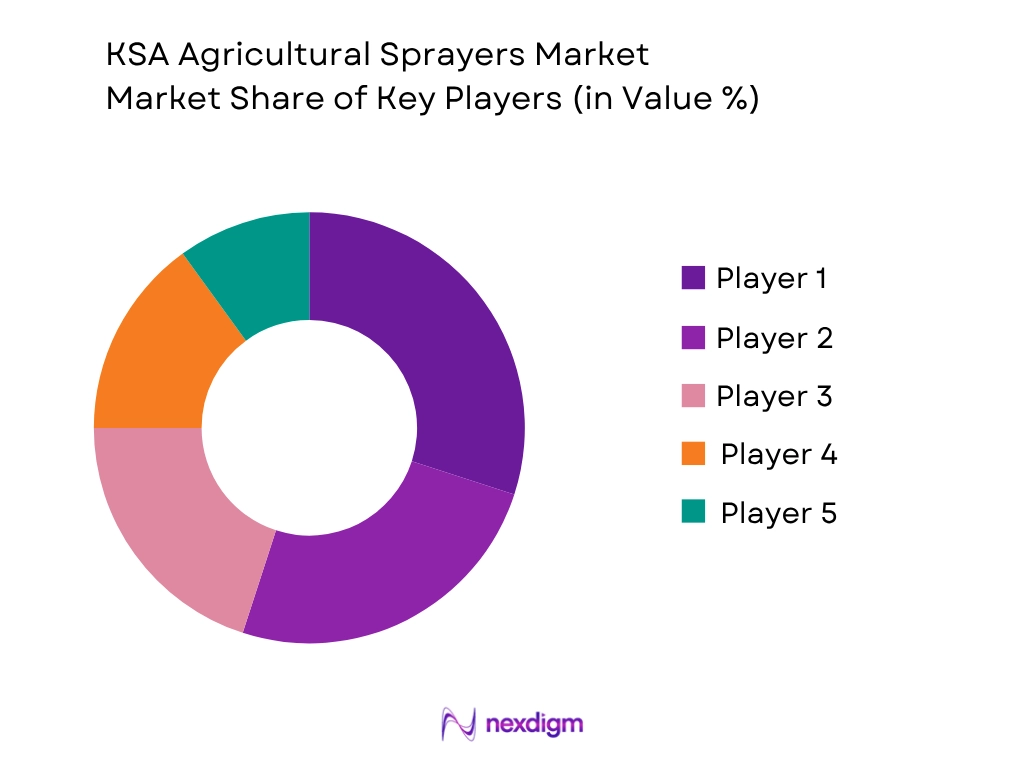
KSA Agricultural Sprayers Market Analysis
Growth Drivers
Saudi Vision 2030 Food Security Strategy and Agricultural Modernisation Investment
Saudi Vision 2030’s agricultural dimension, articulated through the National Food Security Programme and operationalised across the Ministry of Environment, Water and Agriculture and the Saudi Agricultural Development Fund, represents the most powerful structural driver of agricultural equipment demand in the Kingdom. The strategy targets a significant reduction in Saudi Arabia’s dependence on food imports, currently one of the highest per capita in the world, by expanding domestic production of vegetables, fruits, poultry, dairy, and processed food products. The MEWA administers comprehensive farmer support programmes including subsidised inputs, equipment purchase grants, preferential loans through the Saudi Agricultural Development Fund, and technical extension services that directly support mechanisation investment. The Saudi Agricultural Development Fund has disbursed billions of Saudi riyals in concessional financing for agricultural projects, including mechanisation investments covering tractor-mounted sprayers, self-propelled systems, and advanced precision agriculture equipment. Large-scale government-linked agricultural enterprises including the National Agriculture Development Company (NADEC), Arabian Agricultural Services Company (ARASCO), and Saudi Agricultural and Livestock Investment Company (SALIC) collectively operate hundreds of thousands of hectares of irrigated farmland and represent significant institutional purchasers of commercial-grade spraying equipment. The combination of high government purchasing power, strategic food security imperative, and multi-billion riyal investment programmes creates the dominant enabling environment for agricultural sprayer market development across the Kingdom.
National Date Palm Programme and Date Sector Modernisation
The Kingdom’s National Date Palm Programme, implemented under the authority of the Ministry of Environment, Water and Agriculture in collaboration with the King Abdulaziz Centre for Date Palm Research and Development, represents a focused and well-funded driver of specialised spraying equipment demand. Saudi Arabia’s date palm sector, which encompasses an estimated 30 million trees and produces over one million metric tonnes of dates annually across Al-Ahsa, Al-Qassim, Madinah, Al-Jouf, and Riyadh regions, faces persistent and economically significant crop protection challenges. The red palm weevil (Rhynchophorus ferrugineus) remains the most destructive pest of date palms across the Arabian Peninsula, causing severe losses in affected orchards and requiring systematic chemical and biological treatment programmes. The lesser date moth, Bayoud disease, and various fungal conditions affecting the fruit bunch further require targeted spraying interventions throughout the cultivation calendar. Conventional manual and knapsack sprayers face inherent limitations in treating mature date palms whose canopy can exceed ten to fifteen metres in height, creating a compelling practical case for UAV drone-based crop protection services. The MEWA and King Abdulaziz Centre have conducted extensive trials of drone-based applications for red palm weevil pheromone trapping and chemical treatment delivery, creating institutional awareness and procurement interest in this technology. Government subsidies for date palm farm mechanisation and the programme’s emphasis on reducing production losses through improved pest management directly support sprayer market development within this critically important crop segment.
Market Challenges
Extreme Desert Climate and Severely Restricted Agricultural Spraying Windows
The Kingdom of Saudi Arabia’s hyperarid desert climate imposes fundamental operational constraints on agricultural spraying activities throughout the year, representing a structural challenge that is unique in its severity among major agricultural markets globally. Summer ambient temperatures across the agricultural heartlands of Al-Qassim, Riyadh, Al-Ahsa, and Al-Jouf regularly exceed 48 degrees Celsius during peak months, rendering outdoor agricultural operations including spraying effectively impossible during midday and afternoon periods and significantly restricting total daily spraying hours. Elevated evaporation rates under intense solar radiation conditions dramatically reduce the efficacy of aqueous spray applications, increasing chemical wastage and reducing the agronomic value of spray operations conducted outside of early morning or evening windows. According to MEWA agricultural operational guidelines, spray applications during summer months are typically restricted to hours before sunrise and the first two to three hours after dawn, compressing operational windows and reducing annual equipment utilisation rates. Dust and sandstorm events, which occur throughout the year but with increased frequency during spring and early summer, contaminate spray mixtures, block nozzle assemblies, and damage electronic control systems. The combination of extreme heat, low humidity, dust exposure, and ultraviolet radiation accelerates equipment degradation and shortens service intervals, increasing the total cost of ownership for spraying equipment operated in Saudi Arabia relative to more temperate farming environments.
Fossil Groundwater Depletion and Strategic Constraints on Agricultural Expansion
Saudi Arabia’s agricultural sector faces a fundamental and long-term structural constraint in the progressive depletion of non-renewable fossil groundwater aquifers, which have historically underpinned the Kingdom’s irrigated agricultural production across the central and northern regions. The Saudi government’s policy decision to phase out irrigated wheat cultivation, implemented progressively since the 1990s and substantially completed, reflects the strategic recognition that fossil groundwater consumption for low-value grain production is not sustainable. This policy has materially reduced the cultivated area under wheat and barley in Al-Qassim, Al-Jouf, Tabuk, and the Northern Borders region, directly diminishing the addressable market for large-capacity boom sprayers used in grain crop protection programmes. While alternative crops including vegetables, fruits, and high-value horticultural produce are being promoted as water-efficient substitutes, the transition represents a structural reduction in demand from the historically important grain farming segment. The Saudi Water Authority’s national water conservation strategy further imposes restrictions on groundwater extraction volumes for agricultural use, placing a ceiling on potential expansion of irrigated farmland across the Kingdom. These water resource constraints structurally limit the scale of Saudi Arabia’s agricultural sector and, by extension, moderate the long-term growth potential of the agricultural sprayers market relative to countries where arable land and water resources are less constrained.
Market Opportunities
UAV Drone Sprayer Adoption for Date Palm and Large-Scale Farm Management
Agricultural UAV/drone sprayers represent the most compelling and strategically aligned growth opportunity for the KSA Agricultural Sprayers Market, given the specific agronomic challenges of date palm cultivation, the large operational scale of government-linked farming enterprises, and the Kingdom’s strong institutional appetite for advanced technology adoption. Date palm trees, which constitute Saudi Arabia’s most culturally and economically significant agricultural crop, present fundamental physical access challenges for conventional ground-based and even elevated platform spraying equipment due to their mature height, canopy density, and the sensitivity of the developing fruit bunch to physical contact. UAV-based applications enable precise and targeted delivery of insecticide, pheromone, and foliar nutrient solutions to specific canopy zones without mechanical contact, offering clear agronomic advantages in red palm weevil and lesser date moth management programmes. The General Authority of Civil Aviation (GACA) has established regulatory frameworks for commercial drone operations in the Kingdom, and the MEWA has incorporated agricultural drone technology into its mechanisation promotion and pest management programmes. Large government-linked farm operators including NADEC and ARASCO have the institutional capacity and financial resources to adopt drone spraying services at commercial scale, creating high-value procurement opportunities. The rapid decline in agricultural drone hardware costs globally, combined with the growing availability of trained drone operators and local service providers within the Kingdom, is progressively improving the economic viability of drone-based crop protection across KSA’s date palm and large-scale farm sectors.
Controlled Environment Agriculture Expansion and Greenhouse Precision Spraying
The rapid expansion of controlled environment agriculture (CEA) and greenhouse horticulture across Saudi Arabia, actively promoted and supported under Vision 2030’s food security and domestic production objectives, is creating growing and specialised demand for spraying technologies optimised for protected farming environments. MEWA statistics indicate substantial growth in the number of registered greenhouse and shade-house facilities across the Kingdom, particularly in the Riyadh, Al-Ahsa, and Hail regions, as government subsidies, land allocation programmes, and concessional financing from the Saudi Agricultural Development Fund incentivise investment in water-efficient protected agriculture. Greenhouse vegetable production, including tomatoes, cucumbers, capsicum, and leafy greens, requires frequent and precise fungicide, insecticide, and foliar fertiliser applications within enclosed temperature-controlled environments where conventional boom spray equipment cannot be effectively deployed. Electrostatic sprayers, automated greenhouse spray systems, and motorised mist blowers suited to enclosed canopy structures are gaining adoption as the protected agriculture sector expands. Additionally, the emerging vertical farming sector, with projects supported by NEOM, King Abdullah Economic City, and Vision 2030-aligned urban agriculture initiatives, requires ultra-precision foliar nutrition and integrated pest management delivery systems that represent a premium and technology-intensive demand segment. This structural shift toward water-efficient protected agriculture creates a durable and growing addressable market for specialised precision spraying equipment across the Kingdom.
Future Outlook
The KSA Agricultural Sprayers Market is expected to experience steady and technology-driven growth over the forecast period, underpinned by sustained government investment under Vision 2030’s food security agenda, the National Date Palm Programme’s ongoing mechanisation drive, rapid expansion of controlled environment agriculture, and progressive adoption of UAV drone spraying technologies across date palm and large-scale farming operations. Demand for advanced spraying systems, particularly drone-based, electrostatic, and IoT-integrated precision equipment, is anticipated to strengthen as government-linked farm enterprises prioritise operational efficiency, water conservation, and crop protection effectiveness. The KSA’s combination of exceptional institutional purchasing power, strong government strategic commitment to agricultural modernisation, and high openness to advanced technology adoption positions the market for disproportionate penetration of premium spraying solutions relative to the Kingdom’s total agricultural land area. Long-term market development will be shaped by the pace of Vision 2030 programme implementation, the evolution of fossil groundwater conservation policies, and the progressive maturation of domestic AgriTech and precision agriculture service ecosystems across the Kingdom.
Major Players
- John Deere (KSA Operations)
- Al Rajhi Agriculture
- Saudi Agricultural and Livestock Investment Company (SALIC)
- Hardi International (KSA)
- DJI Agriculture (KSA Operations)
- CNH Industrial (Case IH KSA)
- AGCO Corporation (KSA Distribution)
- Amazone (KSA Distribution)
- National Agriculture Development Company (NADEC)
- Al Safi Danone Farms
- XAG (KSA Operations)
- Arabian Agricultural Services Company (ARASCO)
- Kuhn Group (KSA Distribution)
- Saudi Drone Services
- Rivulis Irrigation (KSA)
Key Target Audience
- Agricultural Equipment Importers and Authorised Distributors
- Agricultural Machinery Trading Companies
- Government-Linked Agricultural Enterprises and Development Authorities
- Precision Agriculture and AgriTech Solution Providers
- Crop Protection Chemical Manufacturers and Distributors
- Investments and Venture Capitalist Firms
- Government and Regulatory Bodies (Ministry of Environment Water and Agriculture, Saudi Agricultural Development Fund, General Authority of Civil Aviation, Saudi Standards Metrology and Quality Organisation, King Abdulaziz Centre for Date Palm Research and Development)
- Agricultural Equipment Rental and Contract Application Service Companies
Research Methodology
Step 1: Identification of Key Variables
The initial phase involves constructing an ecosystem map encompassing all major stakeholders within the KSA Agricultural Sprayers Market. This process includes extensive secondary research through government agricultural databases, Ministry of Environment Water and Agriculture publications, Saudi Agricultural Development Fund programme records, import trade statistics, manufacturer and distributor reports, and agricultural technology publications. The objective is to identify critical market variables including equipment import volumes, cultivated crop area by region, government programme investment levels, technology adoption priorities, and purchasing behaviour across government-linked and private farming segments within the Kingdom’s unique agricultural context.
Step 2: Market Analysis and Construction
Historical market data relating to agricultural machinery imports, crop production trends, controlled environment agriculture expansion, date palm sector investment, and spraying technology adoption are collected and analysed. Demand-side assessment focuses on government-linked enterprise procurement patterns, large commercial farm operator investment behaviour, and crop protection requirements across date palm, grain, vegetable, and greenhouse production systems. Supply-side analysis evaluates distributor import volumes, dealer sales, and product portfolio coverage across KSA agricultural regions and government procurement channels. Both approaches contribute to market size estimation and forecasting.
Step 3: Hypothesis Validation and Expert Consultation
Preliminary market findings and assumptions are validated through structured interviews with industry participants including agricultural equipment distributors, MEWA extension officers, government-linked farm enterprise procurement managers, agronomists, date palm pest management specialists, precision agriculture solution providers, drone service operators, and industry associations. These consultations provide practical insights regarding Vision 2030 programme impacts, technology adoption priorities, import supply chain dynamics, date palm sector mechanisation requirements, and future demand outlook specific to Saudi Arabian agricultural conditions, thereby strengthening the reliability of research findings.
Step 4: Research Synthesis and Final Output
The final stage involves triangulating information collected from primary interviews, secondary research sources, government programme data, trade statistics, and proprietary databases. Market estimates are refined through cross-verification across multiple data points and stakeholder perspectives. Forecast models are developed using Vision 2030 agricultural investment plans, MEWA food security programme targets, date palm sector development objectives, technology adoption trajectories, and controlled environment agriculture expansion projections to generate comprehensive and reliable market intelligence for the KSA Agricultural Sprayers Market.

- Executive Summary
- Research Methodology (Market Definitions and Assumptions, Abbreviations, Market Sizing Approach, Top-Down Analysis, Bottom-Up Analysis, Demand-Side Assessment, Supply-Side Assessment, Primary Industry Interviews, Distributor and Dealer Validation, Farm-Level Survey Assessment, Data Triangulation, Forecasting Framework, Limitations and Future Conclusions)

- Definition and Scope
- Industry Evolution and Market Genesis
- Timeline of Technological Advancements in Agricultural Spraying
- Agricultural Equipment Value Chain Analysis
- Agricultural Sprayer Supply Chain Analysis

- Growth Drivers (Saudi Vision 2030 Agricultural Self-Sufficiency Targets, Date Palm Sector Modernisation and National Date Palm Programme, Expansion of Controlled Environment Agriculture and Vertical Farming, Precision Agriculture Adoption among Large-Scale Farm Enterprises, Government-Funded Agricultural Development and Support Programmes)
- Market Challenges (Extreme Aridity and High Ambient Temperatures Restricting Spray Windows, Total Import Dependency for Agricultural Equipment, Fossil Groundwater Depletion and Irrigation Constraints, Scarcity of Skilled Agricultural Labour, High Equipment Operating Costs in Desert Conditions)
- Market Opportunities (UAV Drone Sprayer Adoption for Date Palm and Open-Field Agriculture, Vertical Farming and Greenhouse Precision Spraying Technologies, AgriTech Investment under Vision 2030 and NEOM, Electrostatic and Smart Sprayer Technology, Biological and Organic Input Application Systems)
- Market Trends (Solar-Powered and Battery-Operated Portable Sprayers, GPS-Guided Precision Boom Sprayers, IoT and Remote Monitoring Integration, AI-Based Spray Optimisation, Electrostatic Sprayer Technology Adoption)
- Government Regulations (Ministry of Environment Water and Agriculture Pesticide Registration and Equipment Standards, Saudi Food and Drug Authority Agrochemical Compliance, General Authority of Civil Aviation Drone Regulations, Saudi Standards Metrology and Quality Organisation Equipment Certification, Saudi Agricultural Development Fund Financing Guidelines)
- SWOT Analysis
- PESTLE Analysis
- Stakeholder Ecosystem
- Porter’s Five Forces Analysis
- Competition Ecosystem

- By Market Value (2020-2025)
- By Units Sold (2020-2025)
- By Average Selling Price (2020-2025)

- By Sprayer Type (In Value %)
Self-Propelled Sprayers
Trailed Sprayers
Tractor-Mounted Boom Sprayers
Power Knapsack Sprayers
Manual Knapsack Sprayers
Motorised Mist Blowers
Backpack and Portable Sprayers
UAV/Drone Sprayers - By Application (In Value %)
Herbicide Application
Fungicide Application
Insecticide Application
Foliar Fertiliser Application
Biological Inputs Application - By Crop Type (In Value %)
Date Palms
Wheat and Barley
Vegetables (Tomatoes, Squash, Onions, Leafy Greens)
Fodder Crops (Alfalfa, Rhodes Grass, Sorghum)
Fruits (Citrus, Pomegranate, Grapes)
Greenhouse Horticultural Crops
Medicinal and Aromatic Plants
Other Field Crops - By Distribution Channel (In Value %)
OEM Direct Sales
Agricultural Equipment Dealers and Trading Companies
Government Agricultural Procurement Channels
Agri-Input Retail Networks and Agricultural Cooperatives
Online Agricultural Equipment Platforms - By Region (In Value %)
Al-Ahsa and Eastern Province
Al-Qassim Region
Riyadh Region
Asir and Jizan (Southwestern Highlands)
Al-Jouf and Northern Borders Region

- Market Share of Major Players (By Value, Units Sold, Sprayer Type, Crop Segment, Region)
- Cross Comparison Parameters (Boom Width Portfolio, Tank Capacity Range, Field Coverage Efficiency (ha/hr), Precision Spraying Capability, Variable Rate Application Integration, Dealer Network Strength, After-Sales Service Reach, Spray Drift Reduction Technology)
- Competitive Positioning Matrix (Technology Leadership, Pricing Competitiveness, Brand Recognition, Regional Presence)
- SWOT Analysis of Major Players
- Pricing Analysis by Sprayer Category and Capacity
- Detailed Profiles of Major Companies
John Deere (KSA Operations)
Al Rajhi Agriculture
Saudi Agricultural and Livestock Investment Company (SALIC)
Hardi International (KSA)
DJI Agriculture (KSA Operations)
CNH Industrial (Case IH KSA)
AGCO Corporation (KSA Distribution)
Amazone (KSA Distribution)
National Agriculture Development Company (NADEC)
Al Safi Danone Farms
XAG (KSA Operations)
Arabian Agricultural Services Company (ARASCO)
Kuhn Group (KSA Distribution)
Saudi Drone Services
Rivulis Irrigation (KSA)

- Farm Equipment Ownership and Utilisation Analysis (Hours of Operation, Spraying Frequency, Fleet Age, Seasonal Utilisation Rate)
- Farm Mechanisation Assessment (Mechanisation Index, Equipment Density per Hectare, Technology Adoption Rate)
- Purchasing Power and Investment Capacity Analysis (Farm Revenue, Access to Saudi Agricultural Development Fund Loans and Government Subsidies, ROI Expectations, Capital Expenditure Trends)
- Crop Protection Spending Analysis (Chemical Input Spend, Application Cost per Hectare, Spray Frequency by Crop)
- Farmer Needs and Pain Point Assessment (Extreme Heat Management, Water Conservation, Input Efficiency, Downtime Reduction, Coverage Accuracy)

- By Market Value (2026-2035)
- By Units Sold (2026-2035)
- By Average Selling Price (2026-2035)


 Request a Sample
 Ask for Customization
 Get a Quote
 Enquire Now