

 Download PDF
 Download PDF
Market Overview
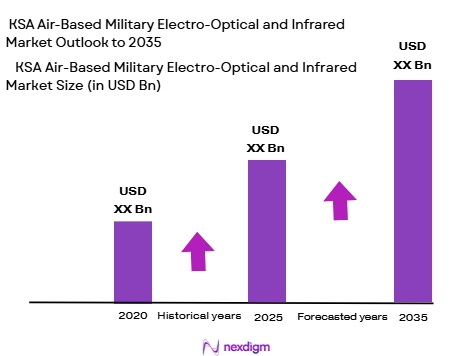
The KSA Air-Based Military Electro-Optical and Infrared Systems market is valued at approximately USD ~billion, based on recent analyses. The market is driven primarily by the growing need for enhanced surveillance, targeting, and reconnaissance capabilities within the region’s defense sector. Rising defense budgets in Saudi Arabia, ongoing military modernization programs, and increasing geopolitical tensions in the Middle East contribute to this demand. As the need for advanced defense technologies grows, the market is expected to continue expanding, supported by investments from the government and private sector.
Saudi Arabia, as the largest economy in the Gulf Cooperation Council (GCC), leads the market for air-based military electro-optical and infrared systems. The country’s strategic location, its significant defense spending, and its continuous investment in military modernization contribute to its dominance. Additionally, cities like Riyadh and Dhahran serve as hubs for defense activities, with many defense contractors operating in these areas. The government’s focus on enhancing surveillance and reconnaissance capabilities to address regional security concerns also strengthens the market’s position in Saudi Arabia.
Market Segmentation
By System Type
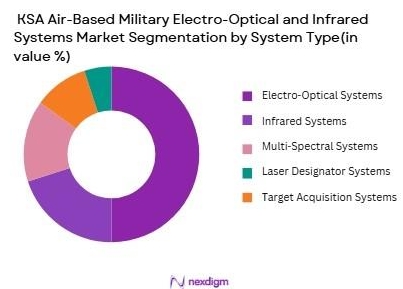
The KSA Air-Based Military Electro-Optical and Infrared Systems market is segmented by system type into Electro-Optical Systems, Infrared Systems, Multi-Spectral Systems, Laser Designator Systems, and Target Acquisition Systems.
Electro-Optical Systems currently dominate the market due to their widespread use in surveillance and reconnaissance operations. These systems are capable of delivering high-resolution imagery in daylight conditions, which is critical for defense applications in the region. The increased adoption of these systems is attributed to their reliability and effectiveness in monitoring air and ground targets. Notable defense contractors in Saudi Arabia have focused on integrating advanced electro-optical systems to enhance military capabilities, which further drives their dominance in the market.
By Platform Type
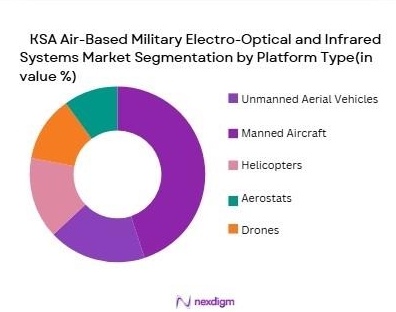
The market is segmented by platform type into Unmanned Aerial Vehicles (UAVs), Manned Aircraft, Helicopters, Aerostats, and Drones.UAVs dominate the platform segment due to their increased use in military surveillance and reconnaissance operations. Saudi Arabia has been investing heavily in UAV technology to enhance border surveillance and intelligence-gathering capabilities. UAVs provide cost-effective and efficient solutions for air-based monitoring, and they can operate in high-risk environments where manned aircraft may not be feasible. As UAV technology continues to advance, it is expected that this platform type will maintain a significant share of the market in the coming years.
Competitive Landscape
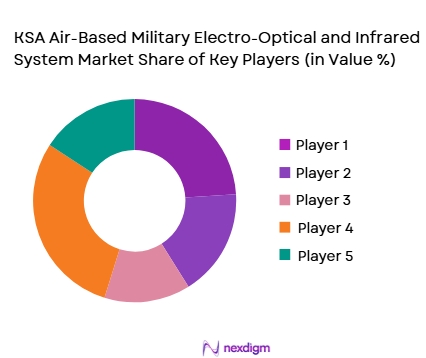
The KSA Air-Based Military Electro-Optical and Infrared Systems market is dominated by both global defense giants and regional players. Major global defense companies such as Lockheed Martin, Northrop Grumman, and Raytheon Technologies have a strong presence in the region, owing to their advanced technologies and established relationships with the Saudi government. Additionally, regional companies like Saudi Arabian Military Industries (SAMI) are becoming increasingly influential by offering localized solutions tailored to the specific needs of the Saudi military.
Competitive Landscape Table
| Company | Year Established | Headquarters | Technology Focus | Military Solutions | Product Portfolio | Strategic Partnerships |
| Lockheed Martin | 1912 | Bethesda, Maryland | ~ | ~ | ~ | ~ |
| Northrop Grumman | 1939 | Falls Church, Virginia | ~ | ~ | ~ | ~ |
| Raytheon Technologies | 1922 | Waltham, Massachusetts | ~ | ~ | ~ | |
| Elbit Systems | 1966 | Haifa, Israel | ~ | ~ | ~ | ~ |
| BAE Systems | 1999 | Farnborough, UK | ~ | ~ | ~ | ~ |
KSA Air-Based Military Electro-Optical and Infrared Systems Market Analysis
Growth Drivers
Urbanization
Indonesia’s urbanization rate has been steadily increasing, with approximately ~of the population residing in urban areas as of 2024. The country is undergoing significant urban growth, which has led to increased industrial activity, vehicular emissions, and pollution levels. This urban expansion creates a greater need for air quality monitoring systems to address the challenges of air pollution in densely populated cities like Jakarta, Surabaya, and Bandung. As cities expand, air quality management becomes crucial for public health and environmental sustainability, driving demand for advanced air quality monitoring technologies.
Industrialization
Indonesia’s industrial sector, which contributed ~of GDP in 2023, continues to grow with increased production activities in sectors such as manufacturing, energy, and construction. This growth has been accompanied by rising pollution levels, particularly in urban and industrial areas. As industries expand, so does the need for effective air quality monitoring to meet regulatory standards and protect public health. With increased energy production, mining, and manufacturing, air quality management systems are critical to monitoring pollutants such as PM~and NOx.
Restraints
High Initial Costs
The high initial costs associated with the installation and maintenance of air quality monitoring systems remain a significant barrier for both government agencies and private companies. These systems, including the sensors, data collection, and real-time reporting infrastructure, can be expensive to deploy, especially in regions outside of major urban centers. The high capital expenditure required for setting up these systems limits the widespread adoption in smaller cities and rural areas. Despite government funding for urban regions, the cost factor continues to restrict broader market growth.
Technical Challenges
Air quality monitoring systems often face technical challenges related to accuracy, calibration, and data integration. In Indonesia, monitoring equipment must function effectively in diverse environmental conditions, including tropical climates, which can impact the long-term reliability of sensors. Additionally, the integration of real-time data with existing infrastructure, such as urban management systems, poses a significant challenge. These technical barriers slow down the seamless deployment of effective monitoring solutions across the country.
Opportunities
Technological Advancements
Recent technological advancements in sensor technology, data analytics, and cloud computing present a significant opportunity for the air quality monitoring market in Indonesia. The cost of sensors has decreased, and their accuracy has significantly improved, making it easier for both private and government organizations to adopt advanced air quality systems. Furthermore, the development of IoT-based monitoring platforms allows real-time air quality data collection and analysis, providing more detailed and actionable insights to both local authorities and the public. These technological advancements create a favorable environment for the growth of the market, enhancing its future potential.
International Collaborations
International collaborations between Indonesia and countries with advanced air quality management systems, such as Japan and the United States, present significant growth opportunities. These partnerships can facilitate the transfer of technology, knowledge sharing, and joint initiatives for air quality management. Collaborative efforts often bring in funding and technical expertise, aiding in the deployment of advanced monitoring solutions in regions with poor infrastructure. Additionally, these collaborations can assist in developing better emission control policies and aligning Indonesia’s air quality standards with global practices.
Future Outlook
Over the next ~years, the KSA Air-Based Military Electro-Optical and Infrared Systems market is expected to witness significant growth. This is driven by the continuous modernization of the Saudi military, increasing regional security concerns, and the growing need for advanced surveillance systems. The Saudi government’s defense budget allocation and its strategic military collaborations with leading global defense contractors will play a critical role in shaping the market’s trajectory. Advancements in system miniaturization and artificial intelligence integration will further fuel demand, creating new opportunities for market expansion.
Major Players
- Lockheed Martin
- Northrop Grumman
- Raytheon Technologies
- Elbit Systems
- BAE Systems
- Leonardo
- Thales Group
- Saab Group
- L3Harris Technologies
- Israel Aerospace Industries
- Harris Corporation
- Leonardo DRS
- General Dynamics
- Rafael Advanced Defense Systems
- Hanwa Systems
Key Target Audience
- Defense Contractors
- Government and Regulatory Bodies
- Military and Security Agencies
- Investments and Venture Capitalist Firms
- Aerospace and Defense OEMs
- Defense Procurement Departments
- Military and Security Technology Integrators
- Armed Forces Leadership
Research Methodology
Step 1: Identification of Key Variables
The initial phase involves identifying the key drivers, restraints, and opportunities influencing the KSA Air-Based Military Electro-Optical and Infrared Systems market. This is achieved through secondary data analysis, focusing on key governmental policies, defense budgets, and technological developments.
Step 2: Market Analysis and Construction
This step includes a comprehensive analysis of historical data regarding the market size, system installations, and technological developments. A detailed market map is created to track the growth and adoption of various system types across different platforms.
Step 3: Hypothesis Validation and Expert Consultation
The research team validates hypotheses through interviews with industry experts, including defense contractors and military officials. These consultations provide real-world insights into market trends, technological innovations, and emerging opportunities.
Step 4: Research Synthesis and Final Output
In the final phase, a synthesis of all gathered data is completed. The research team combines the insights from primary and secondary sources to ensure the accuracy of the market forecast and identifies the critical variables impacting market growth.

- Executive Summary
- Research Methodology (Definitions, Scope, Industry Assumptions, Market Sizing Approach, Primary & Secondary Research Framework, Data Collection & Verification Protocol, Analytic Models & Forecast Methodology, Limitations & Research Validity Checks)

- Market Definition and Scope
- Value Chain & Stakeholder Ecosystem
- Regulatory / Certification Landscape
- Sector Dynamics Affecting Demand
- Strategic Initiatives & Infrastructure Growth

- Growth Drivers
Increasing demand for surveillance and reconnaissance capabilities
Rising defense budgets in the KSA region
Technological advancements in electro-optical and infrared systems - Market Challenges
High initial investment and maintenance costs
Limited local manufacturing capabilities
Regulatory and certification hurdles for advanced systems - Market Opportunities
Growing regional geopolitical tensions driving defense investments
Technological innovation creating more compact and affordable solutions
Collaboration opportunities with international defense agencies - Trends
Integration of AI for enhanced image processing
Shift towards multi-sensor systems for broader capabilities
Increased adoption of unmanned aerial platforms in military applications - Government regulations
Export control regulations for military technologies
Compliance with international defense standards
Regulations on the use of EO/IR systems in defense operations - SWOT analysis
Strength: Saudi Arabia’s strong military and defense capabilities
Weakness: High reliance on foreign technology and suppliers
Opportunity: Expanding UAV applications for defense operations
Threat: Rising competition from global defense technology firms - Porters 5 forces
Threat of new entrants: Low
Bargaining power of suppliers: Moderate
Bargaining power of buyers: High
Threat of substitute products: Moderate
Industry rivalry: High

- By Market Value ,2020-2025
- By Installed Units ,2020-2025
- By Average System Price, 2020-2025
- By System Complexity Tier ,2020-2025

- By System Type (In Value%)
Electro-Optical Systems
Infrared Systems
Multi-Spectral Systems
Laser Designator
SystemsTarget
Acquisition Systems - By Platform Type (In Value%)
Unmanned Aerial Vehicles (UAVs)
Manned Aircraft
Helicopters
Aerostats
Drones - By Fitment Type (In Value%)
Pod Mounted
Airframe Integrated
Wing Pod
Underbelly Integrated
Tail Mounted - By EndUser Segment (In Value%)
Military Air Forces
Military Naval Forces
Defense Contractors
Government Defense Agencies
Security Forces - By Procurement Channel (In Value%)
Direct Procurement
Defense Contractors
OEM Suppliers
Government Contracts
International Partnerships

- Cross Comparison Parameters (System Performance, Pricing, Market Share, Technological Innovation, Product Portfolio)
- SWOT Analysis of Key Competitors
- Pricing & Procurement Analysis
- Key Players
Lockheed Martin
Northrop Grumman
Raytheon Technologies
Saab Group
BAE Systems
Elbit Systems
Thales Group
L3Harris Technologies
Leonardo
General Dynamics
Israel Aerospace Industries
Hanwa Systems
Rafael Advanced Defense Systems
Harris Corporation
Sierra Nevada Corporation

- Adoption of advanced electro-optical and infrared systems in defense modernization
- Focus on improving situational awareness for military operations
- Increasing collaboration between regional and international defense forces
- Need for cost-effective and reliable defense solutions

- Forecast Market Value ,2026-2035
- Forecast Installed Units ,2026-2035
- Price Forecast by System Tier, 2026-2035
- Future Demand by Platform ,2026-2035


 Request a Sample
 Ask for Customization
 Get a Quote
 Enquire Now