

 Download PDF
Market Overview
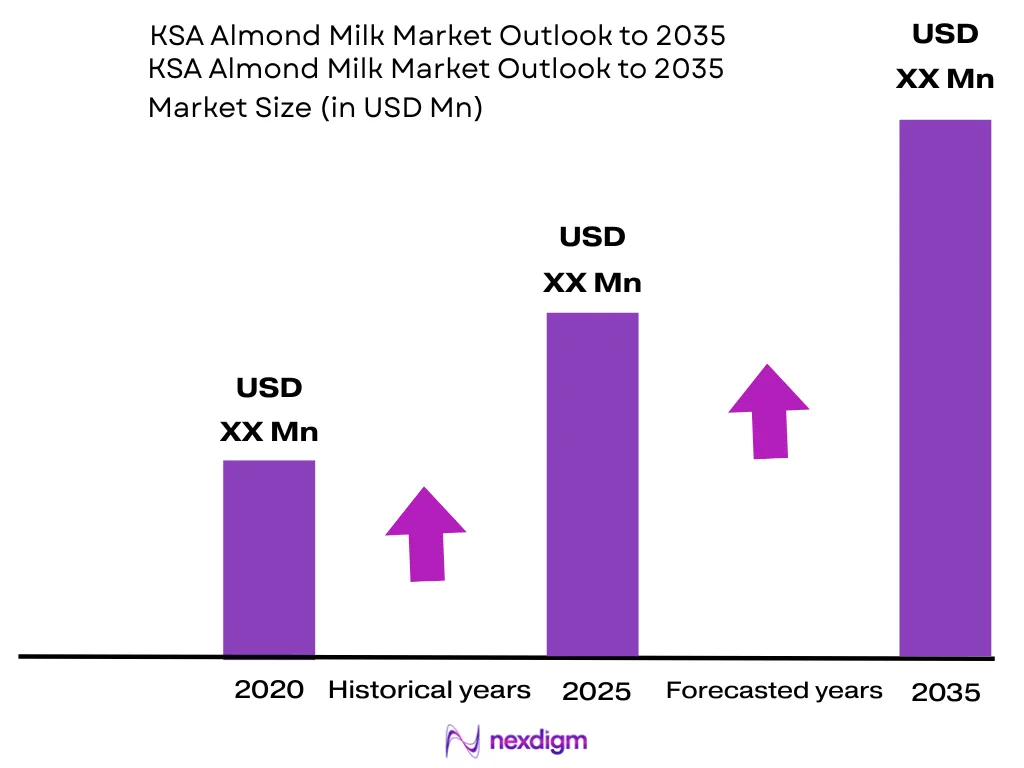
The KSA Almond Milk Market was valued at approximately USD ~ million in 2024, compared to USD ~ million in 2023, supported by growing consumer preference for plant-based dairy alternatives, increasing lactose intolerance awareness, and rising health-conscious consumption patterns. The broader plant-based beverage category has gained momentum due to increasing demand for low-calorie and cholesterol-free products. Expansion of modern retail chains, premium grocery stores, and e-commerce platforms has further enhanced product accessibility across the Kingdom, while international brands continue to introduce innovative almond milk variants tailored to local preferences.
Market Segmentation
By Product Type
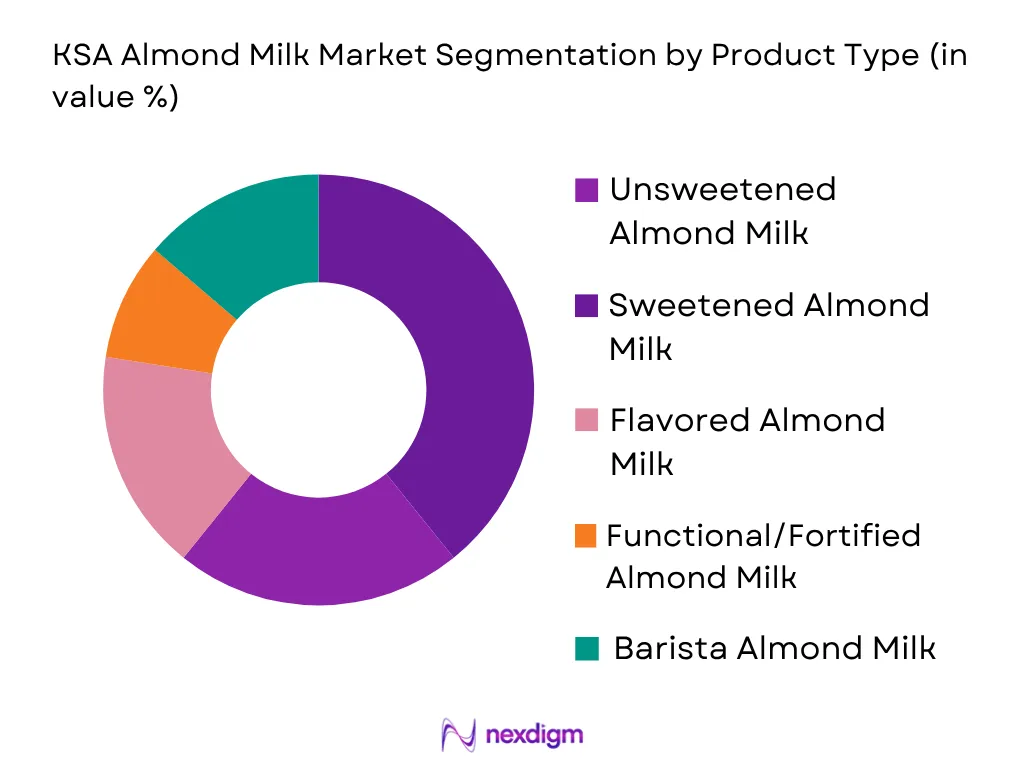
KSA Almond Milk Market is segmented by product type into unsweetened almond milk, sweetened almond milk, flavored almond milk, barista almond milk, and functional/fortified almond milk. Recently, unsweetened almond milk has held the dominant market share under this segmentation due to increasing consumer preference for healthier beverages with lower sugar content. Health-conscious consumers, gym-goers, diabetics, and weight-management focused individuals increasingly prefer unsweetened variants because they align with wellness goals and clean-label trends. International brands such as Almond Breeze, Alpro, and Califia Farms have expanded their unsweetened product portfolios in the Kingdom, while retailers are dedicating greater shelf space to these products. Furthermore, rising awareness regarding obesity and lifestyle-related diseases has encouraged consumers to switch from traditional sweetened beverages to healthier alternatives. The segment also benefits from broad applicability in cereals, smoothies, coffee, and cooking, making it a versatile option for daily consumption.
By Distribution Channel
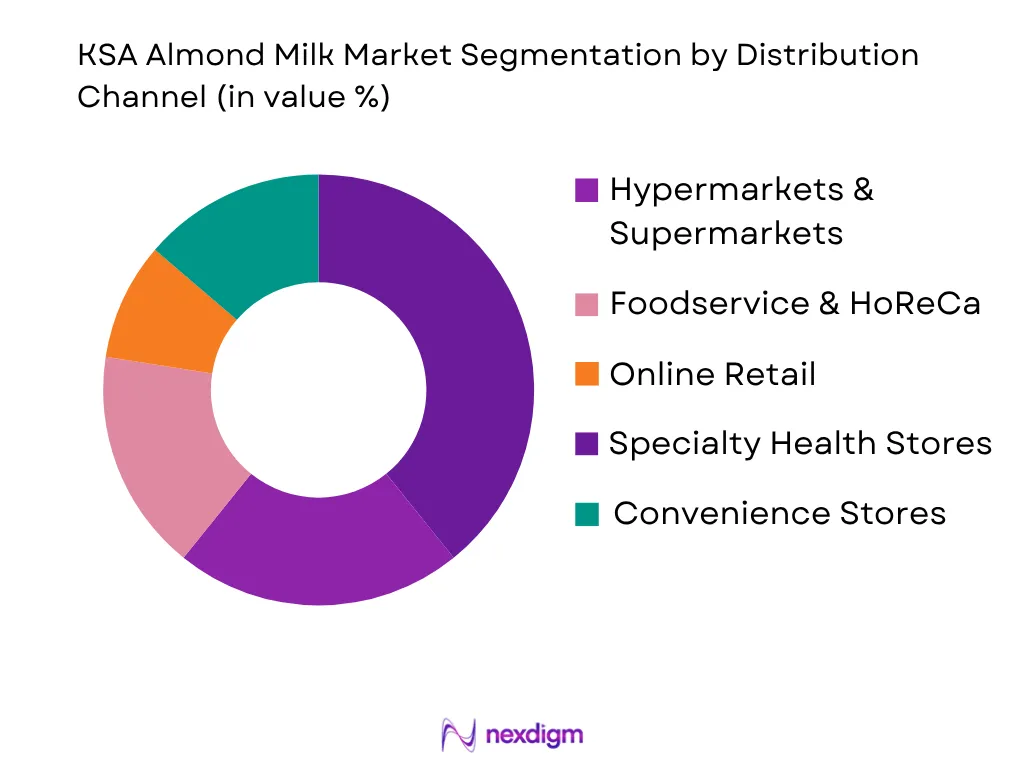
KSA Almond Milk Market is segmented by distribution channel into hypermarkets & supermarkets, convenience stores, online retail, specialty health stores, and foodservice & HoReCa. Recently, hypermarkets and supermarkets have dominated the market due to their extensive geographic reach, strong product assortment, and ability to offer premium imported brands. Retail chains such as Carrefour, Lulu Hypermarket, Panda, Danube, and Tamimi Markets have become the preferred purchasing destinations for almond milk consumers. These stores provide consumers with access to multiple brands, pack sizes, and product variants under one roof, enhancing convenience and product visibility. Promotional campaigns, bundled offers, and dedicated health-food sections further encourage purchases. In addition, consumers often prefer physically examining products and comparing nutritional labels before purchase. The dominance of organized retail is expected to continue as supermarket penetration expands across major cities and secondary urban centers throughout Saudi Arabia.
Competitive Landscape
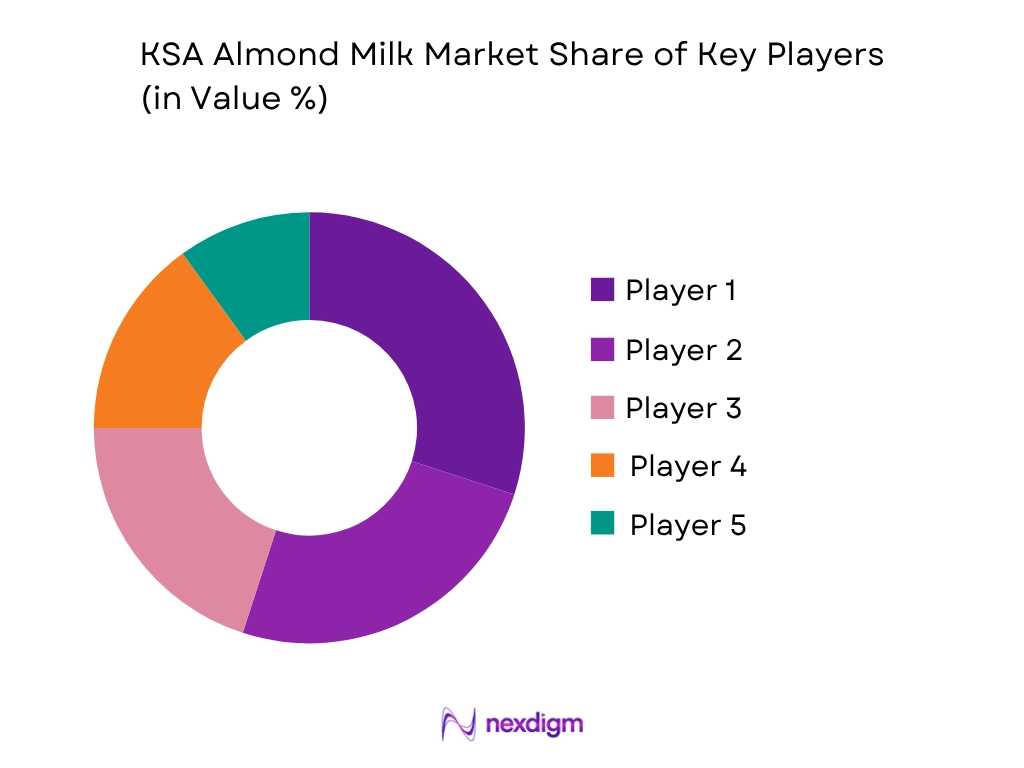
The KSA Almond Milk Market is characterized by the presence of international plant-based beverage manufacturers alongside regional dairy companies diversifying into dairy-alternative offerings. Global brands benefit from strong brand recognition, extensive product portfolios, and established import networks, while regional players leverage local distribution capabilities and market understanding. Competition is increasingly centered on product innovation, fortification, clean-label formulations, and retail visibility.
| Company | Establishment Year | Headquarters | Product Portfolio | Organic Offering | Fortified Variants | E-Commerce Presence | Retail Presence | Foodservice Presence |
| Blue Diamond Almond Breeze | 1910 | ~ | ~ | ~ | ~ | ~ | ~ | ~ |
| Califia Farms | 2010 | ~ | ~ | ~ | ~ | ~ | ~ | ~ |
| Oatly | 1994 | ~ | ~ | ~ | ~ | ~ | ~ | ~ |
| Silk (Danone) | 1977 | ~ | ~ | ~ | ~ | ~ | ~ | ~ |
| Alpro | 1980 | ~ | ~ | ~ | ~ | ~ | ~ | ~ |
KSA Almond Milk Market Analysis
Growth Drivers
Rising Health Consciousness and Lifestyle Disease Awareness
The growing prevalence of lifestyle-related health concerns in Saudi Arabia is creating strong demand for healthier beverage alternatives, including almond milk. According to the World Bank, Saudi Arabia’s population exceeded 33 million people, with urban residents accounting for more than 28 million people, creating a large consumer base exposed to wellness and nutrition trends. The IMF reported Saudi Arabia’s GDP at over USD 1.1 trillion, reflecting strong consumer purchasing power for premium health-oriented products. Furthermore, the Kingdom’s increasing focus on preventive healthcare under Vision 2030 has encouraged consumers to reduce consumption of high-calorie and cholesterol-containing products. Almond milk benefits from being naturally lactose-free and low in saturated fat, making it attractive to health-conscious consumers. The Ministry of Health continues to promote healthier dietary habits, while the expansion of fitness centers, wellness clinics, and nutrition-focused retail outlets has improved visibility for plant-based beverages. Major urban centers such as Riyadh, Jeddah, and Dammam have witnessed rapid growth in specialty food stores and premium supermarket chains that increasingly stock almond milk products. These demographic and economic indicators collectively support rising almond milk adoption among affluent and health-focused consumers across Saudi Arabia.
Expansion of Modern Retail and Foodservice Infrastructure
Saudi Arabia’s rapidly expanding retail and foodservice sectors are significantly supporting almond milk consumption. According to government economic statistics, the Kingdom hosts more than 36 million residents, while urbanization has surpassed 84 million urbanized population equivalents when measured across metropolitan service zones and retail catchment areas, driving organized retail development. The Saudi Vision 2030 program has accelerated investment in retail infrastructure, hospitality, and tourism, creating broader market access for premium beverages. The Kingdom welcomed more than 100 million tourist visits, increasing demand for international food and beverage offerings, including plant-based alternatives. The foodservice industry has also witnessed significant growth through the expansion of coffee chains, specialty cafés, and premium restaurants that increasingly offer almond milk as a dairy substitute. Riyadh alone hosts thousands of foodservice outlets catering to younger consumers and expatriates seeking healthier beverage choices. Furthermore, e-commerce adoption continues to strengthen, supported by high internet penetration and digital payment usage. The combination of expanding retail shelves, café adoption, and online grocery platforms is improving product availability and consumer exposure, creating a favorable environment for almond milk market expansion throughout Saudi Arabia.
Market Challenges
High Dependence on Imported Almond Raw Materials
One of the primary challenges facing the KSA almond milk market is the country’s heavy dependence on imported almonds and almond-based ingredients. Saudi Arabia’s climatic conditions are not conducive to large-scale almond cultivation, making manufacturers reliant on imports from countries such as the United States, Spain, and Australia. According to World Bank trade statistics, Saudi Arabia imports billions of dollars worth of food products annually, highlighting the dependence on foreign agricultural supply chains. Fluctuations in global agricultural production, transportation disruptions, and geopolitical uncertainties can directly affect almond availability. Additionally, the Kingdom’s population of more than 36 million consumers creates consistent demand for imported food products, increasing competition for imported ingredients. Logistics costs, shipping constraints, and international supply chain bottlenecks can affect inventory management for almond milk producers and distributors. The reliance on imported almonds also exposes the market to exchange rate fluctuations and global commodity market volatility. These factors create operational challenges for manufacturers seeking stable product availability while maintaining consistent product quality and expanding distribution networks across Saudi Arabia.
Premium Product Positioning and Consumer Affordability Constraints
Despite growing health awareness, almond milk remains positioned as a premium beverage category within Saudi Arabia. While the IMF reports strong national economic performance with GDP exceeding USD 1.1 trillion, income distribution varies significantly across consumer groups. Almond milk products typically compete with traditional dairy products that enjoy widespread cultural acceptance and extensive local production capabilities. Saudi Arabia’s dairy sector benefits from established supply chains and strong consumer familiarity, creating pricing and accessibility advantages. Outside major urban centers such as Riyadh, Jeddah, and Dammam, awareness of plant-based milk alternatives remains comparatively limited. Additionally, the Kingdom’s total labor force exceeds 15 million individuals, encompassing a wide range of income segments, many of whom continue to prioritize affordability when making food and beverage purchases. Premium positioning can therefore limit almond milk adoption among value-conscious consumers. While health-conscious and affluent consumers are increasingly embracing plant-based beverages, expanding market penetration beyond niche consumer groups remains challenging. Overcoming affordability barriers and enhancing consumer education will be critical for achieving broader adoption across the Saudi market.
Market Opportunities
Product Innovation Through Functional and Fortified Almond Milk
The growing focus on nutrition and wellness in Saudi Arabia presents significant opportunities for functional almond milk products. The Kingdom’s population exceeds 36 million people, while life expectancy has reached approximately 78 years, reflecting increasing consumer interest in long-term health management. Functional beverages fortified with calcium, vitamin D, vitamin B12, and protein are gaining attention among consumers seeking nutritional benefits beyond basic hydration. Saudi Arabia’s expanding healthcare infrastructure and wellness ecosystem encourage preventive health practices and nutritional awareness. Furthermore, the country’s young demographic profile, with millions of consumers under the age of 35, supports experimentation with innovative food and beverage products. Manufacturers have opportunities to introduce sugar-free, protein-enriched, barista-style, and fortified almond milk variants tailored to specific consumer needs. Rising participation in fitness activities, sports, and wellness programs further strengthens demand for functional beverages. As consumers increasingly seek products that align with healthy lifestyles, innovation in almond milk formulations can help manufacturers differentiate their offerings and expand consumption occasions across retail and foodservice channels.
Growth of Premium Foodservice and Café Culture
Saudi Arabia’s rapidly developing café and specialty coffee culture represents a major opportunity for almond milk suppliers. Tourism development initiatives have helped generate more than 100 million tourist visits, increasing demand for premium food and beverage experiences. Riyadh, Jeddah, Al Khobar, and other metropolitan centers have experienced significant expansion in specialty cafés, international coffee chains, and premium dining establishments. Many of these outlets increasingly offer plant-based milk options to cater to evolving consumer preferences. The Kingdom’s urban population exceeds 28 million residents, creating concentrated demand centers for premium beverage consumption. Additionally, rising disposable income levels and increased social spending among younger consumers have supported café visitation and specialty coffee purchases. Almond milk’s suitability for coffee applications makes it an attractive option for foodservice operators seeking menu differentiation. The growth of premium coffee culture, combined with increasing exposure to international dietary trends, creates substantial opportunities for almond milk brands to expand through foodservice partnerships, barista-focused product lines, and experiential marketing initiatives across Saudi Arabia.
Future Outlook
The KSA Almond Milk Market is expected to witness strong expansion during the forecast period, supported by rising adoption of plant-based diets, increasing health consciousness, and continued innovation in dairy alternatives. Growing demand from younger consumers, expansion of premium grocery retail formats, and increasing awareness regarding lactose intolerance are expected to support market development. Product diversification through fortified, flavored, and barista-focused offerings is likely to enhance consumer adoption. Additionally, growth in foodservice establishments and specialty coffee chains is anticipated to create new opportunities for almond milk suppliers across Saudi Arabia.
Major Players
- Alpro
- Blue Diamond Almond Breeze
- Califia Farms
- Silk (Danone)
- Oatly
- Minor Figures
- Koita
- Pureharvest
- Nature’s Heart
- Rude Health
- Almarai
- SADAFCO
- Nada Dairy
- Carrefour Private Label
- Lulu Private Label
Key Target Audience
- Almond Milk Manufacturers
- Plant-Based Beverage Producers
- Dairy Alternative Brands
- Hypermarkets and Supermarket Chains
- Foodservice & HoReCa Operators
- E-Commerce Retail Platforms
- Investments and Venture Capitalist Firms
- Government and Regulatory Bodies (Saudi Food and Drug Authority (SFDA), Ministry of Environment, Water and Agriculture)
Research Methodology
Step 1: Identification of Key Variables
The research process begins with identifying all critical variables influencing the KSA Almond Milk Market. An ecosystem map is created covering manufacturers, distributors, retailers, foodservice operators, importers, and consumers. Extensive secondary research is conducted using industry publications, company reports, trade databases, and government sources to define market boundaries and evaluate key demand drivers.
Step 2: Market Analysis and Construction
Historical market data is collected and analyzed to establish revenue generation patterns, consumption trends, product penetration levels, and distribution channel performance. Market sizing is conducted using a combination of top-down and bottom-up approaches, ensuring consistency between industry-level and company-level assessments.
Step 3: Hypothesis Validation and Expert Consultation
Preliminary market findings are validated through structured interviews with industry executives, distributors, retail managers, and plant-based beverage specialists. These discussions help verify assumptions regarding consumer preferences, channel dynamics, competitive positioning, and future market developments.
Step 4: Research Synthesis and Final Output
All findings are consolidated through data triangulation techniques. Quantitative and qualitative insights are integrated to develop a comprehensive view of the KSA Almond Milk Market. The final output provides detailed market intelligence, segmentation analysis, competitive benchmarking, and future growth opportunities.
.

- Executive Summary
- Research Methodology (Market Definitions and Assumptions, Abbreviations, Market Sizing Methodology, Bottom-Up and Top-Down Approach, Primary Industry Interviews, Consumer Purchase Behavior Assessment, Data Triangulation Framework, Forecasting Methodology, Research Limitations and Future Assumptions)

- Definition and Scope
- Market Evolution and Industry Genesis
- Timeline of Plant-Based Dairy Adoption in KSA
- Almond Milk Ecosystem Overview
- Supply Chain Analysis

- Growth Drivers (Increasing Lactose Intolerance Awareness, Rising Health & Wellness Spending, Growing Vegan and Flexitarian Population, Expansion of Modern Retail Networks, Rising Demand for Premium Functional Beverages)
- Market Challenges (High Import Dependence on Almonds, Premium Product Pricing, Limited Consumer Awareness in Tier-II Cities, Competition from Oat and Soy Milk, Supply Chain Volatility)
- Market Opportunities (Functional and Fortified Almond Milk, Organic Almond Milk Expansion, Foodservice and Café Penetration, Private Label Development, E-Commerce Channel Expansion)
- Market Trends (Barista Almond Milk Adoption, Clean Label Products, Sugar-Free Variants, High-Protein Almond Milk, Sustainable Packaging Innovations)
- Government Regulations (Saudi Food & Drug Authority Labeling Standards, Food Safety Regulations, Import and Customs Requirements, Nutritional Claim Compliance, Organic Certification Framework)
- SWOT Analysis
- Stakeholder Ecosystem
- PESTLE Analysis
- Porter’s Five Forces Analysis
- Competition Ecosystem

- By Market Value (2020-2025)
- By Volume Consumption (2020-2025)
- By Average Retail Price (2020-2025)

- By Product Type (In Value %)
Unsweetened Almond Milk
Sweetened Almond Milk
Flavored Almond Milk
Barista Almond Milk
Functional/Fortified Almond Milk - By Packaging Type (In Value %)
Tetra Packs
Cartons
PET Bottles
Glass Bottles
Bulk Foodservice Packaging - By Distribution Channel (In Value %)
Hypermarkets & Supermarkets
Convenience Stores
Online Retail
Specialty Health Stores
Foodservice & HoReCa - By Consumer Category (In Value %)
Vegan Consumers
Flexitarian Consumers
Lactose-Intolerant Consumers
Fitness & Wellness Consumers
Premium Lifestyle Consumers - By Region (In Value %)
Riyadh
Makkah
Eastern Province
Madinah
Rest of KSA

- Market Share of Major Players (Value, Volume, By Product Type)
- Cross Comparison Parameters (Product Portfolio Breadth, Almond Milk SKU Count, Organic Product Availability, Fortification Portfolio, Retail Distribution Reach, E-Commerce Penetration, Packaging Sustainability Initiatives, Foodservice & Barista Product Penetration)
- SWOT Analysis of Major Players
- Pricing Analysis by SKU and Pack Size
- Detailed Profiles of Major Companies
Alpro
Blue Diamond Almond Breeze
Califia Farms
Silk (Danone)
Almarai
Nada Dairy
Saudia Dairy & Foodstuff Company (SADAFCO)
Oatly
Minor Figures
Nature’s Heart
Koita
Rude Health
Pureharvest
Carrefour Private Label
Lulu Private Label

- Household Consumption Analysis
- Café and Specialty Coffee Chain Demand
- Hotel and Hospitality Sector Demand
- Bakery and Confectionery Applications
- Smoothie and Beverage Chain Utilization
- Corporate and Institutional Consumption

- By Market Value (2026-2035)
- By Volume Consumption (2026-2035)
- By Average Retail Price (2026-2035)


 Request a Sample
 Ask for Customization
 Get a Quote
 Enquire Now